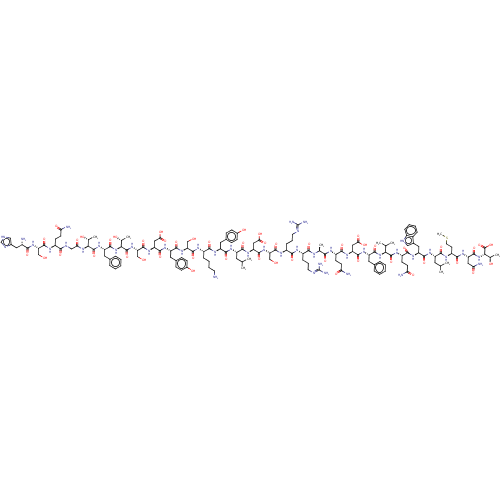
 Glucagon BDBM50266693 CHEBI:5391 Glucagen Hypokit Glucagon Recombinant Glucagon Emergency Kit
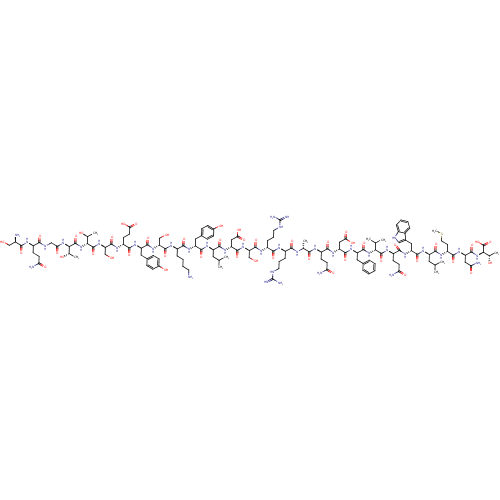 [des-His1, des-Phe6, Glu9] glucagon [des-Phe6, Glu9] glucagon CHEMBL427744 BDBM50059351
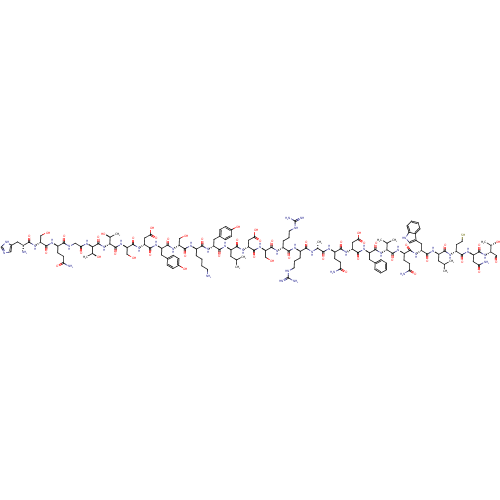 CHEMBL409611 [des-Phe6] glucagon BDBM50059355
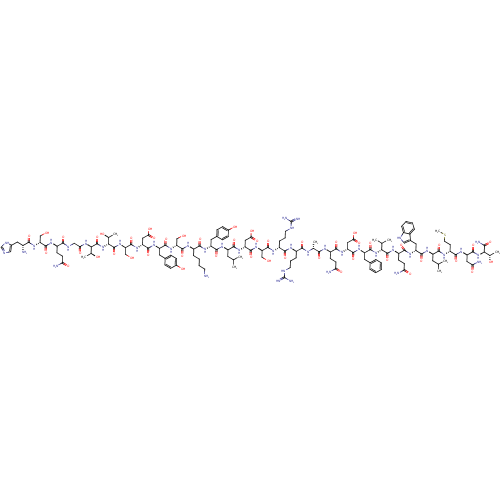 [des-Phe6] glucagon-NH2 CHEMBL438574 BDBM50059354
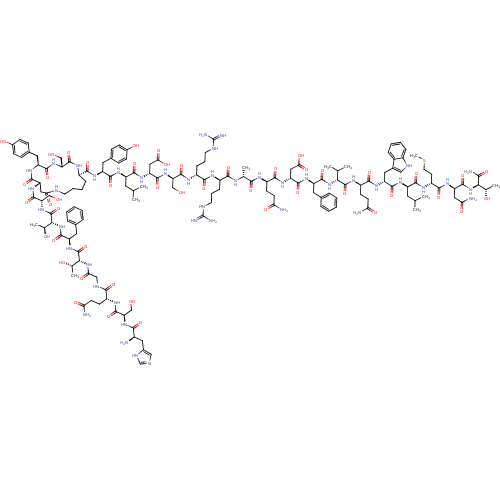 BDBM50087843 c[Asp9, Lys12,] glucagon-NH2 CHEMBL429724
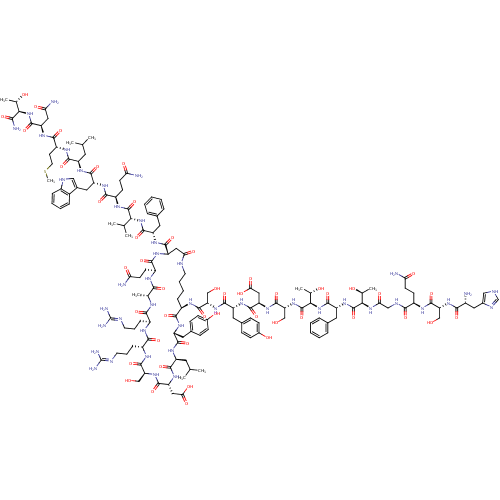 BDBM50087844 CHEMBL266411 c[ Lys12, Asp21] glucagon-NH2
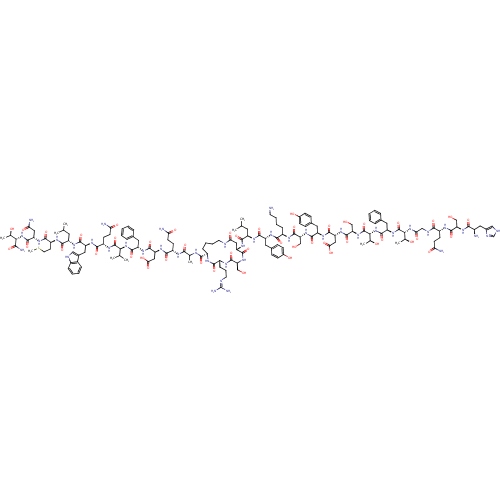 BDBM50087846 c[Asp15, Lys18,] glucagon-NH2 CHEMBL266412
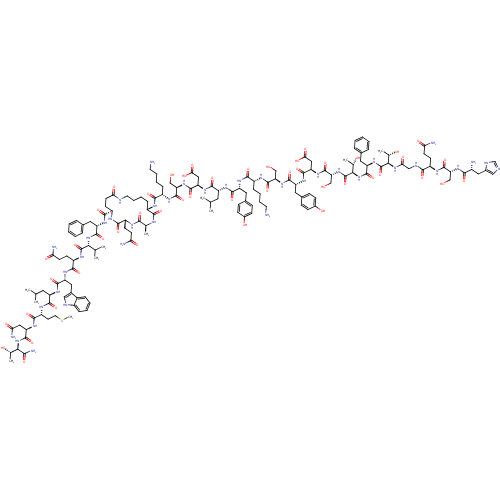 BDBM50087848 c[Asp15, Lys18,] glucagon-NH2 CHEMBL427644
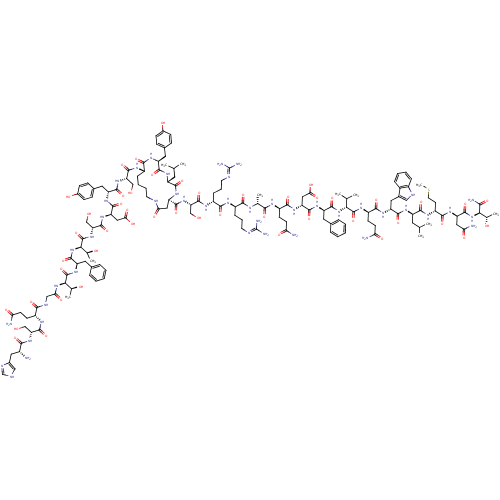 BDBM50087849 CHEMBL268534 c[ Lys12, Asp15] glucagon-NH2
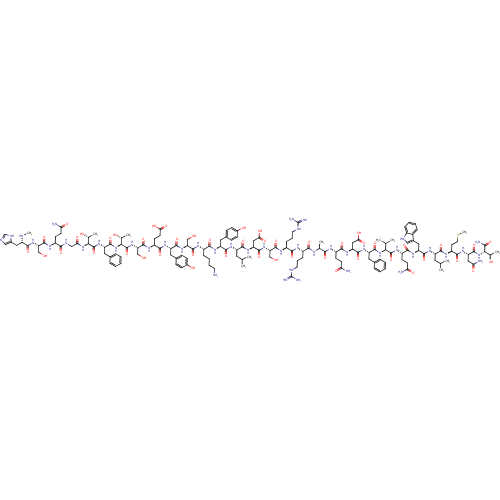 BDBM50161488 Des-His1[Glu9]glucagon-NH2 CHEMBL439289
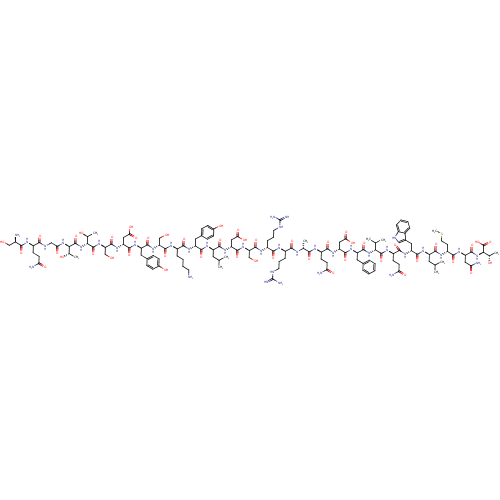 [des-His1, des-Phe6] glucagon CHEMBL439271 BDBM50059361
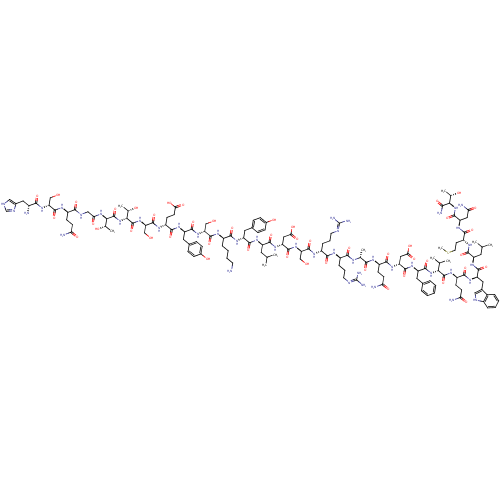 [des-Phe6, Glu9] glucagon-NH2 CHEMBL412352 BDBM50059365
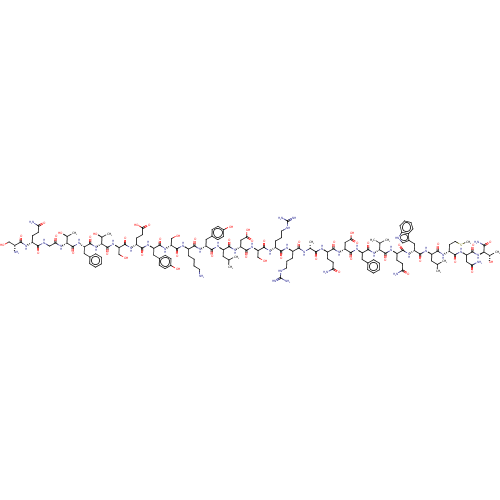 BDBM50059356 [des-His1, Nle6, Glu9] glucagon-NH2 CHEMBL2369990
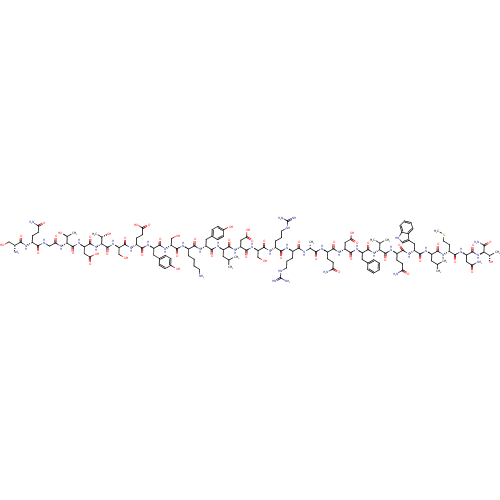 BDBM50059357 [des-His1, Asp6, Glu9] glucagon-NH2 CHEMBL438218
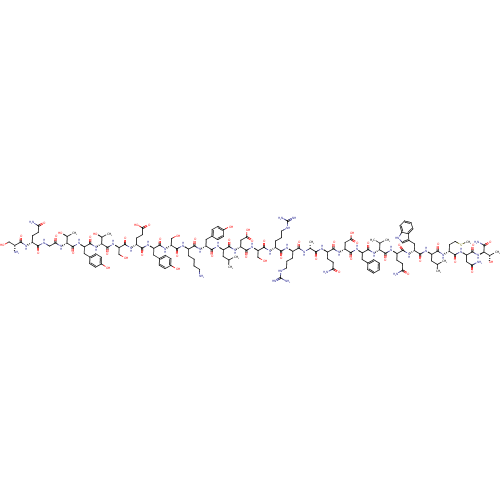 BDBM50059358 CHEMBL267885 [des-His1, Tyr6,Glu9] glucagon-NH2
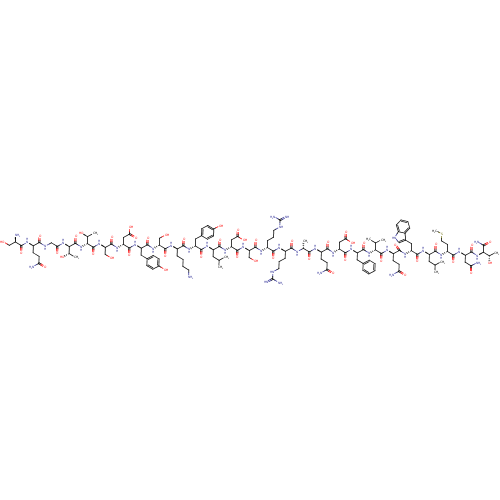 CHEMBL429198 [des-His1, des-Phe6] glucagon-NH2 BDBM50059360
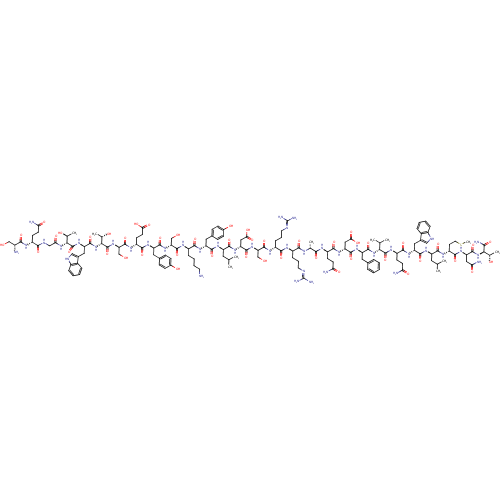 CHEMBL442499 BDBM50059352 [des-His1, Trp6, Glu9] glucagon-NH2
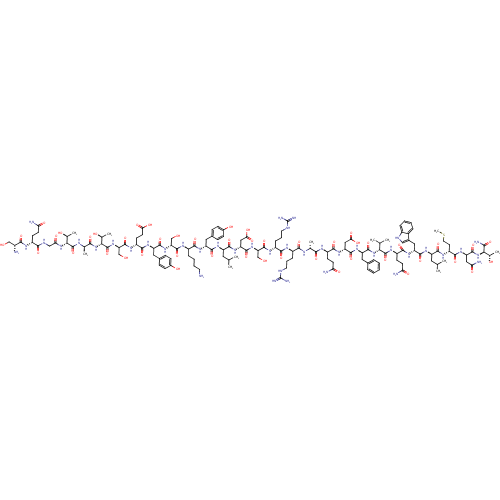 [des-His1,Ala6, Glu9] glucagon-NH2 CHEMBL437095 BDBM50059363
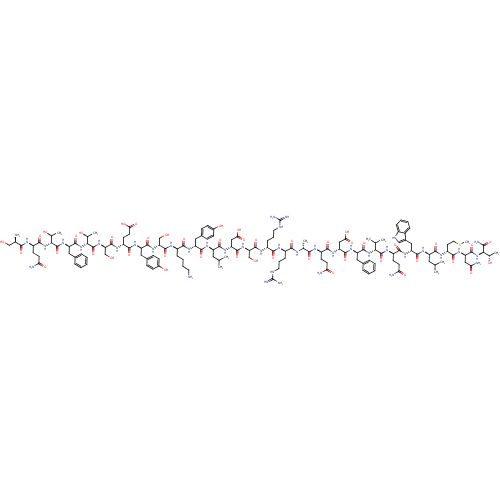 BDBM50059359 CHEMBL411289 [des-His1, des-Gly4, Glu9] glucagon-NH2
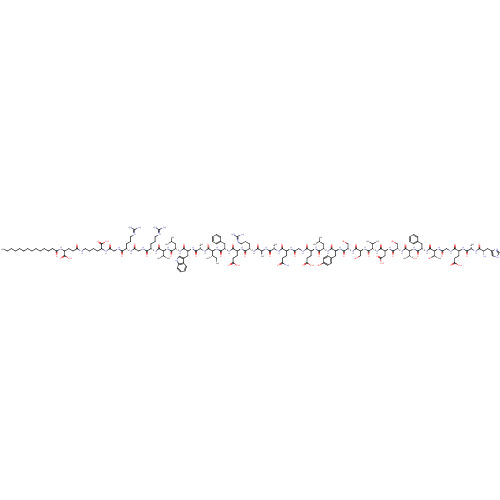 BDBM50087726 Glucagon like peptide-1(GLP-1)analogue CHEMBL409983
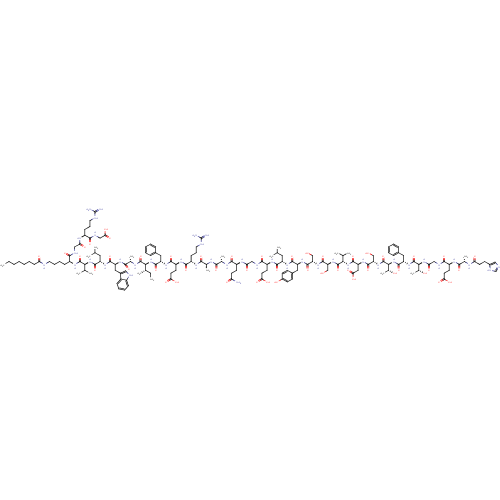 BDBM50087727 CHEMBL437277 Glucagon like peptide-1(GLP-1)analogue
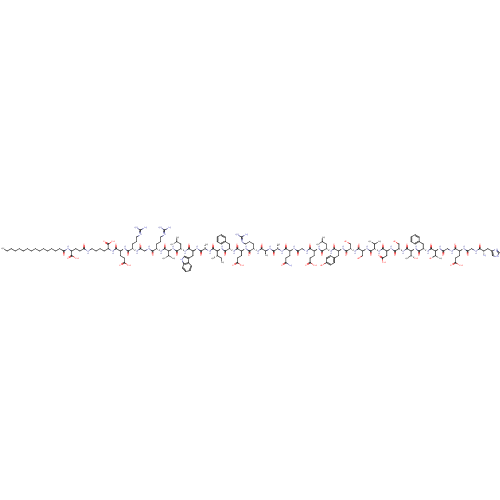 BDBM50087728 CHEMBL412234 Glucagon like peptide-1(GLP-1)analogue
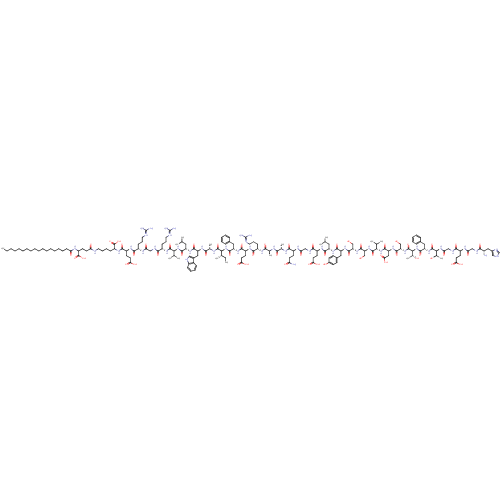 BDBM50087729 CHEMBL439181 Glucagon like peptide-1(GLP-1)analogue
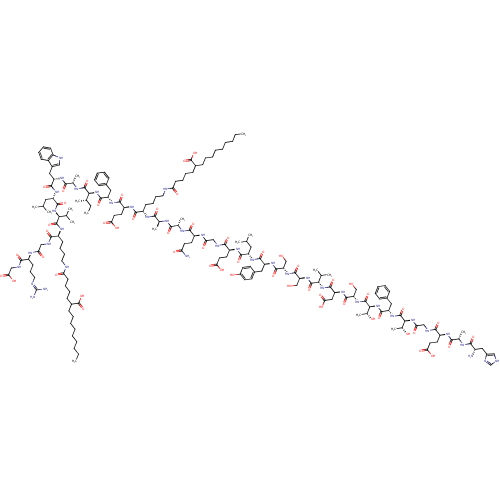 BDBM50087733 CHEMBL440075 Glucagon like peptide-1(GLP-1)analogue
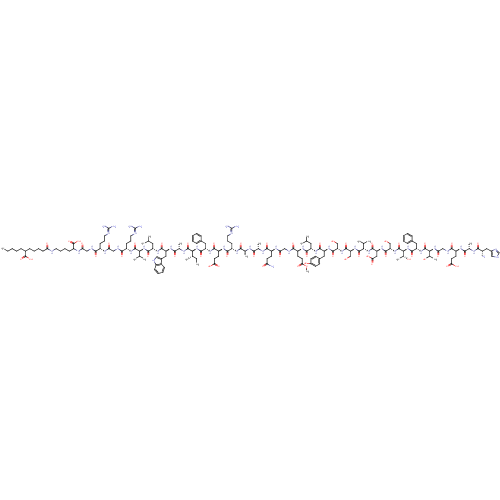 BDBM50087734 CHEMBL412115 Glucagon like peptide-1(GLP-1)analogue
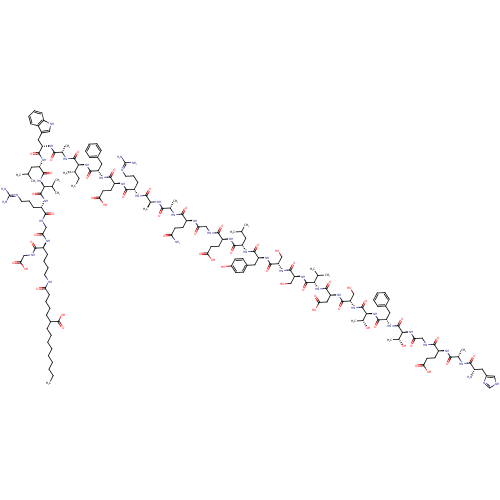 BDBM50087735 CHEMBL428152 Glucagon like peptide-1(GLP-1)analogue
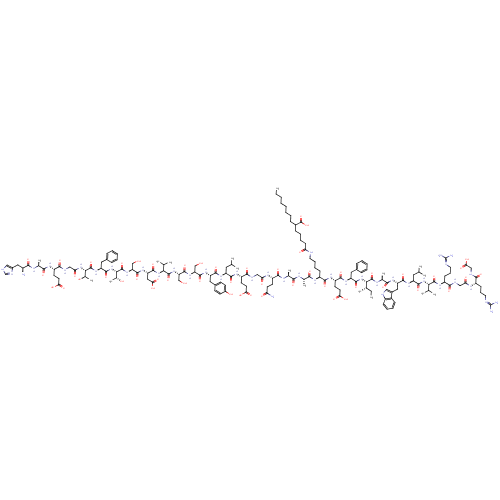 BDBM50087737 CHEMBL427943 Glucagon like peptide-1(GLP-1)analogue
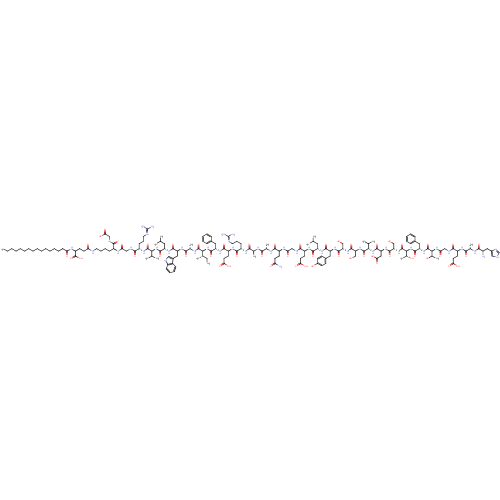 BDBM50087738 CHEMBL412541 Glucagon like peptide-1(GLP-1)analogue
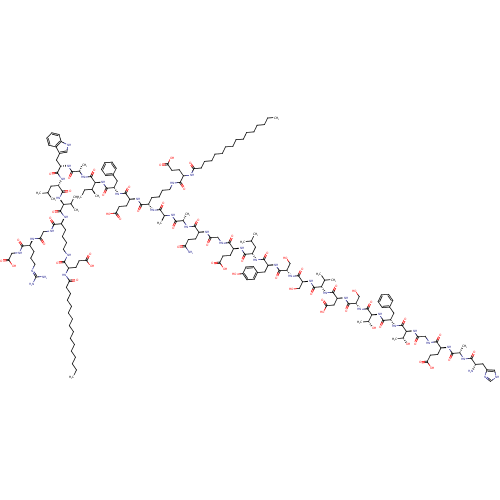 BDBM50087739 CHEMBL441580 Glucagon like peptide-1(GLP-1)analogue
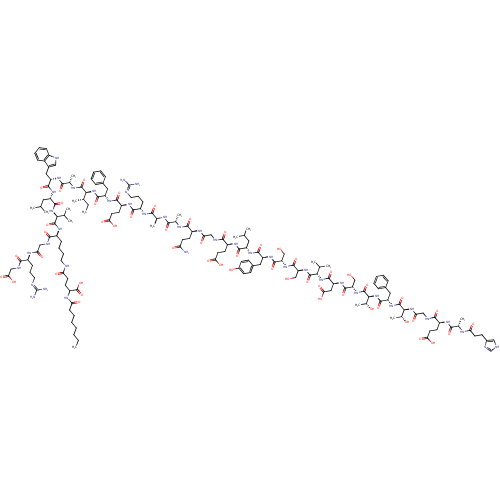 BDBM50087744 CHEMBL269779 Glucagon like peptide-1(GLP-1)analogue
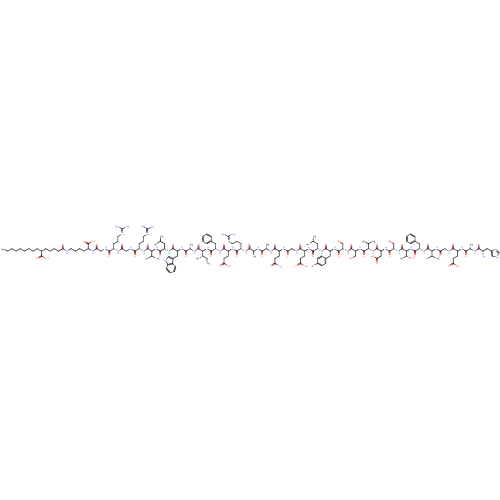 BDBM50087745 CHEMBL439481 Glucagon like peptide-1(GLP-1)analogue
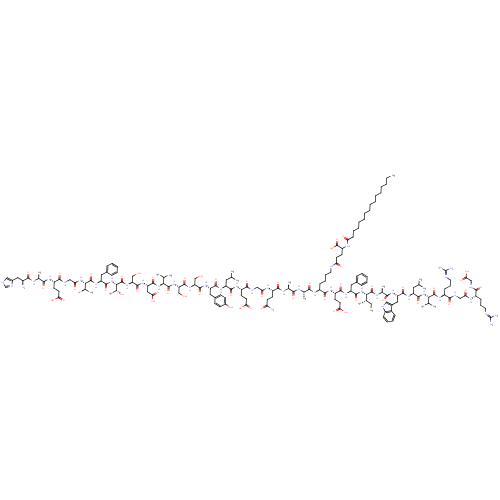 BDBM50087747 CHEMBL439305 Glucagon like peptide-1(GLP-1)analogue
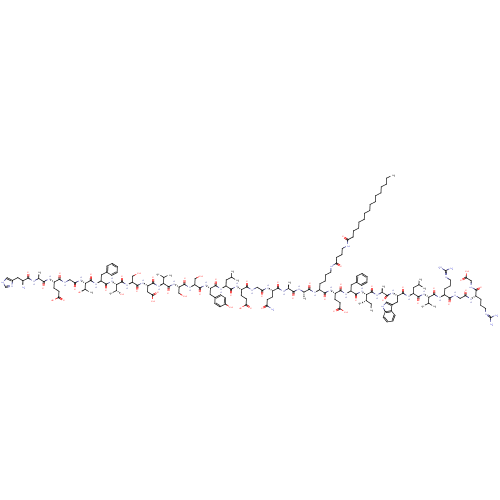 BDBM50087748 Glucagon like peptide-1(GLP-1)analogue CHEMBL269494
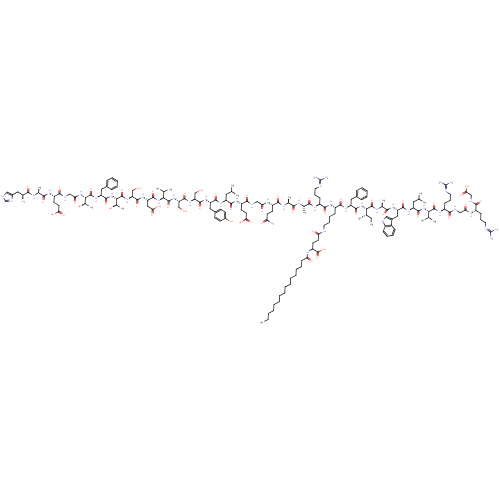 BDBM50087749 CHEMBL261911 Glucagon like peptide-1(GLP-1)analogue
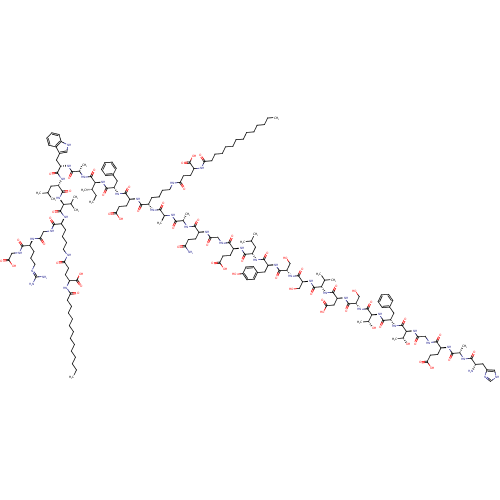 BDBM50087750 Glucagon like peptide-1(GLP-1)analogue CHEMBL409300
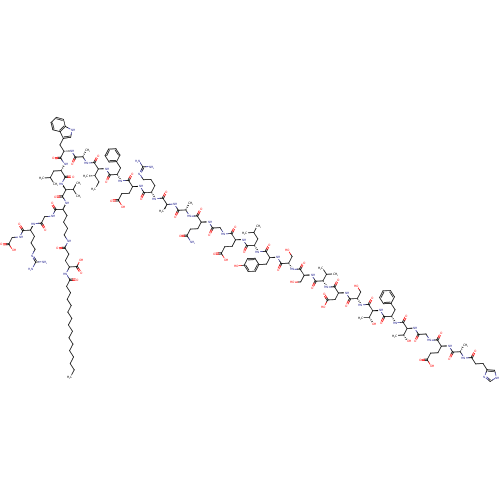 BDBM50087755 CHEMBL438212 Glucagon like peptide-1(GLP-1)analogue
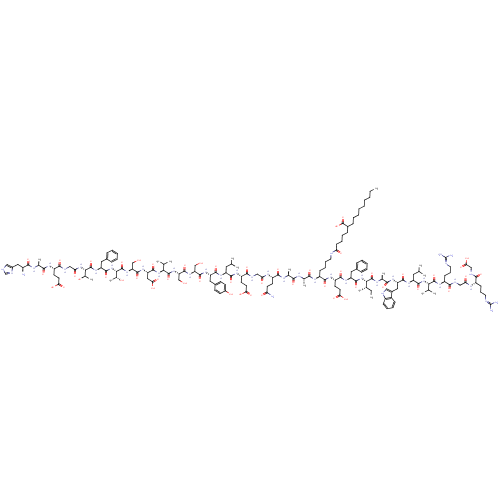 BDBM50087756 CHEMBL439099 Glucagon like peptide-1(GLP-1)analogue
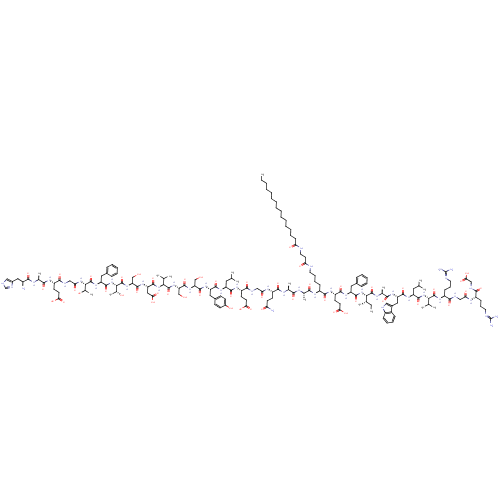 BDBM50087757 CHEMBL441931 Glucagon like peptide-1(GLP-1)analogue
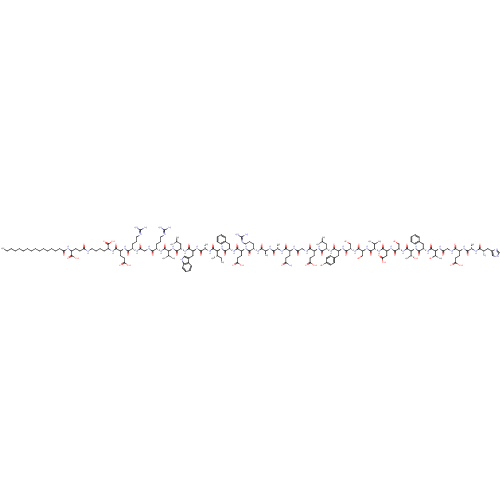 BDBM50087758 CHEMBL409270 Glucagon like peptide-1(GLP-1)analogue
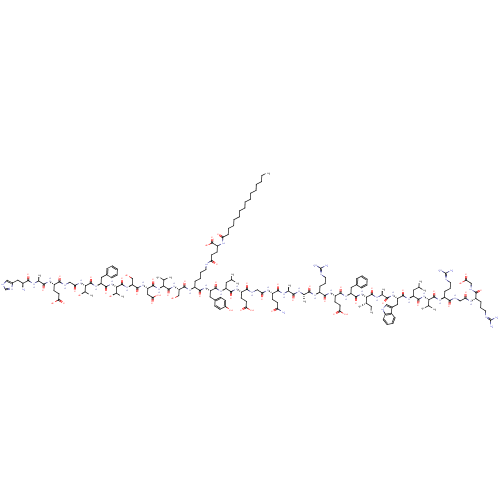 BDBM50087759 CHEMBL414971 Glucagon like peptide-1(GLP-1)analogue
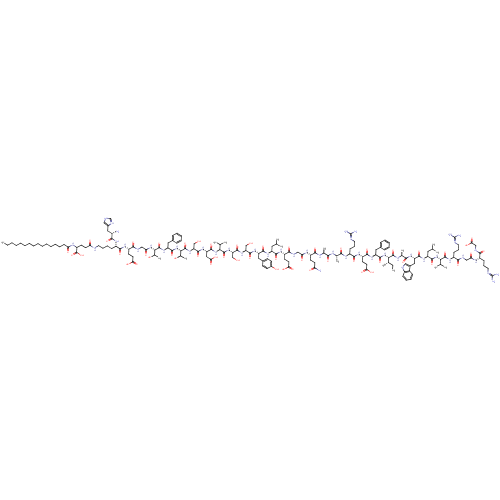 CHEMBL266046 BDBM50087741 Glucagon like peptide-1(GLP-1)analogue
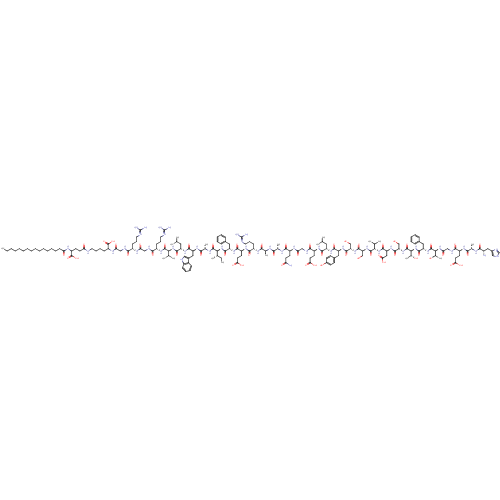 CHEMBL269543 Glucagon like peptide-1(GLP-1)analogue BDBM50087751
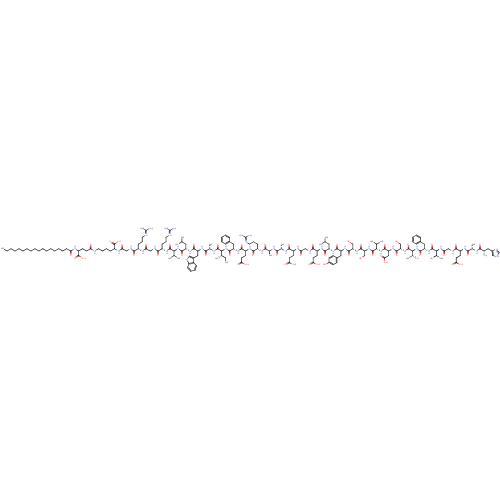 CHEMBL410575 Glucagon like peptide-1(GLP-1)analogue BDBM50087743
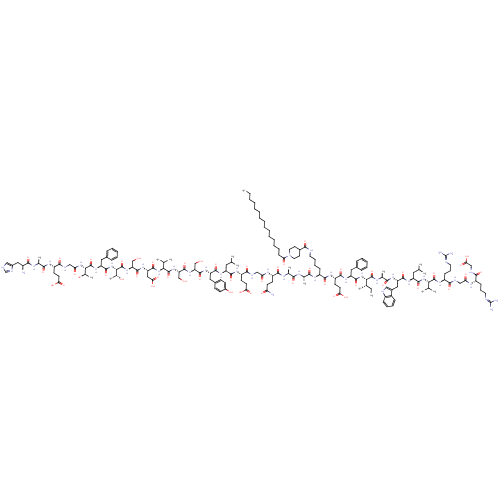 CHEMBL411138 Glucagon like peptide-1(GLP-1)analogue BDBM50087742
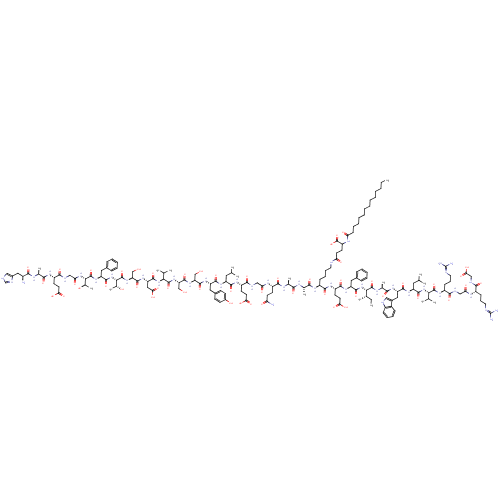 CHEMBL411170 Glucagon like peptide-1(GLP-1)analogue BDBM50087754
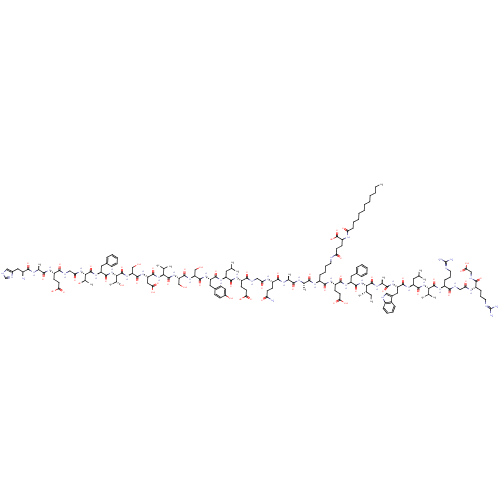 CHEMBL412948 BDBM50087736 Glucagon like peptide-1(GLP-1)analogue
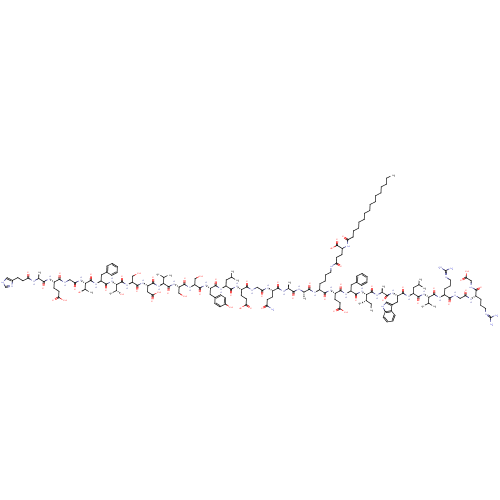 CHEMBL424733 Glucagon like peptide-1(GLP-1)analogue BDBM50087732
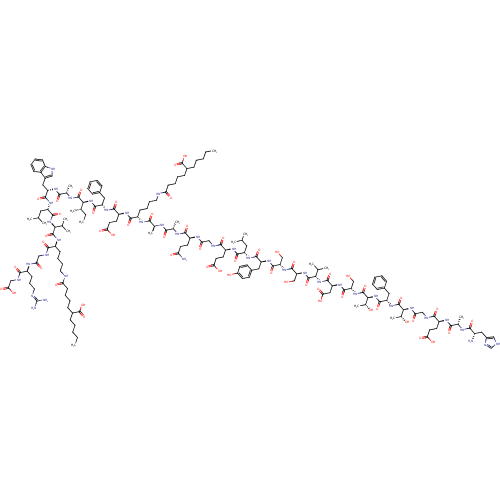 CHEMBL427768 BDBM50087730 Glucagon like peptide-1(GLP-1)analogue
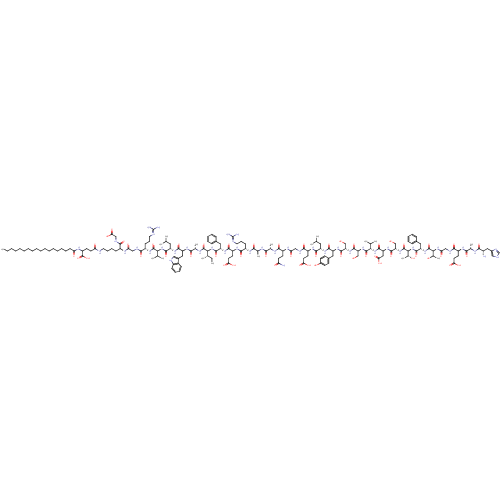 CHEMBL428330 Glucagon like peptide-1(GLP-1)analogue BDBM50087731
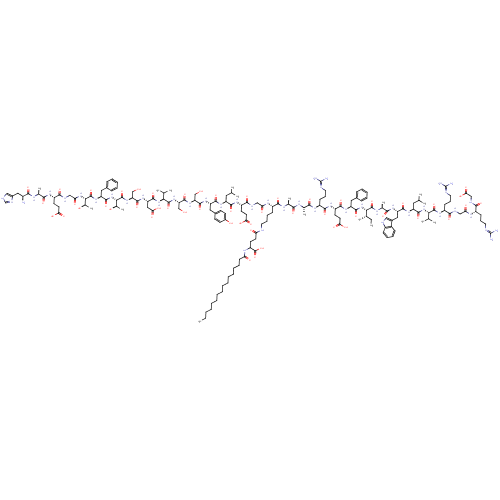 CHEMBL429398 BDBM50087752 Glucagon like peptide-1(GLP-1)analogue
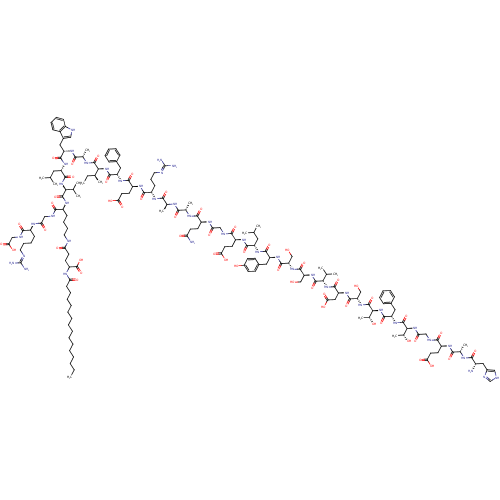 CHEMBL430245 BDBM50087761 Glucagon like peptide-1(GLP-1)analogue
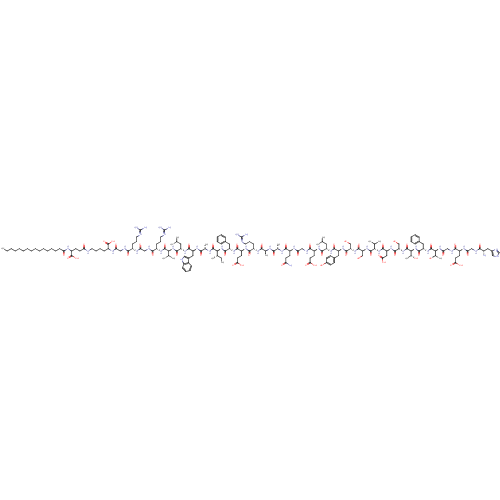 CHEMBL437467 Glucagon like peptide-1(GLP-1)analogue BDBM50087740
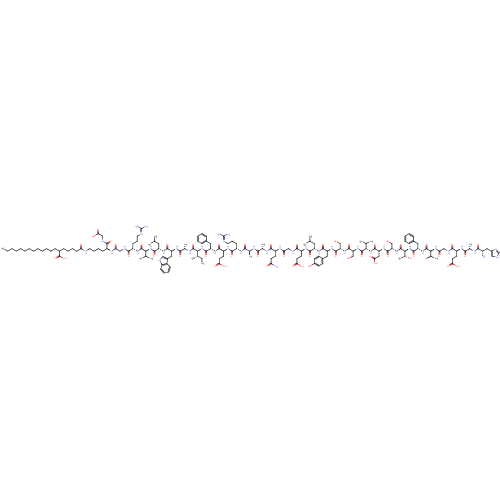 CHEMBL439091 BDBM50087760 Glucagon like peptide-1(GLP-1)analogue
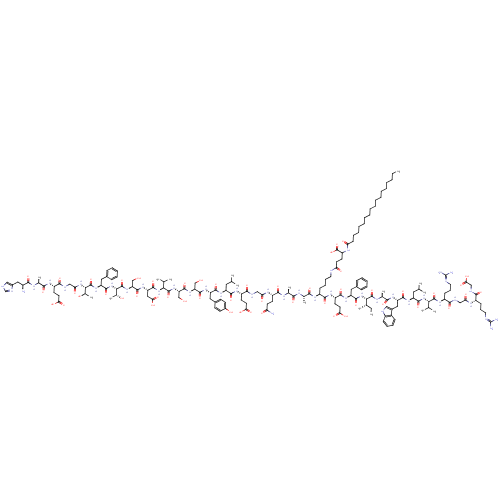 CHEMBL441203 Glucagon like peptide-1(GLP-1)analogue BDBM50087753
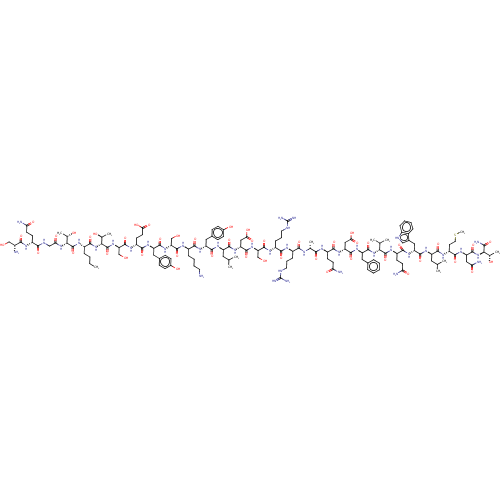 [des-His1, D-Phe6, Glu9] glucagon-NH2 CHEMBL2369985 BDBM50059364
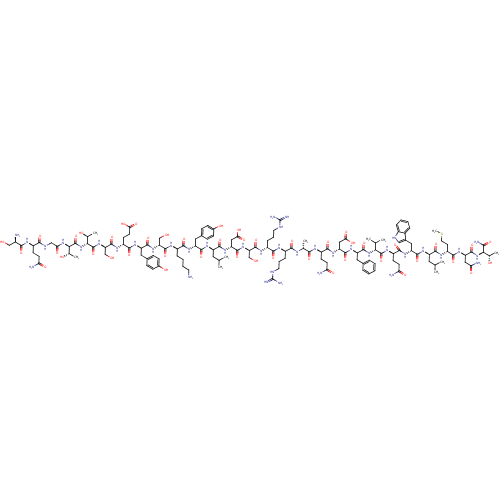 [des-His1, des-Phe6, Glu9] glucagon-NH2 CHEMBL268636 BDBM50059362
 CHEMBL413666 [des-His1,Tyr5,Glu9,D-Tyr10]glucagon-NH2 BDBM50051586
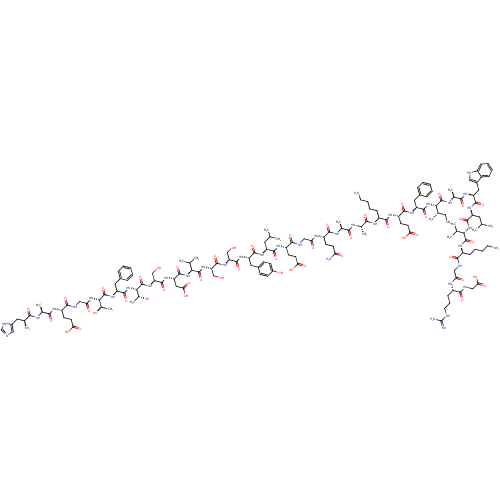 BDBM50087746 GLP-1(7-37) Glucagon like peptide-1(GLP-1) CHEMBL428139
 [des-His1,Tyr5,Glu9,(2S,3R)-beta-MePhe10]glucagon-NH2 CHEMBL2369127 BDBM50051585
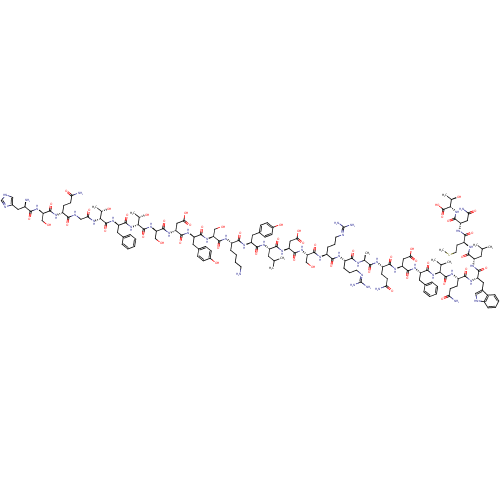 CHEMBL429362 BDBM50051588 His-Ser-Gln-thr-Phe-Thr-Ser-Asp-Tyr-Ser-Lys-Tyr-Leu-Asp-Ser-Arg-Arg-Ala-Gln-Asp-Val-Gln-Trp-Leu-Met-Asn-Thr-COOH(glucagon)
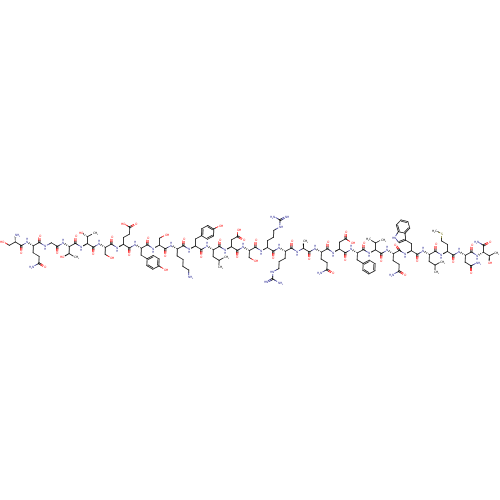 CHEMBL438045 Ser-Gln-Gly-Thr-Thr-Ser-Glu-Tyr-Ser-Lys-Tyr-Leu-Asp-Ser-Arg-Arg-Ala-Gln-Asp-Phe-Val-Gln-Leu-Met-Asn-Thr-NH2 ([DesHis1, Glu9]Glucagon amide) BDBM50098570
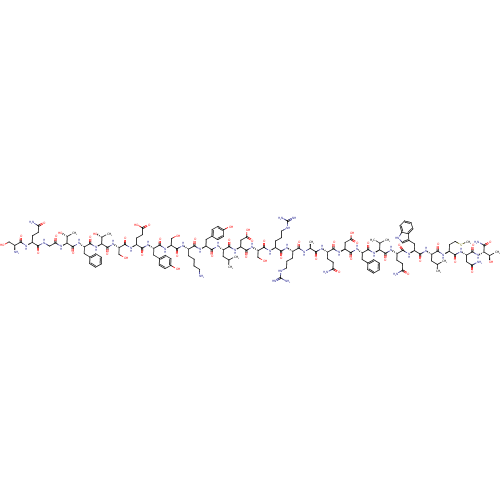 BDBM50098563 Ser-Gln-Gly-Thr-Phe-Thr-Ser-Glu-Tyr-Ser-Lys-Tyr-Leu-Asp-Ser-Arg-Arg-Ala-Gln-Asp-Phe-Val-Gln-Leu-Met-Asn-Thr-NH2 ([DesHis1, Glu9]Glucagon amide) CHEMBL413890
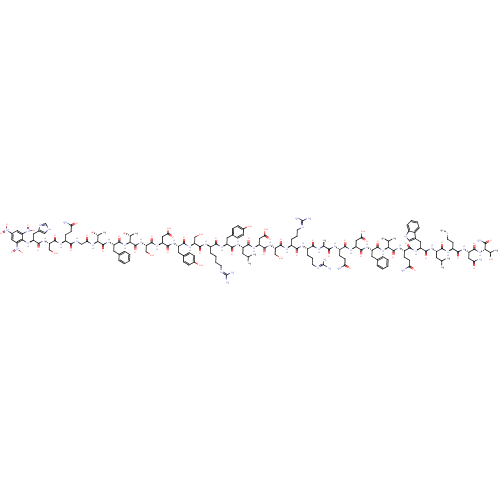 CHEMBL267876 BDBM50098573 N-trinitrophenyl-His-Ser-Gln-Gly-Thr-Phe-Thr-Ser-Asp-Tyr-Ser-homoArg-Tyr-Leu-Asp-Ser-Arg-Arg-Ala-Gln-Asp-Phe-Val-Gln-Leu-Met-Asn-Thr ([N-trinitrophenyl-His1, homo-Arg12] Glucagon)
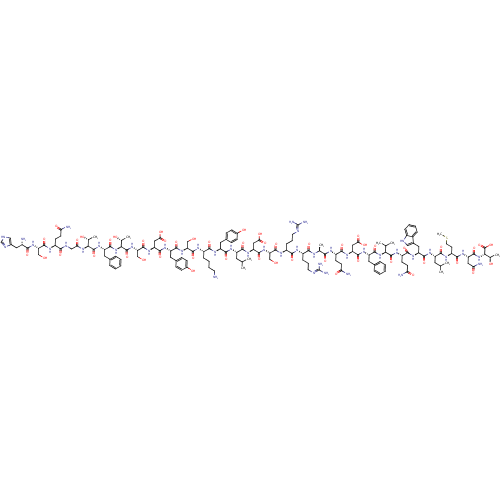 His-Ser-Gln-GlyThr-Phe-Thr-Ser-Asp-Tyr-Ser-Lys-Tyr-Leu-Asp-Ser-Arg-Arg-Ala-Gln-Asp-Phe-Val-Gln-Trp-Leu-Met-asn-Thr HisSerGluPheTyrPheTyrLysSerTyrAspArgTyrLeuAspSerLysLysAlaGluGluLeuTrpGluValPheAsp BDBM50098571 His-Ser-Gln-Gly-Thr-Phe-Thr-Ser-Asp-Tyr-Ser-Ser-Lys-Tyr-Leu-Asp-Ser-Arg-Arg-Ala-Gln-Asp-Phe-Val-Gln-Trp-Leu-Met-Asn-Thr His-Ser-Gln-Gly-Thr-Phe-Thr-Ser-Asp-Tyr-Ser-Lys-Tyr-Leu-Asp-Ser-Arg-Arg-Ala-Gln-Asp-Phe-Val-Gln-Leu-Met-Asn-Thr (Glucagon) CHEMBL266481 GLUCAGON
- Aspnes, GE; Didiuk, MT; Filipski, KJ; Guzman-Perez, A; Lee, EC; Pfefferkorn, JA; Stevens, BD; Tu, MM Glucagon receptor modulators US Patent US8507533 (2013)
- Didiuk, M; Filipski, KJ; Guzman-Perez, A; Lee, EC; Pfefferkorn, JA; Stevens, B; Tu, M Quinolinyl glucagon receptor modulators US Patent US8927577 (2015)
- Kurukulasuriya, R; Sorensen, BK; Link, JT; Patel, JR; Jae, HS; Winn, MX; Rohde, JR; Grihalde, ND; Lin, CW; Ogiela, CA; Adler, AL; Collins, CA Biaryl amide glucagon receptor antagonists. Bioorg Med Chem Lett 14: 2047-50 (2004)
- Coates, DA; Fields, T; Ho, JD; Qu, F Glucagon-like peptide1 receptor agonists US Patent US11655242 (2023)
- Evers, A; Haack, T; Lorenz, M; Bossart, M; Elvert, R; Henkel, B; Stengelin, S; Kurz, M; Glien, M; Dudda, A; Lorenz, K; Kadereit, D; Wagner, M Design of Novel Exendin-Based Dual Glucagon-like Peptide 1 (GLP-1)/Glucagon Receptor Agonists. J Med Chem 60: 4293-4303 (2017)
- Evers, A; Bossart, M; Pfeiffer-Marek, S; Elvert, R; Schreuder, H; Kurz, M; Stengelin, S; Lorenz, M; Herling, A; Konkar, A; Lukasczyk, U; Pfenninger, A; Lorenz, K; Haack, T; Kadereit, D; Wagner, M Dual Glucagon-like Peptide 1 (GLP-1)/Glucagon Receptor Agonists Specifically Optimized for Multidose Formulations. J Med Chem 61: 5580-5593 (2018)
- Ahn, JM; Medeiros, M; Trivedi, D; Hruby, VJ Development of potent truncated glucagon antagonists. J Med Chem 44: 1372-9 (2001)
- de Laszlo, SE; Hacker, C; Li, B; Kim, D; MacCoss, M; Mantlo, N; Pivnichny, JV; Colwell, L; Koch, GE; Cascieri, MA; Hagmann, WK Potent, orally absorbed glucagon receptor antagonists. Bioorg Med Chem Lett 9: 641-6 (1999)
- Chang, LL; Sidler, KL; Cascieri, MA; de Laszlo, S; Koch, G; Li, B; MacCoss, M; Mantlo, N; O'Keefe, S; Pang, M; Rolando, A; Hagmann, WK Substituted imidazoles as glucagon receptor antagonists. Bioorg Med Chem Lett 11: 2549-53 (2001)
- Zhou, J; Cai, X; Huang, X; Dai, Y; Sun, L; Zhang, B; Yang, B; Lin, H; Huang, W; Qian, H A novel glucagon-like peptide-1/glucagon receptor dual agonist exhibits weight-lowering and diabetes-protective effects. Eur J Med Chem 138: 1158-1169 (2017)
- Jiang, N; Jing, L; Li, Q; Su, S; Yang, Q; Zhou, F; Chen, X; Han, J; Tang, C; Tang, W Design of novel Xenopus GLP-1-based dual glucagon-like peptide 1 (GLP-1)/glucagon receptor agonists. Eur J Med Chem 212: (2021)
- Chakravarty, D; Greco, M; Shook, B; Xu, G; Zhang, R Biphenyl derivatives useful as glucagon receptor antagonists US Patent US9045389 (2015)
- Conner, SE; Zhu, G; Li, J Glucagon receptor antagonists, preparation and therapeutic uses US Patent US8609892 (2013)
- Collins, JL; Dambek, PJ; Goldstein, SW; Faraci, W CP-99,711: a non-peptide glucagon receptor antagonist Bioorg Med Chem Lett 2: 915-918 (1992)
- Trivedi, D; Lin, Y; Ahn, JM; Siegel, M; Mollova, NN; Schram, KH; Hruby, VJ Design and synthesis of conformationally constrained glucagon analogues. J Med Chem 43: 1714-22 (2000)
- Ling, A; Plewe, M; Gonzalez, J; Madsen, P; Sams, CK; Lau, J; Gregor, V; Murphy, D; Teston, K; Kuki, A; Shi, S; Truesdale, L; Kiel, D; May, J; Lakis, J; Anderes, K; Iatsimirskaia, E; Sidelmann, UG; Knudsen, LB; Brand, CL; Polinsky, A Human glucagon receptor antagonists based on alkylidene hydrazides. Bioorg Med Chem Lett 12: 663-6 (2002)
- Ling, A; Hong, Y; Gonzalez, J; Gregor, V; Polinsky, A; Kuki, A; Shi, S; Teston, K; Murphy, D; Porter, J; Kiel, D; Lakis, J; Anderes, K; May, J; Knudsen, LB; Lau, J Identification of alkylidene hydrazides as glucagon receptor antagonists. J Med Chem 44: 3141-9 (2001)
- Kim, RM; Chang, J; Lins, AR; Brady, E; Candelore, MR; Dallas-Yang, Q; Ding, V; Dragovic, J; Iliff, S; Jiang, G; Mock, S; Qureshi, S; Saperstein, R; Szalkowski, D; Tamvakopoulos, C; Tota, L; Wright, M; Yang, X; Tata, JR; Chapman, K; Zhang, BB; Parmee, ER Discovery of potent, orally active benzimidazole glucagon receptor antagonists. Bioorg Med Chem Lett 18: 3701-5 (2008)
- Chakravarty, D; Kreutter, K; Powell, M; Shook, B; Song, F; Xu, G; Yang, S; Zhang, R; Zhao, B Picolinamido-propanoic acid derivatives useful as glucagon receptor antagonists US Patent US8748624 (2014)
- Lin, S; Zhang, F; Jiang, G; Qureshi, SA; Yang, X; Chicchi, GG; Tota, L; Bansal, A; Brady, E; Trujillo, M; Salituro, G; Miller, C; Tata, JR; Zhang, BB; Parmee, ER A novel series of indazole-/indole-based glucagon receptor antagonists. Bioorg Med Chem Lett 25: 4143-7 (2015)
- Yamazaki, K; Terauchi, H; Iida, D; Fukumoto, H; Suzuki, S; Kagaya, T; Aoki, M; Koyama, K; Seiki, T; Takase, K; Watanabe, M; Arai, T; Tsukahara, K; Nagakawa, J Ago-allosteric modulators of human glucagon-like peptide 2 receptor. Bioorg Med Chem Lett 22: 6126-35 (2012)
- Sinz, C; Bittner, A; Brady, E; Candelore, M; Dallas-Yang, Q; Ding, V; Jiang, G; Lin, Z; Qureshi, S; Salituro, G; Saperstein, R; Shang, J; Szalkowski, D; Tota, L; Vincent, S; Wright, M; Xu, S; Yang, X; Zhang, B; Tata, J; Kim, R; Parmee, ER Discovery of N-aryl-2-acylindole human glucagon receptor antagonists. Bioorg Med Chem Lett 21: 7124-30 (2011)
- Lau, J; Behrens, C; Sidelmann, UG; Knudsen, LB; Lundt, B; Sams, C; Ynddal, L; Brand, CL; Pridal, L; Ling, A; Kiel, D; Plewe, M; Shi, S; Madsen, P New beta-alanine derivatives are orally available glucagon receptor antagonists. J Med Chem 50: 113-28 (2007)
- Knudsen, LB; Kiel, D; Teng, M; Behrens, C; Bhumralkar, D; Kodra, JT; Holst, JJ; Jeppesen, CB; Johnson, MD; de Jong, JC; Jorgensen, AS; Kercher, T; Kostrowicki, J; Madsen, P; Olesen, PH; Petersen, JS; Poulsen, F; Sidelmann, UG; Sturis, J; Truesdale, L; May, J; Lau, J Small-molecule agonists for the glucagon-like peptide 1 receptor. Proc Natl Acad Sci U S A 104: 937-42 (2007)
- Azizeh, BY; Van Tine, BA; Sturm, NS; Hutzler, AM; David, C; Trivedi, D; Hruby, VJ [des His1, des Phe6, Glu9]glucagon amide: A newly designed “pure” glucagon antagonist Bioorg Med Chem Lett 5: 1849-1852 (1995)
- Choi, H; Lee, CY; Park, EY; Lee, KM; Shin, D; Jun, HS Design, synthesis, and effects of novel phenylpyrimidines as glucagon receptor antagonists. Bioorg Med Chem 26: 5701-5710 (2018)
- Hasegawa, F; Niidome, K; Migihashi, C; Murata, M; Negoro, T; Matsumoto, T; Kato, K; Fujii, A Discovery of furan-2-carbohydrazides as orally active glucagon receptor antagonists. Bioorg Med Chem Lett 24: 4266-70 (2014)
- Sammons, MF; Lee, EC Recent progress in the development of small-molecule glucagon receptor antagonists. Bioorg Med Chem Lett 25: 4057-64 (2015)
- Day, JW; Ottaway, N; Patterson, JT; Gelfanov, V; Smiley, D; Gidda, J; Findeisen, H; Bruemmer, D; Drucker, DJ; Chaudhary, N; Holland, J; Hembree, J; Abplanalp, W; Grant, E; Ruehl, J; Wilson, H; Kirchner, H; Lockie, SH; Hofmann, S; Woods, SC; Nogueiras, R; Pfluger, PT; Perez-Tilve, D; DiMarchi, R; Tschöp, MH A new glucagon and GLP-1 co-agonist eliminates obesity in rodents. Nat Chem Biol 5: 749-57 (2009)
- Sinz, C; Chang, J; Lins, AR; Brady, E; Candelore, M; Dallas-Yang, Q; Ding, V; Jiang, G; Lin, Z; Mock, S; Qureshi, S; Salituro, G; Saperstein, R; Shang, J; Szalkowski, D; Tota, L; Vincent, S; Wright, M; Xu, S; Yang, X; Zhang, B; Tata, J; Kim, R; Parmee, E Discovery of cyclic guanidines as potent, orally active, human glucagon receptor antagonists. Bioorg Med Chem Lett 21: 7131-6 (2011)
- Mapelli, C; Natarajan, SI; Meyer, JP; Bastos, MM; Bernatowicz, MS; Lee, VG; Pluscec, J; Riexinger, DJ; Sieber-McMaster, ES; Constantine, KL; Smith-Monroy, CA; Golla, R; Ma, Z; Longhi, DA; Shi, D; Xin, L; Taylor, JR; Koplowitz, B; Chi, CL; Khanna, A; Robinson, GW; Seethala, R; Antal-Zimanyi, IA; Stoffel, RH; Han, S; Whaley, JM; Huang, CS; Krupinski, J; Ewing, WR Eleven amino acid glucagon-like peptide-1 receptor agonists with antidiabetic activity. J Med Chem 52: 7788-99 (2009)
- Lin, S; Zhang, F; Parmee, ER; Dewnani, SV Glucagon receptor antagonist compounds, compositions containing such compounds and methods of use US Patent US9359339 (2016)
- Yang, B; Gelfanov, VM; Perez-Tilve, D; DuBois, B; Rohlfs, R; Levy, J; Douros, JD; Finan, B; Mayer, JP; DiMarchi, RD Optimization of Truncated Glucagon Peptides to Achieve Selective, High Potency, Full Antagonists. J Med Chem 64: 4697-4708 (2021)
- Griffith, DA; Edmonds, DJ; Fortin, JP; Kalgutkar, AS; Kuzmiski, JB; Loria, PM; Saxena, AR; Bagley, SW; Buckeridge, C; Curto, JM; Derksen, DR; Dias, JM; Griffor, MC; Han, S; Jackson, VM; Landis, MS; Lettiere, D; Limberakis, C; Liu, Y; Mathiowetz, AM; Patel, JC; Piotrowski, DW; Price, DA; Ruggeri, RB; Tess, DA A Small-Molecule Oral Agonist of the Human Glucagon-like Peptide-1 Receptor. J Med Chem 65: 8208-8226 (2022)
- Filipski, KJ; Bian, J; Ebner, DC; Lee, EC; Li, JC; Sammons, MF; Wright, SW; Stevens, BD; Didiuk, MT; Tu, M; Perreault, C; Brown, J; Atkinson, K; Tan, B; Salatto, CT; Litchfield, J; Pfefferkorn, JA; Guzman-Perez, A A novel series of glucagon receptor antagonists with reduced molecular weight and lipophilicity. Bioorg Med Chem Lett 22: 415-20 (2011)
- Han, J; Sun, L; Chu, Y; Li, Z; Huang, D; Zhu, X; Qian, H; Huang, W Design, synthesis, and biological activity of novel dicoumarol glucagon-like peptide 1 conjugates. J Med Chem 56: 9955-68 (2013)
- Shen, DM; Zhang, F; Brady, EJ; Candelore, MR; Dallas-Yang, Q; Ding, VD; Dragovic, J; Feeney, WP; Jiang, G; McCann, PE; Mock, S; Qureshi, SA; Saperstein, R; Shen, X; Tamvakopoulos, C; Tong, X; Tota, LM; Wright, MJ; Yang, X; Zheng, S; Chapman, KT; Zhang, BB; Tata, JR; Parmee, ER Discovery of novel, potent, and orally active spiro-urea human glucagon receptor antagonists. Bioorg Med Chem Lett 15: 4564-9 (2005)
- Lau, J; Bloch, P; Schäffer, L; Pettersson, I; Spetzler, J; Kofoed, J; Madsen, K; Knudsen, LB; McGuire, J; Steensgaard, DB; Strauss, HM; Gram, DX; Knudsen, SM; Nielsen, FS; Thygesen, P; Reedtz-Runge, S; Kruse, T Discovery of the Once-Weekly Glucagon-Like Peptide-1 (GLP-1) Analogue Semaglutide. J Med Chem 58: 7370-80 (2015)
- Ahn, JM; Gitu, PM; Medeiros, M; Swift, JR; Trivedi, D; Hruby, VJ A new approach to search for the bioactive conformation of glucagon: positional cyclization scanning. J Med Chem 44: 3109-16 (2001)
- Liu, Q; Li, N; Yuan, Y; Lu, H; Wu, X; Zhou, C; He, M; Su, H; Zhang, M; Wang, J; Wang, B; Wang, Y; Ma, D; Ye, Y; Weiss, HC; Gesing, ER; Liao, J; Wang, MW Cyclobutane derivatives as novel nonpeptidic small molecule agonists of glucagon-like peptide-1 receptor. J Med Chem 55: 250-67 (2012)
- Ladouceur, GH; Cook, JH; Doherty, EM; Schoen, WR; MacDougall, ML; Livingston, JN Discovery of 5-hydroxyalkyl-4-phenylpyridines as a new class of glucagon receptor antagonists. Bioorg Med Chem Lett 12: 461-4 (2002)
- Huang, C; Palani, A; Yang, Z; Deng, Q; Reddy, V; Nargund, RP; Lin, S; Altezza, S; Bianchi, E; Orvieto, F; Carrington, P Discovery of Insulin/GLP-1/Glucagon Triagonists for the Treatment of Diabetes and Obesity. ACS Med Chem Lett 13: 1255-1261 (2022)
- Madsen, P; Kodra, JT; Behrens, C; Nishimura, E; Jeppesen, CB; Pridal, L; Andersen, B; Knudsen, LB; Valcarce-Aspegren, C; Guldbrandt, M; Christensen, IT; Jørgensen, AS; Ynddal, L; Brand, CL; Bagger, MA; Lau, J Human glucagon receptor antagonists with thiazole cores. A novel series with superior pharmacokinetic properties. J Med Chem 52: 2989-3000 (2009)
- Kodra, JT; Jørgensen, AS; Andersen, B; Behrens, C; Brand, CL; Christensen, IT; Guldbrandt, M; Jeppesen, CB; Knudsen, LB; Madsen, P; Nishimura, E; Sams, C; Sidelmann, UG; Pedersen, RA; Lynn, FC; Lau, J Novel glucagon receptor antagonists with improved selectivity over the glucose-dependent insulinotropic polypeptide receptor. J Med Chem 51: 5387-96 (2008)
- Suzuki, R; Brown, GA; Christopher, JA; Scully, CCG; Congreve, M Recent Developments in Therapeutic Peptides for the Glucagon-like Peptide 1 and 2 Receptors. J Med Chem 63: 905-927 (2020)
- Potterat, O; Wagner, K; Gemmecker, G; Mack, J; Puder, C; Vettermann, R; Streicher, R BI-32169, a bicyclic 19-peptide with strong glucagon receptor antagonist activity from Streptomyces sp. J Nat Prod 67: 1528-31 (2004)
- Design and Evaluation of 3-Phenyloxetane Derivative Agonists of the Glucagon-Like Peptide-1 Receptor.
- Zhang, J; Dong, Y; Ju, D; Feng, J Design, synthesis and biological evaluation of double fatty chain-modified glucagon-like peptide-1 conjugates. Bioorg Med Chem 44: (2021)
- Madsen, P; Knudsen, LB; Wiberg, FC; Carr, RD Discovery and structure-activity relationship of the first non-peptide competitive human glucagon receptor antagonists. J Med Chem 41: 5150-7 (1999)
- Willard, FS; Wainscott, DB; Showalter, AD; Stutsman, C; Ma, W; Cardona, GR; Zink, RW; Corkins, CM; Chen, Q; Yumibe, N; Agejas, J; Cumming, GR; Minguez, JM; Jiménez, A; Mateo, AI; Castaño, AM; Briere, DA; Sloop, KW; Bueno, AB Discovery of an Orally Efficacious Positive Allosteric Modulator of the Glucagon-like Peptide-1 Receptor. J Med Chem 64: 3439-3448 (2021)
- Ladouceur, GH; Cook, JH; Hertzog, DL; Jones, JH; Hundertmark, T; Korpusik, M; Lease, TG; Livingston, JN; MacDougall, ML; Osterhout, MH; Phelan, K; Romero, RH; Schoen, WR; Shao, C; Smith, RA Integration of optimized substituent patterns to produce highly potent 4-aryl-pyridine glucagon receptor antagonists. Bioorg Med Chem Lett 12: 3421-4 (2002)
- Knudsen, LB; Nielsen, PF; Huusfeldt, PO; Johansen, NL; Madsen, K; Pedersen, FZ; Thøgersen, H; Wilken, M; Agersø, H Potent derivatives of glucagon-like peptide-1 with pharmacokinetic properties suitable for once daily administration. J Med Chem 43: 1664-9 (2000)
- Murage, EN; Schroeder, JC; Beinborn, M; Ahn, JM Search for alpha-helical propensity in the receptor-bound conformation of glucagon-like peptide-1. Bioorg Med Chem 16: 10106-12 (2008)
- Teng, M; Johnson, MD; Thomas, C; Kiel, D; Lakis, JN; Kercher, T; Aytes, S; Kostrowicki, J; Bhumralkar, D; Truesdale, L; May, J; Sidelman, U; Kodra, JT; Jørgensen, AS; Olesen, PH; de Jong, JC; Madsen, P; Behrens, C; Pettersson, I; Knudsen, LB; Holst, JJ; Lau, J Small molecule ago-allosteric modulators of the human glucagon-like peptide-1 (hGLP-1) receptor. Bioorg Med Chem Lett 17: 5472-8 (2007)
- Aspnes, GE; Bagley, SW; Coffey, SB; Conn, EL; Curto, JM; Edmonds, DJ; Genovino, J; Griffith, DA; Ingle, G; Jiao, W; Limberakis, C; Mathiowetz, AM; Piotrowski, DW; Rose, CR; Ruggeri, RB; Wei, L 6-Azaspiro[2.5]octanes as small molecule agonists of the human glucagon-like peptide-1 receptor. Bioorg Med Chem Lett 94: (2023)
- Chen, D; Liao, J; Li, N; Zhou, C; Liu, Q; Wang, G; Zhang, R; Zhang, S; Lin, L; Chen, K; Xie, X; Nan, F; Young, AA; Wang, MW A nonpeptidic agonist of glucagon-like peptide 1 receptors with efficacy in diabetic db/db mice. Proc Natl Acad Sci U S A 104: 943-8 (2007)
- Song, F; Xu, G; Gaul, MD; Zhao, B; Lu, T; Zhang, R; DesJarlais, RL; DiLoreto, K; Huebert, N; Shook, B; Rentzeperis, D; Santulli, R; Eckardt, A; Demarest, K Design, synthesis and structure activity relationships of indazole and indole derivatives as potent glucagon receptor antagonists. Bioorg Med Chem Lett 29: 1974-1980 (2019)
- Duffy, JL; Kirk, BA; Konteatis, Z; Campbell, EL; Liang, R; Brady, EJ; Candelore, MR; Ding, VD; Jiang, G; Liu, F; Qureshi, SA; Saperstein, R; Szalkowski, D; Tong, S; Tota, LM; Xie, D; Yang, X; Zafian, P; Zheng, S; Chapman, KT; Zhang, BB; Tata, JR Discovery and investigation of a novel class of thiophene-derived antagonists of the human glucagon receptor. Bioorg Med Chem Lett 15: 1401-5 (2005)
- Chen, L; Yun, Y; Guo, S; Wang, X; Xiong, M; Zhao, T; Xu, T; Shen, J; Xie, X; Wang, K Discovery of Novel 5,6-Dihydro-1,2,4-triazine Derivatives as Efficacious Glucagon-Like Peptide-1 Receptor Agonists. J Med Chem 66: 7988-8010 (2023)
- Shen, DM; Brady, EJ; Candelore, MR; Dallas-Yang, Q; Ding, VD; Feeney, WP; Jiang, G; McCann, ME; Mock, S; Qureshi, SA; Saperstein, R; Shen, X; Tong, X; Tota, LM; Wright, MJ; Yang, X; Zheng, S; Chapman, KT; Zhang, BB; Tata, JR; Parmee, ER Discovery of novel, potent, selective, and orally active human glucagon receptor antagonists containing a pyrazole core. Bioorg Med Chem Lett 21: 76-81 (2010)
- Meng, H; Krishnaji, ST; Beinborn, M; Kumar, K Influence of selective fluorination on the biological activity and proteolytic stability of glucagon-like peptide-1. J Med Chem 51: 7303-7 (2009)
- Wang, P; Hill, TA; Mitchell, J; Fitzsimmons, RL; Xu, W; Loh, Z; Suen, JY; Lim, J; Iyer, A; Fairlie, DP Modifying a Hydroxyl Patch in Glucagon-like Peptide 1 Produces Biased Agonists with Unique Signaling Profiles. J Med Chem 65: 11759-11775 (2022)
- Hoang, HN; Song, K; Hill, TA; Derksen, DR; Edmonds, DJ; Kok, WM; Limberakis, C; Liras, S; Loria, PM; Mascitti, V; Mathiowetz, AM; Mitchell, JM; Piotrowski, DW; Price, DA; Stanton, RV; Suen, JY; Withka, JM; Griffith, DA; Fairlie, DP Short Hydrophobic Peptides with Cyclic Constraints Are Potent Glucagon-like Peptide-1 Receptor (GLP-1R) Agonists. J Med Chem 58: 4080-5 (2015)
- Sang, P; Zeng, H; Lee, C; Shi, Y; Wang, M; Pan, C; Wei, L; Huang, C; Wu, M; Shen, W; Li, X; Cai, J α/Sulfono-γ-AApeptide Hybrid Analogues of Glucagon with Enhanced Stability and Prolonged In Vivo Activity. J Med Chem 64: 13893-13901 (2021)
- Liang, R; Abrardo, L; Brady, EJ; Candelore, MR; Ding, V; Saperstein, R; Tota, LM; Wright, M; Mock, S; Tamvakopolous, C; Tong, S; Zheng, S; Zhang, BB; Tata, JR; Parmee, ER Design and synthesis of conformationally constrained tri-substituted ureas as potent antagonists of the human glucagon receptor. Bioorg Med Chem Lett 17: 587-92 (2007)
- Wisniewski, K; Sueiras-Diaz, J; Jiang, G; Galyean, R; Lu, M; Thompson, D; Wang, YC; Croston, G; Posch, A; Hargrove, DM; Wisniewska, H; Laporte, R; Dwyer, JJ; Qi, S; Srinivasan, K; Hartwig, J; Ferdyan, N; Mares, M; Kraus, J; Alagarsamy, S; Rivière, PJ; Schteingart, CD Synthesis and Pharmacological Characterization of Novel Glucagon-like Peptide-2 (GLP-2) Analogues with Low Systemic Clearance. J Med Chem 59: 3129-39 (2016)
- Murage, EN; Gao, G; Bisello, A; Ahn, JM Development of potent glucagon-like peptide-1 agonists with high enzyme stability via introduction of multiple lactam bridges. J Med Chem 53: 6412-20 (2010)
- Palani, A; Nawrocki, AR; Orvieto, F; Bianchi, E; Mandić, E; Pessi, A; Huang, C; Deng, Q; Toussaint, N; Walsh, E; Reddy, V; Ashley, E; He, H; Mumick, S; Hawes, B; Marsh, D; Erion, M; Nargund, R; Carrington, PE Discovery of MK-1462: GLP-1 and Glucagon Receptor Dual Agonist for the Treatment of Obesity and Diabetes. ACS Med Chem Lett 13: 1248-1254 (2022)
- Xu, G; Gaul, MD; Song, F; Du, F; Liang, Y; DesJarlais, RL; DiLoreto, K; Shook, B; Rentzeperis, D; Santulli, R; Eckardt, A; Demarest, K Discovery of potent and orally bioavailable indazole-based glucagon receptor antagonists for the treatment of type 2 diabetes. Bioorg Med Chem Lett 29: (2019)
- Smith, RA; Hertzog, DL; Osterhout, MH; Ladouceur, GH; Korpusik, M; Bobko, MA; Jones, JH; Phelan, K; Romero, RH; Hundertmark, T; MacDougall, ML; Livingston, JN; Schoen, WR Optimization of the 4-aryl group of 4-aryl-pyridine glucagon antagonists: development of an efficient, alternative synthesis. Bioorg Med Chem Lett 12: 1303-6 (2002)
- Azizeh, BY; Ahn, JM; Caspari, R; Shenderovich, MD; Trivedi, D; Hruby, VJ The role of phenylalanine at position 6 in glucagon's mechanism of biological action: multiple replacement analogues of glucagon. J Med Chem 40: 2555-62 (1997)
- Azizeh, BY; Shenderovich, MD; Trivedi, D; Li, G; Sturm, NS; Hruby, VJ Topographical amino acid substitution in position 10 of glucagon leads to antagonists/partial agonists with greater binding differences. J Med Chem 39: 2449-55 (1996)
- Méndez, M; Matter, H; Defossa, E; Kurz, M; Lebreton, S; Li, Z; Lohmann, M; Löhn, M; Mors, H; Podeschwa, M; Rackelmann, N; Riedel, J; Safar, P; Thorpe, DS; Schäfer, M; Weitz, D; Breitschopf, K Design, Synthesis, and Pharmacological Evaluation of Potent Positive Allosteric Modulators of the Glucagon-like Peptide-1 Receptor (GLP-1R). J Med Chem 63: 2292-2307 (2020)
- Miranda, LP; Winters, KA; Gegg, CV; Patel, A; Aral, J; Long, J; Zhang, J; Diamond, S; Guido, M; Stanislaus, S; Ma, M; Li, H; Rose, MJ; Poppe, L; Véniant, MM Design and synthesis of conformationally constrained glucagon-like peptide-1 derivatives with increased plasma stability and prolonged in vivo activity. J Med Chem 51: 2758-65 (2008)
- Shu, S; Dai, A; Wang, J; Wang, B; Feng, Y; Li, J; Cai, X; Yang, D; Ma, D; Wang, MW; Liu, H A novel series of 4-methyl substituted pyrazole derivatives as potent glucagon receptor antagonists: Design, synthesis and evaluation of biological activities. Bioorg Med Chem 26: 1896-1908 (2018)
- Shu, S; Cai, X; Li, J; Feng, Y; Dai, A; Wang, J; Yang, D; Wang, MW; Liu, H Design, synthesis, structure-activity relationships, and docking studies of pyrazole-containing derivatives as a novel series of potent glucagon receptor antagonists. Bioorg Med Chem 24: 2852-63 (2016)
- Bech, EM; Martos-Maldonado, MC; Wismann, P; Sørensen, KK; van Witteloostuijn, SB; Thygesen, MB; Vrang, N; Jelsing, J; Pedersen, SL; Jensen, KJ Peptide Half-Life Extension: Divalent, Small-Molecule Albumin Interactions Direct the Systemic Properties of Glucagon-Like Peptide 1 (GLP-1) Analogues. J Med Chem 60: 7434-7446 (2017)
- Zhang, J; Li, S; Dong, Y; Tang, H; He, Y; Hu, H; Feng, J Synthesis and biological evaluation of glucagon-like peptide-1 analogs with the C-terminal helix 3 of albumin-binding domain 3. Bioorg Med Chem 62: (2022)
- Decara, JM; Vázquez-Villa, H; Brea, J; Alonso, M; Srivastava, RK; Orio, L; Alén, F; Suárez, J; Baixeras, E; García-Cárceles, J; Escobar-Peña, A; Lutz, B; Rodríguez, R; Codesido, E; Garcia-Ladona, FJ; Bennett, TA; Ballesteros, JA; Cruces, J; Loza, MI; Benhamú, B; Rodríguez de Fonseca, F; López-Rodríguez, ML Discovery of V-0219: A Small-Molecule Positive Allosteric Modulator of the Glucagon-Like Peptide-1 Receptor toward Oral Treatment for "Diabesity". J Med Chem 65: 5449-5461 (2022)
- Lasalle, M; Hoguet, V; Hennuyer, N; Leroux, F; Piveteau, C; Belloy, L; Lestavel, S; Vallez, E; Dorchies, E; Duplan, I; Sevin, E; Culot, M; Gosselet, F; Boulahjar, R; Herledan, A; Staels, B; Deprez, B; Tailleux, A; Charton, J Topical Intestinal Aminoimidazole Agonists of G-Protein-Coupled Bile Acid Receptor 1 Promote Glucagon Like Peptide-1 Secretion and Improve Glucose Tolerance. J Med Chem 60: 4185-4211 (2017)
- Guzman-Perez, A; Pfefferkorn, JA; Lee, EC; Stevens, BD; Aspnes, GE; Bian, J; Didiuk, MT; Filipski, KJ; Moore, D; Perreault, C; Sammons, MF; Tu, M; Brown, J; Atkinson, K; Litchfield, J; Tan, B; Samas, B; Zavadoski, WJ; Salatto, CT; Treadway, J The design and synthesis of a potent glucagon receptor antagonist with favorable physicochemical and pharmacokinetic properties as a candidate for the treatment of type 2 diabetes mellitus. Bioorg Med Chem Lett 23: 3051-8 (2013)
- Madsen, P; Ling, A; Plewe, M; Sams, CK; Knudsen, LB; Sidelmann, UG; Ynddal, L; Brand, CL; Andersen, B; Murphy, D; Teng, M; Truesdale, L; Kiel, D; May, J; Kuki, A; Shi, S; Johnson, MD; Teston, KA; Feng, J; Lakis, J; Anderes, K; Gregor, V; Lau, J Optimization of alkylidene hydrazide based human glucagon receptor antagonists. Discovery of the highly potent and orally available 3-cyano-4-hydroxybenzoic acid [1-(2,3,5,6-tetramethylbenzyl)-1H-indol-4-ylmethylene]hydrazide. J Med Chem 45: 5755-75 (2002)
- Morris, LC; Nance, KD; Gentry, PR; Days, EL; Weaver, CD; Niswender, CM; Thompson, AD; Jones, CK; Locuson, CW; Morrison, RD; Daniels, JS; Niswender, KD; Lindsley, CW Discovery of (S)-2-cyclopentyl-N-((1-isopropylpyrrolidin2-yl)-9-methyl-1-oxo-2,9-dihydro-1H-pyrrido[3,4-b]indole-4-carboxamide (VU0453379): a novel, CNS penetrant glucagon-like peptide 1 receptor (GLP-1R) positive allosteric modulator (PAM). J Med Chem 57: 10192-7 (2014)
- Xiong, Y; Guo, J; Candelore, MR; Liang, R; Miller, C; Dallas-Yang, Q; Jiang, G; McCann, PE; Qureshi, SA; Tong, X; Xu, SS; Shang, J; Vincent, SH; Tota, LM; Wright, MJ; Yang, X; Zhang, BB; Tata, JR; Parmee, ER Discovery of a novel glucagon receptor antagonist N-[(4-{(1S)-1-[3-(3, 5-dichlorophenyl)-5-(6-methoxynaphthalen-2-yl)-1H-pyrazol-1-yl]ethyl}phenyl)carbonyl]-ß-alanine (MK-0893) for the treatment of type II diabetes. J Med Chem 55: 6137-48 (2012)
- Nance, KD; Days, EL; Weaver, CD; Coldren, A; Farmer, TD; Cho, HP; Niswender, CM; Blobaum, AL; Niswender, KD; Lindsley, CW Discovery of a Novel Series of Orally Bioavailable and CNS Penetrant Glucagon-like Peptide-1 Receptor (GLP-1R) Noncompetitive Antagonists Based on a 1,3-Disubstituted-7-aryl-5,5-bis(trifluoromethyl)-5,8-dihydropyrimido[4,5-d]pyrimidine-2,4(1H,3H)-dione Core. J Med Chem 60: 1611-1616 (2017)
- DeMong, D; Dai, X; Hwa, J; Miller, M; Lin, SI; Kang, L; Stamford, A; Greenlee, W; Yu, W; Wong, M; Lavey, B; Kozlowski, J; Zhou, G; Yang, DY; Patel, B; Soriano, A; Zhai, Y; Sondey, C; Zhang, H; Lachowicz, J; Grotz, D; Cox, K; Morrison, R; Andreani, T; Cao, Y; Liang, M; Meng, T; McNamara, P; Wong, J; Bradley, P; Feng, KI; Belani, J; Chen, P; Dai, P; Gauuan, J; Lin, P; Zhao, H The discovery of N-((2H-tetrazol-5-yl)methyl)-4-((R)-1-((5r,8R)-8-(tert-butyl)-3-(3,5-dichlorophenyl)-2-oxo-1,4-diazaspiro[4.5]dec-3-en-1-yl)-4,4-dimethylpentyl)benzamide (SCH 900822): a potent and selective glucagon receptor antagonist. J Med Chem 57: 2601-10 (2014)
- ChEMBL_355175 (CHEMBL853195) Inhibition of [125I]glucagon binding to glucagon receptor
- ChEMBL_70916 (CHEMBL684416) Inhibition of [125I]glucagon binding towards Glucagon receptor
- Glucagon SPA Assay The Glucagon SPA assay is used to determine the ability of test compounds to block the binding of glucagon-cex to the glucagon receptors.
- ChEBML_72874 In vitro inhibitory activity against human glucagon receptor using [127I]-labeled glucagon
- ChEBML_73019 In vitro inhibitory activity against rat glucagon receptor using [127I]-labeled glucagon
- ChEMBL_441038 (CHEMBL890125) Displacement of [125]glucagon from human glucagon receptor expressed in CHO cells
- ChEMBL_72867 (CHEMBL684118) Binding affinity towards human Glucagon Receptor by the displacement of [125I]-glucagon
- ChEBML_70917 Compound was tested for its ability to displace [125I]glucagon from the glucagon receptor
- ChEMBL_1518284 (CHEMBL3620259) Displacement of [125I]glucagon from human glucagon receptor expressed in CHO cell membranes
- ChEMBL_312861 (CHEMBL874939) Inhibition of glucagon induced cAMP accumulation in human glucagon receptor transfected CHO cells
- ChEMBL_321434 (CHEMBL880242) Antagonist activity against human glucagon receptor expressed in CHO cell membranes using [125I]glucagon
- ChEMBL_322388 (CHEMBL856252) Inhibitory concentration against glucagon-induced cAMP accumulation in human glucagon receptor transfected CHO cells
- ChEMBL_70917 (CHEMBL684417) Compound was tested for its ability to displace [125I]glucagon from the glucagon receptor
- ChEMBL_321216 (CHEMBL884635) Antagonist activity against glucagon receptor
- ChEMBL_423457 (CHEMBL909993) Inhibition of rat glucagon receptor
- ChEMBL_598675 (CHEMBL1050756) Agonist activity at glucagon receptor
- ChEMBL_70926 (CHEMBL683744) pA2 value against Glucagon Receptor
- ChEMBL_72858 (CHEMBL683955) pA2 value against Glucagon Receptor
- ChEBML_219265 Tested against glucagon receptor for its ability to displace radiolabeled ([125I]-glucagon) in male Dawley rat liver
- ChEMBL_306583 (CHEMBL832930) Inhibitory concentration towards binding of [125I]glucagon to the human glucagon receptor expressed in CHO cells
- ChEBML_72869 Binding affinity towards glucagon receptor determined by reduction in binding of [125I]glucagon to the human glucagon receptor (GGR) expressed on CHO cells in presence of Mg+2
- ChEMBL_72869 (CHEMBL684120) Binding affinity towards glucagon receptor determined by reduction in binding of [125I]glucagon to the human glucagon receptor (GGR) expressed on CHO cells in presence of Mg+2
- ChEMBL_72993 (CHEMBL680806) Binding affinity towards glucagon receptor determined by reduction in binding of 125 I-glucagon to the murine glucagon receptor (mGLUR) expressed on CHO cells in absence of Mg
- ChEMBL_72994 (CHEMBL680807) Binding affinity towards glucagon receptor determined by reduction in binding of [125I]glucagon to the murine glucagon receptor (GGR) expressed on CHO cells in absence of Mg+2
- ChEMBL_1450588 (CHEMBL3372166) Displacement of [125I]glucagon from glucagon receptor in rat hepatocyte membranes after 30 mins by gamma-counting
- ChEMBL_166182 (CHEMBL879108) Binding affinity towards Glucagon receptor in rat liver plasma membranes by displacement of 125 I-labelled glucagon
- ChEMBL_73016 (CHEMBL681695) Binding affinity towards Glucagon receptor in rat liver plasma membranes by displacement of 125 I-labelled glucagon
- ChEMBL_72999 (CHEMBL680103) Binding affinity towards glucagon receptor determined by reduction in binding of 125 I-glucagon to the murine glucagon receptor (mGLUR) expressed on CHO cells in presence of Mg+2
- ChEMBL_1450605 (CHEMBL3372726) Antagonist activity against human glucagon receptor
- ChEMBL_70922 (CHEMBL683740) inhibition of [125]glucagon specific binding.
- ChEMBL_72866 (CHEMBL683962) Binding affinity for human Glucagon Receptor
- ChEMBL_73015 (CHEMBL681694) Binding affinity towards rat Glucagon Receptor
- ChEMBL_986596 (CHEMBL2437506) Antagonist activity at human glucagon receptor
- ChEMBL_1518285 (CHEMBL3620260) Antagonist activity against human glucagon receptor expressed in CHO cells assessed as reduction in glucagon-induced cAMP production
- ChEMBL_441039 (CHEMBL890126) Antagonist activity at human glucagon receptor transfected in CHO cells assessed as inhibition of glucagon-induced cAMP accumulation
- ChEBML_73000 Binding affinity towards glucagon receptor determined by reduction in binding of 125 I-glucagon to the murine glucagon receptor (mGLUR) expressed on CHO cells in presence of Mg+2 at 1 uM
- ChEMBL_1450589 (CHEMBL3372167) Inhibition of glucagon-induced glucagon receptor-mediated cAMP production in rat hepatocytes after 15 mins by cAMP dynamic2 assay
- ChEMBL_1450591 (CHEMBL3372712) Inhibition of glucagon-induced glucagon receptor-mediated cAMP production in human hepatocytes after 15 mins by cAMP dynamic2 assay
- ChEMBL_73000 (CHEMBL857379) Binding affinity towards glucagon receptor determined by reduction in binding of 125 I-glucagon to the murine glucagon receptor (mGLUR) expressed on CHO cells in presence of Mg+2 at 1 uM
- ChEMBL_1644922 (CHEMBL3993851) Antagonist activity at glucagon receptor (unknown origin)
- ChEMBL_658556 (CHEMBL1247889) Binding affinity to human recombinant glucagon receptor
- ChEMBL_481288 (CHEMBL998398) Antagonist activity at human glucagon receptor expressed in BHK21 cells assessed as inhibition of glucagon-induced cAMP elevation by RIA
- ChEMBL_960258 (CHEMBL2382751) Displacement of [125I]-glucagon-cex from human glucagon receptor by cell based assay in presence of 0.2% bovine serum albumin
- ChEMBL_790196 (CHEMBL1925536) Displacement of [125I]-glucagon from human glucagon receptor expressed in CHO cells after 4 to 12 hrs by scintillation proximity assay
- ChEMBL_1518543 (CHEMBL3619082) Antagonist activity at recombinant human glucagon receptor expressed in CHO cells assessed as inhibition of glucagon-stimulated intracellular cAMP formation preincubated for 30 mins followed by glucagon stimulation measured after 45 mins by LANCE assay
- ChEBML_72873 Affinity for human glucagon receptor in presence of Mg2+
- ChEMBL_219264 (CHEMBL822374) In vitro binding affinity towards rat glucagon receptor
- ChEMBL_70918 (CHEMBL684418) Glucagon receptor binding measured as 50% inhibitory concentration
- ChEMBL_795440 (CHEMBL1937445) Displacement of [125I]Glucagon-Cex from human GCGR
- ChEBML_1769908 Displacement of [125I]-glucagon from wild type human glucagon receptor expressed in CHOK1 cells after 3 hrs by micro beta scintillation counting analysis
- ChEMBL_1518545 (CHEMBL3619084) Displacement of [125I]-glucagon from human glucagon receptor expressed in CHO cells after 4 to 12 hrs by liquid scintillation counting analysis
- ChEMBL_1518548 (CHEMBL3619087) Displacement of [125I]-glucagon from full length human glucagon receptor expressed in HEK293 cell membranes after 2 hrs by scintillation counting analysis
- ChEMBL_1575731 (CHEMBL3800951) Displacement of [125I]-glucagon from wild type human glucagon receptor expressed in CHO-K1 cells after 3 hrs by scintillation counting method
- ChEMBL_1518549 (CHEMBL3619088) Antagonist activity at human glucagon receptor expressed in HEK293 cell membranes assessed as inhibition of glucagon-stimulated intracellular cAMP formation preincubated for 30 mins followed by glucagon stimulation measured after 5 mins by TR-FRET analysis
- ChEMBL_854483 (CHEMBL2160805) Antagonist activity at human VPAC2 expressed in CHO cells assessed as inhibition of glucagon-induced cAMP accumulation preincubated for 30 mins prior to glucagon challenge measured after 30 mins post glucagon challenge by liquid scintillation counter
- ChEMBL_857253 (CHEMBL2160598) Antagonist activity at human GLP1R expressed in CHO cells assessed as inhibition of glucagon-induced cAMP accumulation preincubated for 30 mins prior to glucagon challenge measured after 30 mins post glucagon challenge by liquid scintillation counter
- ChEMBL_857254 (CHEMBL2160599) Antagonist activity at rat GCGR expressed in CHO cells assessed as inhibition of glucagon-induced cAMP accumulation preincubated for 30 mins prior to glucagon challenge measured after 30 mins post glucagon challenge by liquid scintillation counter
- ChEMBL_857255 (CHEMBL2160600) Antagonist activity at mouse GCGR expressed in CHO cells assessed as inhibition of glucagon-induced cAMP accumulation preincubated for 30 mins prior to glucagon challenge measured after 30 mins post glucagon challenge by liquid scintillation counter
- ChEMBL_857256 (CHEMBL2160601) Antagonist activity at dog GCGR expressed in CHO cells assessed as inhibition of glucagon-induced cAMP accumulation preincubated for 30 mins prior to glucagon challenge measured after 30 mins post glucagon challenge by liquid scintillation counter
- ChEMBL_857258 (CHEMBL2160603) Antagonist activity at human GIPR expressed in CHO cells assessed as inhibition of glucagon-induced cAMP accumulation preincubated for 30 mins prior to glucagon challenge measured after 30 mins post glucagon challenge by liquid scintillation counter
- ChEMBL_857259 (CHEMBL2160604) Antagonist activity at human GCGR expressed in CHO cells assessed as inhibition of glucagon-induced cAMP accumulation preincubated for 30 mins prior to glucagon challenge measured after 30 mins post glucagon challenge by liquid scintillation counter
- ChEMBL_790200 (CHEMBL1925540) Antagonist activity at human glucagon receptor expressed in CHO cells assessed as inhibition of forskolin/glucagon-induced cAMP production preincubated for 30 mins before glucagon challenge measured after 30 mins using [125I]-cAMP by liquid scintillation counting
- ChEMBL_857257 (CHEMBL2160602) Antagonist activity at rhesus monkey GCGR expressed in CHO cells assessed as inhibition of glucagon-induced cAMP accumulation preincubated for 30 mins prior to glucagon challenge measured after 30 mins post glucagon challenge by liquid scintillation counter
- ChEMBL_857262 (CHEMBL2160607) Antagonist activity at human VPAC1 expressed in HT-29 cells assessed as inhibition of glucagon-induced cAMP accumulation preincubated for 30 mins prior to glucagon challenge measured after 30 mins post glucagon challenge by liquid scintillation counter
- ChEMBL_1518547 (CHEMBL3619086) Displacement of [125I]-glucagon from human glucagon receptor expressed in Chem-1 cell membranes after 6 to 10 hrs by scintillation proximity assay
- ChEMBL_1769908 (CHEMBL4222020) Displacement of [125I]-glucagon from wild type human glucagon receptor expressed in CHOK1 cells after 3 hrs by micro beta scintillation counting analysis
- ChEMBL_857252 (CHEMBL2160597) Antagonist activity at human PAC1 expressed in mouse HIN 3T3 cells assessed as inhibition of glucagon-induced cAMP accumulation preincubated for 30 mins prior to glucagon challenge measured after 30 mins post glucagon challenge by liquid scintillation counter
- ChEMBL_72873 (CHEMBL684124) Affinity for human glucagon receptor in presence of Mg2+
- ChEMBL_1769909 (CHEMBL4222021) Antagonist activity at human glucagon receptor expressed in HEK293T cells assessed as inhibition of glucagon-induced cAMP accumulation after 30 mins by HTRF assay
- ChEMBL_1518544 (CHEMBL3619083) Antagonist activity at human glucagon receptor expressed in CHO cells assessed as inhibition of glucagon-stimulated intracellular cAMP formation preincubated for 30 mins followed by glucagon stimulation measured after 30 mins by liquid scintillation counting analysis in presence of [125I]-cAMP
- ChEMBL_1793149 (CHEMBL4265068) Antagonist activity at human glucagon receptor expressed in CHO-K1 GCGR Gs cells assessed as inhibition of glucagon-induced cAMP accumulation pre-incubated for 10 mins before glucagon and forskolin addition and further incubated for 30 mins by luminescence-based assay
- ChEMBL_72868 (CHEMBL684119) Binding affinity determined by reduction in binding of 125 I-glucagon to the human glucagon receptor expressed on CHO cells in absence of Mg+2
- ChEMBL_31292 (CHEMBL643973) In vitro inhibitory activity against glucagon induced monkey adenylate cyclase
- ChEMBL_31423 (CHEMBL645297) In vitro inhibitory activity against glucagon induced human adenylate cyclase
- ChEMBL_31425 (CHEMBL645299) In vitro inhibitory activity against glucagon induced human adenylate cyclase
- ChEMBL_423446 (CHEMBL911099) Inhibition of human cloned glucagon receptor expressed in BHK cells
- ChEMBL_72876 (CHEMBL878575) Inhibitory concentration against binding to the human glucagon receptor (hGR)
- ChEMBL_72990 (CHEMBL680803) Binding affinity towards cloned human glucagon receptor in BHK cells.
- ChEMBL_73017 (CHEMBL681696) Compound was evaluated for its ability to displace radiolabeled glucagon
- ChEMBL_2284251 Displacement of [125I]-glucagon from GCGR in Sprague-Dawley rat liver assessed as decrease in glucagon-stimulated CAMP production incubated for 45 mins by scintillation counter analysis
- ChEBML_72859 Binding affinity of first diastereomer (D1) against human glucagon receptor was determined
- ChEBML_72991 In vitro binding affinity against human glucagon receptor (h-GlucR) was determined
- ChEMBL_491826 (CHEMBL945216) Displacement of [125I]glucagon from human GCGR expressed in CHO cells
- ChEMBL_701136 (CHEMBL1648234) Displacement of [125I]glucagon from human GCGR expressed in CHO cells
- ChEMBL_70919 (CHEMBL684419) IC50 value was expressed as inhibition of [125]glucagon specific binding.
- ChEMBL_70920 (CHEMBL683738) IC50 value was expressed for inhibition of [125]glucagon specific binding.
- ChEMBL_1575927 (CHEMBL3802550) Antagonist activity at wild type human glucagon receptor expressed in HEK293T cells assessed as inhibition of glucagon-induced cAMP accumulation incubated for 30 mins by TR-FRET assay
- ChEMBL_72859 (CHEMBL878574) Binding affinity of first diastereomer (D1) against human glucagon receptor was determined
- ChEMBL_72860 (CHEMBL683956) Binding affinity of first enantiomer (E1) against human glucagon receptor was determined
- ChEMBL_72862 (CHEMBL683958) Binding affinity of second diastereomer (D2) against human glucagon receptor was determined
- ChEMBL_72863 (CHEMBL683959) Binding affinity of second enantiomer (E2) against human glucagon receptor was determined
- ChEBML_72985 Tested for its inhibitory activity against human glucagon receptor (hGR) expressed in CHO cells
- ChEMBL_322365 (CHEMBL884187) Inhibitory concentration against human glucagon-like peptide 1 receptor (hGLP1) mediated cAMP accumulation
- ChEMBL_701273 (CHEMBL1648893) Antagonist activity at mouse GCGR assessed as inhibition of glucagon-induced cAMP accumulation
- ChEMBL_701274 (CHEMBL1648894) Antagonist activity at rat GCGR assessed as inhibition of glucagon-induced cAMP accumulation
- ChEMBL_701275 (CHEMBL1648895) Antagonist activity at dog GCGR assessed as inhibition of glucagon-induced cAMP accumulation
- ChEMBL_72872 (CHEMBL684123) Binding affinity towards human glucagon receptor in absence of Mg2+ expressed as IC50
- ChEMBL_72875 (CHEMBL684126) In vitro binding affinity for recombinant human glucagon receptor (hGGR) in BHK cells
- ChEMBL_1338727 (CHEMBL3242198) Antagonist activity at human GCGR expressed in CHO cells assessed as inhibition of glucagon-stimulated cAMP production preincubated for 30 mins followed by glucagon induction measured after 45 mins by LANCE assay
- ChEMBL_72985 (CHEMBL680798) Tested for its inhibitory activity against human glucagon receptor (hGR) expressed in CHO cells
- ChEMBL_981893 (CHEMBL2427588) Inhibition of human glucagon receptor expressed in CHO cell membranes by radioligand displacement assay
- ChEMBL_491827 (CHEMBL945217) Antagonist activity against human GCGR expressed in CHO cells assessed as glucagon-induced cAMP accumulation
- ChEMBL_72857 (CHEMBL683954) Compound was evaluated for its binding affinity towards cloned human Glucagon receptor in BHK cells
- ChEMBL_72878 (CHEMBL684046) Tested for its ability to inhibit cAMP production in human glucagon receptor expressed CHO cells
- ChEMBL_73018 (CHEMBL681697) Compound was evaluated for its ability to displace radiolabeled glucagon (inactive up to 100 uM)
- ChEMBL_1455292 (CHEMBL3362656) Agonist activity at human glucagon receptor expressed in CHO cells by luciferase HTS/summary (Abse5) assay
- ChEMBL_1338729 (CHEMBL3242200) Displacement of [125I]-glucagon from GCGR in mouse liver membranes after 60 mins by scintillation counting analysis
- ChEMBL_1455293 (CHEMBL3362657) Antagonist activity at human glucagon receptor expressed in CHO-K1 cells by LANCE HTRF/summary (Abse5) assay
- ChEMBL_701137 (CHEMBL1648235) Antagonist activity at human GCGR expressed in CHO cells assessed as inhibition of glucagon-induced cAMP accumulation
- ChEMBL_701138 (CHEMBL1648236) Antagonist activity at human GIPR expressed in CHO cells assessed as inhibition of glucagon-induced cAMP accumulation
- ChEMBL_701150 (CHEMBL1648248) Antagonist activity at human GLP1R expressed in CHO cells assessed as inhibition of glucagon-induced cAMP accumulation
- ChEMBL_701151 (CHEMBL1648771) Antagonist activity at human PACAPR1 expressed in CHO cells assessed as inhibition of glucagon-induced cAMP accumulation
- ChEMBL_441040 (CHEMBL890127) Antagonist activity at human GIP receptor transfected in CHO cells assessed as inhibition of glucagon-induced cAMP accumulation
- ChEMBL_857260 (CHEMBL2160605) Displacement of [125I]glucagon from human GCGR expressed in CHO cells after 3 hrs by scintillation proximity assay
- ChEMBL_1338728 (CHEMBL3242199) Displacement of [125I]-glucagon from recombinant human GCGR expressed in CHO cells after 60 mins by scintillation counting analysis
- ChEMBL_2058466 (CHEMBL4713467) Agonist activity at rat glucagon receptor expressed in HEK293 cells assessed as stimulation of cAMP accumulation by FRET assay
- ChEMBL_789413 (CHEMBL1924335) Displacement of [125I]glucagon from human GCGR expressed in CHO cells after 4 to 12 hrs by scintillation counting
- ChEMBL_1554425 (CHEMBL3767413) Inhibition of glycogen phosphorylase in human hepatocytes assessed as glucagon stimulated glycogen content after 3 hrs by colorimetric GOD method
- ChEMBL_1701188 (CHEMBL4052170) Agonist activity at human glucagon receptor expressed in HEK293 cells assessed as cAMP accumulation after 30 mins by HTRF assay
- ChEMBL_1701196 (CHEMBL4052178) Agonist activity at mouse glucagon receptor expressed in HEK293 cells assessed as cAMP accumulation after 30 mins by HTRF assay
- ChEMBL_1714752 (CHEMBL4124801) Agonist activity at human glucagon receptor expressed in HEK293 cells assessed as cAMP accumulation after 30 mins by HTRF assay
- ChEMBL_2100489 (CHEMBL4808885) Displacement of 125I-glucagon from human GCGR expressed in HEK293 cells membranes incubated for 6 hrs by liquid scintillation counting method
- Glucagon Receptor Binding Assay Recombinant human glucagon receptor (huGlucR) membranes and mouse glucagon receptor (mGlucR) membranes were prepared in-house from huGlucR/clone 103c/CHO and mouse liver tissue, respectively. 0.03 ug/li huGluR membranes (or 0.5 ug/ml mGlucR) was incubated in assay buffer containing 0.05 nM 125I-Glucagon (Perkin Elmer, NEX 207) and varying concentrations of antagonist at room temperature for 60 to 90 (assay buffer: 50 mM HEPES, 1 mM MgCl2, 1 mM CaCl2, 1 mg/ml BSA, COMPLETE protease inhibitor cocktail, pH 7.4). The total volume of the assay was 200 ul. The assay was performed at room temperature using 96-deep well plate.
- ChEMBL_1554316 (CHEMBL3766855) Inhibition of glycogen phosphorylase in human hepatocytes assessed as decrease in glucagon stimulated glucose release after 3 hrs by glucose oxidase method
- ChEMBL_1701202 (CHEMBL4052184) Agonist activity at human glucagon receptor expressed in HEK293 cells assessed as cAMP accumulation after 5 hrs by luciferase reporter gene assay
- SPA Receptor Binding Assay Wheat Germ Agglutinin derivatized SPA beads containing a scintillant (WGA beads) (Amersham) bound the membranes of BHK cells transfected with the human glucagon receptor. 125I-glucagon bound to the receptor in the membranes and excited the scintillant in the WGA beads to light emission. Test compound binding to the receptor competed with 125I-glucagon. The binding assay was carried out in opti plates (Polystyrene Microplates, Packard). After incubation, the opti plates were counted in a Topcounter.
- SPA Assay The Glucagon SPA assay is used to determine the ability of test compounds to block the binding of glucagon-cex to the glucagon receptor. Test compounds are re-suspended and serially diluted in 100% DMSO. 1 ul of test compound at the desired concentrations is spotted into the appropriate wells of 96 well low binding white clear bottom plate (Corning). 1 ul of DMSO is spotted into total binding wells. 1 ul of a known glucagon antagonist at a concentration of 20 uM is added to non specific binding wells. 0.3-0.75 ug of membrane from chem-1 cells stably transfected with the human glucagon receptor (Millipore), 125 pM of [125I]Glucagon-Cex (Perkin Elmer) and 175 ug of WGA PVT SPA beads (Perkin Elmer) are added to all wells of the assay plate. All assay ingredients with the exception of test compounds are re-suspended in the following buffer; 50 mM Hepes pH 7.4; 5 mM MgCl2; 1 mM CaCl; 5% glycerol and 0.2% BSA.
- ChEMBL_1554315 (CHEMBL3766854) Inhibition of glycogen phosphorylase in Wistar rat hepatocytes assessed as decrease in glucagon stimulated glucose release after 3 hrs by glucose oxidase method
- ChEMBL_1888365 (CHEMBL4390042) Antagonist activity at full length human recombinant GCGR transfected in HEK293 cells assessed as inhibition of glucagon-stimulated cAMP by by LANCE assay
- ChEMBL_1898379 (CHEMBL4400414) Inhibition of human full length GCGR transfected in HEK293 cells assessed as reduction in glucagon-induced cAMP response by LANCE TR-FRET assay
- ChEMBL_2018329 (CHEMBL4671907) Agonist activity at human glucagon receptor expressed in HEK293 cells assessed as induction of cAMP accumulation incubated for 30 mins by HTRF assay
- ChEMBL_789414 (CHEMBL1924336) Antagonist activity at human GCGR expressed in CHO cells assessed as inhibition of glucagon-induced [125I]cAMP accumulation after 30 mins by scintillation counting
- ChEMBL_1929173 (CHEMBL4432349) Activation of glucagon receptor (unknown origin) transfected in HEK293 cells coinfected with luciferase reporter gene linked CRE element assessed as cAMP accumulation after 5 hrs in presence of luclite substrate by liquid scintillation counting
- Binding Assay The binding assays are carried out using a Scintillation Proximity Assay (Amersham) with WGA beads previously blocked with 1% fatty acid free BSA (ICN). The binding buffer contains 25 mM Hepes, pH 7.4, 2.5 mM CaCl2, 1 mM MgCl2, 0.1% fatty acid free BSA, (ICN), 0.003% tween-20, and Roche Complete Inhibitors without EDTA. Glucagon is dissolved in 0.01 N HCl at 1 mg/mL and immediately frozen at −80 degrees C. in 30 μl aliquots. The glucagon aliquot is diluted and used in binding assays within an hour. Test compounds are dissolved in DMSO and serially diluted in DMSO. 10 ul diluted compounds or DMSO is transferred into Corning 3632, opaque clear bottom assay plates containing 90 μl assay binding buffer or cold glucagon (NSB at 1 μM final). 50 μl of 1-125 glucagon (0.15 nM final in reaction), 50 μl of membranes (300 μg/well), and 40 μl of WGA beads (150 mgs/well) are added, covered, and mixed end over end.
- Binding Assay A stable CHO (Chinese hamster ovary) cell line expressing cloned human glucagon receptor was maintained as described (Chicchi, et. al. J Biol Chem 272, 7765-9 (1997); Cascieri, et. al. J Biol Chem 274, 8694-7 (1999)). To determine antagonistic binding affinity of compounds, 0.001-0.003 mg of cell membranes from these cells were pre-incubated with 0.100 mg WGA-coated PVT SPA beads (Amersham) for 20 minutes at room temperature in 25 μL of a buffer containing 50 mM Tris-HCl (pH 7.5), 5 mM MgCl2, 2 mM EDTA, 0.1% BSA and 3% glycerol in Costar 384 well plates with clear bottoms (#3706). Next, 25 μL of 125I-Glucagon (New England Nuclear, MA) (1×10⁻¹⁴ mol per well) and either 1 μL solutions of test compounds or 0.001 mM unlabeled glucagon or DMSO were added and mixed. After 4-12 hours incubation at room temperature, the radioactivity bound to the cell membranes was determined in a radioactive emission detection counter (Wallac-Microbeta).
- GLP-1 Assay with EX-4 Synthetic Agonist To assess the effects of test compounds on GLP-1 or glucagon potency and efficacy, a high-throughput calcium mobilization assay was used essentially as previously described (Morris L C, Days E L, Turney M, Mi D, Lindsley C W, Weaver C D, Niswender K D, A Duplexed High-Throughput Screen to Identify Allosteric Modulators of the Glucagon-Like Peptide 1 and Glucagon Receptors. J. Biomol. Screen. 2014 Feb. 13, 19(6):847-858). Briefly, human GLP-1R or Glucagon Receptor 9-3-H cells over-expressing a promiscuous G-protein (Millipore, Billerica, Mass.) were plated at 15,000 cells/well in black-walled 384-well plates (Greiner Bio-one, Monroe, N.C.) in Dulbecco's Modified Eagles Medium (DMEM) with 10% FCS, 4.0 mM L-glutamine, 1× non-essential amino acids (NEAAs), and 10.0 mM HEPES without antibiotics. After overnight attachment, cells were washed twice with assay buffer (HBSS supplemented with 20 mM HEPES and 1.0 mM probenecid) using an EL×405CW cell washer (Bio-Tek, Winooski, Vt.) and then loaded with the calcium sensitive dye fluo-4 AM (Invitrogen, Grand Island, N.Y.) at a final concentration of 2.0 μM in assay buffer. After a 45-minute incubation at room temperature, the dye was removed by washing, leaving 20 μL of assay buffer. Next, the cell plate was introduced alongside a 384-well compound plate containing 0.1% final DMSO control wells and 11-point concentration response curves of putative GLP-1 PAMs created using a non-pipet based liquid transfer instrument, ECH0555 (Labcyte, Sunnyvale, Calif.). After a 20 μL compound addition to the appropriate wells, kinetic fluorescent measurements were collected for 2 minutes using an FDSS6000 (Hamamatsu, Bridgewater, N.J.) with 488 nm excitation and 480/540 emission filters. After 2 minutes, 10 μL of an EC20 concentration of EX-4 (Phoenix Pharmaceuticals, Burlingame, Calif.), Glucagon (Phoenix Pharmaceuticals, Burlingame, Calif.) Exendin-4 (Tocris Bioscience, Bristol, UK), or Liraglutide (Victoza , Novo-Nordisk, Denmark) was added and fluorescence was monitored for an additional 2 minutes to observe potentiation of the calcium flux signal. Control wells for vehicle, EC20 peptide, and Emax peptide resided in columns #1 and 24 and rows H and I to account for any plate variations. Recombinant peptides were reconstituted into assay buffer supplemented with 0.1% fatty acid free BSA (Sigma #A6003) and diluted into borosilicate glass tubes to maximize peptide recovery (Goebel-Stengel M, Stengel A, Tach Y, Reeve J R Jr., The importance of using the optimal plasticware and glassware in studies involving peptides. Anal. Biochem. 2011 Jul. 1, 414(1):38-46).
- GLP-1 Assay with GLP1 Endogenous Agonist To assess the effects of test compounds on GLP-1 or glucagon potency and efficacy, a high-throughput calcium mobilization assay was used essentially as previously described (Morris L C, Days E L, Turney M, Mi D, Lindsley C W, Weaver C D, Niswender K D, A Duplexed High-Throughput Screen to Identify Allosteric Modulators of the Glucagon-Like Peptide 1 and Glucagon Receptors. J. Biomol. Screen. 2014 Feb. 13, 19(6):847-858). Briefly, human GLP-1R or Glucagon Receptor 9-3-H cells over-expressing a promiscuous G-protein (Millipore, Billerica, Mass.) were plated at 15,000 cells/well in black-walled 384-well plates (Greiner Bio-one, Monroe, N.C.) in Dulbecco's Modified Eagles Medium (DMEM) with 10% FCS, 4.0 mM L-glutamine, non-essential amino acids (NEAAs), and 10.0 mM HEPES without antibiotics. After overnight attachment, cells were washed twice with assay buffer (HBSS supplemented with 20 mM HEPES and 1.0 mM probenecid) using an ELx405CW cell washer (Bio-Tek, Winooski, Vt.) and then loaded with the calcium sensitive dye fluo-4 AM (Invitrogen, Grand Island, N.Y.) at a final concentration of 2.0 μM in assay buffer. After a 45-minute incubation at room temperature, the dye was removed by washing, leaving 20 μL of assay buffer. Next, the cell plate was introduced alongside a 384-well compound plate containing 0.1% final DMSO control wells and 11-point concentration response curves of putative GLP-1 PAMs created using a non-pipet based liquid transfer instrument, ECH0555 (Labcyte, Sunnyvale, Calif.). After a 20 μL compound addition to the appropriate wells, kinetic fluorescent measurements were collected for 2 minutes using an FDSS6000 (Hamamatsu, Bridgewater, N.J.) with 488 nm excitation and 480/540 emission filters. After 2 minutes, 10 μL of an EC20 concentration of GLP-1 peptide 7-36 amide (Phoenix Pharmaceuticals, Burlingame, Calif.), Glucagon (Phoenix Pharmaceuticals, Burlingame, Calif.) Exendin-4 (Tocris Bioscience, Bristol, UK), or Liraglutide (Victoza , Novo-Nordisk, Denmark) was added and fluorescence was monitored for an additional 2 minutes to observe potentiation of the calcium flux signal. Control wells for vehicle, EC20 peptide, and Emax peptide resided in columns #1 and 24 and rows H and I to account for any plate variations. Recombinant peptides were reconstituted into assay buffer supplemented with 0.1% fatty acid free BSA (Sigma #A6003) and diluted into borosilicate glass tubes to maximize peptide recovery (Goebel-Stengel M, Stengel A, Tache Y, Reeve J R Jr., The importance of using the optimal plasticware and glassware in studies involving peptides. Anal. Biochem. 2011 Jul. 1, 414(1):38-46).
- Binding Assay The binding assay was performed by a filtration method in a 384 well format. Membranes at a final protein concentration of 6 μg/well were incubated with 125I-glucagon at 0.3 nM and in the presence of compound for 2 hours at room temperature in a total reaction volume of 40 μL per well. Assay buffer consisted of 50 mM HEPES, pH 7.4, 5 mM MgCl2, 1 mM CaCl2 and 0.2% BSA. 30 μL of the reaction was then transferred to PEI treated filter plates and followed by filter aspiration. Plates were then washed 5x and allowed to dry at room temperature overnight. The next day the bottom of the plate was covered with seal tape and scintillant was added. Total counts retained by the filters were quantified with a Top Count instrument.