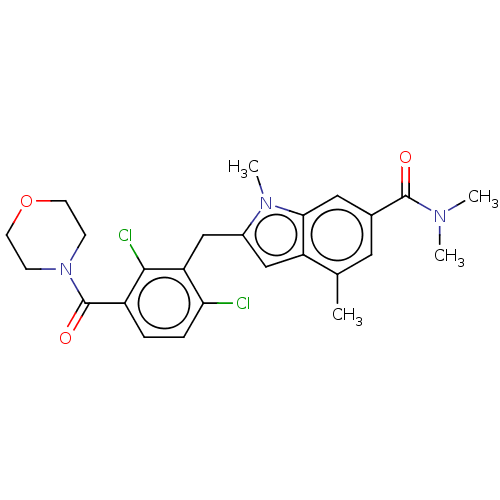
 US10106501, Example FO BDBM292844
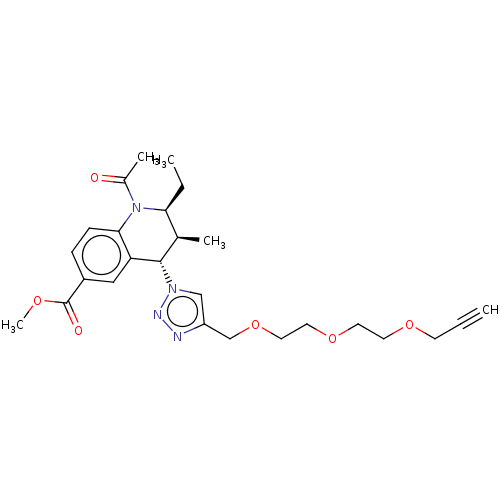 US20240287025, Reference JUP-1-102-FO BDBM693774
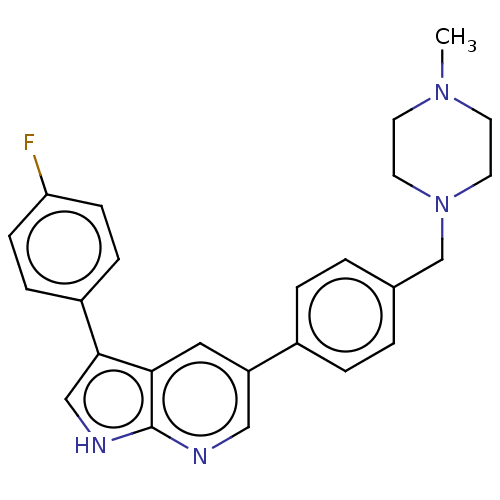 BDBM420213 US10485800, Example 169 US10485800, Cmpd ID FO
- Malamas, MS; Sredy, J; Moxham, C; Katz, A; Xu, W; McDevitt, R; Adebayo, FO; Sawicki, DR; Seestaller, L; Sullivan, D; Taylor, JR J Med Chem 43: 1293-310 (2001)
- Battiti, FO; Cemaj, SL; Guerrero, AM; Shaik, AB; Lam, J; Rais, R; Slusher, BS; Deschamps, JR; Imler, GH; Newman, AH; Bonifazi, A J Med Chem 62: 6287-6314 (2019)
- Soubhye, J; Prévost, M; Van Antwerpen, P; Zouaoui Boudjeltia, K; Rousseau, A; Furtmüller, PG; Obinger, C; Vanhaeverbeek, M; Ducobu, J; Néve, J; Gelbcke, M; Dufrasne, FO J Med Chem 53: 8747-59 (2010)
- Bach, T; Syversveen, T; Kvingedal, AM; Krobert, KA; Brattelid, T; Kaumann, AJ; Levy, FO Naunyn Schmiedebergs Arch Pharmacol 363: 146-60 (2001)
- Hammitzsch, A; Tallant, C; Fedorov, O; O'Mahony, A; Brennan, PE; Hay, DA; Martinez, FO; Al-Mossawi, MH; de Wit, J; Vecellio, M; Wells, C; Wordsworth, P; Müller, S; Knapp, S; Bowness, P Proc Natl Acad Sci U S A 112: 10768-73 (2015)
- Winfield, HJ; Cahill, MM; O'Shea, KD; Pierce, LT; Robert, T; Ruchaud, S; Bach, S; Marchand, P; McCarthy, FO Bioorg Med Chem 26: 4209-4224 (2018)
- ChEMBL_32960 (CHEMBL644524) Binding affinity fo retinoic acid receptor RAR alpha
- ChEMBL_89215 (CHEMBL699707) Affinity fo the compound against human Intestinal peptide transporter PepT1 in Caco-2 cells was measured as inhibition of [14C]Gly-Sar uptake
- Modulation of the Metabotropic Glutamate Receptor mGluR4: Selectivity at mGluR3 Assay Provider: Colleen Niswender Assay Provider Affiliation: Vanderbilt University The primary pathophysiological change giving rise to the symptoms of Parkinson's disease (PD) is a loss of the dopaminergic neurons in the substantia nigra pars compacta (SNc) that are involved in modulating the function of basal ganglia (BG) nuclei. Unfortunately, traditional therapies for treatment of PD based on dopamine replacement strategies eventually fail in most patients and are associated with numerous side effects. A great deal of effort has been focused on developing a detailed understanding of the circuitry and function of the BG to develop novel, nondopaminergic, approaches for restoring normal BG function in PD patients. Exciting advances suggest that metabotropic glutamate receptors (mGluRs), including the group III mGluRs (mGluR4, -7 and -8), play important roles in regulating transmission through the BG and could serve as targets for novel PD therapeutics (Conn et al., 2005). Fo
- Modulation of the Metabotropic Glutamate Receptor mGluR4: Selectivity at mGluR4 Assay Provider: Colleen Niswender Assay Provider Affiliation: Vanderbilt University The primary pathophysiological change giving rise to the symptoms of Parkinson's disease (PD) is a loss of the dopaminergic neurons in the substantia nigra pars compacta (SNc) that are involved in modulating the function of basal ganglia (BG) nuclei. Unfortunately, traditional therapies for treatment of PD based on dopamine replacement strategies eventually fail in most patients and are associated with numerous side effects. A great deal of effort has been focused on developing a detailed understanding of the circuitry and function of the BG to develop novel, nondopaminergic, approaches for restoring normal BG function in PD patients. Exciting advances suggest that metabotropic glutamate receptors (mGluRs), including the group III mGluRs (mGluR4, -7 and -8), play important roles in regulating transmission through the BG and could serve as targets for novel PD therapeutics (Conn et al., 2005). Fo
- Cdc25B Catalytic Domain Protein Tyrosine Phosphatase Probe Assessment Dose Response assay in 25 mM DTT and Catalase. The Cdc25B Phosphatase probe assessment dose response assay in 25 mM DTT with Catalase has been developed to assess actives that were identified in the Cdc25B HTS AID 368 and confirmed in the Cdc25B 10-pt dose response confirmation assay AID 569 conducted by the University of Pittsburgh Molecular Screening Center (PMLSC) part of the Molecular Library Screening Center Network (MLSCN). XO1 submission MH078959 Cdc25B catalytic domain in vitro assay, Assay Provider Dr. Marni Brisson, Department of Pharmacology at the University of Pittsburgh. The 107 protein tyrosine phosphatases (PTPs) found in the human genome are defined by the active site sequence C(X)5R(S/T), with X being any amino acid, and they are critical regulators of mammalian cell proliferation, differentiation, and apoptosis. The active site cysteine of PTPs is required for catalytic activity and performs a nucleophilic attack on the phosphotyrosine residues of the substrate to form a covalent thiol-phosphate intermediate fo