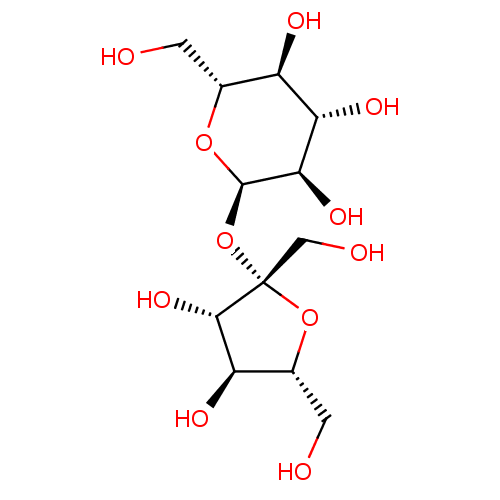
 BDBM50108105 Sucrose CHEBI:17992
- Rao, V; Alleti, R; Xu, L; Tafreshi, NK; Morse, DL; Gillies, RJ; Mash, EA A sucrose-derived scaffold for multimerization of bioactive peptides. Bioorg Med Chem 19: 6474-82 (2011)
- Tintori, C; Esposito, F; Morreale, F; Martini, R; Tramontano, E; Botta, M Investigation on the sucrose binding pocket of HIV-1 Integrase by molecular dynamics and synergy experiments. Bioorg Med Chem Lett 25: 3013-6 (2015)
- Sutherell, CL; Tallant, C; Monteiro, OP; Yapp, C; Fuchs, JE; Fedorov, O; Siejka, P; Müller, S; Knapp, S; Brenton, JD; Brennan, PE; Ley, SV Identification and Development of 2,3-Dihydropyrrolo[1,2-a]quinazolin-5(1H)-one Inhibitors Targeting Bromodomains within the Switch/Sucrose Nonfermenting Complex. J Med Chem 59: 5095-101 (2016)
- Myrianthopoulos, V; Gaboriaud-Kolar, N; Tallant, C; Hall, ML; Grigoriou, S; Brownlee, PM; Fedorov, O; Rogers, C; Heidenreich, D; Wanior, M; Drosos, N; Mexia, N; Savitsky, P; Bagratuni, T; Kastritis, E; Terpos, E; Filippakopoulos, P; Müller, S; Skaltsounis, AL; Downs, JA; Knapp, S; Mikros, E Discovery and Optimization of a Selective Ligand for the Switch/Sucrose Nonfermenting-Related Bromodomains of Polybromo Protein-1 by the Use of Virtual Screening and Hydration Analysis. J Med Chem 59: 8787-8803 (2016)
- ChEMBL_878845 (CHEMBL2184153) Inhibition of rat intestinal sucrase using sucrose as substrate
- ChEMBL_2284580 Inhibition of yeast alpha-glucosidase using sucrose as substrate preincubated for 5 mins followed by sucrose addition and measured after 30 mins by spectroscopic analysis
- ChEMBL_468820 (CHEMBL932060) Inhibition of sucrose hydrolyzing activity of rat intestinal alpha glucosidase
- ChEMBL_1436551 (CHEMBL3382931) Inhibition of rat intestinal sucrase using sucrose substrate incubated for 10 mins
- ChEMBL_2029535 (CHEMBL4683693) Inhibition of alpha-glucosidase (unknown origin) using sucrose as substrate incubated for 30 mins
- ChEMBL_1994278 (CHEMBL4628173) Positive allosteric modulation of human TIR2/TIR3 expressed in PEAKrapid cells assessed as potentiation of sucrose-induced intracellular calcium influx by measuring sucrose EC50 at 30 uM measured for 120 secs by fluorescence based assay
- ChEMBL_1506156 (CHEMBL3594632) Inhibition of sucrase in rat intestinal mucosa pre-incubated for 40 mins using sucrose substrate
- ChEMBL_976218 (CHEMBL2415867) Competitive inhibition of rat intestinal sucrase using sucrose as substrate by Lineweaver-Burk plot analysis
- ChEMBL_979086 (CHEMBL2421542) Competitive inhibition of rat intestine sucrase using sucrose as substrate by Lineweaver-Burk plot analysis
- ChEMBL_979085 (CHEMBL2421541) Non-competitive inhibition of rat intestine sucrase using sucrose as substrate by Lineweaver-Burk plot analysis
- ChEMBL_1930725 (CHEMBL4433976) Positive allosteric modulator activity at human T1R2/T1R3 expressed in PEAKrapid cells assessed as potentiation of sucrose-induced intracellular calcium influx by measuring sucrose EC50 at 30 uM measured for 120 secs by fluorescence based assay (Rvb = 31.7 mM)
- ChEMBL_1930726 (CHEMBL4433977) Positive allosteric modulator activity at human T1R2/T1R3 expressed in PEAKrapid cells assessed as potentiation of sucrose-induced intracellular calcium influx by measuring sucrose EC50 at 50 uM measured for 120 secs by fluorescence based assay (Rvb = 31.7 mM)
- ChEMBL_1554222 (CHEMBL3766261) Inhibition of rat intestinal sucrase using sucrose as substrate incubated for 30 mins by glucose-oxidase method
- ChEMBL_1583831 (CHEMBL3815263) Inhibition of rat small intestinal sucrase using sucrose as substrate incubated for 30 mins by glucose-oxidase method
- ChEMBL_1672825 (CHEMBL4022854) Inhibition of wild type C57BL/6 mouse small intestinal sucrase/isomaltase using sucrose as substrate after 30 mins
- ChEMBL_1554225 (CHEMBL3766264) Competitive inhibition of rat intestinal sucrase using sucrose as substrate incubated for 30 mins by Lineweaver-Burk plot analysis
- ChEMBL_1519498 (CHEMBL3625684) Inhibition of rat intestinal Sucrase using sucrose as substrate assessed as glucose release after 40 mins by glucose oxidase method
- ChEMBL_1519502 (CHEMBL3625688) Competitive inhibition of rat intestinal Sucrase using sucrose as substrate assessed as glucose release after 40 mins by Lineweaver-Burk plot analysis
- ChEMBL_2290740 Inhibition of sucrase in rat small intestinal brush border membrane vesicles using sucrose as substrate incubated for 30 mins by glucose-oxidase method
- ChEMBL_1519503 (CHEMBL3625689) Non-competitive inhibition of rat intestinal Sucrase using sucrose as substrate assessed as glucose release after 40 mins by Lineweaver-Burk plot analysis
- ChEMBL_804686 (CHEMBL1953208) Inhibition of rat intestinal alpha-glucosidase sucrase using sucrose as substrate preincubated for 10 mins prior substrate addition measured after 40 mins by spectrophotometry
- ChEMBL_976220 (CHEMBL2415869) Inhibition of rat intestinal sucrase using sucrose as substrate assessed as D-glucose release from substrate preincubated for 15 mins measured after 60 mins
- ChEMBL_1645848 (CHEMBL3994904) Inhibition of sucrase in rat small intestinal mucosa assessed as reduction in glucose production using sucrose as substrate measured after 40 mins by glucose oxidase assay
- ChEMBL_2284607 Inhibition of baker's yeast alpha-glucosidase using PNP as substrate preincubated for 30 mins followed by sucrose addition and measured after 1 mins by UV spectrophotometric analysis
- ChEMBL_979092 (CHEMBL2421548) Inhibition of rat intestine sucrase using sucrose as substrate incubated for 10 mins prior to substrate addition measured after 40 mins by glucose oxidase colorimetric method
- ChEMBL_2290743 Binding affinity to sucrase in rat small intestinal brush border membrane vesicles assessed as inhibition constant using sucrose as substrate incubated for 30 mins by glucose-oxidase method
- Dopamine Transporter Binding Assay Brains from male Sprague-Dawley rats weighing 200-225 g (Taconic Labs) were removed, striatum dissected and quickly frozen. Membranes were prepared by homogenizing tissues in 20 volumes (w/v) of ice cold modified sucrose phosphate buffer (0.32 M sucrose, 7.74 mM Na2HPO4, 2.26 mM NaH2PO4, pH adjusted to 7.4) using a Brinkman Polytron (setting 6 for 20 sec) and centrifuged at 20,000ug for 10 min at 4° C. The resulting pellet was resuspended in buffer, recentrifuged and resuspended in buffer to a concentration of 10 mg/ml. Ligand binding experiments were conducted in assay tubes containing 0.5 ml sucrose phosphate buffer for 120 min on ice. Each tube contained 0.5 nM 3H WIN 35428 (specific activity 84 Ci/mmol) and 1.0 mg striatal tissue (original wet weight). Nonspecific binding was determined using 0.1 mM cocaine HCl. Incubations were terminated by rapid filtration through Whatman GF/B filters, presoaked in 0.05% PEI (polyethyleneimine), using a Brandel R48 filtering manifold (Brandel Instruments Gaithersburg, Md.). The filters were washed twice with 5 ml cold buffer and transferred to scintillation vials.
- ChEMBL_1506590 (CHEMBL3598343) Inhibition of His-tagged HIV-1 integrase-mediated 3' processing and strand transfer reactions using 5'-ACAGGCCTAGCACGCGTCG-Biotin-3' annealed with 5'-CGACGCGTGGTAGGCCTGT-Biotin3'/5'-Cy5-ATGTGGAAAATCTCTAGCAGT-3' annealed with 5'-Cy5-TGAGCTCGAGATTTTCCACAT-3' as donar/acceptor DNA substrate preincubated for 1 hr followed by DNA and LEDGF/p75 addition measured after 90 mins by HTRF assay in presence of 300 mM sucrose
- Binding Assay Microplates were coated with recombinant human integrin αVβ6 (2 μg/mL) in PBS (100 μL/well 25° C., overnight). The coating solution was removed, washed with wash buffer (0.05% Tween 20; 0.5 mM MnCl2; in 1×TBS). The plate was blocked with 200 μL/well of Block Buffer (1% BSA; 5% sucrose; 0.5 mM MnCl2; in 1×TBS) at 37° C. for 2 h. Dilutions of testing compounds and recombinant TGFβ1 LAP (0.67 μg/mL) in binding buffer (0.05% BSA; 2.5% sucrose; 0.5 mM MnCl2; in 1×TBS) were added. The plate was incubated for 2 hours at 25° C., washed, and incubated for 1 hour with Biotin-Anti-hLAP. Bound antibody was detected by peroxidase-conjugated streptavidin. The IC50 values for testing compounds were calculated by a four-parameter logistic regression.
- Binding Assay Microplates were coated with recombinant human integrin αvβ6 (2 ug/ml) in PBS (100 ul/well 25° C., overnight). The coating solution was removed, washed with wash buffer (0.05% Tween 20; 0.5 mM MnCl2; in 1×TBS). Plate was blocked with 200 ul/well of Block Buffer (1% BSA; 5% sucrose; 0.5 mM MnCl2; in 1×TBS) at 37° C. for 2 h. Dilutions of testing compounds and recombinant TGFβ1 LAP (0.67 ug/ml) in binding buffer (0.05% BSA; 2.5% sucrose; 0.5 mM MnCl2; in 1×TBS) were added. The plate was incubated for 2 hours at 25° C., washed, and incubated for 1 hour with Biotin-Anti-hLAP. Bound antibody was detected by peroxidase-conjugated streptavidin. The IC50 values for testing compounds were calculated by a four-parameter logistic regression.
- Solid Phase Integrin alphaVbeta6 Binding Assay Microplates were coated with recombinant human integrin alphavbeta6 (2 ug/mL) in PBS (100 uL/well 25 C., overnight). The coating solution was removed, washed with wash buffer (0.05% Tween 20; 0.5 mM MnCl2; in 1x TBS). The plate was blocked with 200 uL/well of Block Buffer (1% BSA; 5% sucrose; 0.5 mM MnCl2; in 1x TBS) at 37 C. for 2 h. Dilutions of testing compounds and recombinant TGFbeta1 LAP (0.67 ug/mL) in binding buffer (0.05% BSA; 2.5% sucrose; 0.5 mM MnCl2; in 1x TBS) were added. The plate was incubated for 2 hours at 25 C., washed, and incubated for 1 hour with Biotin-Anti-hLAP. Bound antibody was detected by peroxidase-conjugated streptavidin. The IC50 values for testing compounds were calculated by a four-parameter logistic regression.
- Solid Phase Integrin alphavbeta6 Binding Assay Microplates were coated with recombinant human integrin αvβ6 (2 ug/ml) in PBS (100 ul/well 25° C. overnight). The coating solution was removed, washed with wash buffer (0.05% Tween 20; 0.5 mM MnCl2; in 1×TBS). Plate was blocked with 200 ul/well of Block Buffer (1% BSA; 5% sucrose; 0.5 mM MnCl2; in 1×TBS) at 37° C. for 2 h. Dilutions of testing compounds and recombinant TGFβ1 LAP (0.67 ug/ml) in binding buffer (0.05% BSA; 2.5% sucrose; 0.5 mM MnCl2; in 1×TBS) were added. The plate was incubated for 2 hours at 25° C., washed, and incubated for 1 hour with Biotin-Anti-hLAP. Bound antibody was detected by peroxidase-conjugated streptavidin. The IC50 values for testing compounds were calculated by a four-parameter logistic regression.
- Binding Assay Dopamine Transporter Binding Assay. Brains from male Sprague-Dawley rats weighing 200-225 g (Taconic Labs) were removed, striatum dissected and quickly frozen. Membranes were prepared by homogenizing tissues in 20 volumes (w/v) of ice cold modified sucrose phosphate buffer (0.32 M sucrose, 7.74 mM Na2HPO4, 2.26 mM NaH2PO4, pH adjusted to 7.4) using a Brinkman Polytron (setting 6 for 20 sec) and centrifuged at 20,000×g for 10 min at 4° C. The resulting pellet was resuspended in buffer, recentrifuged and resuspended in buffer to a concentration of 10 mg/ml. Ligand binding experiments were conducted in assay tubes containing 0.5 ml sucrose phosphate buffer for 120 min on ice. Each tube contained 0.5 nM 3H WIN 35428 (specific activity 84 Ci/mmol) and 1.0 mg striatal tissue (original wet weight). Nonspecific binding was determined using 0.1 mM cocaine HCl. Incubations were terminated by rapid filtration through Whatman GF/B filters, presoaked in 0.05% PEI (polyethyleneimine), using a Brandel R48 filtering manifold (Brandel Instruments Gaithersburg, Md.). The filters were washed twice with 5 ml cold buffer and transferred to scintillation vials. Beckman Ready Safe (3.0 ml) was added and the vials were counted the next day using a Beckman 6000 liquid scintillation counter (Beckman Coulter Instruments, Fullerton, Calif.). Data were analyzed by using GraphPad Prism software (San Diego, Calif.).
- Dopamine Transporter Binding Assay Dopamine Transporter Binding Assay. Brains from male Sprague-Dawley rats weighing 200-225 g (Taconic Labs) were removed, striatum dissected and quickly frozen. Membranes were prepared by homogenizing tissues in 20 volumes (w/v) of ice cold modified sucrose phosphate buffer (0.32 M sucrose, 7.74 mM Na2HPO4, 2.26 mM NaH2PO4, pH adjusted to 7.4) using a Brinkman Polytron (setting 6 for 20 sec) and centrifuged at 20,000×g for 10 min at 4° C. The resulting pellet was resuspended in buffer, recentrifuged and resuspended in buffer to a concentration of 10 mg/ml. Ligand binding experiments were conducted in assay tubes containing 0.5 ml sucrose phosphate buffer for 120 min on ice. Each tube contained 0.5 nM 3H WIN 35428 (specific activity 84 Ci/mmol) and 1.0 mg striatal tissue (original wet weight). Nonspecific binding was determined using 0.1 mM cocaine HCl. Incubations were terminated by rapid filtration through Whatman GF/B filters, presoaked in 0.05% PEI (polyethyleneimine), using a Brandel R48 filtering manifold (Brandel Instruments Gaithersburg, Md.). The filters were washed twice with 5 ml cold buffer and transferred to scintillation vials. Beckman Ready Safe (3.0 ml) was added and the vials were counted the next day using a Beckman 6000 liquid scintillation counter (Beckman Coulter Instruments, Fullerton, Calif.). Data were analyzed by using GraphPad Prism software (San Diego, Calif.).
- Caspase Catalytic Activity Assay Experiments were performed in a 384-well format (Greiner no. 781207) as per the conditions noted here. Caspase-1: 2.5 nM enzyme, 6.5 mM WEHD substrate, ECB; Caspase-3: 200 nM enzyme, 3.3 mM DEVD substrate, SCB; Caspase-4: 1 nM enzyme, 10 mM LEHD substrate, HCB; Caspase-5: 20 nM enzyme, 10 mM LEHD substrate, HCB; Caspase-9: 200 nM enzyme, 6.5 mM LEHD substrate, HCB. ECB (Enzo Caspase Buffer): 50 mM HEPES (pH 7.4), 100 mM NaCl, 0.5% Tween 20, 10 mM DTT, and 10% glycerol; SCB (Standard Caspase Buffer): 20 mM PIPES (pH 7.5), 100 mM NaCl, 1 mM EDTA, 10 mM DTT, and 10% sucrose; HCB (High-Citrate Buffer): 50 mM Tris-HCl (pH 7.5), 1 M sodium citrate, 10 mM DTT, and 10% sucrose. Activity was measured as the change in luminescent signal for at least 30 min.
- Solid Phase Integrin αVβ6 Binding Assay Microplates were coated with recombinant human integrin αVβ6 (2 μg/mL) in PBS (100 μL/well 25 OC, overnight). The coating solution was removed, washed with wash buffer (0.05% Tween 20; 0.5 mM MnCl2; in 1×TBS). Plate was blocked with 200 μL/well of Block Buffer (1% BSA; 5% sucrose; 0.5 mM MnCl2; in 1×TBS) at 37° C. for 2 h. Dilutions of testing compounds and recombinant TGFβ1 LAP (0.67 μg/mL) in binding buffer (0.05% BSA; 2.5% sucrose; 0.5 mM MnCl2; in 1×TBS) were added. The plate was incubated for 2 hours at 25° C., washed, and incubated for 1 hour with Biotin-Anti-hLAP. Bound antibody was detected by peroxidase-conjugated streptavidin. The IC50 values for testing compounds were calculated by a four-parameter logistic regression.
- Solid Phase Integrin alphaVbeta6 Binding Assay Microplates were coated with recombinant human integrin αVβ6 (2 μg/mL) in PBS (100 μL/well 25° C., overnight). The coating solution was removed, washed with wash buffer (0.05% Tween 20; 0.5 mM MnCl2; in 1×TBS). The plate was blocked with 200 μL/well of Block Buffer (1% BSA; 5% sucrose; 0.5 mM MnCl2; in 1×TBS) at 37° C. for 2 h. Dilutions of testing compounds and recombinant TGFβ1 LAP (0.67 μg/mL) in binding buffer (0.05% BSA; 2.5% sucrose; 0.5 mM MnCl2; in 1×TBS) were added. The plate was incubated for 2 hours at 25° C., washed, and incubated for 1 hour with Biotin-Anti-hLAP. Bound antibody was detected by peroxidase-conjugated streptavidin. The IC50 values for testing compounds were calculated by a four-parameter logistic regression.
- Solid Phase Integrin alphav/beta6 Binding Assay (B-1) Microplates were coated with recombinant human integrin αvβ6 (2 μg/mL) in PBS (100 μL/well 25° C., overnight). The coating solution was removed, washed with wash buffer (0.05% Tween 20; 0.5 mM MnCl2; in 1×TBS). The plate was blocked with 200 μL/well of Block Buffer (1% BSA; 5% sucrose; 0.5 mM MnCl2; in 1×TBS) at 37° C. for 2 h. Dilutions of testing compounds and recombinant TGFβ1 LAP (0.67 μg/mL) in binding buffer (0.05% BSA; 2.5% sucrose; 0.5 mM MnCl2; in 1×TBS) were added. The plate was incubated for 2 hours at 25° C., washed, and incubated for 1 hour with Biotin-Anti-hLAP. Bound antibody was detected by peroxidase-conjugated streptavidin. The IC50 values for testing compounds were calculated by four-parameter logistic regression.
- Solid Phase Integrin alphavbeta6 Binding Assay Microplates were coated with recombinant human integrin αvβ6 (2 μg/mL) in PBS (100 μL/well 25° C., overnight). The coating solution was removed, washed with wash buffer (0.05% Tween 20; 0.5 mM MnCl2; in 1×TBS). The plate was blocked with 200 μL/well of Block Buffer (1% BSA; 5% sucrose; 0.5 mM MnCl2; in 1×TBS) at 37° C. for 2 h. Dilutions of testing compounds and recombinant TGFβ1 LAP (0.67 μg/mL) in binding buffer (0.05% BSA; 2.5% sucrose; 0.5 mM MnCl2; in 1×TBS) were added. The plate was incubated for 2 hours at 25° C., washed, and incubated for 1 hour with Biotin-Anti-hLAP. Bound antibody was detected by peroxidase-conjugated streptavidin. The IC50 values for testing compounds were calculated by a four-parameter logistic regression.
- Binding Assay Receptor binding assay: Membranes were prepared from CHO cells expressing S1P1 or S1P3 for use in ligand and 35S-GTPγS binding studies. Cells were suspended in 50 mM TRIS, pH 7.4, 2 mM EDTA, 250 mM Sucrose (buffer A) and 1 Complete protease inhibitor cocktail (Roche), and disrupted at 4 C. by N2 decompression using a cell disruption bomb (Parr Instrument). Following centrifugation at 1000 RPM for 10 min at 4 C., the supernatant was suspended in buffer A and centrifuged again at 19000 RPM for 60 min at 4 C. The pellet was then suspended in 10 mM HEPES, pH 7.4, 1 mM EDTA, 250 mM Sucrose (Buffer B), and 1xComplete EDTA-free protease inhibitor cocktail and homogenized using a potter. Membranes were flash frozen in liquid N2 and stored at −80 C. [33P]sphingosine 1-phosphate (3000 Ci/mmol; American Radiolabeled Chemicals, Inc.) was added to test compounds in DMSO.
- Nav1.5 Assay To assess the potential cardiac liability of compounds at an early stage in the drug discovery process, a Nav1.5 sodium channel screening assay was be performed on Molecular Device's PatchXpress™ automated electrophysiology platform. Under voltage-clamp conditions, Nav1.5 currents were recorded from HEK cells expressing the human Nav1.5 channel in the absence and presence of increasing concentrations of the test compound to obtain an IC50 value. The external recording solution contained (in mM): 90 TEACl, 50 NaCl, 1.8 CaCl, 1 MgCl2, 10 HEPES, 10 glucose, adjusted to pH 7.4 with TEA-OH and to 300 mOsm with sucrose (if necessary), while the internal patch pipette solution contained (in mM): 129 CsF, 2 MgCl2, 11 EGTA, 10 HEPES, 3 Na2ATP adjusted to pH 7.2 with CsOH and to 290 mOsm with sucrose (if necessary). Nav1.5 channel currents were evoked using a cardiac action potential waveform at 1 Hz, digitized at 31.25 kHz and low-pass filtered at 12 kHz.
- BIOLOGICAL ACTIVITY Reagents and instruments: radiolabeled dihydrotestosterone (DHT-d3) and unlabelled dihydrotestosterone (DHT) purchased from Sigma-Aldrich (St. Louis, Mo.), scintillation solution purchased from Perkin Elmer Life Sciences (Boston, Mass.), hydroxyapatite (HAP) suspension purchased from Bio-Rad Laboratories (Hercules, Calif.), buffer (containing 10 mM Tris, 1.5 mM disodium EDTA, 0.25 M sucrose, 10 mM sodium molybdate and 1 mM PMSF, pH value adjusted to 7.4), and hydroxyapatite (HAP) solution (containing 50 mM Tris and 1 mM KH2PO4, pH value adjusted to 7.4).
- Binding Assay Fluorescent Imaging Plate Reader (FLIPR) assay: Briefly, 293-human or mouse P2X7 stable cells were incubated in sucrose buffer, pH 7.4 [KCl (5 mM), NaH2PO4.2H2O (9.6 mM), HEPES (25 mM), sucrose (280 mM), glucose (5 mM), CaCl2 (0.5 mM), and probenecid (0.1425 g in 3 mL 1N NaOH was added for 500 mL solution)] in 384-well plates.293-rat P2X7 stable cells were incubated in HHPB (pH 7.4) [consisting of Hank's BSS (1×); HEPES (pH 7.4) (20 mM) (Sigma); probenecid (0.710g/5 mL 1N NaOH) (Sigma); and BSA (0.05%) (Roche) which was added after the pH had been adjusted] in 384-well plates. Fluo-4 NW dye mix (Molecular Probes, Inc., Eugene, Oreg., USA) was prepared in buffer (see manufacturer's instructions). Cell plates were removed from the 37° C. incubator, the media discarded and then 30 μL of dye was added to each well. Plates were placed in the 37° C., non-CO2 incubator for 30 minutes and then room temperature for 30 minutes.
- Binding Assay Membranes were prepared from CHO cells expressing S1P1 or S1P3 for use in ligand and 35S-GTPgammaS binding studies. Cells were suspended in 50 mM TRIS, pH 7.4, 2 mM EDTA, 250 mM Sucrose (buffer A) and 1x Complete protease inhibitor cocktail (Roche), and disrupted at 4° C. by nitrogen decompression using a cell disruption bomb (Parr Instrument). Following centrifugation at 1000 RPM for 10 min at 4° C., the supematant was suspended in buffer A and centrifuged again at 19000 RPM for 60 min at 4 C. The pellet was then suspended in 10 mM HEPES, pH 7.4, 1 mM EDTA, 250 mM Sucrose (Buffer B), and 1x Complete EDTA-free protease inhibitor cocktail and homogenized using a potter. Membranes were flash frozen in liquid nitrogen and stored at -80° C. [33P]sphingosine 1-phosphate (3000 Ci/mmol; American Radiolabeled Chemicals, Inc.) was added to test compounds in DMSO. Membranes and WGA SPA beads (GE Healthcare) were added to give a final volume of 100 ul in 96-well plates.
- Enzyme Inhibition Assay Human SCD-1 enzyme activity using HepG2 cell microsomes after treating with inhibitory compounds (% inhibition):Human hepatocarcinoma HepG2 cells (ATCC, HB-8065) are cultured to confluence and trypsinised. The cell pellet is taken up with 10 mM Tris (pH 7.4) sucrose (250 mM) DTT (1 mM) buffer and the cells are lysed by sonication. The microsomes are obtained after centrifugation at 10,000 g for 20 minutes at 4 C. followed by centrifugation of the supernatant at 100,000 g for 60 minutes at 4 C. The pellet is taken up with 10 mM Tris (pH 7.4) sucrose (250 mM) buffer at 4 C. and the microsomal proteins are assayed and stored at -196 C. (liquid nitrogen).The enzyme reaction measures the conversion of stearic acid (C18:0 fatty acid) to oleic acid (C18:1 fatty acid) by SCD-1. The enzyme reaction is started by adding 125 ug of HepG2 cell microsomal fraction to tubes (total reaction volume of 500 ul) containing 62 uM of stearic acid.
- In Vitro Assay Fluorescent Imaging Plate Reader (FLIPR) assay: Briefly, 293-human or mouse P2X7 stable cells were incubated in sucrose buffer, pH 7.4 [KCl (5 mM), NaH2PO4.2H2O (9.6 mM), HEPES (25 mM), sucrose (280 mM), glucose (5 mM), CaCl2 (0.5 mM), and probenecid (0.1425 g in 3 mL 1N NaOH was added for 500 mL solution)] in 384-well plates. 293-rat P2X7 stable cells were incubated in HHPB (pH 7.4) [consisting of Hank's BSS (1×); HEPES (pH 7.4) (20 mM) (Sigma); probenecid (0.710 g/5 mL 1N NaOH) (Sigma); and BSA (0.05%) (Roche) which was added after the pH had been adjusted] in 384-well plates. Fluo-4 NW dye mix (Molecular Probes, Inc., Eugene, Oreg., USA) was prepared in buffer (see manufacturer's instructions). Cell plates were removed from the 37° C. incubator, the media discarded and then 30 μL of dye was added to each well. Plates were placed in the 37° C., non-CO2 incubator for 30 minutes and then room temperature for 30 minutes.
- In Vitro Assay Receptor binding assay: Membranes were prepared from CHO cells expressing S1P1 or S1P3 for use in ligand and 35S-GTPgammaS binding studies. Cells were suspended in 50 mM TRIS, pH 7.4, 2 mM EDTA, 250 mM Sucrose (buffer A) and 1x Complete protease inhibitor cocktail (Roche), and disrupted at 4 C. by nitrogen decompression using a cell disruption bomb (Parr Instrument). Following centrifugation at 1000 RPM for 10 min at 4 C, the supernatant was suspended in buffer A and centrifuged again at 19000 RPM for 60 min at 4 C. The pellet was then suspended in 10 mM HEPES, pH 7.4, 1 mM EDTA, 250 mM Sucrose (Buffer B), and 1x Complete EDTA-free protease inhibitor cocktail and homogenized using a potter. Membranes were flash frozen in liquid nitrogen and stored at -80 C. [33P]sphingosine 1-phosphate (3000 Ci/mmol; American Radiolabeled Chemicals, Inc.) was added to test compounds in DMSO. Membranes and WGA SPA beads (GE Healthcare) were added to give a final volume of 100 ul in 96-well plates.
- Receptor Binding Assay Receptor binding assay: Membranes were prepared from CHO cells expressing S1P1 or S1P3 for use in ligand and 355-GTPgammaS binding studies. Cells were suspended in 50 mM TRIS, pH 7.4, 2 mM EDTA, 250 mM Sucrose (buffer A) and 1x Complete protease inhibitor cocktail (Roche), and disrupted at 4 C. by N2 decompression using a cell disruption bomb (Parr Instrument). Following centrifugation at 1000 RPM for 10 min at 4 C., the supernatant was suspended in buffer A and centrifuged again at 19000 RPM for 60 min at 4 C. The pellet was then suspended in 10 mM HEPES, pH 7.4, 1 mM EDTA, 250 mM Sucrose (Buffer B), and 1x Complete EDTA-free protease inhibitor cocktail and homogenized using a potter. Membranes were flash frozen in liquid N2 and stored at --80 C. [33P]sphingosine 1-phosphate (3000 Ci/mmol; American Radiolabeled Chemicals, Inc.) was added to test compounds in DMSO. Membranes and WGA SPA beads (GE Healthcare) were added to give a final volume of 100 ul in 96-well plates.
- Enzymatic Assay Lysosomal NAAA protein preparation were obtained by homogenizing male Sprague-Dawley rat lungs (Charles River) in 20 mM Tris-HCl buffer pH 7.4 containing 0.32M sucrose. Samples were centrifuged at 800×g for 15 minutes at 4° C. Supernatants were then centrifuged at 12,000 g for 30 minutes at 4° C. Pellets were then resuspended in PBS pH 7.4 and subjected to a freeze/thaw cycle at −80° C. The suspension was finally centrifuged at 105,000×g for 1 hour at 4° C. The supernatant was then used in the enzymatic assay.
- In vitro ATRA 4-Hydroxylase Activity Assay All procedures were carried out under minimal light in order to prevent degradation of the retinoid samples.Microsomal preparation: one lobe of fresh pig liver was obtained at the time of slaughter from a food-processing company and immediately placed in ice cold 15 mM KH2PO4/250 mM sucrose (pH 7.4) and kept on ice during transportation. A 10 g sample of liver was minced and homogenized in 30 mls of homogenization buffer (15 mM KH2PO4/250 mM sucrose) using a Tekmar homoginizer by pulsing 3 times 20 second pulses. This procedure was repeated for a total of 8x10 g samples of pig liver. The remaining pig liver was cut into 10-g pieces and wrapped in aluminum foil and stored at -80 °C. The homogenates from the 8 samples were pooled and centrifuged at 13,000xg for 20 minutes at 4 °C. to remove crude debris and the supernatant was further centrifuged at 100,000xg for 70 minutes at 4 °C. The microsomal pellets were resuspended into 50 mls of 150 mM KH2PO4/1 mM DTT (pH 7.4).
- Solid Phase Integrin alphav/beta6 Binding Assay (B-2) A third series of exemplary compounds was selected for testing in the solid phase integrin αvβ6 binding assay. The compounds tested were compound samples prepared according to procedures described in the Synthetic Examples section, with the stereochemical purity as indicated in the Examples. As in Example B1, microplates were coated with recombinant human integrin αvβ6 (2 μg/mL) in PBS (100 μL/well 25° C., overnight). The coating solution was removed, washed with wash buffer (0.05% Tween 20; 0.5 mM MnCl2; in 1×TBS). The plate was blocked with 200 μL/well of Block Buffer (1% BSA; 5% sucrose; 0.5 mM MnCl2; in 1×TBS) at 37° C. for 2 h. Dilutions of testing compounds and recombinant TGFβ1 LAP (0.67 μg/mL) in binding buffer (0.05% BSA; 2.5% sucrose; 0.5 mM MnCl2; in 1×TBS) were added. The plate was incubated for 2 hours at 25° C., washed, and incubated for 1 hour with Biotin-Anti-hLAP. Bound antibody was detected by peroxidase-conjugated streptavidin. The IC50 values for testing compounds were calculated by a four-parameter logistic regression.
- null Microsomal preparation: One lobe of fresh pig liver is obtained (e.g., at about the time of slaughter from a food-processing company) and immediately placed in ice cold 15 mM KH2PO4/250 mM sucrose (pH 7.4) and kept on ice during transportation. A 10 g sample of liver is minced and homogenized in 30 mL of homogenization buffer (15 mM KH2PO4/250 mM sucrose) using a Tekmar homoginizer or equivalent by pulsing 3 times with 20 second pulses. This procedure is repeated for a total of 8x10 g samples of pig liver. The remaining pig liver may be stored at -80 C. The homogenates from the 8 samples are pooled and centrifuged at 13,000xg for 20 minutes at 4 C. to remove crude debris. The supernatant is further centrifuged at 100,000xg for 70 minutes at 4° C. The microsomal pellets are re-suspended into 50 mL of 150 mM KH2PO4/1 mM DTT (pH 7.4) and 1 mL aliquots are stored at -80 C.100-150 ug of pig liver microsomal protein in 150 mM KH2PO4 is incubated at 37° C.
- Inhibition Assay All assays were performed at 100 µL total volume in triplicate and monitored for 60 minutes at room temperature in a 96-well plate format in HEPES Buffer (100 mM HEPES, 100 mM NaCl, 0.1% CHAPS, 10% sucrose, pH 7.5) on a BioTek Synergy H1 plate reader. Fluorescence was measured with excitation and emission wavelengths of 380 nm and 460 nm, respectively. Caspase-1 was activated with 100 µM DTT for 30 minutes and held constant at 5 nM for all assays. WEHD-AMC was used as a substrate for all assays at 10 µM unless otherwise specified and reactions were monitored immediately upon addition to caspase-1.
- Ethidium Bromide Uptake Assay hP2X7-expressing HEK 293 cells were re-suspended at 2.5 × 10^6 cells/mL in assay buffer composed of 10 mM HEPES, 5 mM N-methyl-D-glutamine, 5.6 mM KCl, 10 mM D-glucose, and 0.5 mM CaCl2 (pH 7.4) supplemented with either 280 mM sucrose or 140 mM NaCl, and an 80 µL aliquot was added to each well of a 96-well plate. To each compound were added and KN-62 as the positive control, followed by the hP2X7R agonist benzoyl ATP (BzATP). The plates were incubated at 37 °C for 2 h and the cellular accumulation of ethidium ion was determined by measuring fluorescence (excitation = 530 nm; emission = 590 nm).
- Calcein Quenching Fluostar Assay A calcein quenching fluostar assay was performed in order to investigate the biological activity of the newly synthesized examples 1 to 57. This type of assay is disclosed in J. Biol. Chem., 2011, 286, 44319-44325 and Am. J. Physiol. Renal Physiol. (2010), 298, F224-230.The buffers used in the assay were prepared with the following compounds and quantities.500 ml of 4× buffer:3.2 mM MgSO4.7H2O (0.395 g)20 mM KCl (0.746 g)7.2 mM CaCl.2H2O (0.530 g)100 mM NaHepes (13.02 g)pH 7.4 w. HClTetracyclin Stock: Wash buffer (μl) Sucrose buffer (μl) 4x buffer 80000 35000 NaCl (1M) 34080 14910 H2O 199520 18970 Probenecid 6400 2800 Sucrose (1M) 0 68320 Total 320000 140000The total probenecid required to prepare the wash buffer and sucrose buffer is 6400+2800=9200 μl. An additional 500 μl of probenecid (5 plates at 100 μl each) is also required. Therefore, the total probenecid required is 9200 μl+500 μl=9700 μl. Sufficient probenecid is prepared using:690 mg probenecid;4850 μl NaOH 1M;1213 μl 4× buffer; and3638 μl H2O.Assay Experimental Protocol:1) Two days prior to commencement of the assay, seed 10,000 cells/well of 96 well black clear bottom plate (Greiner Poly-lysin plate). A 1:1 mix of Dulbecco's Modified Eagle's Medium: Nutrient Mixture F-12 (DMEM: F12) was obtained from Gibco. Tetracycline stock of 5 mg/ml in 96% ethanol is used. Medium: DMEM/F12/10% Donor Bovine Serum, Human AQP9 cell line+1:270,000 tetracyclin, mouse AQP9 cell line+1:2,700,000 tetracycline.2) Day of assay: Flick/slam off the medium and add 50 μl/well of loading solution: 5 ml DMEM/F12/10% Donor Bovine Serum, 25 μl Calcein AM from freshly dissolved aliquot in 50 μl DMSO (VWR #734-1434), and 100 μl Probenecid.3) Incubate the well for 90 minutes at 37° C.4) Perform one wash with 75 μl wash buffer.5) Add 75 μl of an example compound prepared in wash buffer per well.Example compounds are prepared in 500 μl U bottom PP plates (NUNC). 2.7 μl Substance in DMSO are added to row A; 180 μl of wash buffer+1% DMSO are added to rows B H. 90 μl from row A are transferred and mixed with all other wells (up to row G) to make a 3-fold dilution series.6) Assay in FLUOstar Optima at 25° C. Settings buffer addition at 135 μl/seconds, add 75 μl/well, record time course for 30 seconds, add sucrose buffer 3.6 seconds into recording.7) Normalization to initial in Excel.8) Fit to exponential decay function in GraphPad Prism 5.0, then arrange half live shrinking values according to wells and fit dose-response curves.
- Biochemical Assay for Inhibition of LpxC Dilutions of test compound were pre-incubated with 5 nM P. aeruginosa or E. coli LpxC for 10 minutes at room temperature in 50 mM NaH2PO4, 500 mM sucrose, 0.2 mg/mL BSA, pH 7.2 and <1% DMSO. Reactions were initiated by the addition of 2× substrate (UDP-3-O—(R-3-hydroxydecanoyl)-N-acetylglucosamine, Carbosynth Ltd, UK, for P. aeruginosa LpxC and UDP-3-O—(R-3-hydroxymyristoyl)-N-acetylglucosamine, BOC Sciences, USA, for E. coli LpxC), in 50 mM NaH2PO4, 0.5 mg/mL BSA, pH 7.2, to a final concentration of 2.5 μM. Reactions proceeded for 1 hour at room temperature prior to quenching with and equal volume of 2% acetic acid.
- Inhibition Assay Assay buffers consist of 20 mM citric acid, 60 mM disodium hydrogen orthophosphate, 1 mM EDTA, 0.1% CHAPS, 4 mM DTT, pH 5.8 for legumain, 50 mM dihydrogen sodium orthophosphate, 1 mM EDTA, 5 mM DTT, pH 6.25 for cathepsin B and cathepsin Land 100 mM Tris, 0.1% CHAPS, 10% sucrose, 10 mM DTT, pH 7.4 for caspase-3. Concentrations of substrates during the measurement were 10 nM (legumain, cathepsin Land caspase-3) and 50 nM (cathepsin B) and concentration of enzymes were 100 nM for cathepsin Land caspase-3, 270 nM for legumain and 360 nM for cathepsin B. Each enzyme was incubated with inhibitor concentrations ranging from 1 nM to 1 mM in the presence of the substrates.
- Inhibitory Effect on hCYP11B2 The pcDNA3.1-human CYP11B2 plasmid was transfected into a Chinese hamster lung fibroblast V79 cell line to produce a cell line stably expressing human CYP11B2 gene.The cells were cultured and grown in the Dulbecco's modified Eagle's/Ham's medium supplemented with 10% fetal bovine serum and 1% G418 disulfate solution under the environment of 37° C., 95% air, and 5% CO2, and the grown cells were harvested.Then, the cells were fractionated to obtain mitochondria by reference to a method described in Chabre et al. JCE 86 M 85 (11) 4060-68, 2000. In particular, the cells suspended in a 5 mmol/L Tris-HCl buffer (pH 7.4) containing 250 mmol/L sucrose were homogenized in a Teflon (Registered Trademark) Potter Elvehjem homogenizer, and then the suspension was centrifuged (800×g, 15 min.). The supernatant was separated and again centrifuged (10000×g, 15 min.) to obtain a pellet (mitochondrial fraction).The mitochondrial fraction diluted with a buffer containing 10 mmol/L KH2PO4, 10 mmol/L Tris, 20 mmol/L KCl, 25 mmol/L sucrose, 5 mmol/L MgCl2, and 0.05% bovine serum albumin was dispensed to a 96-well plate. 0.5 μmol/L Deoxycorticosterone, 150 μmol/L NADPH and a compound of each concentration were added to each well, and incubated for 1.5-2 hours at room temperature to produce aldosterone. An amount of the produced aldosterone in the incubated solution was determined by using HTRF (Homogeneous Time Resolved Fluorescence) method.IC 50 (nmol/L) was calculated by analyzing the aldosterone production inhibition rate (%) of each concentration of compounds by non-linear regression to a logistic curve.
- Assay for Dopamine Reuptake Inhibition Uptake inhibition assay for the dopamine transporter was conducted in rat brain synaptosomes as described elsewhere with minor modifications (Rothman et al., Synapse 39, 32-41 (2001)). Freshly removed caudate was homogenized in 10% ice-cold sucrose with 12 strokes of a hand-held Potter-Elvehjem homogenizer followed by centrifugation at 1000×g for 10 min. The supernatants were saved on ice and used immediately. Transporter activity was assessed using 5 nM [3H]dopamine. The assay buffer was Krebs-phosphate buffer containing 154.4 mM NaCl, 2.9 mM KCl, 1.1 mM CaCl2, 0.83 mM MgCl2, 5 mM glucose, 1 mg/mL ascorbic acid, and 50 μM pargyline. The selectivity of the uptake assay for DAT was optimized by including 100 nM citalopram and 100 nM desipramine as blockers of SERT and NET in the sucrose solution and assay buffer. Uptake inhibition assays were conducted at 25° C. and were initiated by adding 100 μl of tissue to 900 μL assay buffer containing test drug and [3H]dopamine. Test drugs were diluted in assay buffer containing 1 mg/mL bovine serum albumin. Nonspecific uptake was measured by incubating in the presence of 10 μM indatraline. The reactions were stopped after 15 minutes by rapid vacuum filtration with a cell harvester (BRANDEL) over GF/B filters (Whatman) presoaked in wash buffer maintained at 25° C. (10 mM Tris-HCl, pH 7.4/150 mM NaCl). Filters were rinsed with 6 mL wash buffer and retained tritium was quantified by a MicroBeta liquid scintillation counter (PerkinElmer) after overnight extraction in 0.6 mL of liquid scintillation cocktail (Cytoscint, ICN). The data from three experiments were pooled and fit to a dose-response curve equation (using Kaleidagraph), to yield an Emax and EC50 value.
- Binding Assay Cell culture: 293 HEK cells, stably transfected with plasmids capable of expressing human P2X7 receptor, were cultured by standard methods. Cells were plated to cell density of approximately 15,000 cells/well in 384-well assay plates (50 μl/well) with 1.5% low serum media (DMEM, 1.5% BCS, 1% L-glut (2 mM), 1% P/S).293 HEK cells, stably transfected with plasmids capable of expressing rat or mouse P2X7 receptor, were cultured by standard methods. Cells were plated to cell density of approximately 15,000 cells/well in 384-well assay plates (50 μl/well) with 1.5% low serum media (DMEM, 1.5% FBS, 1% L-glut (2 mM), 10 mM HEPES, 1% P/S). Cells were plated 24 hours prior to assay. Cells expressing human, rat or mouse P2X7 receptor were assayed in the following manner.Fluorescent Imaging Plate Reader (FLIPR) assay: Briefly, 293-human or mouse P2X7 stable cells were incubated in sucrose buffer, pH 7.4 [KCl (5 mM), NaH2PO4.2H2O (9.6 mM), HEPES (25 mM), sucrose (280 mM), glucose (5 mM), CaCl2 (0.5 mM), and probenecid (0.1425 g in 3 mL 1N NaOH was added for 500 mL solution)] in 384-well plates.293-rat P2X7 stable cells were incubated in HHPB (pH 7.4) [consisting of Hank's BSS (1×); HEPES (pH 7.4) (20 mM) (Sigma); probenecid (0.710 g/5 mL 1N NaOH) (Sigma); and BSA (0.05%) (Roche) which was added after the pH had been adjusted] in 384-well plates. Fluo-4 NW dye mix (Molecular Probes, Inc., Eugene, Oreg., USA) was prepared in buffer (see manufacturer's instructions). Cell plates were removed from the 37° C. incubator, the media discarded and then 30 μL of dye was added to each well. Plates were placed in the 37° C., non-CO2 incubator for 30 minutes and then room temperature for 30 minutes.
- Fluorescent Imaging Plate Reader (FLIPR) Assay Briefly, 293-human or mouse P2X7 stable cells were incubated in sucrose buffer, pH 7.4 [KCl (5 mM), NaH2PO42H2O (9.6 mM), HEPES (25 mM), sucrose (280 mM), glucose (5 mM), CaCl2 (0.5 mM), and probenecid (0.1425 g in 3 mL 1N NaOH was added for 500 mL solution)] in 384-well plates. 93-rat P2X7 stable cells were incubated in HHPB (pH 7.4) [consisting of Hank's BSS (1X); HEPES (pH 7.4) (20 mM) (Sigma); probenecid (0.710 g/5 mL 1N NaOH) (Sigma); and BSA (0.05%) (Roche) which was added after the pH had been adjusted] in 384-well plates. Fluo-4 NW dye mix (Molecular Probes, Inc., Eugene, Oreg., USA) was prepared in buffer (see manufacturer's instructions). Cell plates were removed from the 37° C. incubator, the media discarded and then 30 μL of dye was added to each well. Plates were placed in the 37° C., non-CO2 incubator for 30 minutes and then room temperature for 30 minutes. Two sets of drug plates were prepared: A) Mixtures of compound plus agonist were prepared as follows, in order to determine close response: BzATP: 11 point ½ log, diluted in buffer, starting from 1 mM. Testing compounds: 11 point ½ log, diluted in 2% DMSO buffer starting from 10 μM. B) Agonist only mixture was prepared with BzATP at a single concentration in buffer (concentration determined by dose response). Compound mixtures (A) were added to assay plates containing cells and placed at room temperature for 30 minutes, then BzATP (B) was added. Fluorescence was read using the Tetra FLIPR® (Molecular Devices, Inc., Sunnyvale, Calif., USA) and IC50 values were calculated by standard methods to determine antagonist activity.
- [3H]Dopamine ([3H]DA) Uptake Assay Inhibition of [3H]DA uptake was conducted using isolated synaptic vesicle preparations (Teng et al., 1997). Briefly, rat striata were homogenized with 10 up-and-down strokes of a Teflon pestle homogenizer (clearance 0.003) in 14 ml of 0.32 M sucrose solution. Homogenates were centrifuged (2,000 g for 10 min at 4 C.), and then the supernatants were centrifuged (10,000 g for 30 min at 4 C.). Pellets were resuspended in 2 ml of 0.32 M sucrose solution and subjected to osmotic shock by adding 7 ml of ice-cold MilliQ water to the preparation. After 1 min, osmolarity was restored by adding 900 ul of 0.25 M HEPES buffer and 900 ul of 1.0 M potassium tartrate solution. Samples were centrifuged (20,000 g for 20 min at 4 C.), and the supernatants were centrifuged (55,000 g for 1 hr at 4 C.), followed by addition of 100 ul of 10 mM MgSO4, 100 ul of 0.25 M HEPES and 100 ul of 1.0 M potassium tartrate solution prior to the final centrifugation (100,000 g for 45 min at 4 C.). Final pellets were resuspended in 2.4 ml of assay buffer (25 mM HEPES, 100 mM potassium tartrate, 50 uM EGTA, 100 uM EDTA, 1.7 mM ascorbic acid, 2 mM ATP-Mg2+. pH 7.4). Aliquots of the vesicular suspension (100 ul) were added to tubes containing assay buffer, various concentrations of compound (0.1 nM-10 mM) and 0.1 uM [3H]DA in a final volume of 500 ul, and incubated at 37 C. for 8 min. Nonspecific uptake was determined in the presence of the standard compound, Ro4-1284 (10 uM). Reactions were terminated by filtration, and radioactivity retained by the filters was determined by liquid scintillation spectrometry (Tri-Carb 2100TR liquid scintillation analyzer; PerkinElmer Life and Analytical Sciences, Boston, MA).
- Human Androgen Receptor (hAR) Ligand Binding Domain (LBD) Affinity Assay Methods: hAR-LBD (633-919) was cloned into pGex4t.1. Large scale GST-tagged AR-LBD was prepared and purified using a GST column. Recombinant AR-LBD was combined with [3H]mibolerone (PerkinElmer, Waltham, Mass.) in buffer A (10 mM Tris, pH 7.4, 1.5 mM disodium EDTA, 0.25 M sucrose, 10 mM sodium molybdate, 1 mM PMSF) to determine the equilibrium dissociation constant (Kd) of [3H]mibolerone. Protein was incubated with increasing concentrations of [3H]mibolerone with and without a high concentration of unlabeled mibolerone at 4° C. for 18 h in order to determine total and non-specific binding. Non-specific binding was then subtracted from total binding to determine specific binding and non-linear regression for the ligand binding curve with one site saturation was used to determine the Kd of mibolerone.
- In Vitro Binding Assay hEP1 and hEP4 membranes are prepared from recombinant HEK293 cells stably expressing the human EP1 (Genbank accession number AY275470) or EP4 (Genbank accession number AY429109) receptors. hEP2 and hEP3 membranes are prepared from HEK293 cells transiently transfected with EP2 (Genbank accession number AY275471) or EP3 (isoform VI: Genbank accession number AY429108) receptor plasmids. Frozen cell pellets are homogenized in homogenization buffer using a Teflon/glass homogenizer. Membrane protein is aliquoted and quick frozen on dry ice prior to storage at -80 C. Homogenization buffer contained 10 mM Tris-HCl, pH 7.4, 250 mM sucrose, 1 mM EDTA, 0.3 mM indomethacin and plus Complete, with EDTA, obtained from Roche Molecular Biochemicals (Catalog Number 1 697 498).Kd values for [3H]-PGE2 binding to each receptor are determined by saturation binding studies or homologous competition. Compounds are tested in a 96-well format using a three-fold dilution series.
- Inhibition Assay Beef heart mitochondria were obtained by a large-scale procedure. Inverted submitochondrial particles (SMP) were prepared by the method of Matsuno-Yagi and Hatefi (J. Biol. Chem. 260 (1985), p. 14424), and stored in a buffer containing 0.25 M sucrose and 10 mM Tris-HCl (pH 7.4) at −80° C. Inhibitory effects of compounds on bovine heart mitochondrial complex (I, III, IV) were evaluated. Maximal dimethyl sulfoxide concentration never exceeded 2% and had no influence on the control enzymatic activity. Beef heart SMP were diluted to 0.5 mg/mL. The enzymatic activities were assayed at 30° C. and monitored spectrophotometrically with a Beckman Coulter DU-530 (340 nm, c=6.22 mM−1 cm−1). NADH oxidase activity was determined in a reaction medium (2.5 mL) containing 50 mM Hepes, pH 7.5, containing 5 mM MgCl2. The final mitochondrial protein concentration was 30 μg.
- Binding Assay Cells expressing recombinant human CL receptor/RAMP1 were washed with PBS and harvested in harvest buffer containing 50 mM HEPES, 1 mM EDTA and Complete protease inhibitors (Roche). The cell suspension was disrupted with a laboratory homogenizer and centrifuged at 48,000 g to isolate membranes. The pellets were resuspended in harvest buffer plus 250 mM sucrose and stored at −70C. For binding assays, 20 μg of membranes were incubated in 1 ml binding buffer (10 mM HEPES, pH 7.4, 5 mM MgCl2, and 0.2% BSA) for 3 hours at room temperature containing 10 pM 125I-hCGRP (GE Healthcare) and antagonist. The assay was terminated by filtration through 96-well GFB glass fiber filter plates (PerkinElmer) that had been blocked with 0.05% polyethyleneimine. The filters were washed 3 times with ice-cold assay buffer (10 mM HEPES, pH 7.4 and 5 mM MgCl2). Scintillation fluid was added and the plates were counted on a Topeount (Packard).
- Cell Based Assay This assay was used to measure PI3K-alpha inhibition in cells. BT474 cells (human breast ductal carcinoma, ATCC HTB-20) were seeded into black 384 well plates (Costar, #3712) at a density of 5600 cells/well in DMEM containing 10% FBS and 1% glutamine and allowed to adhere overnight.The following morning compounds in 100% DMSO were added to assay plates by acoustic dispensing. After a 2 hour incubation at 37 C. and 5% CO2, the medium was aspirated and the cells were lysed with a buffer containing 25 mM Tris, 3 mM EDTA, 3 mM EGTA, 50 mM sodium fluoride, 2 mM Sodium orthovanadate, 0.27M sucrose, 10 mM beta-glycerophosphate, 5 mM sodium pyrophosphate, 0.5% Triton X-100 and complete protease inhibitor cocktail tablets (Roche #04 693 116 001, used 1 tab per 50 ml lysis buffer).After 20 minutes, the cell lysates were transferred into ELISA plates (Greiner #781077) which had been pre-coated with an anti total-AKT antibody in PBS buffer.
- Determination of Affinity for Human 5-HT2A Receptors in Competitive Binding Assay Receptor membranes were prepared from the CHO-K1 recombinant AequoScreen® cell line stably expressing the human 5-HT2A receptor (PerkinElmer, Waltham, MA, USA). Cells were suspended in 4× volume in buffer A (15 mM Tris-HCl, pH 7.5, 2 mM MgCl2, 0.3 mM EDTA, 1 mM EGTA) (1 g cell-4 mL buffer) and homogenized in a Dounce homogenizer. The crude membrane fraction was collected following two consecutive centrifugation steps at 40,000×g for 25 minutes separated by a washing step in buffer A. The final pellet was resuspended in buffer B (75 mM Tris-HCl, pH 7.5, 12.5 mM MgCl2, 0.3 mM EDTA, 1 mM EGTA, 250 mM sucrose) in a concentration of 80 mg wet cell weight in 0.5 mL buffer, aliquoted and flash frozen on dry ice. Protein content was determined using the bicinchoninic acid assay in the presence of sulfhydryl reagents with bovine serum albumin (BSA) as a standard.
- Enzyme Activity Assay The potency of compounds of formula I against the stearoyl-CoA desaturase was determined by measuring the conversion of radiolabeled stearoyl-CoA to oleoyl-CoA using rat liver microsome or human SCD1 following previously published procedures with some modifications (Joshi, et al., J. Lipid Res., 18: 32-36 (1977); Talamo, et al., Anal. Biochem, 29: 300-304 (1969)). Liver microsome was prepared from male Wistar or Sprague Dawley rats on a high carbohydrate diet for 3 days (LabDiet #5803, Purina). The livers were homogenized (1:10 w/v) in a buffer containing 250 mM sucrose, 1 mM EDTA, 5 mM DTT and 50 mM Tris-HCl (pH 7.5). After a 100,000xg centrifugation for 60 min, the liver microsome pellet was suspended in a buffer containing 100 mM sodium phosphate, 20% glycerol, 2 mM DTT, and stored at -78° C. Human SCD1 desaturase system was reconstituted using human SCD1 from a baculovirus/Sf9 expression system, cytochrome B5 and cytochrome B5 reductase.
- Functional Uptake Assay (rNET) Quantification of norepinephrine uptake was performed using synaptosomes isolated in a 0.32 M sucrose buffer from a male Wistar rat hypothalamus. The uptake of radiolabelled norepinephrine by synaptosomes (100 ug of proteins/point) was allowed by incubating them for 20 minutes at 37° C. in presence of test compounds and [3H]-norepinephrine (0.1 uCi/point). The experiment was performed in a deep well. Synaptosomes and [3H]-norepinephrine were prepared in a Krebs buffer pH 7.4 containing 25 mM NaHCO3, 11 mM glucose and 50 uM ascorbic acid. This incubation buffer was oxygenated for 5 minutes before incubation. Basal control was incubated for 20 minutes at 4° C. in order to avoid any uptake. Following this incubation, the uptake was stopped by filtration through a unifilter 96-wells GFB Packard plate washed with Krebs buffer containing 25 mM NaHCO3 in order to eliminate the free [3H]-norepinephrine.
- In Vitro Binding Assay hEP1 and hEP4 membranes are prepared from recombinant HEK293 cells stably expressing human EP1 (Genbank accession number AY275470) or EP4 (Genbank accession number AY429109) receptors. hEP2 and hEP3 membranes are prepared from HEK293 cells transiently transfected with EP2 (Genbank accession number AY275471) or EP3 (isoform VI: Genbank accession number AY429108) receptor plasmids. Frozen cell pellets are homogenized in homogenization buffer using a Teflon/glass homogenizer. Membrane protein is aliquoted and quick frozen on dry ice prior to storage at -80 C. Homogenization buffer contained 10 mM Tris-HCl, pH 7.4, 250 mM sucrose, 1 mM EDTA, 0.3 mM indomethacin and plus Complete, with EDTA, obtained from Roche Molecular Biochemicals (Catalog Number 1 697 498). Kd values for [3H]-PGE2 binding to each receptor are determined by saturation binding studies or homologous competition. Compounds are tested in a 96-well format using a three-fold dilution series to generate a 10-point curve.
- In Vitro Binding Assay hEP1 and hEP4 membranes are prepared from recombinant HEK293 cells stably expressing the human EP1 (Genbank accession number AY275470) or EP4 (Genbank accession number AY429109) receptors. hEP2 and hEP3 membranes are prepared from HEK293 cells transiently transfected with EP2 (Genbank accession number AY275471) or EP3 (isoform VI: Genbank accession number AY429108) receptor plasmids. Frozen cell pellets are homogenized in homogenization buffer using a Teflon/glass homogenizer. Membrane protein is aliquoted and quick frozen on dry ice prior to storage at -80 C. Homogenization buffer contained 10 mM Tris-HCl, pH 7.4, 250 mM sucrose, 1 mM EDTA, 0.3 mM indomethacin and plus Complete, with EDTA, obtained from Roche Molecular Biochemicals (Catalog Number 1 697 498).Kd values for [3]H-PGE2 binding to each receptor are determined by saturation binding studies or homologous competition. Compounds are tested in a 96-well format using a three-fold dilution series.
- Inhibition Assay A test for MGAT2 inhibitory action of test compounds was conducted in accordance with a partially modified version of the method described in John F. Lockwood et al., Am. J. Physiol. Endocrinol. Metab., 2003, 285, E927.Bac-to-Bac Baculovirus Expression System (Life Technologies Japan) was used to express human MGAT2 in insect cells (Sf9) (Life Technologies Japan). These cells were sonicated and centrifuged at 100,000 g.times.1 hr to give a precipitate. The precipitate was used as a human MGAT2 enzyme fraction in this assay.This test was conducted using a black flat-bottom 96-well plate (Corning). A buffer solution with final concentrations of 5 mM magnesium chloride, 100 mM sucrose and 100 mM Tris-HCl (pH=7.5) was prepared and test compounds prepared in various concentrations using dimethyl sulfoxide were added thereto to give a final dimethyl sulfoxide concentration of 1%. The MGAT2 enzyme fraction was added thereto to give a final concentration of 0.5 .mu.g/ml.
- Inhibition Assay Full-length human GCGR (Accession Number: NM000160) subcloned into pcDNA3.1 was stably transfected into HEK293 cells (hGluc-1 HEK) and maintained under G418 selection (500 ug/mL). Cell cultures were maintained in DMEM/F12 media supplemented with 10% FBS and 1% GlutaMax. Membranes were prepared from these cells as follows: cells were harvested from T225 flasks and re-suspended in hypotonic lysis buffer, 50 mM HEPES pH 7.4 supplemented with Complete Protease inhibitors (Boehringer Mannheim, Indianapolis, Ind.). Cells were dounced 20 times on ice and spun at 700xg to remove nuclei and unlysed cells. The resulting pellet was re-suspended in hypotonic lysis buffer and the above step was repeated. Supernatants from the low speed centrifugation were combined and subsequently spun at 100Kxg for 1 hr at 4 C. and the resulting pellet was re-suspended in buffer containing 50 mM HEPES pH 7.4 and 10% sucrose and the protein concentration was adjusted at 1 mg/mL as determined in the BCA assay.
- Inhibitory Assay Human PIK3CA mutation-positive breast cancer cell line MDA-MB-453 cells were subcutaneously implanted into nude mice, MDA-MB-453 tumor was excised, a mitochondria extraction solution (0.25 M Sucrose, 2 mM EDTA, 10 mM Tris/HCl pH 7.5) of 9 times of tumor weight was added thereto, and crushing was carried out thereon. The reaction mixture was centrifuged at 600×g and 4° C. for 10 minutes to obtain a supernatant, and the supernatant was centrifuged at 14000×g and 4° C. for 10 minutes, thereby obtaining a pellet. The pellet was suspended in 10 mM Tris/HCl pH 7.5 of 5 times of the excised tumor weight, thereby obtaining a human mitochondrial suspension.Next, 25 μl of the human mitochondrial suspension per 1 ml of Complex I activity measurement solution (200 mM potassium phosphate pH 7.6, 0.35% Bovine Serum Albumin (BSA), 60 μM 2,6-dichlorophenol-indophenol, 70 μM decylubiquinone, 1 μM antimycin) was added.
- Radioligand Binding Assays The CB1 and CB2 radioligand binding assays described herein are utilized to ascertain the selectivity of compounds of the present application for binding to CB2 relative to CB1 receptors.HEK293 cells stably expressing human CB2 receptors were grown until a confluent monolayer was formed. Briefly, the cells were harvested and homogenized in TE buffer (50 mM Tris-HCl, 1 mM MgCl2, and 1 mM EDTA) using a polytron for 210 second bursts in the presence of protease inhibitors, followed by centrifugation at 45,000xg for 20 minutes. The final membrane pellet was re-homogenized in storage buffer (50 mM Tris-HCl, 1 mM MgCl2, and 1 mM EDTA and 10% sucrose) and frozen at -78 C. until used. Saturation binding reactions were initiated by the addition of membrane preparation (protein concentration of 5 ug/well for human CB2) into wells of a deep well plate containing [3H]CP 55,940 (120 Ci/mmol, a nonselective CB agonist commercially available from Tocris) in assay buffer.
- Scintillation Proximity Assay (SPA) Binding Assay CHO cells stably transfected with human Orexin type 1 receptors (CHO-hOX1) or HEK-293 cells transiently transfected with human Orexin type 2 receptors (HEK-hOX2) were collected after 16 h induction with 5 mM sodium butyrate. The cell pellets were re-suspended, homogenized in 15 mM Tris/HCl pH=7.5, 1 mM EGTA, 0.3 mM EDTA, 2 mM MgCl2, protease inhibitors and centrifuged at 40,000 g (20 min, 4° C.). After re-suspension, homogenization and centrifugation as above, the final pellets were re-suspended in 75 mM Tris/HCl pH=7.5, 1 mM EGTA, 0.3 mM EDTA, 12.5 mM MgCl2, 250 mM Sucrose, protease inhibitors, divided into aliquots and frozen down at −80° C.Compounds of invention were serially diluted in neat DMSO at 100-fold concentrations (1% DMSO final in the assay) and 2 μl/well were plated into 96-well Isoplates (Perkin Elmer).
- Supercoiling Assay Supercoiling assay was performed using the commercially available kit (DNA gyrase supercoiling assay kit: SAS4001) from Inspiralis Pvt.limited, Norwich, UK. The assay was performed in 1.5 mL eppendorf tubes at room temperature. According to the assay protocol, 1 U of S. aureus DNA gyrase was incubated with 0.5 µg of relaxed pBR 322 DNA in 30 µL reaction volume at 37oC for 30 min with 40 mM HEPES. KOH (pH 7.6), 10 mM magnesium acetate, 10 mM DTT, 2 mM ATP, 500 mM potassium glutamate, 0.05 mg/mL albumin (BSA). While the standard compound novobiocin was the positive control, 4% DMSO was considered as negative control. Subsequently, each reaction was stopped by the addition of 30 µL of Stop dye [40% sucrose, 100 mM Tris-HCl (pH 7.5), 1 mM EDTA and 0.5 mg/mL bromophenol blue] (8), briefly centrifuged for 45 sec and was run in 1% agarose gel in 1X TAE buffer (40mM Tris acetate, 2mM EDTA).
- TREK-1 Manual Patch Clamp (hMPC) assay TBDCHO-K1 cells stably expressing human TREK-1 or HEK293 cells stably expressing human TREK-2 are plated on glass coverslips, and voltage clamped in the whole-cell configuration of the patch clamp technique. Cells were voltage clamped at a holding potential of −80 mV and the stepped to 0 mV for 500 msec. The voltage was subsequently ramped from −120 mV to +80 mV over a 500 msec duration. This step-ramp protocol was repeated every 10 sec. The bathing solution contained the following: 135 mM NaCl, 5 mM KCl, 2 mM CaCl2, 1 mM MgCl2, 5 mM D-Glucose, 10 mM HEPES, 10 mM sucrose (adjusted to pH 7.4 with NaOH, 300 mosmol/kg H2O). The pipette solution contained the following: 135 mM KCl, 2 mM MgCl2, 1 mM EGTA, 10 mM HEPES, 2 mM Na 2 ATP (adjusted to pH 7.35 with KOH, 285 mosmol/kg H2O).
- Radioligand Binding Assay Radioligand binding assays were carried out using commercial or in-house prepared hMC1R, hMC3R and hMC4R membranes and [125I] NDP-MSH, as per the hMC5R procedure in Example 102. In-house plasma membranes were prepared from transfected mammalian cells (prepared as in Example 109, using plasmid DNA containing the human MC1R, MC3R or MC4R gene or other gene of interest in a plasmid vector with a mammalian origin of replication): Adherent cells were washed with warm Hanks buffered saline solution (HBSS). 1 mL of cold HBSS was added to each flask and the cells were scraped off with a rubber policeman. The scraped cells were added to a 50 mL tube on ice. The plates were then rinsed twice with 5 mL cold HBSS and this was also added to the tube. The cells were centrifuged at 1000×g for 5 mins in a bench top centrifuge and the supernatant was decanted. The remaining cell pellet was resuspended in 0.25 M sucrose. The cell suspension was centrifuged again as previously and the pellet resuspended in 5 mL of 0.25 M sucrose containing protease inhibitors. The cells were homogenised by a 10 second pulse with an Ika disperser followed by 30 seconds on ice. The homogenisation and ice incubation was repeated three times. The mixture was then centrifuged at 1260×g for 5 mins. The supernatant was decanted into another centrifuge tube, to which a buffer containing 50 mM Tris, pH 7.4, 12.5 mM MgCl2, 5 mM EGTA and protease inhibitors was added to make the volume up to 30 mL. This was centrifuged at 30,000×g for 90 mins at 4° C. The resulting pellet was resuspended in 1 mL of the buffer above also containing 10% glycerol. Membranes were aliquoted into cryovials which were snap-frozen in a dry-ice/ethanol bath before being stored at −80° C. until required for use.
- Binding Assay Rat brain tissue (hippocampus or whole brain) is homogenized in homogenization buffer (10% w/v). [0.32 M sucrose, 1 mM EDTA; 0.1 mM phenylmethylsulfonyl fluoride (PMSF), 0.01% (w/v) NaN3, pH 7.4, 4 C.] at 600 rpm in a glass homogenizer. The homogenate is centrifuged (1000xg, 4 C., 10 min) and the supernatant is removed. The pellet is resuspended (20% w/v) and the suspension is centrifuged (1000xg, 4 C., 10 mM). The two supernatants are combined and centrifuged (15 000xg, 4 C., 30 min). The pellet obtained in this way is referred to as the P2 fraction.The P2 pellet is washed twice with binding buffer (50 mM Tris-HCl, 1 mM MgCl2, 120 mM NaCl, 5 mM KCl, 2 mM CaCl2, pH 7.4), and centrifuged (15 000xg, 4 C., 30 min).The P2 membranes are resuspended in binding buffer and incubated in a volume of 250 ul (amount of membrane protein 0.1-0.5 mg) in the presence of 1-5 nM [3H]methyllycaconitine, 0.1% (w/v) BSA (bovine serum albumin) and various concentrations of the test substance.
- Binding Assay The [3H]-methyllycaconitine binding assay is a modification of the method described by Davies et al. in Neuropharmacol. 1999, 38, 679-690.Rat brain tissue (hippocampus or whole brain) is homogenized in homogenization buffer (10% w/v, 0.32 M sucrose, 1 mM EDTA, 0.1 mM phenylmethylsulfonyl fluoride (PMSF), 0.01% (w/v) NaN3, pH 7.4, 4 C.) at 600 rpm in a glass homogenizer. The homogenate is centrifuged (1000xg, 4 C., 10 min) and the supernatant is removed. The pellet is resuspended (20% w/v) and the suspension is centrifuged (1000xg, 4 C., 10 min). The two supernatants are combined and centrifuged (15 000xg, 4 C., 30 min). The pellet obtained in this way is referred to as the P2 fraction.The P2 pellet is washed with binding buffer (50 mM Tris-HCl, 1 mM MgCl2, 120 mM NaCl, 5 mM KCl, 2 mM CaCl2, pH 7.4), and centrifuged (15 000x g, 4 C., 30 min), twice.The P2 membranes are resuspended in binding buffer and incubated in a volume of 250 ul (amount of membrane protein 0.1-0.5 mg).
- Binding Assay The [3H]-methyllycaconitine binding assay is a modification of the method described by Davies et al. in Neuropharmacol. 1999, 38, 679-690.Rat brain tissue (hippocampus or whole brain) is homogenized in homogenization buffer (10% w/v, 0.32 M sucrose, 1 mM EDTA, 0.1 mM phenylmethylsulphonyl fluoride (PMSF), 0.01% (w/v) NaN3, pH 7.4, 4 C.) at 600 rpm in a glass homogenizer. The homogenate is centrifuged (1000xg, 4 C., 10 min) and the supernatant is removed. The pellet is resuspended (20% w/v) and the suspension is centrifuged (1000xg, 4 C., 10 min). The two supernatants are combined and centrifuged (15 000xg, 4 C., 30 min). The pellet obtained in this way is referred to as the P2 fraction.The P2 pellet is suspended in binding buffer (50 mM Tris-HCl, 1 mM MgCl2, 120 mM NaCl, 5 mM KCl, 2 mM CaCl2, pH 7.4), and the suspension is centrifuged (15 000xg, 4 C., 30 min), twice.The residue is resuspended in binding buffer and incubated in a volume of 250 ul.
- Binding Assay The synthesized substances were examined in a PAR1 binding test. This tested whether the substances can inhibit the binding of a radioactively labeled PAR1 agonist known from the literature at the PAR1 receptor (Ho-Sam Ahn, Mol Pharm, 51:350-356, 1997). The human PAR1 receptor was expressed transiently in High Five insect cells. From these cells, after 48 hours, a membrane preparation was produced by standard methods, aliquoted into 10 mM Tris-HCl; 0.3 mM EDTA; 1 mM EGTA; 250 mM sucrose pH 7.5, and stored at -80 C.The substances were preincubated with the membrane at room temperature for 15 minutes, then the radioligand (ALA-(para-F-Phe)-Arg-ChA-homoArg-(3,4-3H-Tyr)-NH2; approx. 40 Ci/mMol) was added. The end concentration of the radioligand in the test buffer (50 mM Tris-HCl; 10 mM MgCl2; 1 mM EGTA; 0.1% BSA; 2% DMSO) was 20 nM, that of the membrane 1 mg/ml. After an incubation time of 60 minutes, 25 uL of the mixture were transferred to a 96-well MultiScreenHTS FB.
- Binding Assay The synthesized substances were examined in a PAR1 binding test. This tested whether the substances can inhibit the binding of a radioactively labeled PAR1 agonist known from the literature at the PAR1 receptor (Ho-Sam Ahn, Mol Pharm, 51:350-356, 1997).The human PAR1 receptor was expressed transiently in High Five insect cells. From these cells, after 48 hours, a membrane preparation was produced by standard methods, aliquoted into 10 mM Tris-HCl; 0.3 mM EDTA; 1 mM EGTA; 250 mM sucrose pH 7.5, and stored at -80 C.The substances were preincubated with the membrane at RT for 15 minutes, then the radioligand (ALA-(para-F-Phe)-Arg-ChA-homoArg-(3,4-3H-Tyr)-NH2; approx. 40 Ci/mMol) was added. The end concentration of the radioligand in the test buffer (50 mM Tris-HCl; 10 mM MgCl2; 1 mM EGTA; 0.1% BSA; 2% DMSO) was 20 nM, that of the membrane 1 mg/ml. After an incubation time of 60 minutes, 25 uL of the mixture were transferred to a 96-well MultiScreenHTS FB microtiter filtration.
- Functional Uptake Assay (rDAT) Quantification of dopamine uptake was performed using synaptosomes isolated in a 0.32 M sucrose buffer from a male Wistar rat striatum. The uptake of radiolabelled dopamine by synaptosomes (20 ug of proteins/point) was allowed by incubating them for 15 minutes at 37° C. in the presence of test compounds and [3H]-dopamine (0.1 uCi/point). The experiment was performed in a deep well. Synaptosomes and [3H]-dopamine were prepared in a Krebs buffer pH 7.4 containing 25 mM NaHCO3, 11 mM glucose and 50 uM ascorbic acid. This incubation buffer was oxygenated for 5 minutes before incubation. Basal control was incubated for 15 minutes at 4° C. in order to avoid any uptake. Following this incubation, the uptake was stopped by filtration through a unifilter 96-wells GFB Packard plate washed with Krebs buffer containing 25 mM NaHCO3 in order to eliminate free [3H]-dopamine. The radioactivity associated to the synaptosomes retained onto the unifilter corresponding to the uptake was then measured with a microplate scintillation counter (Topcount, Packard) using a scintillation fluid.
- Functional Uptake Assay (rSERT) Quantification of 5-HT uptake was performed using synaptosomes isolated in a 0.32M sucrose buffer from a male Wistar rat cortex. The uptake of radiolabelled 5-HT by synaptosomes (100 ug of proteins/point) was allowed by incubating them in a well for 15 min at 37° C. in presence of test compounds and [3H]5-hydroxytryptamine (serotonin; 0.1 uCi/point). Synaptosomes and [3H]serotonin were prepared in a Krebs buffer pH 7.4 containing 25 mM NaHCO3, 11 mM glucose and 50 uM ascorbic acid. This incubation buffer was oxygenated during 5 minutes before incubation. Basal control was incubated for 15 minutes at 4° C. in order to avoid any uptake. Following this incubation the uptake was stopped by filtration through a unifilter 96-wells GFB Packard plate washed with Krebs buffer containing 25 mM NaHCO3 in order to eliminate the free [3H]serotonin. The radioactivity associated to the synaptosomes retained on the unifilter corresponding to the uptake was then measured with a microplate scintillation counter (Topcount, Packard) using a scintillation fluid.
- Inhibition Assay Rat brain tissue (hippocampus or whole brain) is homogenized in aqueous homogenization buffer (10% w/v, 0.32 M sucrose, 1 mM EDTA, 0.1 mM phenylmethylsulfonyl fluoride (PMSF), 0.01% (w/v) NaN3, pH 7.4, 4C.) at 600 rpm in a glass homogenizer. The homogenate is centrifuged (1000xg, 4C., 10 min) and the supernatant is removed. The pellet is resuspended (20% w/v) and the suspension is centrifuged (1000xg, 4C., 10 min). The two supernatants are combined and centrifuged (15 000xg, 4C., 30 min). The pellet obtained in this way is referred to as the P2 fraction. The P2 pellet is suspended in binding buffer (50 mM Tris-HCl, 1 mM MgCl2, 120 mM NaCl, 5 mM KCl, 2 mM CaCl2, pH 7.4), and the suspension is centrifuged (15 000xg 4C., 30 min), twice. The residue is resuspended in binding buffer to a concentration of 4 mg/ml and incubated in a volume of 250 ul (amount of membrane protein 0.4 mg) in the presence of 2 nM [3H]-methyllyeaconitine, 0.1% (w/v) BSA (bovine serum albumin).
- Inhibition of Recombinant PDE10A The DNA of PDE10A1 (AB 020593, 2340 bp) was synthesized and cloned into the vector pCR4. TOPO (Entelechon GmbH, Regensburg, Germany). The gene was than inserted into a baculovirus vector, ligated with the baculovirus DNA. The protein was expressed in SF21-cells and isolated from these cells.The cells were harvested and collected by centrifugation at 500 g. The cells were resuspended in 50 mM Tris-HCl/1 mM EDTA/250 mM Sucrose buffer, pH=7.4 (Sigma, Deisenhofen, Germany; Merck, Darmstadt, Germany) and lysed by sonification of the cells (three times for 15 seconds, Labsonic U, Fa. Braun, Degersheim, Switzerland, level high). The cytosolic PDE10A was obtained by a centrifugation at 48,000 g for 1 h in the supernatant and stored at −70° C. PDE activity was determined in a one step procedure in microtiter plates. The reaction mixture of 100 μl contained 50 mM Tris-HCl/5 mM MgCl2 buffer (pH=7.4, Sigma, Deisenhofen, Germany; Merck, Darmstadt, Germany) 0.1 μM [3H]-cAMP (PerkinElmer, Shelton, USA) and the enzyme. Non-specific enzyme activity was determined without the enzyme.
- Radioligand Binding Assay HEK293 cells stably expressing human CB2 receptors were grown until a confluent monolayer was formed. Briefly, the cells were harvested and homogenized in TE buffer (50 mM Tris-HCl, 1 mM MgCl2, and 1 mM EDTA) using a polytron for 2X10 second bursts in the presence of protease inhibitors, followed by centrifugation at 45,000 ug for 20 minutes. The final membrane pellet was re-homogenized in storage buffer (50 mM Tris-HCl, 1 mM MgCl2, and 1 mM EDTA and 10% sucrose) and frozen at -78 C. until used. Saturation binding reactions were initiated by the addition of membrane preparation (protein concentration of 5 ug/well for human CB2) into wells of a deep well plate containing [3H]CP 55,940 (120 Ci/mmol, a nonselective CB agonist commercially available from Tocris) in assay buffer (50 mM Tris, 2.5 mM EDTA, 5 mM MgCl2, and 0.5 mg/mL fatty acid free BSA, pH 7.4). After 90 min incubation at 30 C., binding reaction was terminated by the addition of 300 uL/well of cold assay buffer.
- Radioligand Binding Assay HEK293 cells stably expressing human CB2 receptors were grown until a confluent monolayer was formed. Briefly, the cells were harvested and homogenized in TE buffer (50 mM Tris-HCl, 1 mM MgCl2, and 1 mM EDTA) using a polytron for 2x 10 second bursts in the presence of protease inhibitors, followed by centrifugation at 45,000xg for 20 minutes. The final membrane pellet was re-homogenized in storage buffer (50 mM Tris-HCl, 1 mM MgCl2, and 1 mM EDTA and 10% sucrose) and frozen at -78 C. until used. Saturation binding reactions were initiated by the addition of membrane preparation (protein concentration of 5 ug/well for human CB2) into wells of a deep well plate containing [3H]CP 55,940 (120 Ci/mmol, a nonselective CB agonist commercially available from Tocris) in assay buffer (50 mM Tris, 2.5 mM EDTA, 5 mM MgCl2, and 0.5 mg/mL fatty acid free BSA, pH 7.4). After 90 min incubation at 30 C., binding reaction was terminated by the addition of 300 uL/well of cold assay buffer.
- Radioligand Binding Assay HEK293 cells stably expressing rat CB2 receptors were grown until a confluent monolayer was formed. Briefly, the cells were harvested and homogenized in TE buffer (50 mM Tris-HCl, 1 mM MgCl2, and 1 mM EDTA) using a polytron for 2x 10 second bursts in the presence of protease inhibitors, followed by centrifugation at 45,000x g for 20 minutes. The final membrane pellet was re-homogenized in storage buffer (50 mM Tris-HCl, 1 mM MgCl2, and 1 mM EDTA and 10% sucrose) and frozen at -78 C. until used. Saturation binding reactions were initiated by the addition of membrane preparation (protein concentration of 20 ug/well for rat CB2) into wells of a deep well plate containing [3H]CP 55,940 (120 Ci/mmol, a nonselective CB agonist commercially available from Tocris) in assay buffer (50 mM Tris, 2.5 mM EDTA, 5 mM MgCl2, and 0.5 mg/mL fatty acid free BSA, pH 7.4). After 45 min incubation at 30u C., binding reaction was terminated by the addition of 300 ul/well of cold assay buffer.
- Radioligand Binding Assay Membranes for in vitro receptor binding assays were obtained by the following procedures. CHO-K1 cells expressing one of the somatostatin receptors were homogenized in ice-cold buffer with 10 mM Tris-HCl, 5 mM EDTA, 3 mM EGTA, 1 mM phenylmethylsuphonyl fluoride, pH 7.6, using Polytron PT10-35GT (Kinematica) at 18,000 rpm for 30 seconds and centrifuged at 500xg for 10 minutes. The supernatant containing the plasma membranes was centrifuged at 100,000xg for 30 minutes and the pellet was resuspended in buffer containing 20 mM glycine-glycine, 1 mM MgCl2, 250 mM sucrose, pH 7.2, for storage at -80 C.For the SSTR1, 2 and 5 assays, membranes and various concentrations of test compounds were incubated in 96-well plates for 60 minutes at 25 C. with 0.05 nM [125I-Tyr11]-SRIF-14 (for hSSTR1; PerkinElmer Life Science), 0.05 nM [125I-Tyr]-seglitide (for hSSTR2; PerkinElmer Life Science) or 0.05 nM [125I-Tyr]-[DPhe-cyclo(Cys-Tyr-DTrp-Lys-Val-Cys)-Thr-NH2] (for hSSTR5.
- CMV and HSV Polymerase Biochemical Assay DNA polymerase activity was measured using a molecular beacon-based assay, as described in Ma et. al. 100 pM CMV polymerase or 625 pM HSV polymerase was added to a buffer containing 20 mM Tris, pH=7.5, 100 mM NaCl, 10 mM MgCl2, 0.01% Tween-20, 0.5 mM EDTA, 10% Sucrose and 1 mM DTT. The inhibitor was pre-incubated with the polymerase for 30 minutes at room temperature. Reactions were initiated by the addition of a mixture containing 1.25 uM dATP, 1.25 uM dCTP, 1.25 uM dTTP, 1.25 uM dGTP, 200 nM Primer B (5′-GAC GGG AAG-3′5′-GAC GGG AAG-3′) and 100 nM molecular beacon (5′-5,6-FAM-CCT CTC CGT GTC TTG TAC TTC CCG TCA GAG AGG-BHQ1-3′) (SEQ ID NO: 16). For human CMV polymerase the reactions were incubated for 60 minutes at room temperature. For HSV polymerase the reactions were incubated for 20 minutes at room temperature. The reactions were then read on a Perkin-Elmer EnVision 2101 reader (fluorescence) using an excitation of 480 nm and emission of 535 nm. IC50s were determined using an internal Novartis software (Helios).
- DGAT1 Inhibitory Assay As a buffer to be used in the enzymatic reaction of DGAT1, 100 mM Tris-HCl (pH 7.4), 200 mM Sucrose, 20 mM MgCl2, 0.125% Bovine Serum Albumin (BSA) were used. To the buffer were added Test compound with a predetermined concentration as well as 15 μM dioleoylglycerol, 5 μM [14C]-palmitoyl-CoA, 100 μg protein/nth DGAT1 highly expressed-expresSF+® microsome, 0.75% acetone, and 1% dimethylsulfoxide, and triglyceride (TG) synthetic reaction was carried out at 30 °C. for 20 minutes with a volume of 100 μL. 90 μL of the reaction solution was added to 810 μL of methanol to stop the reaction. The reaction solution was added to Oasie® μElution plate (available from Waters Corporation), and eluted with 150 μL of a mixed solution of acetonitrile: isopropanol (=2:3). To elute was added 150 μL of MicroScinti™-40 (available from PerkinElmer Inc.), and after thoroughly stirring the mixture, a [14C]-TG amount formed by the reaction was quantitated by measuring the same using TopCount™-NXT (available from PerkinElmer Inc.).
- Human Androgen Receptor (hAR) Ligand Binding Domain (LBD) Affinity Assay Methods: hAR-LBD (633-919) was cloned into pGex4t.1. Large scale GST-tagged AR-LBD was prepared and purified using a GST column. Recombinant AR-LBD was combined with [3H]mibolerone (PerkinElmer, Waltham, Mass.) in buffer A (10 mM Tris, pH 7.4, 1.5 mM disodium EDTA, 0.25 M sucrose, 10 mM sodium molybdate, 1 mM PMSF) to determine the equilibrium dissociation constant (Kd) of [3H]mibolerone. Protein was incubated with increasing concentrations of [3H]mibolerone with and without a high concentration of unlabeled mibolerone at 4° C. for 18 h in order to determine total and non-specific binding. Non-specific binding was then subtracted from total binding to determine specific binding and non-linear regression for the ligand binding curve with one site saturation was used to determine the Kd of mibolerone.Increasing concentrations of SARDs or DHT (range: 10−12 to 10−4 M) were incubated with [3H]mibolerone and AR-LBD using the conditions described above. Following incubation, the ligand bound AR-LBD complex was isolated using BiogelHT hydroxyapatite, washed and counted in a scintillation counter after adding scintillation cocktail.
- Radioactive Binding Assay The radioactive filter binding assay is standardized using recombinant human activated BRAF (V599E) kinase (Cat No. 14-557) and kinase dead MEK1 (K97R) (Cat No. 14-737) procured from Upstate. The incorporation of 32P into MEK1 (K97R) by BRAF (V599E) is measured with final assay buffer conditions of 50 mM Tris pH 7.5, 10 mM MgCl2, 1 mM DTT, 100 mM sucrose, 100 μM sodium orthovanadate, 5 μM ATP and 2 μCi [γ 32P] ATP and 500 mg MEK1 Kinase dead substrate. The enzymatic reaction is stopped after 120 minutes with 8N HCl (hydrochloric acid) and 1 mM ATP. The solution is spotted on P81 filter paper and washed 4 times with 0.75% orthophosphoric acid and lastly with acetone. The dried P81 filter papers are read in a Micro-beta Trilux scintillation counter. The final concentration of DMSO is 1% in the assay. Compounds are screened at 10 μM concentration with pre-incubation of the enzymes in the presence of test compound for 45 minutes. Compounds of the invention were found to be inactive in this assy, e.g. ex. 33 (13% inhibition at 10 uM), ex. 1A (0% inhibition at 10 uM).
- n vitro cytoprotection assay HEp-2 cells, (originally derived from tumors grown in irradiated-cortisonised weanling rats that had been injected with epidermoid carcinoma tissue from a 56 year old male's larynx, but later found to be indistinguishable from HeLa cells by PCR DNA analysis), were used for the culturing of genotype A, Long strain RSV. Flasks were inoculated with RSV and viral stocks were collected once cytopathic effect (CPE) was greater than 90%. Viral stocks in 25% sucrose media were snap frozen using liquid nitrogen to increase viral stability. Viral stock titers were quantified by tissue culture infectious dose 50% (TCID50) using 8,000 cells per well and 3-fold viral dilutions across a 96-well plate, cultured for 4 days.Following extensive parameter testing, the final assay is run as follows: HEp-2 cells are seeded into the inner 60 wells of a 96-well plate at 8,000 cells per well in a volume of 50 using Growth Media (DMEM without phenol red, 1% L-Glut, 1% Penn/Strep, 1% nonessential amino acids, 10% FBS). 2-fold serial dilutions of control and test compounds are added to the wells in duplicate in a total volume of 25 μL. Viral stock is then added to the wells in a volume of 25 μL, bringing the total volume of each well to 100 μL. Each 96-well plate has a control column of 6 wells with cells and virus but no compound (negative control, max CPE), a column with cells but no compound or virus (positive control, minimum CPE), and a column with no cells or virus or compound (background plate/reagent control). The control wells with cells but no virus are given an additional 25 uL of growth media containing an equal quantity of sucrose as those wells receiving the viral stock in order to keep consistent in media and volume conditions. The outer wells of the plate are filled with 125 μL of growth media to act as a thermal and evaporative moat around the test wells. Following a 4-day incubation period, the plates are read using ATPlite (50 uL added per well), which quantifies the amount of ATP (a measure of cell health) present in each well. Assay plates are read using the Envision luminometer.
- Affinity Assay hAR-LBD (633-919) was cloned into pGex4t.1. Large scale GST-tagged AR-LBD was prepared and purified using a GST column. Recombinant AR-LBD was combined with [3H]mibolerone (PerkinElmer, Waltham, Mass.) in buffer A (10 mM Tris, pH 7.4, 1.5 mM disodium EDTA, 0.25 M sucrose, 10 mM sodium molybdate, 1 mM PMSF) to determine the equilibrium dissociation constant (Kd) of [3H]mibolerone. Protein was incubated with increasing concentrations of [3H]mibolerone with and without a high concentration of unlabeled mibolerone at 4° C. for 18 h in order to determine total and non-specific binding. Non-specific binding was then subtracted from total binding to determine specific binding and non-linear regression for the ligand binding curve with one site saturation was used to determine the Kd of mibolerone. The results of this assay are reported as Ki values (nM) in Table 1 in the column labeled wt AR Binding (Ki(left)) . As discussed above and is apparent from Table 1, there is a poor correlation between AR-LBD affinity and SARD activity. E.g., see in vitro SARD activity for 1002, 1005, 1015, 1019, 1020, and 1022 despite no binding affinity for the LBD.
- VEGFR2 Adult human umbilical vein endothelial cells (HUVEC) (Cat# CC-2519, Lonza) were seeded into clear-bottom, TC treated 12 well plates (Cat #665180, Greiner Bio-One) in EGM-2 (Cat# CC-3162, Lonza) at 180,000 cells/well (volume 1 mL), and the plates incubated at 37° C. and 5% CO2 for 6 hours. The media was replaced with EBM-2 (Cat # CC-3156, Lonza)+0.1% BSA (Cat# A8412, Sigma) and cells incubated for a further period (overnight at 37° C. and 5% CO2).96 well Maxisorp immuno plates (Cat #439454, Nunc) were coated with 100 L of Total VEGFR2 capture antibody (Part #841434, Human Total VEGFR2/FLT4 ELISA Kit, Cat # DYC1780, R&D Systems), or Phospho VEGFR2 Capture antibody (Part #841419, Human Phospho VEGFR2/FLT4 ELISA Kit, Cat# DYC1766, R&D Systems). The plates were covered and incubated at room temperature overnight. The coating antibody was flicked out and the plates washed three times with Wash Buffer (Phosphate buffered saline (137 mM NaCl, 2.7 nM KCl, 8.1 nM Na2HPO4, 1.5 mL KH2PO4, pH 7.2-7.4), 0.05% Tween 20). 300 uL of blocking buffer (5% v/v Tween 20, 5% w/v sucrose in PBS) was then added to wells and plate incubated for 2 hours at room temperature.
- RSV-A Assay Hep-2 cells, (originally derived from tumors grown in irradiated-cortisonised weanling rats that had been injected with epidermoid carcinoma tissue from a 56 year old male's larynx, but later found to be indistinguishable from HeLa cells by PCR DNA analysis), were used for the culturing of genotype A, Long strain RSV. Flasks were inoculated with RSV and viral stocks were collected once cytopathic effect (CPE) was greater than 90%. Viral stocks in 25% sucrose media were snap frozen using liquid nitrogen to increase viral stability. Viral stock titers were quantified by tissue culture infectious dose 50% (TCID50) using 8,000 cells per well and 3-fold viral dilutions across a 96-well plate, cultured for 4 days. Viral stock titers were also quantified by a plaque forming unit assay, as described elsewhere.Following extensive parameter testing, the final assay is run as follows: Hep-2 cells are seeded into the inner 60 wells of a 96-well plate at 8,000 cells per well in a volume of 50 μL using Growth Media (DMEM without phenol red, 1% L-Glut, 1% Penn/Strep, 1% nonessential amino acids, 10% heat-inactivated FBS). 2-fold serial dilutions of control and test compounds are added to the wells in duplicate in a total volume of 25 μL. Viral stock is then added to the wells at a multiplicity of infection (MOI) of 0.1 in a volume of 25 μL, bringing the total volume of each well to 100 μL. The MOI is calculated using the PFU/mL, or TCID50 if unavailable. Each 96-well plate has a control column of 6 wells with cells and virus but no compound (negative control, max CPE), a column with cells but no compound or virus (positive control, minimum CPE), and a column with no cells or virus or compound (background plate/reagent control). The control wells with cells but no virus are given an additional 254, of growth media containing an equal quantity of sucrose as those wells receiving the viral stock in order to keep consistent in media and volume conditions. The outer wells of the plate are filled with 125 μL of moat media (DMEM, 1% Penn/Strep) to act as a thermal and evaporative moat around the test wells. Following a 5-day incubation period, the plates are read using ATPlite (50 uL added per well), which quantifies the amount of ATP (a measure of cell health) present in each well. Assay plates are read using the Envision luminometer.
- Enzyme Assay In this assay, CSNK1D phosphorylates a substrate peptide PLSRTL-pS-VASLPGL in the presence of ATP. This substrate peptide has been modeled after the sequences surrounding three main cyclic AMP-dependent protein kinase sites of glycogen synthase. This assay monitors CSNK1D kinase activity by measuring the amount of ADP produced in the assay. A substrate mix is prepared by diluting peptide substrate (final concentration 150 μM) with ATP (final concentration 20 μM) in assay buffer (50 mM Tris/HCl pH 7.4+10 mM MgCl2+1 mM DTT+0.1% BSA). The substrate mix is added to each well of a low volume, 384-well, white opaque plate. Test compounds were diluted in HBSS and added in a dose-response to the plate. To start the reaction, 2 nM of constitutively active human recombinant GST cleaved CSNK1D (University of Dundee, clone DU 19064, stored at 0.28 mg/mL in 50 mM Tris/HCl pH 7.5, 150 mM NaCl, 270 mM Sucrose, 0.1 mM EGTA, 0.1% 2-mercaptoethanol, 0.02% Brij-35.1 mM benzamidine, 0.2 mM PMSF) was added to each well and the plate centrifuged for 5 minutes at 1500 rpm. The total volume of each reaction is 5 ul (2 μL of substrate mix, 1 μL of diluted compounds, and 2 μL of human recombinant CSNK1D). The plates are incubated for 45 minutes at room temperature.
- Steroid Inhibition of TBPS Binding Briefly, cortices are rapidly removed following decapitation of carbon dioxide-anesthetized Sprague-Dawley rats (200-250 g). The cortices are homogenized in 10 volumes of ice-cold 0.32 M sucrose using a glass/teflon homogenizer and centrifuged at 1500×g for 10 min at 4° C. The resultant supernatants are centrifuged at 10,000×g for 20 min at 4° C. to obtain the P2 pellets. The P2 pellets are resuspended in 200 mM NaCl/50 mM Na—K phosphate pH 7.4 buffer and centrifuged at 10,000×g for 10 min at 4° C. This washing procedure is repeated twice and the pellets are resuspended in 10 volumes of buffer. Aliquots (100 mL) of the membrane suspensions are incubated with 3 nM [35S]-TBPS and 5 mL aliquots of test drug dissolved in dimethyl sulfoxide (DMSO) (final 0.5%) in the presence of 5 mM GABA. The incubation is brought to a final volume of 1.0 mL with buffer. Nonspecific binding is determined in the presence of 2 mM unlabeled TBPS and ranged from 15 to 25%. Following a 90 min incubation at room temp, the assays are terminated by filtration through glass fiber filters (Schleicher and Schuell No. 32) using a cell harvester (Brandel) and rinsed three times with ice-cold buffer. Filter bound radioactivity is measured by liquid scintillation spectrometry.
- VEGFR3 Phospho ELISA Assay Adult human dermal lymphatic microvascular endothelial cells (HMVEC-dLyAD) (Cat# CC-2810, Lonza) were seeded into clear-bottom, TC treated 12 well plates (Cat #665180, Greiner Bio-One) in EGM-2MV (Cat# CC-3202, Lonza) at 180,000 cells/well (volume 1 mL), and the plates incubated at 37° C. and 5% CO2 for 6 hours. The media was replaced with EBM-2 (Cat # CC-3156, Lonza)+0.1% BSA (Cat# A8412, Sigma) and cells incubated for a further period (overnight at 37° C. and 5% CO2).96 well Maxisorp immuno plates (Cat #439454, Nunc) were coated with 100 uL of Total VEGFR3 capture antibody (Part #841888, Human Total VEGFR3/FLT4 ELISA Kit, Cat # DYC3491, R&D Systems), or Phospho VEGFR3 Capture antibody (Part #841885, Human Phospho VEGFR3/FLT4 ELISA Kit, Cat# DYC2724, R&D Systems). The plates were covered and incubated at room temperature overnight .The coating antibody was flicked out and the plates washed three times with Wash Buffer (Phosphate buffered saline (137 mM NaCl, 2.7 nM KCl, 8.1 nM Na2HPO4, 1.5 mL KH2PO4, pH 7.2-7.4), 0.05% Tween 20). 300 uL of blocking buffer (5% v/v Tween 20, 5% w/v sucrose in PBS) was then added to wells and plate incubated for 2 hours at room temperature.
- Binding of Compound 102 to Dopamine D2 Receptors (Membrane Preparation) The ability of Compound 102 to bind the dopamine D2 receptor in a membrane preparation was examined. Medium was removed from dopamine D2 receptor cells and washed with PBS. A lysis buffer (250 mM sucrose, 1 nM EDTA, 10 mM Tris HCl buffered at pH 7.2 plus protease inhibitors) was added and cells scrapped using a plate scrapper. Cells were homogenized with 20 manual up and down strokes in a glass homogenizer. Intact cells, nuclei, and cell debris were removed by centrifugation of the homogenate at 500× g for 10 minutes at 4° C., the supernatant was removed, and the pellet resuspended in assay buffer. Membrane preparations were incubated with 3H spiperone until equilibration. Separation of bound from free radioligand was carried out using a Packard Filtermate Harvester and glass filter plates. Radioactivity was measured using a Packard Topcount. To 20 μL of D2 membranes were mixed 20 μL of 3H spiperone and 10 μL test compound or reference ligand in binding buffer in a nonbinding 96 well plate, and incubated for <120 minutes. Prior to filtration, a 96 well harvest filter plate was coated with 0.33% polyethyleneimine for 30 minutes and then washed with assay buffer. The binding reaction was transferred to the filter plate and washed three times with wash buffer, dried, scintillant added, and radioactivity counted on a Topcount NXT.
- Binding of Compound 102 to Dopamine D2 Receptors (Membrane Preparation) The ability of Compound 102 to bind the dopamine D2 receptor in a membrane preparation was examined. Medium was removed from dopamine D2 receptor cells and washed with PBS. A lysis buffer (250 mM sucrose, 1 nM EDTA, 10 mM Tris HCl buffered at pH 7.2 plus protease inhibitors) was added and cells scrapped using a plate scrapper. Cells were homogenized with 20 manual up and down strokes in a glass homogenizer. Intact cells, nuclei, and cell debris were removed by centrifugation of the homogenate at 500×g for 10 minutes at 4° C., the supernatant was removed, and the pellet resuspended in assay buffer.Membrane preparations were incubated with 3H spiperone until equilibration. Separation of bound from free radioligand was carried out using a Packard Filtermate Harvester and glass filter plates. Radioactivity was measured using a Packard Topcount. To 20 μL of D2 membranes were mixed 20 μL of 3H spiperone and 10 μL test compound or reference ligand in binding buffer in a nonbinding 96 well plate, and incubated for <120 minutes. Prior to filtration, a 96 well harvest filter plate was coated with 0.33% polyethyleneimine for 30 minutes and then washed with assay buffer. The binding reaction was transferred to the filter plate and washed three times with wash buffer, dried, scintillant added, and radioactivity counted on a Topcount NXT.
- Steroid Inhibition of TBPS Binding [35S]-t-Butylbicyclophosphorothionate (TBPS) binding assays using rat brain cortical membranes in the presence of 5 mM GABA. Briefly, cortices are rapidly removed following decapitation of carbon dioxide-anesthetized Sprague-Dawley rats (200-250 g). The cortices are homogenized in 10 volumes of ice-cold 0.32 M sucrose using a glass/teflon homogenizer and centrifuged at 1500×g for 10 min at 4° C. The resultant supernatants are centrifuged at 10,000×g for 20 min at 4° C. to obtain the P2 pellets. The P2 pellets are resuspended in 200 mM NaCl/50 mM Na—K phosphate pH 7.4 buffer and centrifuged at 10,000×g for 10 min at 4° C. This washing procedure is repeated twice and the pellets are resuspended in 10 volumes of buffer. Aliquots (100 mL) of the membrane suspensions are incubated with 3 nM [35S]-TBPS and 5 mL aliquots of test drug dissolved in dimethyl sulfoxide (DMSO) (final 0.5%) in the presence of 5 mM GABA. The incubation is brought to a final volume of 1.0 mL with buffer. Nonspecific binding is determined in the presence of 2 mM unlabeled TBPS and ranged from 15 to 25%. Following a 90 min incubation at room temp, the assays are terminated by filtration through glass fiber filters (Schleicher and Schuell No. 32) using a cell harvester (Brandel) and rinsed three times with ice-cold buffer. Filter bound radioactivity is measured by liquid scintillation spectrometry.
- Enzyme Inhibition Assay E. coli gyrase supercoiling and its inhibition was assayed using a kit procured from Inpiralis (K0001) and the protocol (PMID: 2172086) was adapted with necessary modifications. The compounds to be tested weree incubated for 10 minutes with 2.5 nM of E. coli DNA gyrase in a 30 μl reaction volume and 3.2% DMSO. The reactions were then started with the addition of 60 ng relaxed pBR322 plasmid DNA and continued for 45 min at 37° C. The reaction mixture contained 35 mM Tris.HCl (pH 7.5), 24 mM KCl, 1.8 mM spermidine, 4 mM MgCl2, 2 mM DTT, 6.5% (w/v) glycerol, 0.1 mg/mL BSA, and 1 mM ATP. The reaction was then stopped by addition of 0.75 L of Proteinase K (20 mg/mL) and 3 μL of 2% SDS and further incubated at 37° C. for 30 min. This was followed by the addition of 4 μL of STEB (40% (w/v) sucrose, 100 mM Tris-HCl pH8, 1 mM EDTA, 0.5 mg/ml Bromophenol Blue), and the supercoiled/relaxed forms of plasmid DNA were separated by agarose gel electrophoresis. The 1% agarose gels were run for 3 h at 4V/cm in 1×TAE (40 mM Tris, 20 mM Acetic acid, 1 mM EDTA). To visualize the DNA the gels were stained for 10 min with 0.7 g/mL ethidium bromide and excess dye was removed by several washes with water. IC50 were determined by quantifying the supercoiled and relaxed DNA in each of the reactions from a gel image by a densitometric method using the Quantity One Software (Bio-rad).
- Enzyme Inhibition Assay: E. coli DNA Gyrase Supercoiling Assay E. coli gyrase supercoiling and its inhibition was assayed using a kit procured from Inpiralis (K0001) and the protocol (PMID: 2172086) was adapted with necessary modifications. The compounds to be tested were incubated for 10 minutes with 2.5 nM of E. coli DNA gyrase in a 30 μl reaction volume and 3.2% DMSO. The reactions were then started with the addition of 60 ng relaxed pBR322 plasmid DNA and continued for 45 min at 37° C. The reaction mixture contained 35 mM Tris-HCl (pH 7.5), 24 mM KCl, 1.8 mM spermidine, 4 mM MgCl2, 2 mM DTT, 6.5% (w/v) glycerol, 0.1 mg/mL BSA, and 1 mM ATP. The reaction was then stopped by addition of 0.75 μL of Proteinase K (20 mg/mL) and 3 μL of 2% SDS and further incubated at 37° C. for 30 min. This was followed by the addition of 4 μL of STEB (40% (w/v) sucrose, 100 mM Tris-HCl (pH 8), 1 mM EDTA, 0.5 mg/ml Bromophenol Blue), and the supercoiled/relaxed forms of plasmid DNA were separated by agarose gel electrophoresis. The 1% agarose gels were run for 3 h at 4V/cm in 1×TAE (40 mM Tris, 20 mM Acetic acid, 1 mM EDTA). To visualize the DNA, the gels were stained for 10 min with 0.7 μg/mL ethidium bromide and excess dye was removed by several washes with water. IC50 values were determined by quantifying the supercoiled and relaxed DNA in each of the reactions from a gel image by a densitometric method using the Quantity One Software (Bio-rad).
- Fluorescent Assay Human recombinant FAAH was obtained from a HEK-293 cell line stably overexpressing human FAAH-1 enzyme. Cells were grown in Dulbecco's Modified Eagle Medium (DMEM) medium containing 10% FBS, 1% pen/strep, 1% glutamine and 500 μg/mL G418. To obtain membrane preparation cells were scraped off with cold PBS and collected by centrifugation (500×g, 10 min, 4° C.); the cell pellet was re-suspended in 20 mM Tris-HCl pH 7.4, 0.32M sucrose, disrupted by sonication (10 pulses, 5 times) and centrifuged (800×g, 15 min, 4° C.); the collected supernatant was centrifuged at 105,000×g for 1 h at 4° C. and the pellet was re-suspended in PBS.The fluorescent assay to measure FAAH activity was performed in 96 wells black plates: 2.5 μg of human FAAH-1 membrane preparation were pre-incubated for 50 min at 37° C., in 180 L of assay buffer (50 mM TrisHCl pH 7.4, 0.05% Fatty acid-free-BSA) with 10 μL of inhibitor (at appropriate concentration in DMSO) or 10 μL DMSO to measure FAAH total activity. The background (no activity) samples were prepared using 180 μL of assay buffer without human FAAH-1 and 10 μL of DMSO. The reaction was then started by the addition of 10 μL of a 40 μM substrate solution (N. 10005098, Cayman Chemical) dissolved in ethanol, and used at a final concentration of 2 μM. The reaction was carried out for 30 min at 37° C. and fluorescence was measured with a Tecan Infinite M200 nanoquant plate reader (excitation wavelength 350 nm/emission wavelength 460 nm).
- In Vitro Human FAAH Fluorescent Assay Human recombinant FAAH was obtained from a HEK-293 FAAH-1 overexpressing stable cell line. Cells were grown in DMEM medium containing 10% FBS, 1% pen/strep, 1% glutamine and 500 μg/mL G418. To obtain membrane preparation cells were scraped off with cold phosphate-buffered saline (PBS) and collected by centrifugation (500×g, 10 minutes, 4° C.); the cell pellet was re-suspended in 20 mM Tris-HCl pH 7.4, 0.32 M sucrose, disrupted by sonication (10 pulses, 5 times) and centrifuged (800×g, 15 minutes, 4° C.); the collected supernatant was centrifuged at 105,000×g for 1 h at 4° C. and the pellet was re-suspended in PBS.The fluorescent assay to measure FAAH activity was performed in 96 wells black plates: 2.5 μg of human FAAH-1 membrane preparation were pre-incubated for 50 minutes at 37° C., in 180 μL of assay buffer (50 mM TrisHCl pH 7.4, 0.05% Fatty acid-free BSA) with 10 μL of inhibitor or 10 μL DMSO to measure FAAH total activity. The background (no activity) samples were prepared using 180 μL of assay buffer without human FAAH-1 and 10 μL of DMSO. The reaction was then started by the addition of 10 μL of substrate (AMC arachidonyl amide, N. 10005098, Cayman Chemical) dissolved in ethanol and used at a final concentration of 2 μM. The reaction was carried out for 30 minutes at 37° C. and fluorescence was measured with a Tecan Infinite M200 nanoquant plate reader (excitation wavelength 350 nm/emission wavelength 460 nm).
- RSV assay Following extensive parameter testing, the final assay is run as follows: HEp-2 cells are seeded into the inner 60 wells of a 96-well plate at 8,000 cells per well in a volume of 50 μL using Growth Media (DMEM without phenol red, 1% L-Glut, 1% Penn/Strep, 1% nonessential amino acids, 10% FBS). 2-fold serial dilutions of control and test compounds are added to the wells in duplicate in a total volume of 25 μL. Viral stock is then added to the wells in a volume of 25 μL, bringing the total volume of each well to 100 μL. Each 96-well plate has a control column of 6 wells with cells and virus but no compound (negative control, max CPE), a column with cells but no compound or virus (positive control, minimum CPE), and a column with no cells or virus or compound (background plate/reagent control). The control wells with cells but no virus are given an additional 25 uL of growth media containing an equal quantity of sucrose as those wells receiving the viral stock in order to keep consistent in media and volume conditions. The outer wells of the plate are filled with 125 μL of growth media to act as a thermal and evaporative moat around the test wells. Following a 4-day incubation period, the plates are read using ATPlite (50 uL added per well), which quantifies the amount of ATP (a measure of cell health) present in each well. Assay plates are read using the Envision luminometer.
- Binding Assay Brain membrane preparation and binding assays for the σ1-receptor were performed as described (DeHaven-Hudkins, D. L., L. C. Fleissner, and F. Y. Ford-Rice, 1992, Characterization of the binding of [3H](+)pentazocine to a recognition sites in guinea pig brain, Eur. J. Pharmacol. 227, 371-378) with some modifications. Guinea pig brains were homogenized in 10 vols. (w/v) of Tris-HCl 50 mM 0.32 M sucrose, pH 7.4, with a Kinematica Polytron PT 3000 at 15000 r.p.m. for 30 s. The homogenate was centrifuged at 1000 g for 10 min at 4° C. and the supernatants collected and centrifuged again at 48000 g for 15 min at 4° C. The pellet was resuspended in 10 volumes of Tris-HCl buffer (50 mM, pH 7.4), incubated at 37° C. for 30 min, and centrifuged at 48000 g for 20 min at 4° C. Following this, the pellet was re-suspended in fresh Tris-HCl buffer (50 mM, pH 7.4) and stored on ice until use.The radioligand used was [3H]-(+)-pentazocine at 5.0 nM and the final volume was 200 μl. The incubation was initiated with the addition of 100 μl of membrane at a final tissue concentration of approximately 5 mg tissue net weight/mL and the incubation time was 150 m. at 37° C. After incubation, the membranes were collected onto pretreated glass fiber filterplate (MultiScreen-FC, Millipore), with polyethylenimine 0.1%. The filters were washed two times with 200 μl of washing buffer (50 mM Tris Cl, pH=7.4) and then 25 μl of Ecoscint H liquid scintillation cocktail were added. Microplates were allowed to set for several hours and then quantified by liquid scintillation spectrophotometry (1450 Microbeta, Wallac). Nonspecific binding was determined with 1 μM haloperidol.
- Binding Assay Brain membrane preparation and binding assays for the σ1-receptor were performed as described (DeHaven-Hudkins, D. L., L. C. Fleissner, and F. Y. Ford-Rice, 1992, Characterization of the binding of [3H]-(+)-pentazocine to 6 recognition sites in guinea pig brain, Eur. J. Pharmacol. 227, 371-378) with some modifications. Guinea pig brains were homogenized in 10 vols. (w/v) of Tris-HCl 50 mM 0.32 M sucrose, pH 7.4, with a Kinematica Polytron PT 3000 at 15000 r.p.m. for 30 s. The homogenate was centrifuged at 1000 g for 10 min at 4° C. and the supernatants collected and centrifuged again at 48000 g for 15 min at 4° C. The pellet was resuspended in 10 volumes of Tris-HCl buffer (50 mM, pH 7.4), incubated at 37° C. for 30 min, and centrifuged at 48000 g for 20 min at 4° C. Following this, the pellet was resuspended in fresh Tris-HCl buffer (50 mM, pH 7.4) and stored on ice until use.The radioligand used was [3H]-(+)-pentazocine at 5.0 nM and the final volume was 200 μl. The incubation was initiated with the addition of 100 μA of membrane at a final tissue concentration of approximately 5 mg tissue net weight/mL and the incubation time was 150 m. at 37° C. After incubation, the membranes were collected onto pretreated glass fiber filterplate (MultiScreen-FC, Millipore), with polyethylenimine 0.1%. The filters were washed two times with 200 μA of washing buffer (50 mM Tris CI, pH=7.4) and then 25 μl of Ecoscint H liquid scintillation cocktail were added. Microplates were allowed to set for several hours and then quantified by liquid scintillation spectrophotometry (1450 Microbeta, Wallac).
- Binding Assay Brain membrane preparation and binding assays for the 61-receptor were performed as described (DeHaven-Hudkins, D. L., L. C. Fleissner, and F. Y. Ford-Rice, 1992, Characterization of the binding of [3H](+)pentazocine to a recognition sites in guinea pig brain, Eur. J. Pharmacol. 227, 371-378) with some modifications. Guinea pig brains were homogenized in 10 vols. (w/v) of Tris-HCl 50 mM 0.32 M sucrose, pH 7.4, with a Kinematica Polytron PT 3000 at 15000 r.p.m. for 30 s. The homogenate was centrifuged at 1000 g for 10 min at 4° C. and the supernatants collected and centrifuged again at 48000 g for 15 min at 4° C. The pellet was resuspended in 10 volumes of Tris-HCl buffer (50 mM, pH 7.4), incubated at 37° C. for 30 min, and centrifuged at 48000 g for 20 min at 4° C. Following this, the pellet was re-suspended in fresh Tris-HCl buffer (50 mM, pH 7.4) and stored on ice until use.The radioligand used was [3H]-(+)-pentazocine at 5.0 nM and the final volume was 200 μl. The incubation was initiated with the addition of 100 μl of membrane at a final tissue concentration of approximately 5 mg tissue net weight/mL and the incubation time was 150 m. at 37° C. After incubation, the membranes were collected onto pretreated glass fiber filterplate (MultiScreen-FC, Millipore), with polyethylenimine 0.1%. The filters were washed two times with 200 μl of washing buffer (50 mM Tris Cl, pH=7.4) and then 25 μl of Ecoscint H liquid scintillation cocktail were added. Microplates were allowed to set for several hours and then quantified by liquid scintillation spectrophotometry (1450 Microbeta, Wallac). Nonspecific binding was determined with 1 μM haloperidol.
- Biological Assay Pharmacological assessment of the compounds of the invention was performed using HEK293-Nav1.8 in combination with an assay developed on the QPatch 48 HTX electrophysiological system. HEK293-Nav1.8 were prepared on the day of use by removing culture media, washing in DPBS, adding Accutase (2 ml to cover the surface, aspirate 1 ml then 1.5 min at 37° C.) followed by addition of CHO-SFM II to stop the enzyme digestion and in order to obtain a suspension of 3×10⁶ cell/mL. Compound was prepared in an extracellular solution of the following composition: NaCl (145 mM), KCl (4 mM), CaCl2 (2 mM), MgCl2 (2 mM), HEPES (1 mM), Glucose (10 mM), pH 7.4 with NaOH Osmolality 300 mOsM/L. The intracellular solution was used of the following composition: CsF (115 mM), CsCl (20 mM), NaCl (5 mM), EGTA (10 mM), HEPES (10 mM), Sucrose (20 mM), pH 7.2 with CsOH Osmolality 310 mOsm/L. Utilizing the voltage-clamp mode in the QPatch 48 HTX system a half inactivation state voltage protocol (V1/2) was used to determine pharmacological activity of compounds of the invention at Nav1.8 ion channels. A V1/2 protocol was utilized with the following voltage steps: a holding voltage of −100 mV was established followed by a 20 ms voltage step to 0 mV (P1), followed by an inactivating voltage step at −46 mV for 8 seconds, followed by a step to −100 mV for 20 ms, before a 20 ms step to 0 mV (P2) before returning to the holding voltage of −100 mV. This voltage protocol was repeated at a frequency of 0.07 Hz., current magnitude was quantified at the P2 step throughout the recording.
- Enzyme Inhibition Assay: E. coli Topo IV Decatenation E. coli topoisomerase IV decatenation activity and its inhibition was assayed using a kit procured from Inpiralis (D4002) and the kit protocol was adapted with necessary modifications similar to the gyrase supercoiling assays. The compounds 1, 2, 3 and 4 were incubated individually for 10 minutes with 5 nM of E. coli topoisomerase IV in a 30 μl reaction volume and 3.2% DMSO. The reactions were started with the addition of 60 ng of kDNA and continued for 40 min at 37° C. The final reaction mixture contained 40 mM Tris-HCl (pH 7.6), 100 mM potassium glutamate, 10 mM magnesium acetate, 10 mM DTT, 1 mM ATP, and 50 μg/ml albumin. The reactions were stopped by addition of 0.75 μL of Proteinase K (20 mg/mL) and 3 μL of 2% SDS and further incubated at 37° C. for 30 min. This was followed by the addition of 4 μL of STEB (40% (w/v) sucrose, 100 mM Tris-HCl pH8, 1 mM EDTA, 0.5 mg/ml Bromophenol Blue) and the kDNA/minicircles forms were separated by agarose gel electrophoresis. The 1% agarose gels were run for 3 h at 4V/cm in 1×TAE (40 mM Tris, 20 mM Acetic acid, 1 mM EDTA). To visualize the DNA, the gels were stained for 10 min with 0.7 μg/mL ethidium bromide and excess dye was removed by several washes with water. IC50 values were determined by quantifying the Kinetoplast DNA band inside the gel well and decatenated minicircles that migrate into the gel in each of the reactions from a gel image by a densitometric method using the Quantity One Software (Bio-rad).
- Measurement of DGAT1 Inhibitory Activity As a buffer used for the enzymatic reaction of DGAT1, 100 mM Tris-HCl (pH7.4), 200 mM Sucrose, and 20 mM MgCl2, 0.125% Bovin Serum Albumin (BSA) were used. To this buffer, a test compound with predetermined concentration of test compound, 15 μM dioleylglycerol, 5 μM [14C]-palmitoyl-CoA, 100 μg-protein/mL, highly DGAT1-expressing expresSF+ microsome, 0.75% acetone, and 1% dimethylsulfoxide were added, and a triglyceride (TG) synthesis reaction in a volume of 100 μL was carried out at 30° C. for 20 minutes. 90 μL of the reaction solution was added to 810 μL of methanol to cease the reaction. The reaction solution was added to Oasis μ Elution plate (Waters) and eluted with 150 μL of mixture of acetonitrile:isopropanol (=2:3). 150 μL of MicroScinti-40 (Perkin-Elmer Corp.) were added to the eluted solution and the mixture was sufficiently stirred, and an amount of [14C]-TG produced in the reaction was determined by measuring using TopCount-NXT (Perkin-Elmer Corp.).The inhibitory ratio was calculated by the following equation.Inhibitory ratio (%)=(1−(TG amount when the test compound was added−blank TG amount)/(control TG amount−blank TG amount))×100Here, a count of [14C]-TG in the solution where the reaction was carried out without adding the test compound was regarded control TG amount, and a count of [14C]-TG in the solution to which the test compound and highly DGAT1 expressing expresSF+ microsome were not added was regarded as blank TG amount. Further, a concentration of test compound required to inhibit the synthesis of [14C]-TG by 50% (IC50 value) was calculated by Prism 5.01 (GraphPad Softwear).
- RSV-A Assay HEp-2 cells are seeded into the inner 60 wells of a 96-well plate at 8,000 cells per well in a volume of 50 μL using Growth Media (DMEM without phenol red, 1% L-Glut, 1% Penn/Strep, 1% nonessential amino acids, 10% heat-inactivated FBS). 2-fold serial dilutions of control and test compounds are added to the wells in duplicate in a total volume of 25 μL. Viral stock is then added to the wells at a multiplicity of infection (MOI) of 0.1 in a volume of 25 μL, bringing the total volume of each well to 100 μL. The MOI is calculated using the PFU/mL, or TCID50 if unavailable. Each 96-well plate has a control column of 6 wells with cells and virus but no compound (negative control, max CPE), a column with cells but no compound or virus (positive control, minimum CPE), and a column with no cells or virus or compound (background plate/reagent control). The control wells with cells but no virus are given an additional 25 μL of growth media containing an equal quantity of sucrose as those wells receiving the viral stock in order to keep consistent in media and volume conditions. The outer wells of the plate are filled with 125 μL of moat media (DMEM, 1% Penn/Strep) to act as a thermal and evaporative moat around the test wells. Following a 5-day incubation period, the plates are read using ATPlite (50 μL added per well), which quantifies the amount of ATP (a measure of cell health) present in each well. Assay plates are read using the Envision luminometer. In parallel, cytotoxicity is examined on an additional 96-well plate treated in an identical manner, but substituting the 25 μL of viral stock for 25 μL of growth media.
- RSV-B Assay A549 cells (originally derived through explant culture from a 58 year old male's carcinomatous lung tissue) are seeded into the inner 60 wells of a 96-well plate at 3,000 cells per well in a volume of 50 μL using A549 growth media (F-12K Media, 1% Penn/Strep, 1% nonessential amino acids, 10% heat-inactivated FBS). 2-fold serial dilutions of control and test compounds are added to the wells in duplicate in a total volume of 25 μL. Viral stock is then added to the wells at a multiplicity of infection (MOI) of 0.5 in a volume of 25 μL, bringing the total volume of each well to 100 μL. The MOI is calculated using the PFU/mL, or TCID50 if unavailable. Each 96-well plate has a control column of 6 wells with cells and virus but no compound (negative control, max CPE), a column with cells but no compound or virus (positive control, minimum CPE), and a column with no cells or virus or compound (background plate/reagent control). The control wells with cells but no virus are given an additional 25 μL of growth media containing an equal quantity of sucrose as those wells receiving the viral stock in order to keep consistent in media and volume conditions. The outer wells of the plate are filled with 125 μL of moat media (DMEM, 1% Penn/Strep) to act as a thermal and evaporative moat around the test wells. 6 days post infection, the plates are read using qPCR or ATP lite (50 μL added per well), which quantifies the amount of ATP (a measure of cell health) present in each well. Assay plates treated with APTlite are read using the Envision luminometer.
- Steroid Inhibition of TBPS Binding Briefly, cortices are rapidly removed following decapitation of carbon dioxide-anesthetized Sprague-Dawley rats (200-250 g). The cortices are homogenized in 10 volumes of ice-cold 0.32 M sucrose using a glass/teflon homogenizer and centrifuged at 1500 g for 10 min at 4 C. The resultant supernatants are centrifuged at 10,000 g for 20 min at 4 C. to obtain the P2 pellets. The P2 pellets are resuspended in 200 mM NaCl/50 mM Na K phosphate pH 7.4 buffer and centrifuged at 10,000 g for 10 min at 4 C. This washing procedure is repeated twice and the pellets are resuspended in 10 volumes of buffer. Aliquots (100 mL) of the membrane suspensions are incubated with 3 nM [35S]-TBPS and 5 mL aliquots of test drug dissolved in dimethyl sulfoxide (DMSO) (final 0.5%) in the presence of 5 mM GABA. The incubation is brought to a final volume of 1.0 mL with buffer. Nonspecific binding is determined in the presence of 2 mM unlabeled TBPS and ranged from 15 to 25%. Following a 90 min incubation at room temp, the assays are terminated by filtration through glass fiber filters (Schleicher and Schuell No. 32) using a cell harvester (Brandel) and rinsed three times with ice-cold buffer. Filter bound radioactivity is measured by liquid scintillation spectrometry. Non-linear curve fitting of the overall data for each drug averaged for each concentration is done using Prism (GraphPad). The data are fit to a partial instead of a full inhibition model if the sum of squares is significantly lower by F-test. Similarly, the data are fit to a two component instead of a one component inhibition model if the sum of squares is significantly lower by F-test.
- Measurement of Inhibitory Effect Against DGAT2 Enzyme Activity 1. Preparation of DGAT2 Expression Vector. In order to prepare the pBacPAK9-DGAT2, which is DGAT2 expression vector, the human DGAT2 gene amplified by polymerase chain reaction (PCR) was cloned into the EcoR1 and Xho1 sites of the pBacPAK9 (clonctech) vector. The nucleotide sequence of the primers used in PCR was the forward primer 5′ CTATAAATACGGATCCCGGGAATTCATGGACTACAAGGACGACGATGACAAGCTTAAG ACCCTCATAGCCGCC and the reverse primer 5′ TAAGCGGCCGCCCTGCAGGCCTCGAGTCAGTTCACCTCCAGGAC. The composition of the reaction solution was to contain 50 ng of cDNA clone (OriGene), 200 μM of dATP, dCTP, dTTP, dGTP, 200 nM of each primer, 1 unit of Tag DNA Polymerase (Toyobo), 1x PCR buffer, and the final volume was adjusted to 20 μl. The reaction conditions were denatured at 95° C. for 5 minutes, followed by 30 times of 94° C. for 20 seconds, 60° C. for 20 seconds, and 72° C. for 90 seconds, followed by further reaction at 72° C. for 7 minutes. 2. DGAT2 Expression and Preparation of Membrane Protein. Recombinant human DGAT2 protein was expressed in Sf-21 cells, which are insect cells, by using the BacPack baculovirus expression system (Clontech). The brief manufacturing process is as follows. First, the pBacPAK9-DGAT2 expression vector was transfected with BacPAK6 virus DNA (Bsu36I digest) into sf21 cells using Bacfectin to prepare a recombinant DGAT2 expressing baculovirus. The thus prepared baculovirus was infected with Sf-21 cells at 10 MOI (multiplicity of infection), and after 72 hours, infected insect cells were collected and membrane proteins were isolated. For membrane protein separation, the cell pellet was dissolved in a sucrose solution containing 250 mM sucrose, 10 mM Tris (pH 7.4), and 1 mM ethylenediamine-tetraacetic acid (EDTA), and then homogenized by using a dounce homogenizer, and the supernatant was taken by centrifuging at 600×g for 15 minutes, and centrifuged at 100,000×g for 1 hour to discard the supernatant, and the remaining pellet was resuspended in 20 mM HEPES buffer (pH 7.4). The prepared DGAT2 overexpressing membrane protein was dispensed in 100 μl and stored at −80° C. until use. Protein concentration was quantified by using the BCA Protein Assay Kit (Thermo Scientific). 3. Measurement of Inhibitory Effect Against DGAT2 Enzyme Activity. In vitro DGAT2 analysis was performed using a Phospholipid Flash Plate (PerkinElmer) based on the principle of SPA (Scintilation Proximity Assay). First, DGAT2 inhibition compounds serially diluted 5 times from 3 nM to 10 μM (final concentration, 1% DMSO) were mixed in a buffer solution containing 2 μg DGAT2-membrane protein and 20 mM HEPES, 20 mM MgCl2, 1 mg/mL BSA, 50 μM 1,2 sn-oleoyl glycerol (Sigma), put in a 96-well flash plate (FlashPlate) and reacted at 37° C. for 20 minutes, and then 1 μM [14C] ole oil CoA (PerkinElmer, NEC651050UC) was added to be a final volume of 100 μL and further reacted at 37° C. for 15 minutes. After the enzymatic reaction was completed, 100 μL of isopropanol was added, the plate was sealed with a film, and the plate was shaken slowly in a plate shaker. The next day, the amplified scintillation signal (cpm) in Topcounter (Packard) was measured to measure the degree of production of [14C]-labeled triacyl glycerol (TG) as a reaction product. The measured value when the compound was not treated was used as a positive control, and the measured value of the compound treated group was calculated as a relative % to measure the inhibition effect of the compound on TG production. The IC50 value, which is the concentration of the compound that inhibits TG production by 50%, was determined by treating the response value according to the compound concentration with a nonlinear regression curve using PRISM (Graphpad Inc.).
- Aurora B Enzyme Assay Aurora B (2 μM) was preactivated by equivalent concentration of GST-INCENP in 30 mM Tris-HCl pH 8.0, 0.4 mM ATP, 2 mM MgCl2, 0.1 mM EGTA, 0.1% BME (beta mercaptoethanol), 0.1 mM sodium vanadate, 10 mM DTT for 3 hours at 30° C. This solution was then dialysed for 5 hours against 50 mM Tris-HCl, pH 7.5, 270 mM sucrose, 150 mM NaCl, 0.1 mM EDTA, 0.1% BME, 1 mM benzamidine and 0.2 mM PMSF at 4° C. Aurora B/INCENP complex was aliquoted and frozen at −80° C. §Human INCENP (826-919) clone DU930 was received from University of Dundee, it is a GST N-terminal tagged protein. A final concentration of 2 nM of Aurora B/INCENP complex was added to the assay buffer (25 mM HEPES, 25 mM NaCl 0.0025% Tween-20, pH 7.2 0.015% BSA, 1 μM DTT). 3 μl of this solution was added to wells containing 0.1 μl of various concentrations of compound or DMSO vehicle in Greiner low volume 384 well black plate at room temperature for 30 mins. The reaction was initiated by the presence of 3 μl of substrate reagent containing 100 nM 5FAM-PKA-tide (GRTGRRNSI-NH2), 2 M ATP and 2 mM MgCl2 in assay buffer (25 mM HEPES, 25mM NaCl 0.0025% Tween-20, pH 7.2 0.015% BSA, 1 μM DTT) with a final DMSO level of 1.7%. The reaction was incubated for a further 120 mins at room temperature, and then terminated by the addition of 6 μl of a 1:500 dilution Progressive Binding Reagent solution (Part: R7287) in the manufacturers buffer A (Part: R7285) and manufacturers buffer B (Part R7286) and left to incubate for 120 mins at room temperature. The degree of phosphorylation of the 5FAM-PKA-tide (GRTGRRNSI-NH2) was measured using an Acquest plate reader (Molecular Devices, Sunnyvale, US) with excitation 485 nM, emission at 530 nM and using a 505 nmM dichroic lens.
- Binding Assay Human V1b receptor was transiently expressed in 293FT cells (Invitrogen). The cells were collected and then homogenated in a 15 mmol/L tris-hydrochloric acid buffer (pH 7.4 and containing 2 mmol/L magnesium chloride, 0.3 mmol/L ethylenediaminetetracetic acid, and 1 mmol/L glycol ether diaminetetraacetic acid). The resulting homogenate was centrifuged at 50,000xg at 4° C. for 20 minutes. The precipitate was resuspended in a 75 mmol/L tris-hydrochloric acid buffer (pH 7.4 and containing 12.5 mmol/L magnesium chloride, 0.3 mmol/L ethylenediaminetetracetic acid, 1 mmol/L glycol ether diaminetetraacetic acid, and 250 mmol/L sucrose) to give a crude membrane preparation, which was stored at 80° C. until the binding test was initiated. In the binding test, the crude membrane preparation was diluted with a 50 mmol/L tris-hydrochloric acid buffer (pH 7.4 and containing 10 mmol/L magnesium chloride and 0.1% bovine serum albumin) and mixed with each test compound and [3H]AVP (final concentration: 0.4 to 1 nmol/L), followed by incubation at room temperature for 60 minutes. The test compound was serially diluted with DMSO so that it would have final concentrations of 0.01 nmol/L to 1 umol/L at the time of mixing. After the incubation, the mixture was suction filtered through a GF/C filter that was preliminarily impregnated with 0.3% polyethyleneimine. The GF/C filter was dried and after adding a scintillator, the residual radioactivity on the filter was measured using TopCount (PerkinElmer Inc.). The radioactivity in the presence of unlabeled AVP at 10 mmol/L was defined as 0%, and the radioactivity in the absence of unlabeled AVP was defined as 100%. A dose-response curve was plotted from radio activities in the presence of a test compound at various concentrations, and the 50% inhibitory concentration (IC50 value) of the test compound was calculated. The IC50 values of the compounds of the present invention were in the range of 0.1 to 1000 nM.
- Binding Test for V1b Receptor Human V1b receptor was transiently expressed in 293FT cells (Invitrogen). The cells were collected and then homogenated in a 15 mmol/L tris-hydrochloric acid buffer (pH 7.4 and containing 2 mmol/L magnesium chloride, 0.3 mmol/L ethylenediaminetetracetic acid, and 1 mmol/L glycol ether diaminetetraacetic acid). The resulting homogenate was centrifuged at 50,000×g at 4° C. for 20 minutes. The precipitate was resuspended in a 75 mmol/L tris-hydrochloric acid buffer (pH 7.4 and containing 12.5 mmol/L magnesium chloride, 0.3 mmol/L ethylenediaminetetracetic acid, 1 mmol/L glycol ether diaminetetraacetic acid, and 250 mmol/L sucrose) to give a crude membrane preparation, which was stored at −80° C. until the binding test was initiated. In the binding test, the crude membrane preparation was diluted with a 50 mmol/L tris-hydrochloric acid buffer (pH 7.4 and containing 10 mmol/L magnesium chloride and 0.1% bovine serum albumin) and mixed with each test compound and [3H]AVP (final concentration: 0.4 to 1 nmol/L), followed by incubation at room temperature for 60 minutes. The test compound was serially diluted with DMSO so that it would have final concentrations of 0.01 nmol/L to 1 μmol/L at the time of mixing. After the incubation, the mixture was suction filtered through a GF/C filter that was preliminarily impregnated with 0.3% polyethyleneimine. The GF/C filter was dried and after adding a scintillator, the residual radioactivity on the filter was measured using TopCount (PerkinElmer Inc.). The radioactivity in the presence of unlabeled AVP at 10 mmol/L was defined as 0%, and the radioactivity in the absence of unlabeled AVP was defined as 100%. A dose-response curve was plotted from radio activities in the presence of a test compound at various concentrations, and the 50% inhibitory concentration (IC50 value) of the test compound was calculated.
- Cellular Assay Assay c) BT474 cells (human breast ductal carcinoma, ATCC HTB-20) were seeded into black 384 well plates (Costar, #3712) at a density of 5600 cells/well in DMEM containing 10% FBS and 1% glutamine and allowed to adhere overnight. The following morning compounds in 100% DMSO were added to assay plates by acoustic dispensing. After a 2 h incubation at 37° C. and 5% CO2, the medium was aspirated and the cells were lysed with a buffer containing 25 mM Tris, 3 mM EDTA, 3 mM EGTA, 50 mM sodium fluoride, 2 mM Sodium orthovanadate, 0.27 M sucrose, 10 mM β-glycerophosphate, 5 mM sodium pyrophosphate, 0.5% Triton X-100 and complete protease inhibitor cocktail tablets (Roche #04 693 116 001, used 1 tab per 50 ml lysis buffer). After 20 minutes, the cell lysates were transferred into ELISA plates (Greiner #781077) which had been pre-coated with an anti total-AKT antibody in PBS buffer and non-specific binding was blocked with 1% BSA in PBS containing 0.05% Tween 20. Plates were incubated over night at 4° C. The next day the plates were washed with PBS buffer containing 0.05% Tween 20 and further incubated with a mouse monoclonal anti-phospho AKT T308 for 2 h. Plates were washed again as above before addition of a horse anti-mouse-HRP conjugated secondary antibody. Following a 2 h incubation at r.t., plates were washed and QuantaBlu substrate working solution (Thermo Scientific #15169, prepared according to provider's instructions) was added to each well. The developed fluorescent product was stopped after 60 minutes by addition of Stop solution to the wells. Plates were read using a Tecan Satire plate reader using 325 nm excitation and 420 nm emission wavelengths respectively. Except where specified, reagents contained in the Path Scan Phospho AKT (Thr308) sandwich ELISA kit from Cell Signalling (#7144) were used in this ELISA assay.
- Competitive Binding Assay Table 11: Receptor membranes were prepared from the CHO-K1 recombinant AequoScreen® cell line stably expressing the human 5-HT2A receptor (PerkinElmer, Waltham, MA, USA). Cells were suspended in 4× volume in buffer A (15 mM Tris-HCl, pH 7.5, 2 mM MgCl2, 0.3 mM EDTA, 1 mM EGTA) (1 g cell-4 mL buffer) and homogenized in a Dounce homogenizer. The crude membrane fraction was collected following two consecutive centrifugation steps at 40,000×g for 25 minutes separated by a washing step in buffer A. The final pellet was resuspended in buffer B (75 mM Tris-HCl, pH 7.5, 12.5 mM MgCl2, 0.3 mM EDTA, 1 mM EGTA, 250 mM sucrose) in a concentration of 80 mg wet cell weight in 0.5 mL buffer, aliquoted and flash frozen on dry ice. Protein content was determined using the bicinchoninic acid assay in the presence of sulfhydryl reagents with bovine serum albumin (BSA) as a standard.In binding experiments, 15 μg protein/well membrane preparation and 1 nM ketanserin hydrochloride, [ethylene-3H] (PerkinElmer) as radioligand were incubated with compounds or vehicle (DMSO, 1% (v/v) final concentration) in an incubation buffer (50 mM Tris, 0.3% BSA, pH 7.4). Non-specific binding (NSB) was determined in the presence of 1 μM mianserin hydrochloride (Tocris, Bristol, UK). Samples were incubated in a final volume of 250 μL for 15 minutes at 25° C. Binding reactions were terminated by rapid filtration through a Filtermate™ harvester (PerkinElmer) using UniFilter® GF/C plates pre-soaked for at least 1 hour in 0.5% (v/v) polyethylene imine (PEI, dissolved in distilled water). The filter plates were washed three times with 0.5 mL of ice-cold washing buffer (50 mM Tris, pH 7.4). Washed filter plates were dried at 40° C. for 60 minutes and 40 μL of Microscint™-20 scintillation cocktail (PerkinElmer) was added to each well. Radioactivity was determined with a MicroBeta2® microplate counter (PerkinElmer).
- Determination of Affinity at Human D3 Receptors in Competitive Binding Assay Using [3H]raclopride Table 7: Cell cultures (CHO-K1) expressing recombinant human D3 receptors (DRD3, GenBank ID U32499, purchased from Euroscreen Fast, Brussels, BE) were homogenized in 4× buffer (v/v) solution (15 mM Tris, 2 mM MgCl2, 0.3 mM EDTA, 1 mM EGTA, pH 7.4 at 25° C.) with a Dounce tissue grinder and centrifuged at 40,000×g at 4° C. for 25 minutes. The supernatant was removed, and the pellet was resuspended in 4× (v/v) buffer and centrifuged. The process was repeated twice, and the pellet was resuspended in storage buffer (75 mM Tris, 12.5 mM MgCl2, 0.3 mM EDTA, 1 mM EGTA, 250 mM sucrose, pH 7.4 at 25° C.) at a volume of 12.5 mL/g original cell weight. The membrane preparation was then aliquoted and stored at −70° C.Compounds were diluted in DMSO and binding buffer (containing 50 mM Tris, 5 mM MgCl2, 5 mM KCl, 1 mM CaCl2), 120 mM NaCl, 1 mM EDTA) and 50 μL of each solution was transferred into a deep-well plate (BRAND) in 5-fold final concentration in 5% DMSO-buffer solution. The aliquoted membrane preparation was thawed and washed once in binding buffer. In the same buffer, 3.3 μg protein/assay was incubated with ca. 2.7 nM [3H]raclopride (PerkinElmer) in the presence or absence of test compound for 120 minutes at 25° C. in a volume of 250 μL in a 96-well deep well plate (BRAND). Non-specific binding (NSB) was determined in the presence of 10 μM haloperidol. DMSO final concentration was 1% (v/v) in all reactions. After incubation, samples were filtered over UniFilter® GF/B plates (PerkinElmer) using a Filtermate™ harvester (PerkinElmer) and washed with 4×1 mL ice-cold binding buffer. The plate was dried at 40° C. for an hour and 40 μL Microscint™-20 scintillation cocktail (PerkinElmer) was added to each well. Radioactivity was determined with a Microbeta2® microplate counter (PerkinElmer).
- In Vitro Human FAAH Fluorescent Assay Human recombinant FAAH was obtained from a HEK-293 cell line stably overexpressing human FAAH-1 enzyme. Cells were grown in Dulbecco's Modified Eagle Medium (DMEM) medium containing 10% FBS, 1% pen/strep, 1% glutamine and 500 μg/mL G418. To obtain membrane preparation cells were scraped off with cold PBS and collected by centrifugation (500×g, 10 min, 4° C.); the cell pellet was re-suspended in 20 mM Tris-HCl pH 7.4, 0.32M sucrose, disrupted by sonication (10 pulses, 5 times) and centrifuged (800×g, 15 min, 4° C.); the collected supernatant was centrifuged at 105,000×g for 1 h at 4° C. and the pellet was re-suspended in PBS.The fluorescent assay to measure FAAH activity was performed in 96 wells black plates: 2.5 μg of human FAAH-1 membrane preparation were pre-incubated for 50 min at 37° C., in 180 L of assay buffer (50 mM TrisHCl pH 7.4, 0.05% Fatty acid-free-BSA) with 10 μL of inhibitor (at appropriate concentration in DMSO) or 10 μL DMSO to measure FAAH total activity. The background (no activity) samples were prepared using 180 μL of assay buffer without human FAAH-1 and 10 μL of DMSO. The reaction was then started by the addition of 10 μL of a 40 M substrate solution (, N. 10005098, Cayman Chemical) dissolved in ethanol, and used at a final concentration of 2 μM. The reaction was carried out for 30 min at 37° C. and fluorescence was measured with a Tecan Infinite M200 nanoquant plate reader (excitation wavelength 350 nm/emission wavelength 460 nm).Concentrations causing half-maximal inhibition of FAAH, IC50 values, were determined by non-linear regression analysis of the Log [concentration]/response curves generated with mean replicate values using a four parameter Hill equation curve fitting with GraphPad Prism 5 (GraphPad Software Inc., CA USA).
- Inhibition of Protease Activity Assay Full-length cDNA of human MALT1 gene (GenBank accession No: AB026118.1) amplified by PCR was inserted in flame to a SalI site located downstream of GST gene in a pGEX6P3 vector (GE Healthcare Japan Corp.) to prepare a vector (hereinafter, referred to as a pGEX6P3-MALT1 vector). Subsequently, E. coli for protein expression (BL21-RIL-codon plus-DE3, Agilent Technologies, Inc.) was transformed with the pGEX6P3-MALT1 vector and then analyzed by ampicillin resistance screening and colony PCR to obtain an E. coli strain expressing recombinant GST fusion MALT1. Protein expression was induced with isopropyl-(3-thiogalactopyranoside. After the expression induction, E. coli precipitates were recovered by centrifugation from the E. coli culture solution, and the E. coli precipitates were homogenized and then centrifuged to obtain a supernatant. The supernatant was purified using GSTrap FF column (GE Healthcare Japan Corp.) to obtain recombinant GST fusion MALT1.B) Evaluation of Inhibition of Protease Activity of MALT1:To 89 μL of an enzyme solution (4.8 g/mL GST fusion MALT1, 50 mmol/L MES, 150 mmol/L NaCl, 10% sucrose, 0.1% CHAPS, 10 mmol/L dithiothreitol, and 1 mol/L tri-ammonium citrate) per specimen, 1 μL of a test compound (DMSO-diluted solution) of each concentration was added to prepare a mixed solution. The mixed solution was incubated at room temperature for 30 minutes, followed by the measurement of the fluorescence value of the mixed solution (fluorescence value of the first measurement) (Ex: 380 nm, Em: 460 nm; Envision (Perkin Elmer Inc.)). Next, 10 μL of 200 μmol/L substrate (Ac-LRSR-AMC, SM Biochemicals LLC) was added (final concentration: 20 μmol/L) to the mixed solution, and the mixture was reacted by incubation at 30° C. for 80 minutes, followed by the measurement of the fluorescence value of the reaction solution (fluorescence value of the second measurement) (Ex: 380 nm, Em: 460 nm; Envision (Perkin Elmer Inc.)).
- [35S]-GTPgammaS binding assay for determining antagonist pharmacological parameters of histamine H3 receptor ligands Experimental procedure: 1) Membrane preparation for HEK293/Ga15/hH3R; 2) Standard binding assay. Briefly, for membrane parathion, HEK293/Ga15/hH3R cells were grown to confluence, harvested and the cell pellets were suspended in TEL buffer (50 mM Tris-HCl buffer, 1 mM EGTA, 0.1 mM PMSF). Homogenate and centrifuge at 1,000 g for 10 min. Centrifuge the supernatant at 46,000 g for 30 min. Suspend the membrane pellet in 50 mM Tris with 0.32 M sucrose, pH 7.0. Aliquot at 1 mg protein/mL. Keep frozen and store at −80° C. until use. All compounds were prepared by dissolving in DMSO to make 10 mM stock. The 10 mM stock was used as top concentration (1 μM) to carry out 10-points, 3-fold dilution scheme using DMSO in a 96-well plate to make the compound dose plate. H3R GTPγS binding assay was performed as followings: thaw the membrane at 37° C., chill on ice, add GDP and the membrane to assay buffer (50 mM Tris-HCl, 100 mM NaCl, 5 mM MgCl2, pH 7.4, and 0.2%, BSA). Stay on ice for 20 min. For antagonist mode: Add 20 μL agonist (R-alpha-methylhistamine, final concentration 1 μM), 20 μL testing compound (final top concentration 1 μM, 3-fold dilution, 10 points), 20 μL [35S]-GTPγS (final 200 pM), 140 μL membrane solution (total 200 μL, GDP 10 μM, membrane protein 20 μg/well) to the assay plate. Incubate at room temperature for 60 min. Data Analysis: The CPM values were calculated into % of inhibition with the following formula: For antagonist mode: % of inhibition=(R-alpha-methyl-histamine control CPM−Compound CPM)/(R-alpha-methyl-histamine control CPM−DMSO control CPM)×100.
- [35S]-GTPgammaS binding assay for determining inverse agonist pharmacological parameters of histamine H3 receptor ligands Experimental procedure: 1) Membrane preparation for HEK293/Ga15/hH3R; 2) Standard binding assay. Briefly, for membrane parathion, HEK293/Ga15/hH3R cells were grown to confluence, harvested and the cell pellets were suspended in TEL buffer (50 mM Tris-HCl buffer, 1 mM EGTA, 0.1 mM PMSF). Homogenate and centrifuge at 1,000 g for 10 min. Centrifuge the supernatant at 46,000 g for 30 min. Suspend the membrane pellet in 50 mM Tris with 0.32 M sucrose, pH 7.0. Aliquot at 1 mg protein/mL. Keep frozen and store at −80° C. until use. All compounds were prepared by dissolving in DMSO to make 10 mM stock. The 10 mM stock was used as top concentration (1 μM) to carry out 10-points, 3-fold dilution scheme using DMSO in a 96-well plate to make the compound dose plate. H3R GTPγS binding assay was performed as followings: thaw the membrane at 37° C., chill on ice, add GDP and the membrane to assay buffer (50 mM Tris-HCl, 100 mM NaCl, 5 mM MgCl2, pH 7.4, and 0.2%, BSA). Stay on ice for 20 min. For inverse agonist mode: Add 20 μL testing compound (10 points, 3-fold dilution from 1 μM), 20 uL buffer, 140 μL membrane solution (GDP 10 μM, membrane protein 20 μg/well) to the assay plate, and preincubate at room temperature for 30 min. Add 20 μL [35S]-GTPγS (final 200 pM) and incubate at room temperature for 60 min. Filter the assay plate on GF/C (non-PEI coated) plate to stop the assay. Dry GF/C plate for 1 h. Add 50 μL scintillation fluid and count on the MicroBeta. Data Analysis: The CPM values were calculated into % of inhibition with the following formula: For inverse agonist mode: % of inhibition=(DMSO control CPM−Compound CPM)/(DMSO control CPM−GTP control CPM)×100.
- Binding Assay Recombinant ER-α or ER-β ligand binding domain (LBD) was combined with [3H]E2 (PerkinElmer, Waltham, Mass.) in buffer A (10 mM Tris, pH 7.4, 1.5 mM disodium EDTA, 0.25 M sucrose, 10 mM sodium molybdate, 1 mM PMSF) to determine the equilibrium dissociation constant (Kd) of [3H]E2. Protein was incubated with increasing concentrations of [3H]E2 with and without a high concentration of unlabeled E2 at 4° C. for 18h in order to determine total and non-specific binding. Non-specific binding was then subtracted from total binding to determine specific binding. Ligand binding curves were analyzed by nonlinear regression with one site saturation to determine the Kd of E2 (ER-α: 0.65 nM; ER-β: 1.83 nM). In addition, the concentration of [3H]E2 required to saturate ER-α and ER-β LBD was determined to be 1-3 nM.Increasing concentrations of two β-SERMs (14m and 12u) (range: 10−11 to 10−6 M) were incubated with [3H]E2 (1-2 nM) and ER LBD using the conditions described above. Following incubation, plates were harvested with GF/B filters on the Unifilter-96 Harvester (PerkinElmer) and washed three times with ice-cold buffer B (50 mM Tris, pH 7.2). The filter plates were dried at room temperature, then Microscint-O cocktail was added to each well and the filter plates were sealed with TopSeal-A. Radioactivity was counted in a TopCount NXT Microplate Scintillation Counter using the settings for [3H] in Microscint cocktail (PerkinElmer).The specific binding of [3H]E2 at each concentration of compound was determined by subtracting the nonspecific binding of [3H]E2 (determined by incubating with 10−6 M unlabeled E2) and expressing it as a percentage of the specific binding in the absence of compound. The concentration of compound that reduced the specific binding of [3H]E2 by 50% (IC50) was determined by computer-fitting the data with SigmaPlot and non-linear regression with the four parameter logistic curve. The equilibrium binding constant (Ki) of each compound was then calculated by: Ki=Kd×IC50/(Kd+L), where Kd is the equilibrium dissociation constant of [3H]E2, and L is the concentration of [3H]E2.
- Steroid Inhibition of TBPS Binding Assay Briefly, cortices are rapidly removed following decapitation of carbon dioxide-anesthetized Sprague-Dawley rats (200-250 g). The cortices are homogenized in 10 volumes of ice-cold 0.32 M sucrose using a glass/teflon homogenizer and centrifuged at 1500×g for 10 min at 4° C. The resultant supernatants are centrifuged at 10,000×g for 20 min at 4° C. to obtain the P2 pellets. The P2 pellets are resuspended in 200 mM NaCl/50 mM Na—K phosphate pH 7.4 buffer and centrifuged at 10,000×g for 10 min at 4° C. This washing procedure is repeated twice and the pellets are resuspended in 10 volumes of buffer. Aliquots (100 mL) of the membrane suspensions are incubated with 3 nM [35S]-TBPS and 5 mL aliquots of test drug dissolved in dimethyl sulfoxide (DMSO) (final 0.5%) in the presence of 5 mM GABA. The incubation is brought to a final volume of 1.0 mL with buffer. Nonspecific binding is determined in the presence of 2 mM unlabeled TBPS and ranged from 15 to 25%. Following a 90 min incubation at room temp, the assays are terminated by filtration through glass fiber filters (Schleicher and Schuell No. 32) using a cell harvester (Brandel) and rinsed three times with ice-cold buffer. Filter bound radioactivity is measured by liquid scintillation spectrometry. Non-linear curve fitting of the overall data for each drug averaged for each concentration is done using Prism (GraphPad). The data are fit to a partial instead of a full inhibition model if the sum of squares is significantly lower by F-test. Similarly, the data are fit to a two component instead of a one component inhibition model if the sum of squares is significantly lower by F-test. The concentration of test compound producing 50% inhibition (IC50) of specific binding and the maximal extent of inhibition (Imax) are determined for the individual experiments with the same model used for the overall data and then the means±SEM.s of the individual experiments are calculated. Picrotoxin serves as the positive control for these studies as it has been demonstrated to robustly inhibit TBPS binding.
- Steroid Inhibition of TBPS Binding Briefly, cortices are rapidly removed following decapitation of carbon dioxide-anesthetized Sprague-Dawley rats (200-250 g). The cortices are homogenized in 10 volumes of ice-c eflon32 M sucrose using a glass/teflon homogenizer and centrifuged at 1500×g for 10 min at 4° C. The resultant supernatants are centrifuged at 10,000×g for 20 min at 4° C. to obtain the P2 pellets. The P2 pellets are resuspended in 200 mM NaCl/50 mM Na K phosphate pH 7.4 buffer and centrifuged at 10,000×g for 10 min at 4° C. This washing procedure is repeated twice and the pellets are resuspended in 10 volumes of buffer. Aliquots (100 μL) of the membrane suspensions are incubated with 3 nM [35S]-TBPS and 5 μL aliquots of test drug dissolved in dimethyl sulfoxide (DMSO) (final 0.5%) in the presence of 5 μM GABA. The incubation is brought to a final volume of 1.0 mL with buffer. Nonspecific binding is determined in the presence of 2 μM unlabeled TBPS and ranged from 15 to 25%. Following a 90 min incubation at room temp, the assays are terminated by filtration through glass fiber filters (Schleicher and Schuell No. 32) using a cell harvester (Brandel) and rinsed three times with ice-cold buffer. Filter bound radioactivity is measured by liquid scintillation spectrometry. Non-linear curve fitting of the overall data for each drug averaged for each concentration is done using Prism (GraphPad). The data are fit to a partial instead of a full inhibition model if the sum of squares is significantly lower by F-test. Similarly, the data are fit to a two component instead of a one component inhibition model if the sum of squares is significantly lower by F-test. The concentration of test compound producing 50% inhibition (IC50) of specific binding and the maximal extent of inhibition (Imax) are determined for the individual experiments with the same model used for the overall data and then the means±SEM.s of the individual experiments are calculated. Picrotoxin serves as the positive control for these studies as it has been demonstrated to robustly inhibit TBPS binding.
- Steroid Inhibition of TBPS Binding Briefly, cortices are rapidly removed following decapitation of carbon dioxide-anesthetized Sprague-Dawley rats (200-250 g). The cortices are homogenized in 10 volumes of ice-cold 0.32 M sucrose using a glass/teflon homogenizer and centrifuged at 1500×g for 10 min at 4° C. The resultant supernatants are centrifuged at 10,000×g for 20 min at 4° C. to obtain the P2 pellets. The P2 pellets are resuspended in 200 mM NaCl/50 mM Na—K phosphate pH 7.4 buffer and centrifuged at 10,000×g for 10 min at 4° C. This washing procedure is repeated twice and the pellets are resuspended in 10 volumes of buffer. Aliquots (100 mL) of the membrane suspensions are incubated with 3 nM [35S]-TBPS and 5 mL aliquots of test drug dissolved in dimethyl sulfoxide (DMSO) (final 0.5%) in the presence of 5 mM GABA. The incubation is brought to a final volume of 1.0 mL with buffer. Nonspecific binding is determined in the presence of 2 mM unlabeled TBPS and ranged from 15 to 25%. Following a 90 min incubation at room temp, the assays are terminated by filtration through glass fiber filters (Schleicher and Schuell No. 32) using a cell harvester (Brandel) and rinsed three times with ice-cold buffer. Filter bound radioactivity is measured by liquid scintillation spectrometry. Non-linear curve fitting of the overall data for each drug averaged for each concentration is done using Prism (GraphPad). The data are fit to a partial instead of a full inhibition model if the sum of squares is significantly lower by F-test. Similarly, the data are fit to a two component instead of a one component inhibition model if the sum of squares is significantly lower by F-test. The concentration of test compound producing 50% inhibition (IC50) of specific binding and the maximal extent of inhibition (Imax) are determined for the individual experiments with the same model used for the overall data and then the means±SEM.s of the individual experiments are calculated. Picrotoxin serves as the positive control for these studies as it has been demonstrated to robustly inhibit TBPS binding.
- The [3H]-methyllycaconitine binding assay Rat brain tissue (hippocampus or whole brain) is homogenized in homogenization buffer (10% w/v, 0.32 M sucrose, 1 mM EDTA, 0.1 mM phenylmethylsulphonyl fluoride (PMSF), 0.01% (w/v) NaN3, pH 7.4, 4° C.) at 600 rpm in a glass homogenizer. The homogenate is centrifuged (1000×g, 4° C., 10 min) and the supernatant is removed. The pellet is resuspended (20% w/v) and the suspension is centrifuged (1000×g, 4° C., 10 min). The two supernatants are combined and centrifuged (15 000×g, 4° C., 30 min). The pellet obtained in this way is referred to as the P2 fraction.The P2 pellet is suspended in, binding buffer (50 mM Tris-HCl, 1 mM MgCl2, 120 mM NaCl, 5 mM KCl, 2 mM CaCl2, pH 7.4), and the suspension is centrifuged (15 000×g, 4° C., 30 min), twice.The residue is resuspended in binding buffer and incubated in a volume of 250 (amount of membrane protein 0.1-0.5 mg) in the presence of 1-5 nM [3H]-methyllycaconitine 0.1% (w/v). BSA (bovine serum albumin) and various concentrations of the test substance at 21° C. for 2.5 h. Incubation is then carried out in the presence of 1 μM α-bungarotoxin or 100 μM nicotine or 10 μM MLA (methyllycaconitine).The incubation is stopped by adding 4 ml PBS (20 mM Na2HPO4, 5 mM KH2PO4, 150 mM NaCl, pH 7.4, 4° C.) and filtering through type A/E glass fibre filters (Gelman Sciences) which have previously been placed in 0.3% (v/v) polyethyleneimine (PEI) for 3 h. The filters are washed twice with 4 ml of PBS (4° C.), and the bound radioactivity is determined by scintillation measurement. All the assays are carried out in triplicate. The dissociation constant Ki of the test substance was determined from the IC50 of the compounds (concentration of the test substance at which 50% of the ligand bound to the receptor is displaced), the dissociation constant KD and the concentration L of [3H]-methyllycaconitine using the equation Ki=IC50/(1+L/KD).
- [3H]DA and [3H]5-HT Uptake Assay [3H]DA and [3H]5-HT uptake into striatal synaptosomes was determined to evaluate compound inhibition of the dopamine transporter (DAT) and the serotonin transporter (SERT), respectively. Striata from individual rats were homogenized in ice-cold sucrose solution containing 5 mM NaHCO3 (pH 7.4), with 16 up-and-down strokes of a Teflon pestle homogenizer (clearance≈0.003″). Homogenates were centrifuged at 2000 g for 10 min at 4° C., and resulting supernatants were centrifuged at 20.000 g for 17 min at 4° C. Pellets were resuspended in 2.4 mL (for DAT assays) or 1.5 mL (for SERT assays) of assay buffer (125 mM NaCl, 5 mM KCl, 1.5 mM MgSO4, 1.25 mM CaCl2, 1.5 mM KH2PO4, 10 mM alpha-D-glucose, 25 mM HEPES, 0.1 mM EDTA, 0.1 mM pargyline, 0.1 mM ascorbic acid, saturated with 95% O2/5% CO2, pH 7.4). Assays were performed in duplicate in a total volume of 500 μL (for DAT assays) or 250 μL (for SERT assays). Aliquots of the synaptosomal suspension (25 μL for DAT, 50 μL for SERT) were added to tubes containing assay buffer and various concentrations of analog (1 nM-100 μM), and incubated at 34° C. for 5 min. Nonspecific uptake was determined in the presence of nomifensine (10 μM) for DAT assays or fluoxetine (10 μM) for SERT assays. GBR-12935 (100 nM) was included in the assay buffer for the SERT assay to maximally inhibit [3H]5-HT uptake through DAT and isolate uptake to SERT. Samples were placed on ice, and 50 μL of 0.1 μM [3H]DA (for DAT assays) or 25 μL of 0.1 μM [3H]5-HT (for SERT assays) was added to each tube, and incubated for 10 min at 34° C. Reactions were terminated by addition of 3 mL of ice-cold assay buffer and subsequent filtration and radioactivity retained by the filters was determined by liquid scintillation spectrometry (Tri-Carb 2100TR liquid scintillation analyzer; PerkinElmer Life and Analytical Sciences, Boston, MA).
- Fluorescence Assay α-Synuclein recombinant protein was produced in E. coli. BL21(DE3)RIL E. coli were transformed with a pRK172 bacterial expression plasmid containing the human α-synuclein coding sequence. Freshly transformed BL21 colonies were inoculated into 2 L baffled flasks containing 250 mL sterilized TB (1.2% bactotryptone, 2.4% yeast extract, 0.4% glycerol, 0.17 M KH2PO4, 0.72 M K2HPO4) with 50 μg/ml ampicillin, and incubated overnight at 37° C. with shaking. Overnight cultures were pelleted by centrifugation at 3,900×g for 10 min at 25° C. Bacterial pellets were resuspended in 20 mL osmotic shock buffer (30 mM Tris-HCl, 2 mM EDTA, 40% sucrose, pH 7.2) by gentle vortexing and incubated at room temperature for 10 minutes. The cell suspension was then centrifuged at 8,000×g for 10 min at 25° C. and the pellet was resuspended in 22.5 mL cold H2O before adding 9.4 μL 2 M MgCl2 to each tube. The suspension was incubated on ice for 3 min prior to centrifugation at 20,000×g for 15 min at 4° C. The supernatant was transferred to a fresh tube, streptomyocin was added to a final concentration of 10 mg/mL, and then centrifuged at 20,000×g for 15 min at 4° C. The supernatant from this step was collected and dithiothreitol (DTT) and Tris-HCl were added to final concentrations of 1 mM and 20 mM respectively, before boiling for 10 min to precipitate heat-sensitive proteins, which were pelleted at 20,000×g for 15 minutes at 4° C. The supernatant was collected and filtered through a 0.45 μm surfactant free cellulose acetate filter (Corning, Corning, NY) before loading onto a 1 mL DEAE Sepharose column equilibrated in 20 mM Tris- HCl pH 8, 1 mM EDTA, and 1 mM DTT. The DEAE column was washed with 20 mM Tris- HCl pH 8, 1 mM EDTA, 1 mM DTT before eluting α-synuclein protein in 20 mM Tris-HCl, pH 8, buffer with 1 mM EDTA, 1 mM DTT and 0.3 M NaCl. The purified α-synuclein protein was dialyzed overnight in 10 mM Tris-HCl, pH 7.6, 50 mM NaCl, and 1 mM DTT. Preparations contained greater than 95% α-synuclein protein as determined by SDS-PAGE and BCA assay with a typical yield of 30 mg protein per 250 ml culture.
- Human NK2 Receptor Binding Assay CHO cells expressing hNK2 receptor were cultured in a HAM-F12 medium containing 400 ug/mL geneticin, 100 U/mL penicillin, 100 ug/mL streptomycin and 10% inactivated serum. The medium was removed, the adhered cells were washed with PBS, and PBS containing 5 mM EDTA was added to detach the cells from the flask. The cells were collected by centrifugation, suspended in suspension buffer A (15 mM Tris-HCl (pH 7.5), 2 mM MgCl2, 0.3 mM ethylenediaminetetraacetic acid (EDTA), 1 mM O,O'-bis(2-aminoethyl)ethyleneglycol-N,N,N',N'-tetraacetic acid (EGTA)), disrupted by a Polytron homogenizer (Kinematika), and centrifuged at 800xg for 10 min. The supernatant was recovered and ultracentrifuged at 100,000xg for 25 min. The precipitation fraction was suspended in suspension buffer B (7.5 mM Tris-HCl (pH 7.5), 12.5 mM MgCl2, 0.3 mM EDTA, 1 mM EGTA, 250 mM sucrose), and cryopreserved (-80° C.) as a receptor reference standard. Measurement buffer (50 mM Tris-HCl (pH 7.4), 0.02% bovine serum albumin, 2 ug/mL chymostatin, 40 ug/mL bacitracin, 40 ug/mL APMSF, 3 mM MnCl2) (50 uL) was added to a 96-well microassay plate. The membrane reference standard (20 ug/mL) suspended in a measurement buffer was added by 50 uL. A measurement buffer containing 2% dimethyl sulfoxide was added by 50 uL to examine the total binding level, 4 uM non-labeled NK-A (PEPTIDE INSTITUTE, INC.) solution diluted with a measurement buffer containing 2% dimethyl sulfoxide was added by 50 uL to examine the non-specific binding level, and a test compound diluted with a measurement buffer (containing 2% dimethyl sulfoxide) was added by 50 uL to examine the binding inhibitory activity of the test compound. Furthermore, 400 uM [125I]-NK-A (GE Healthcare Bio-Sciences KK) solution was added to each well by 50 uL. After reaction at 25° C. for 30 min, the reaction was quenched using a cell harvester (PerkinElmer) by rapid filtration on a GF/C filter plate, and the cells were washed 5 times with 250 uL of a 50 mM Tris-HCl buffer (pH 7.4) containing 0.02% bovine serum albumin. The GF/C filter plate was dried, MicroScinti-0 (PerkinElmer) was added by 20 uL, and the radioactivity was measured on a TopCount (PerkinElmer). The GF/C filter plate used had been immersed in 0.3% polyethyleneimine for one day.
- Pharmacological Assay The human V1a receptor was cloned by RT-PCR from total human liver RNA. The coding sequence was subcloned in an expression vector after sequencing to confirm the identity of the amplified sequence. To demonstrate the affinity of the compounds from the present invention to the human Via receptor binding studies were performed. Cell membranes were prepared from HEK293 cells transiently transfected with the expression vector and grown in 20 liter fermenters with the following protocol. 50 g of cells are re-suspended in 30 ml freshly prepared ice cold Lysis buffer (511 mM HEPES. 1 mM EDTA, 10 mM MgCl adjusted to pH=7.4+complete cocktail of protease inhibitor (Roche Diagnostics)). Homogenized with Polytron for 1 min and sonicated on ice for 2×2 minutes at 80% intensity (Vibracell sonicator). The preparation is centrifuged 20 min at 500 g at 4° C., the pellet is discarded and the supernatant centrifuged 1 hour at 43'000 g at 4° C. (19'000 rpm). The pellet is re-suspended in 12.5 ml Lysis buffer+12.5 ml Sucrose 20% and homogenized using a Polytron for 1-2 min. The protein concentration is determined by the Bradford method and aliquots are stored at −80° C. until use. For binding studies 60 mg Yttrium silicate SPA beads (Amersham) are mixed with an aliquot of membrane in binding buffer (50 mM Tris, 120 mM NaCl, 5 mM KCl, 2 mM CaCl, 10 mM MgCl) for 15 minutes with mixing. 50 μl of bead/membrane mixture is then added to each well of a 96 well plate, followed by 54.1 of 4 nM 3H-Vasopressin (American Radiolabeled Chemicals). For total binding measurement 100 μl of binding buffer are added to the respective wells, for non-specific binding 100 μl of 8.4 mM cold vasopressin and for compound testing 100 μl of a serial dilution of each compound in 2% DMSO. The plate is incubated 1 h at room temperature, centrifuged 1 min at 1000 g and counted on a Packard Top-Count. Non-specific binding counts are subtracted from each well and data is normalized to the maximum specific binding set at 100%. To calculate an IC 50 the curve is fitted using a non-linear regression model (XLfit) and the K, is calculated using the Cheng-Prussoff equation.
- Recombinant SSAO/VAP-1 Inhibtion Assay Briefly, HMEC cell expressing human SSAO/VAP-1 were grown in several 10 cm petri dishes, once the cells reached 100% confluency, cells were harvested and homogenates were prepared. Cells were washed twice with 5 mL of chilled HES buffer (20 mM HEPES, 1 mM EDTA, 250 mM sucrose, pH 7.4). HES buffer containing 1× protease inhibitor (Sigma Aldrich) and added and cells were incubated on ice for 3 min. Buffer was removed and cells were scraped and transferred to a centrifuge tube. Cell lysates were prepared by passing through 23 G needle for, 10 times and followed by 27 G needle for 10 times. Alternatively the cell lysates were prepared by using IKA Ultra-Turrax T 10 homogenizer for 3 min for every 10 mL of cell suspensions. Cells were then spun for 5 min at 300×g. The clear supernatant was transferred to new centrifuge tube and stored at −80 °C. until colorimetric assay was performed. Prior to the assay, 0.5 mM pargyline was added in order to inhibit any residue MAO activities. Briefly, 50 μL of cell lysate was incubated with test compounds for 30 min at 37 °C. Reaction mixtures were added and kinetic was read as described in detail in Example 5: Briefly, in a standard 96 well plate assay 50 μL of purified human SSAO/VAP-1 (0.25 μg/mL) in 0.1 M NaPO4 buffer (pH 7.4) was added into each well. Test compounds were dissolved in DMSO and tested in a Concentration Response Curve (CRC) with 4-9 data points, typically in the micromolar or nanomolar range after incubation with human SSAO/VAP-1 for 30 min at 37 °C. After 30 min incubation, 50 μL of the reaction mixture containing 600 μM benzylamine (Sigma Aldrich), 120 μM Amplex Red (Sigma Aldrich) and 1.5 U/mL horseradish peroxidase (Sigma Aldrich) prepared in 0.1 M NaPO4 buffer (pH 7.4) were added to the corresponding well. The fluorescence unit (RFU) was read every 2.5 min for 30 min at 37 °C. excitation 565 nm and emission 590 (Optima; BMG labtech). The slope of the kinetics for each well was calculated using MARS data analysis software (BMG labtech) and this value was used to deduce the IC50 value (Dotmatics).
- Steroid Inhibition of TBPS Binding Briefly, cortices are rapidly removed following decapitation of carbon dioxide-anesthetized Sprague-Dawley rats (200-250 g). The cortices are homogenized in 10 volumes of ice-cold 0.32 M sucrose using a glass/teflon homogenizer and centrifuged at 1500×g for 10 min at 4° C. The resultant supernatants are centrifuged at 10,000×g for 20 min at 4° C. to obtain the P2 pellets. The P2 pellets are resuspended in 200 mM NaCl/50 mM Na K phosphate pH 7.4 buffer and centrifuged at 10,000×g for 10 min at 4° C. This washing procedure is repeated twice and the pellets are resuspended in 10 volumes of buffer. Aliquots (100 μL) of the membrane suspensions are incubated with 3 nM [35S]-TBPS and 5 μL aliquots of test drug dissolved in dimethyl sulfoxide (DMSO) (final 0.5%) in the presence of 5 μM GABA. The incubation is brought to a final volume of 1.0 mL with buffer. Nonspecific binding is determined in the presence of 2 μM unlabeled TBPS and ranged from 15 to 25%. Following a 90 min incubation at room temp, the assays are terminated by filtration through glass fiber filters (Schleicher and Schuell No. 32) using a cell harvester (Brandel) and rinsed three times with ice-cold buffer. Filter bound radioactivity is measured by liquid scintillation spectrometry. Non-linear curve fitting of the overall data for each drug averaged for each concentration is done using Prism (GraphPad). The data are fit to a partial instead of a full inhibition model if the sum of squares is significantly lower by F-test. Similarly, the data are fit to a two component instead of a one component inhibition model if the sum of squares is significantly lower by F-test. The concentration of test compound producing 50% inhibition (IC50) of specific binding and the maximal extent of inhibition (Imax) are determined for the individual experiments with the same model used for the overall data and then the means±SEM.s of the individual experiments are calculated. Picrotoxin serves as the positive control for these studies as it has been demonstrated to robustly inhibit TBPS binding.[5] Various compounds are or can be screened to determine their potential as modulators of [35S]-TBPS binding in vitro
- [35S]-GTPgamma-delta binding assay (antagonist) Briefly, for membrane parathion, HEK293/Ga15/hH3R cells were grown to confluence, harvested and the cell pellets were suspended in TEL buffer (50 mM Tris-HCl buffer, 1 mM EGTA, 0.1 mM PMSF). Homogenate and centrifuge at 1,000 g for 10 min. Centrifuge the supernatant at 46,000 g for 30 min. Suspend the membrane pellet in 50 mM Tris with 0.32 M sucrose, pH 7.0. Aliquot at 1 mg protein/mL. Keep frozen and store at −80° C. until use. All compounds were prepared by dissolving in DMSO to make 10 mM stock. The 10 mM stock was used as top concentration (1 μM) to carry out 10-points, 3-fold dilution scheme using DMSO in a 96-well plate to make the compound dose plate. H3R GTPγδ binding assay was performed as followings: thaw the membrane at 37° C., chill on ice, add GDP and the membrane to assay buffer (50 mM Tris-HCl, 100 mM NaCl, 5 mM MgCl2, pH 7.4, and 0.2%, BSA). Stay on ice for 20 min. For inverse agonist mode: Add 20 μL testing compound (10 points, 3-fold dilution from 1 μM), 20 μL buffer, 140 μL membrane solution (GDP 10μM, membrane protein 20 μg/well) to the assay plate, and preincubate at room temperature for 30 min. Add 20 μL [35S]-GTPγδ (final 200 pM) and incubate at room temperature for 60 min. For antagonist mode: Add 20 μL agonist (R-alpha-methylhistamine, final concentration 1 μM), 20 μL testing compound (final top concentration 1 μM, 3-fold dilution, 10 points), 20 μL [35S]-GTPγδ (final 200 pM), 140 μL membrane solution (total 200 μL, GDP 10μM, membrane protein 20 μg/well) to the assay plate. Incubate at room temperature for 60 min. Filter the assay plate on GF/C (non-PEI coated) plate to stop the assay. Dry GF/C plate for 1 h. Add 50 μL scintillation fluid and count on the MicroBeta.Data Analysis: The CPM values were calculated into % of inhibition with the following formula:For antagonist mode: % of inhibition=(R-alpha-methyl-histamine control CPM−Compound CPM)/(R-alpha-methyl-histamine control CPM−DMSO control CPM)×100.
- [35S]-GTPgamma-delta binding assay (inverse antagonist) Briefly, for membrane parathion, HEK293/Ga15/hH3R cells were grown to confluence, harvested and the cell pellets were suspended in TEL buffer (50 mM Tris-HCl buffer, 1 mM EGTA, 0.1 mM PMSF). Homogenate and centrifuge at 1,000 g for 10 min. Centrifuge the supernatant at 46,000 g for 30 min. Suspend the membrane pellet in 50 mM Tris with 0.32 M sucrose, pH 7.0. Aliquot at 1 mg protein/mL. Keep frozen and store at −80° C. until use. All compounds were prepared by dissolving in DMSO to make 10 mM stock. The 10 mM stock was used as top concentration (1 μM) to carry out 10-points, 3-fold dilution scheme using DMSO in a 96-well plate to make the compound dose plate. H3R GTPγδ binding assay was performed as followings: thaw the membrane at 37° C., chill on ice, add GDP and the membrane to assay buffer (50 mM Tris-HCl, 100 mM NaCl, 5 mM MgCl2, pH 7.4, and 0.2%, BSA). Stay on ice for 20 min. For inverse agonist mode: Add 20 μL testing compound (10 points, 3-fold dilution from 1 μM), 20 μL buffer, 140 μL membrane solution (GDP 10μM, membrane protein 20 μg/well) to the assay plate, and preincubate at room temperature for 30 min. Add 20 μL [35S]-GTPγδ (final 200 pM) and incubate at room temperature for 60 min. For antagonist mode: Add 20 μL agonist (R-alpha-methylhistamine, final concentration 1 μM), 20 μL testing compound (final top concentration 1 μM, 3-fold dilution, 10 points), 20 μL [35S]-GTPγδ (final 200 pM), 140 μL membrane solution (total 200 μL, GDP 10μM, membrane protein 20 μg/well) to the assay plate. Incubate at room temperature for 60 min. Filter the assay plate on GF/C (non-PEI coated) plate to stop the assay. Dry GF/C plate for 1 h. Add 50 μL scintillation fluid and count on the MicroBeta.Data Analysis: The CPM values were calculated into % of inhibition with the following formula:For inverse agonist mode: % of inhibition=(DMSO control CPM−Compound CPM)/(DMSO control CPM−GTP control CPM)×100.
- [3H]Dihydrotetrabenazine ([3H]DTBZ) Binding Assay Synaptic vesicles were prepared from rat brain using a modification of a previously described procedure (Teng et al., 1998). Briefly, fresh whole brain (excluding cerebellum) was homogenized using a Teflon pestle (clearance 0.003 inches) with 7 vertical strokes at 800 rpm in 20 vol of ice-cold 0.32 M sucrose and centrifuged at 1000 g for 12 min at 4 C. The resulting supernatant (S1) was then centrifuged at 22,000 g for 10 min at 4 C. The synaptosomal pellets (P2) were homogenized in 18 mL of ice-cold Milli-Q water and exposed for 5 min for lysing synaptosomes. Osmolarity was restored by addition of 2 mL of 25 mM HEPES with 100 mM dipotassium tartrate (pH 7.5). Samples were centrifuged at 20,000 g for 20 min at 4 C. to remove lysed synaptosomal membranes. MgSO4 (1 mM) was added to the supernatant (S3), and was centrifuged at 100,000 g for 45 min at 4 C. The final vesicular pellets (P4) were resuspended in ice-cold assay buffer (see below) providing 15 ug protein/100 uL, determined by the method of Bradford (1976) using bovine serum albumin as a the standard. Aliquot parts (100 uL) of suspension of vesicle membrane protein were incubated in assay buffer (25 mM HEPES, 100 mM dipotassium tartrate, 5 mM MgSO4, 0.1 mM EDTA and 0.05 mM EGTA, pH 7.5, at 25 C.) in the presence of 3 nM [3H]DTBZ and at least 7 concentrations (1 nM-1 mM) of compound for 1 hr at room temperature. Nonspecific binding was determined in the presence of 20 uM tetrabenazine, a standard compound. Assays were performed in duplicate using a 96-well plate format. Reactions were terminated by filtration of samples on a Unifilter-96 GF/B filter plates (presoaked in 0.5% polyethylenimine), using a FilterMate harvester (Packard BioScience Co., Meriden, Conn.). After washing 5 times with 350 uL of the ice-cold wash buffer (25 mM HEPES, 100 mM dipotassium tartrate, 5 mM MgSO4 and 10 mM NaCl, pH 7.5), filter plates were dried, sealed and each well filled with 40 uL Packard's MicroScint 20 cocktail. Bound [3H]DTBZ was measured using a Packard TopCount NXT scintillation counter with a Packard Windows NT based operating system.
- competition binding assay The human V1a receptor was cloned by RT-PCR from total human liver RNA. The coding sequence was subcloned in an expression vector after sequencing to confirm the identity of the amplified sequence. To demonstrate the affinity of the compounds from the present invention to the human V1a receptor binding studies were performed. Cell membranes were prepared from HEK293 cells transiently transfected with the expression vector and grown in 20 liter fermenters with the following protocol.50 g of cells are re-suspended in 30 ml freshly prepared ice cold Lysis buffer (50 mM HEPES, 1 mM EDTA, 10 mM MgCl2 adjusted to pH=7.4+complete cocktail of protease inhibitor (Roche Diagnostics)). Homogenized with Polytron for 1 min and sonicated on ice for 2×2 minutes at 80% intensity (Vibracell sonicator). The preparation is centrifuged 20 min at 500 g at 4° C., the pellet is discarded and the supernatant centrifuged 1 hour at 43,000 g at 4° C. (19,000 rpm). The pellet is re-suspended in 12.5 ml Lysis buffer+12.5 ml Sucrose 20% and homogenized using a Polytron for 1-2 min. The protein concentration is determined by the Bradford method and aliquots are stored at −80° C. until use. For binding studies 60 mg Yttrium silicate SPA beads (Amersham) are mixed with an aliquot of membrane in binding buffer (50 mM Tris, 120 mM NaCl, 5 mM KCl, 2 mM CaCl2, 10 mM MgCl2) for 15 minutes with mixing. 50 μl of bead/membrane mixture is then added to each well of a 96 well plate, followed by 50 μl of 4 nM 3H-Vasopressin (American Radiolabeled Chemicals). For total binding measurement 100 μl of binding buffer are added to the respective wells, for non-specific binding 100 μl of 8.4 mM cold vasopressin and for compound testing 100 μl of a serial dilution of each compound in 2% DMSO. The plate is incubated 1 h at room temperature, centrifuged 1 min at 1000 g and counted on a Packard Top-Count. Non-specific binding counts are subtracted from each well and data is normalized to the maximum specific binding set at 100%. To calculate an IC 50 the curve is fitted using a non-linear regression model (XLfit) and the Ki is calculated using the Cheng-Prussoff equation.
- Alpha 7 UAChR Inhibition Assay The [3H]-methyllycaconitine binding assay is a modification of the method described by Davies et al. in Neuropharmacol, 1999, 38, 679-690.Rat brain tissue (hippocampus or whole brain) is homogenized in aqueous homogenization buffer (10% w/v, 0.32 M sucrose, 1 mM EDTA, 0.1 mM phenylmethylsulfonyl fluoride (PMSF), 0.01% (w/v) NaN3, pH 7.4, 4° C.) at 600 rpm in a glass homogenizer. The homogenate is centrifuged (1000×g, 4° C., 10 min) and the supernatant is removed. The pellet is resuspended (20% w/v) and the suspension is centrifuged (1000×g, 4° C., 10 min). The two supernatants are combined and centrifuged (15 000×g, 4° C., 30 min). The pellet obtained in this way is referred to as the P2 fraction.The P2 pellet is suspended in binding buffer (50 mM Tris-HCl, 1 mM MgCl2, 120 mM NaCl, 5 mM KCl, 2 mM CaCl2, pH 7.4), and the suspension is centrifuged (15 000×g, 4° C., 30 min), twice.The residue is resuspended in binding buffer to a concentration of 4 mg/ml and incubated in a volume of 250 μl (amount of membrane protein 0.4 mg) in the presence of 2 nM [3H]-methyllycaconitine, 0.1% (w/v) BSA (bovine serum albumin) and various concentrations of the test substance at 21° C. for 60 min.Incubation is then carried out in the presence of 1 μM α-bungarotoxin or 100 μM nicotine or 10 μM MLA (methyllycaconitine). The incubation is stopped by adding 4 ml of PBS (20 mM Na2HPO4, 5 mM KH2PO4, 150 mM NaCl, pH 7.4, 4° C.) and filtering through type A/E glass fiber filters (Gelman Sciences) which have previously been placed in 0.3% (v/v) polyethyleneirnine (PEI) for 3 h. The filters are washed twice with 4 ml of PBS (4° C.), and the bound radioactivity is determined by scintillation measurement. All the assays are carried out in triplicate. The dissociation constant Ki of the test substance was determined from the IC50 of the compounds (concentration of the test substance at which 50% of the ligand bound to the receptor is displaced), the dissociation constant KD and the concentration L of [3H]-methyllycaconitine using the equation K1=IC50/(1+L/KD).In place of [3H]-methyllycaconitine it is also possible to employ other α7 nAChR-selective radioligands such as, for example, [125I]-α-bungarotoxin or nonselective nAChR radioligands together with inhibitors of other nAChRs.The in vitro data for the effects of the compounds of the invention show a Ki of <300 nM.
- BTK Target Occupancy Ramos B cells (ATCC, cat no. CRL-1923) were plated in 24-wells culture plates at 2×10⁶ cells per well in a total volume of 900 μL DMEMF12+10% FBS+2 mM L-Glutamine+Pen/Strep. Allow the cells to rest 1 h at 5-7% CO2 and 37° C.Serial dilutions log 10 from 10 mM to 316 nM of test compounds are made in 100% DMSO, followed by a 100-fold dilution into culture medium.For each well, 100 μL was then transferred to well plate containing 900 μL of Ramos B cells. Final compound concentration range in the assay varied from 10 μM to 0.316 nM, with a final DMSO concentration of 0.1% and incubated at 5-7% CO2 and 37° C. for 2h. Afterwards, cells are collected for the measurement of the BTK target occupancy using the BTK target occupancy ELISA as outlined below.The percent of drug-bound BTK in Ramos B cell samples was determined by an ELISA based method as follows: OptiPlate 96-well plates (Perkin Elmer) were coated with 125 ng/well anti-BTK Ab (BD Biosciences) and blocked with BSA (Sigma-Aldrich). Samples containing Ramos B cells were lysed in ice cold lysis buffer containing 50 mM Tris-HCl pH 7.5, 250 mM sucrose, 5 mM MgCl2, 1 mM dithiothreitol (DTT), 0.05% digitonin, and protease inhibitor cocktail (Sigma-Aldrich). Cell lysates were then incubated for 1 h in the absence or presence of 1 μM acalabrutinib, a saturating concentration that results in complete BTK occupancy. Final amount of cell lysate used per well in BTK target occupancy ELISA is representative of 2×10⁵ Ramos B cells. The difference with the signal of the cell lysates not incubated with an excess acalabrutinib represents free BTK (not occupied by a BTK inhibitor). Samples were incubated for 1 h with biotin tag compound of Formula (II) (100 nM). This probe will bind covalently to Cys481 in the ATP pocket in BTK when the ATP pocket is not occupied by a covalent BTK inhibitor. Each sample was then added in duplicate to the prepared Optiplate and incubated for 2h at ambient temperature. Plates were washed with PBS+0.05% Tween20 four times. Streptavidin-HRP (Invitrogen; ELISA grade) was added at 100 μL/well (120 ng/mL) and incubated for 1 hour at room temperature. Plates were washed with PBS+0.05% Tween20 three times and then washed with PBS (without Tween 20) two times. One hundred L/well of SuperSignal ELISA Femto Substrate (ThermoFisher Scientific) was added and then chemiluminescence was measured after 1 minute (EnVision plate reader; PerkinElmer).
- Steroid Inhibition of TBPS Binding TBPS binding assays using rat brain cortical membranes in the presence of 5 μM GABA has been described (Gee et al, J. Pharmacol. Exp. Ther. 1987, 241, 346-353; Hawkinson et al, Mol. Pharmacol. 1994, 46, 977-985; Lewin, A. H et al., Mol. Pharmacol. 1989, 35, 189-194).Briefly, cortices are rapidly removed following decapitation of carbon dioxide-anesthetized Sprague-Dawley rats (200-250 g). The cortices are homogenized in 10 volumes of ice-cold 0.32 M sucrose using a glass/teflon homogenizer and centrifuged at 1500×g for 10 min at 4° C. The resultant supernatants are centrifuged at 10,000×g for 20 min at 4° C. to obtain the P2 pellets. The P2 pellets are resuspended in 200 mM NaCl/50 mM Na K phosphate pH 7.4 buffer and centrifuged at 10,000×g for 10 min at 4° C. This washing procedure is repeated twice and the pellets are resuspended in 10 volumes of buffer. Aliquots (100 μL) of the membrane suspensions are incubated with 3 nM [35S]-TBPS and 5 μL aliquots of test drug dissolved in dimethyl sulfoxide (DMSO) (final 0.5%) in the presence of 5 μM GABA. The incubation is brought to a final volume of 1.0 mL with buffer. Nonspecific binding is determined in the presence of 2 μM unlabeled TBPS and ranged from 15 to 25%. Following a 90 min incubation at room temp, the assays are terminated by filtration through glass fiber filters (Schleicher and Schuell No. 32) using a cell harvester (Brandel) and rinsed three times with ice-cold buffer. Filter bound radioactivity is measured by liquid scintillation spectrometry. Non-linear curve fitting of the overall data for each drug averaged for each concentration is done using Prism (GraphPad). The data are fit to a partial instead of a full inhibition model if the sum of squares is significantly lower by F-test. Similarly, the data are fit to a two component instead of a one component inhibition model if the sum of squares is significantly lower by F-test. The concentration of test compound producing 50% inhibition (IC50) of specific binding and the maximal extent of inhibition (Imax) are determined for the individual experiments with the same model used for the overall data and then the means ±SEM.s of the individual experiments are calculated. Picrotoxin serves as the positive control for these studies as it has been demonstrated to robustly inhibit TBPS binding.
- Steroid Inhibition of TBPS Binding TBPS binding assays using rat brain cortical membranes in the presence of 5 μM GABA has been described (Gee et al, J. Pharmacol. Exp. Ther. 1987, 241, 346-353; Hawkinson et al, Mol. Pharmacol. 1994, 46, 977-985; Lewin, A. H et al., Mol. Pharmacol. 1989, 35, 189-194).Briefly, cortices are rapidly removed following decapitation of carbon dioxide-anesthetized Sprague-Dawley rats (200-250 g). The cortices are homogenized in 10 volumes of ice-cold 0.32 M sucrose using a glass/teflon homogenizer and centrifuged at 1500×g for 10 min at 4° C. The resultant supernatants are centrifuged at 10,000×g for 20 min at 4° C. to obtain the P2 pellets. The P2 pellets are resuspended in 200 mM NaCl/50 mM Na-K phosphate pH 7.4 buffer and centrifuged at 10,000×g for 10 min at 4° C. This washing procedure is repeated twice and the pellets are resuspended in 10 volumes of buffer. Aliquots (100 μL) of the membrane suspensions are incubated with 3 nM [35S]-TBPS and 5 μL aliquots of test drug dissolved in dimethyl sulfoxide (DMSO) (final 0.5%) in the presence of 5 μM GABA. The incubation is brought to a final volume of 1.0 mL with buffer. Nonspecific binding is determined in the presence of 2 μM unlabeled TBPS and ranged from 15 to 25%. Following a 90 min incubation at room temp, the assays are terminated by filtration through glass fiber filters (Schleicher and Schuell No. 32) using a cell harvester (Brandel) and rinsed three times with ice-cold buffer. Filter bound radioactivity is measured by liquid scintillation spectrometry. Non-linear curve fitting of the overall data for each drug averaged for each concentration is done using Prism (GraphPad). The data are fit to a partial instead of a full inhibition model if the sum of squares is significantly lower by F-test. Similarly, the data are fit to a two component instead of a one component inhibition model if the sum of squares is significantly lower by F-test. The concentration of test compound producing 50% inhibition (IC50) of specific binding and the maximal extent of inhibition (Imax) are determined for the individual experiments with the same model used for the overall data and then the means±SEM.s of the individual experiments are calculated. Picrotoxin serves as the positive control for these studies as it has been demonstrated to robustly inhibit TBPS binding.
- Steroid Inhibition of TBPS Binding [35S]-t-Butylbicylophorothionate (TBPS) binding assays using rat brain cortical membranes in the presence of 5 μM GABA has been described (Gee et al, J. Pharmacol. Exp. Ther. 1987, 241, 346-353; Hawkinson et al, Mol. Pharmacol. 1994, 46, 977-985; Lewin, A. H et al., Mol. Pharmacol. 1989, 35, 189-194).Briefly, cortices are rapidly removed following decapitation of carbon dioxide-anesthetized Sprague-Dawley rats (200-250 g). The cortices are homogenized in 10 volumes of ice-cold 0.32 M sucrose using a glass/teflon homogenizer and centrifuged at 1500 g for 10 min at 4 C. The resultant supernatants are centrifuged at 10,000 g for 20 min at 4 C. to obtain the P2 pellets. The P2 pellets are resuspended in 200 mM NaCl/50 mM Na K phosphate pH 7.4 buffer and centrifuged at 10,000 g for 10 min at 4 C. This washing procedure is repeated twice and the pellets are resuspended in 10 volumes of buffer. Aliquots (100 μL) of the membrane suspensions are incubated with 3 nM [35S]-TBPS and 5 μL aliquots of test drug dissolved in dimethyl sulfoxide (DMSO) (final 0.5%) in the presence of 5 μM GABA. The incubation is brought to a final volume of 1.0 mL with buffer. Nonspecific binding is determined in the presence of 2 μM unlabeled TBPS and ranged from 15 to 25%. Following a 90 min incubation at room temp, the assays are terminated by filtration through glass fiber filters (Schleicher and Schuell No. 32) using a cell harvester (Brandel) and rinsed three times with ice-cold buffer. Filter bound radioactivity is measured by liquid scintillation spectrometry. Non-linear curve fitting of the overall data for each drug averaged for each concentration is done using Prism (GraphPad). The data are fit to a partial instead of a full inhibition model if the sum of squares is significantly lower by F-test. Similarly, the data are fit to a two component instead of a one component inhibition model if the sum of squares is significantly lower by F-test. The concentration of test compound producing 50% inhibition (IC50) of specific binding and the maximal extent of inhibition (Imax) are determined for the individual experiments with the same model used for the overall data and then the means SEM.s of the individual experiments are calculated. Picrotoxin serves as the positive control for these studies as it has been demonstrated to robustly inhibit TBPS binding.
- [35S]-GTPgammaS binding assay for determining antagonist Materials: GTPγS, [35S] (PerkinElmer, Cat # NEG030H001MC), DMSO (Amresco, Cat #0231), MicroScint™-20 (PerkinElmer, Cat #6013621), CelLytic™ M Cell Lysis Reagent (Sigma, Cat # C2978-250ML), (R)(−)-α-Methylhistamine (Sigma, Cat # H1128), GDP (Sigma, Cat # G7127), GF/C plate (PE, CAT #6005174).Experimental procedure: 1) Membrane preparation for HEK293/Ga15/hH3R; 2) Standard binding assay. Briefly, for membrane parathion, HEK293/Ga15/hH3R cells were grown to confluence, harvested and the cell pellets were suspended in TEL buffer (50 mM Tris-HCl buffer, 1 mM EGTA, 0.1 mM PMSF). Homogenate and centrifuge at 1,000 g for 10 min. Centrifuge the supernatant at 46,000 g for 30 min. Suspend the membrane pellet in 50 mM Tris with 0.32 M sucrose, pH 7.0. Aliquot at 1 mg protein/mL. Keep frozen and store at −80° C. until use. All compounds were prepared by dissolving in DMSO to make 10 mM stock. The 10 mM stock was used as top concentration (1 μM) to carry out 10-points, 3-fold dilution scheme using DMSO in a 96-well plate to make the compound dose plate. H3R GTPγS binding assay was performed as followings: thaw the membrane at 37° C., chill on ice, add GDP and the membrane to assay buffer (50 mM Tris-HCl, 100 mM NaCl, 5 mM MgCl2, pH 7.4, and 0.2%, BSA). Stay on ice for 20 min. For inverse agonist mode: Add 20 μL testing compound (10 points, 3-fold dilution from 1 μM), 20 μL buffer, 140 μL membrane solution (GDP 10 μM, membrane protein 20 μg/well) to the assay plate, and preincubate at room temperature for 30 min. Add 20 μL [35S]-GTPγS (final 200 μM) and incubate at room temperature for 60 min. For antagonist mode: Add 20 μL agonist (R-alpha-methylhistamine, final concentration 1 μM), 20 μL testing compound (final top concentration 1 μM, 3-fold dilution, 10 points), 20 μL [35S]-GTPγS (final 200 μM), 140 μL membrane solution (total 200 μL, GDP 10 μM, membrane protein 20 μg/well) to the assay plate. Incubate at room temperature for 60 min. Filter the assay plate on GF/C (non-PEI coated) plate to stop the assay. Dry GF/C plate for 1 h. Add 50 μL scintillation fluid and count on the MicroBeta.Data Analysis: The CPM values were calculated into % of inhibition with the following formula:For inverse agonist mode: % of inhibition=(DMSO control CPM−Compound CPM)/(DMSO control CPM−GTP control CPM)×100.IC50s were calculated using Prism5 with log(inhibitor) vs. response equation.
- NATIVE RECEPTOR BINDING ASSA The binding of 125I-CGRP to receptors in SK-N-MC cell membranes was carried out essentially as described (Edvinsson et al. (2001) Eur. J. Pharmacol. 415, 39-44). Briefly, membranes (25 μg) were incubated in 1 mL of binding buffer [10 mM HEPES, pH 7.4, 5 mM MgCl2 and 0.2% bovine serum albumin (BSA)] containing 10 pM 125I-CGRP and antagonist. After incubation at room temperature for 3 h, the assay was terminated by filtration through GFB glass fibre filter plates (PerkinElmer) that had been blocked with 0.5% polyethyleneimine for 3 h. The filters were washed three times with ice-cold assay buffer (10 mM HEPES, pH 7.4 and 5 mM MgCl2), then the plates were air dried. Scintillation fluid (50 μL) was added and the radioactivity was counted on a Topcount (Packard Instrument). Data analysis was carried out by using Prism and the Ki was determined by using the Cheng-Prusoff equation (Cheng & Prusoff (1973) Biochem. Pharmacol. 22, 3099-3108).Cells expressing recombinant human CL receptor/RAMP1 were washed with PBS and harvested in harvest buffer containing 50 mM HEPES, 1 mM EDTA and Complete protease inhibitors (Roche). The cell suspension was disrupted with a laboratory homogenizer and centrifuged at 48,000 g to isolate membranes. The pellets were resuspended in harvest buffer plus 250 mM sucrose and stored at −70° C. For binding assays, 20 μg of membranes were incubated in 1 mL binding buffer (10 mM HEPES, pH 7.4, 5 mM MgCl2, and 0.2% BSA) for 3 h at room temperature containing 10 pM 125I-hCGRP (GE Healthcare) and antagonist. The assay was terminated by filtration through 96-well GFB glass fiber filter plates (PerkinElmer) that had been blocked with 0.05% polyethyleneimine. The filters were washed 3 times with ice-cold assay buffer (10 mM HEPES, pH 7.4, and 5 mM MgCl2). Scintillation fluid was added and the plates were counted on a Topcount (Packard). Non-specific binding was determined and the data analysis was carried out with the apparent dissociation constant (Ki) determined by using a non-linear least squares fitting the bound CPM data to the equation below:Y obsd = ( Y max - Y min ) ( % I max - % Imin / 100 ) + Y min + ( Y max - Y min ) ( 100 - % I max / 100 ) 1 + ( [ Drug ] / K i ( 1 + [ Radiolabel ] / K d ) nH Where Y is observed CPM bound, Ymax is total bound counts, Ymin is non specific bound counts, (Ymax−Ymin) is specific bound counts, % Imax is the maximum percent inhibition, % I min is the minimum percent inhibition, radiolabel is the probe, and the Kd is the apparent dissociation constant for the radioligand for the receptor as determined by hot saturation experiments.
- Steroid Inhibition of TBPS Binding TBPS binding assays using rat brain cortical membranes in the presence of 5 μM GABA has been described (Gee et al, J. Pharmacol. Exp. Ther. 1987, 241, 346-353; Hawkinson et al, Mol. Pharmacol. 1994, 46, 977-985; Lewin, A. H et al., Mol. Pharmacol. 1989, 35, 189-194).Briefly, cortices are rapidly removed following decapitation of carbon dioxide-anesthetized Sprague-Dawley rats (200-250 g). The cortices are homogenized in 10 volumes of ice-cold 0.32 M sucrose using a glass/teflon homogenizer and centrifuged at 1500×g for 10 min at 4° C. The resultant supernatants are centrifuged at 10,000×g for 20 min at 4° C. to obtain the P2 pellets. The P2 pellets are resuspended in 200 mM NaCl/50 mM Na K phosphate pH 7.4 buffer and centrifuged at 10,000×g for 10 min at 4° C. This washing procedure is repeated twice and the pellets are resuspended in 10 volumes of buffer. Aliquots (100 μL) of the membrane suspensions are incubated with 3 nM [35S]-TBPS and 5 μL aliquots of test drug dissolved in dimethyl sulfoxide (DMSO) (final 0.5%) in the presence of 5 μM GABA. The incubation is brought to a final volume of 1.0 mL with buffer. Nonspecific binding is determined in the presence of 2 μM unlabeled TBPS and ranged from 15 to 25%. Following a 90 min incubation at room temp, the assays are terminated by filtration through glass fiber filters (Schleicher and Schuell No. 32) using a cell harvester (Brandel) and rinsed three times with ice-cold buffer. Filter bound radioactivity is measured by liquid scintillation spectrometry. Non-linear curve fitting of the overall data for each drug averaged for each concentration is done using Prism (GraphPad). The data are fit to a partial instead of a full inhibition model if the sum of squares is significantly lower by F-test. Similarly, the data are fit to a two component instead of a one component inhibition model if the sum of squares is significantly lower by F-test. The concentration of test compound producing 50% inhibition (IC50) of specific binding and the maximal extent of inhibition (Imax) are determined for the individual experiments with the same model used for the overall data and then the means±SEM.s of the individual experiments are calculated. Picrotoxin serves as the positive control for these studies as it has been demonstrated to robustly inhibit TBPS binding.Various compounds are or can be screened to determine their potential as modulators of [35S]-TBPS binding in vitro. These assays are or can be performed in accordance with the above discussed procedures.
- [35S]-GTPgammaS binding assay for determining inverse agonist Materials: GTPγS, [35S] (PerkinElmer, Cat # NEG030H001MC), DMSO (Amresco, Cat #0231), MicroScint™-20 (PerkinElmer, Cat #6013621), CelLytic™ M Cell Lysis Reagent (Sigma, Cat # C2978-250ML), (R)(−)-α-Methylhistamine (Sigma, Cat # H1128), GDP (Sigma, Cat # G7127), GF/C plate (PE, CAT #6005174).Experimental procedure: 1) Membrane preparation for HEK293/Ga15/hH3R; 2) Standard binding assay. Briefly, for membrane parathion, HEK293/Ga15/hH3R cells were grown to confluence, harvested and the cell pellets were suspended in TEL buffer (50 mM Tris-HCl buffer, 1 mM EGTA, 0.1 mM PMSF). Homogenate and centrifuge at 1,000 g for 10 min. Centrifuge the supernatant at 46,000 g for 30 min. Suspend the membrane pellet in 50 mM Tris with 0.32 M sucrose, pH 7.0. Aliquot at 1 mg protein/mL. Keep frozen and store at −80° C. until use. All compounds were prepared by dissolving in DMSO to make 10 mM stock. The 10 mM stock was used as top concentration (1 μM) to carry out 10-points, 3-fold dilution scheme using DMSO in a 96-well plate to make the compound dose plate. H3R GTPγS binding assay was performed as followings: thaw the membrane at 37° C., chill on ice, add GDP and the membrane to assay buffer (50 mM Tris-HCl, 100 mM NaCl, 5 mM MgCl2, pH 7.4, and 0.2%, BSA). Stay on ice for 20 min. For inverse agonist mode: Add 20 μL testing compound (10 points, 3-fold dilution from 1 μM), 20 μL buffer, 140 μL membrane solution (GDP 10 μM, membrane protein 20 μg/well) to the assay plate, and preincubate at room temperature for 30 min. Add 20 μL [35S]-GTPγS (final 200 μM) and incubate at room temperature for 60 min. For antagonist mode: Add 20 μL agonist (R-alpha-methylhistamine, final concentration 1 μM), 20 μL testing compound (final top concentration 1 μM, 3-fold dilution, 10 points), 20 μL [35S]-GTPγS (final 200 μM), 140 μL membrane solution (total 200 μL, GDP 10 μM, membrane protein 20 μg/well) to the assay plate. Incubate at room temperature for 60 min. Filter the assay plate on GF/C (non-PEI coated) plate to stop the assay. Dry GF/C plate for 1 h. Add 50 μL scintillation fluid and count on the MicroBeta.Data Analysis: The CPM values were calculated into % of inhibition with the following formula:For antagonist mode: % of inhibition=(R-alpha-methyl-histamine control CPM−Compound CPM)/(R-alpha-methyl-histamine control CPM−DMSO control CPM)×100. IC50s were calculated using Prism5 with log(inhibitor) vs. response equation.
- Determining Endocannabinoid Hydrolase Activity In the Experimental example, endocannabinoid hydrolases used were Fatty Acid Amide Hydrolase (FAAH) and N-acylethanolamide hydrolyzing acid amidase (NAAA), which were prepared by the method described in the document (PMCID: PMC3423427, PMC3723234, PMC2692831, PMC3382457). The preparation method was as followed: a plasmid (pCDNA3.1/NAAA or pCDNA3.1/FAAH) carrying a whole NAAA/FAAH gene was constructed, wherein the plasmid carried Cytomegalovirus (CMV) promoter and Neomycin selectable gene; the plasmid was transformed into HEK-293 cell via lipid medium, stable cell lines expressing NAAA/FAAH at a high level were obtained by G418 screening and Western-blot method. HEK-293 recombinant cells were cultured and collected, washed with PBS for 2-3 times, and ultrasonically treated in 20 mM Tris-HCl containing 0.32 M sucrose, then repeatedly frozen and thawed twice, and then centrifuged at 4° C., 800 g for 15 min. The supernatant (i.e., the desired protein) was collected, the protein concentration was determined by BCA method, and the protein was diluted to a concentration of 1 mg/mL, and sub-packaged and stored in a refrigerator at −80° C. for further use.In the Experimental example, PBS solution used was prepared as followed: 8 g NaCl, 0.2 g KCl, 1.44 g Na2HPO4, and 0.24 g KH2PO4 were dissolved in 1 L ultrapure water, and the resultant solution was subjected to moist heat sterilization and stored at 4° C.30 μL (1 mg/mL) endocannabinoid hydrolase was added to a sample vial, and 2 μL DMSO (Blank control group) or a different concentration of a test compound (Compounds 1-46 prepared in the Examples according to the invention) was further added. The reaction was carried out at 37° C. for 10 min. 170 μL buffer (the buffer consisted of 50 mM disodium Hydrogen Phosphate, 0.1% Triton X-100, 3 mM DTT, 150 μL) containing enzymatic hydrolysis substrate (the substrate was a heptadecenoyl ethanolamine containing a double bond and 17 carbon atoms, abbreviated as 17:1 FAE) was further added, wherein the concentration of 17:1 FAE was 5 μM. The reaction was carried out at 37° C. for 30 min, and 200 μL methanol solution containing internal standard (the internal standard was margaric acid, at a concentration of 1 nmol) was then added to stop the reaction. LC-MS was used to determine the yield of the hydrolysate 17:1 FA (i.e., a heptadecenoic acid containing a double bond) of 17:1 FAE, then a graph was plotted with Graphpad Prism 5. Thereby, the IC50 of the test compound on endocannabinoid hydrolase was determined.By the method above, the inhibitory effects of the Compounds 1-46 prepared in the invention on NAAA and FAAH were determined. The results were shown in Table 1, wherein IC50 (NAAA) represents a concentration that inhibits NAAA activity to 50% of the activity prior to inhibition, IC50 (FAAH) represents a concentration that inhibits FAAH activity to 50% of the activity prior to inhibition, and >100 μM represents that IC50 of a compound on a corresponding enzyme is above 100 μM, indicating that the compound has no inhibitory effect on the enzyme.
- Drug-Drug Interaction (DDI) Assay The assay was set up and executed using a Biomek FXp robotic liquid handling workstation (Beckman Coulter Corp., Fullerton, Calif.), integrated with a Cytomat shaking incubator set at 37° C. (Thermo Electron Corp., Bellefonte, Pa.). A batch of human liver microsomes from 50 donors, pooled and characterized by BD Gentest, (Cat #457111, lot 01220, 20 mg/mL in 250 mM sucrose) was used. Each substrate was incubated at a protein concentration of 0.1, 0.15 or 0.2 mg/mL in a total incubation volume of 0.16 mL. The incubates were prepared in 100 mM potassium phosphate buffer (pH 7.4) supplemented with 5 mM magnesium chloride and 1 mM EDTA. Quinidine was used as a positive control inhibitor for CYP2D6. Quinidine was prepared as a working solution in organic solvent (primarily methanol, with DMSO and acetonitrile as secondary solvents) and was spiked into the microsomal suspension to yield the desired concentration level. The solution was then serially diluted with additional microsomal suspension to yield eight concentration levels. Final organic content was less than 0.07%. A stock solution of the test compound was prepared at a concentration of 50 mM or higher, if possible, in an adequate organic solvent (DMSO, methanol or acetonitrile), depending on solubility limitations. The stock solution was serially diluted with methanol and subsequently spiked into the microsomal suspension to yield final incubation concentrations of 0, 0.1, 0.3, 1, 3, 10, 30 and 100 μM for Comparator Compound and 0, 0.06, 0.18, 0.6, 1.8, 6, 18 and 60 μM for 4-(2,2-difluoro-benzo[1,3]dioxol-5-ylmethyl)-piperazine-1-carboxylic acid (4-chloro-pyridin-3-yl)-amide. The final organic content was 0.2%. Incubations were performed in triplicate for each probe substrate. The control inhibitor (quinidine) and marker substrate (dextromethorphan or bufuralol) were transferred to the incubation vessels (60 μL aliquots each). After a pre-incubation period at 37° C., the reactions were initiated by the addition of a 40 μL aliquot of NADPH regenerating system (BD Gentest). A 40 μL aliquot (diluted 6:19 with incubation buffer) provided final concentrations of 1.3 mM NADP+, 3.3 mM glucose-6-phosphate and 0.4 U/mL glucose-6-phosphate dehydrogenase. Incubation times were 12 minutes for both dextromethorphan and bufuralol. Reactions were terminated by the direct addition of acetonitrile (160 μL) to the incubation mix followed by transfer to a pooling plate containing additional acetonitrile (400 μL). The incubation reactions were pooled by equal test compound or control inhibitor concentration, transferred to a Phenomenex Strata Impact protein precipitation filter plate containing acetonitrile and internal standards (100 μL of a mixture of the following deuterated compounds ranging in concentration from 0.5 to 2.8 μM: hydroxybufuralol-d9, dextrorphan-d3). The resulting filtrate was evaporated to dryness under a nitrogen flow, then reconstituted in 250 μL mobile phase (1:1 methanol:water, containing 0.1% acetic acid). Samples and standards were analyzed on a Sciex API4000 triple quadrupole mass spectrometer. The data were acquired in Analyst 1.4.1 (Applied Biosystems/MDS Sciex).
- Human GOAT Enzymatic Assay Prepare test compounds in DMSO to make up a 0.2 mM stock solution. Serially dilute the stock solution in DMSO for ten concentrations with final compound concentrations ranging from 10 μM to 0.5 nM in a 96-well round-bottom plate. Prepare enzyme and substrate solutions in assay buffer (0.02% TWEEN™-20 in 50 mM Tris, pH 7.5 containing 250 mM sucrose, 1 mg/mL BSA and 10 mM EDTA). Add diluted compound (1 μL) to each well of row A to N of a corresponding low protein binding 384 well plate. Add human GOAT substrate mix (10 μL), consisting of human desacyl-ghrelin-biotin (CPC Scientific Inc., 6.0 μM final), octanoyl-CoA (Sigma, 60 μM final) and an AG specific antibody (WO 2006/091381) (1.0 μg/mL final), to the compounds. Add GOAT-His/sf9 enzyme preparation, that has been prepared in assay buffer (9 μL), to each well of the plate containing substrate and test compounds resulting in a final concentration of 0.01 μg/mL to initiate the reaction. Incubate the mixture for 1 h at RT on a gently rotating oscillator. Add 4 M guanidine hydrochloride (20 μL) to all wells, mix, and incubate for 3 h to stop the reaction.Prepare ELISA plates (STREPTAVIDIN SPECTRAPLATE 384, Perkin Elmer) by blocking with 2% Heat-Inactivated FBS in PBS (40 μL) (Invitrogen) blocking buffer for 3 h. Aspirate the blocking buffer from ELISA plate and add blocking buffer (23 μL) to columns 1-24, rows A-N. Reserve rows O and P for the acylghrelin standard curve. Add the reaction mixture (2 μL) to the ELISA plates. Prepare a 10 point standard curve (biotin-labeled octanoyl-ghrelin) by serial 2× dilution in blocking buffer containing 0.2M Guanidine hydrochloride starting at 2.5 μM. Incubate the reaction mixture or biotin-labeled AG standard in the ELISA plate overnight at 4° C. The following day, wash the plate 3× with wash buffer (0.1% TWEEN-20/PBS, 100 μL per well in each wash cycle). Add AG specific antibody (WO 2006/091381) (25 μL of 0.5 μg/mL in blocking buffer) to each well and incubate at RT for 1 h. Wash the plate 3× with the wash buffer, similarly to the previous step. Add Protein G-HRP (25 μL) (Southern Biotech) diluted 3,000× in blocking buffer and incubate 1 h at RT. Wash the late 3× with wash buffer, as in the previous steps. Add TMB reagent (25 μL) (Kirkegaard & Perry Laboratories, Inc.) to each well and let develop for 20 min and stop with 1 M phosphoric acid (25 μL per well). Read plates at 450 nm using an ENVISION Multilabel plate reader. AG levels are calculated versus a fitted standard curve and percent inhibition calculated. The 10-point inhibition curve is plotted and fitted with the four-parameter logistic equation to obtain IC50 values using ACTIVITYBASE (ver. 7.3.2.1).Following a protocol essentially as described above, all of the compounds of the Examples herein were tested and exhibited an IC50 for the in vitro cell free human GOAT enzymatic assay of lower than 1 μM.
- Human GOAT Enzymatic Assay Prepare test compounds in DMSO to make up a 0.2 mM stock solution. Serially dilute the stock solution in DMSO to obtain a ten-point dilution curve with final compound concentrations ranging from 10 μM to 0.5 nM in a 96-well round-bottom plate. Prepare enzyme and substrate solutions in assay buffer (0.02% TWEEN-20 in 50 mM Tris, pH 7.5/250 mM sucrose/1 mg/mL BSA/10 mM EDTA). Add diluted compound (1 μL) to each well of row A to N of a corresponding low protein binding 384 well plate. Add human GOAT substrate mix (10 μL), consisting of human desacyl-ghrelin-biotin (CPC Scientific Inc., 6.0 μM final), octanoyl-coenzyme A (CoA) (Sigma, 60 μM final) and an AG specific antibody (WO 2006/091381)(1.0 fig/mL final), to the compounds. Add GOAT-His/sf9 enzyme preparation, that has been prepared in assay buffer (9 μL), to each well of the plate containing substrate and test compounds resulting in a final concentration of 0.01 μg/mL to initiate the reaction. Incubate the mixture for 1 hour at RT on a gently rotating oscillator. Add 4M guanidine hydrochloride (20 μL) to all wells, mix, and incubate for 3 hours to stop the reaction. Prepare ELISA plates (STREPTAVIDIN SPECTRAPLATE 384, Perkin Elmer) by blocking with 2% Heat-Inactivated FBS in PBS (40 μL) (Invitrogen) blocking buffer for 3 hours. Aspirate the blocking buffer from ELISA plate and add blocking buffer (23 μL) to columns 1-24, rows A-N. Reserve rows O and P for the acylghrelin standard curve. Add the reaction mix (2 μL) to the ELISA plates. Prepare a 10 point standard curve (biotin-labeled octanoyl-ghrelin) by serial 2× dilution in blocking buffer containing 0.2M Guanidine hydrochloride starting at 2.5 pM. Incubate the reaction mixture or biotin-labeled AG standard in the ELISA plate overnight at 4° C. The following day, wash the plate 3× with wash buffer (0.1% TWEEN-20/PBS, 100 μL per well in each wash cycle). Add AG specific antibody (WO 2006/091381) (25 μL of 0.5 μg/mL in blocking buffer) to each well and incubate at RT for 1 hour. Wash the plate 3× with the wash buffer, similarly to the previous step. Add Protein G-HRP (25 μL)(Southern Biotech) diluted 3,000× in blocking buffer and incubate 1 hour at RT. Wash the late 3× with wash buffer, as in the previous steps. Add TMB reagent (25 μL) (Kirkegaard & Perry Laboratories, Inc.) to each well and let develop for 20 min and stop with 1M phosphoric acid (25 μL per well). Read plates at 450 nm using an ENVISION Multilabel plate reader. AG levels are calculated versus a fitted standard curve and percent inhibition calculated. The 10-point inhibition curve is plotted and fitted with the four-parameter logistic equation to obtain IC50 values using ACTIVITYBASE (ver. 7.3.2.1). Following a protocol essentially as described above, all of the compounds of the Examples herein were tested and exhibited an IC50 for the in vitro cell free human GOAT enzymatic assay of lower than 1 μM.