Query String: HCV infection
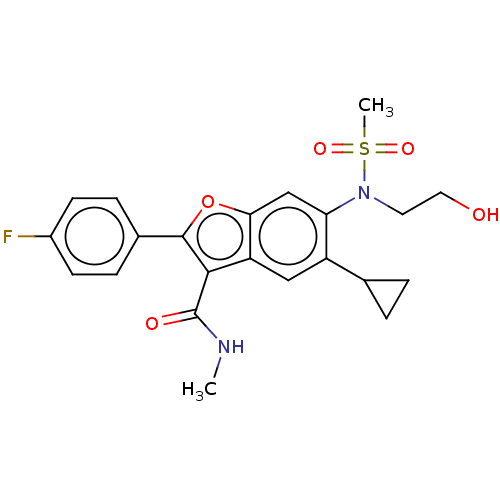 HCV-796 BDBM50454876 Nesbuvir HCV 796
- Gosselin, G; Parsy, CC; Alexandre, F; Rahali, H; Griffon, J; Surleraux, D; Dousson, CB; Pierra, C; Moussa, AM; Mayes, BA; Stewart, AJ 2′-chloro nucleoside analogs for HCV infection US Patent US10513534 (2019)
- Kalayanov, G; Torssell, S; Wahling, H HCV polymerase inhibitors US Patent US10106571 (2018)
- Hall, PR; Leitão, A; Ye, C; Kilpatrick, K; Hjelle, B; Oprea, TI; Larson, RS Small molecule inhibitors of hantavirus infection. Bioorg Med Chem Lett 20: 7085-91 (2010)
- Wong, C; Wu, Y Compounds and methods for treating tuberculosis infection US Patent US9073941 (2015)
- Schinazi, RF; Amblard, F; Kovari, L; Liu, P; Zhou, S; Kuiper, BD; Keusch, BJ Peptidomimetics for the treatment of Norovirus infection US Patent US11859014 (2024)
- Zheng, L; Zhang, L; Huang, J; Nandakumar, KS; Liu, S; Cheng, K Potential treatment methods targeting 2019-nCoV infection. Eur J Med Chem 205: (2020)
- Shipps, GW; Deng, Y; Wang, T; Popovici-Muller, J; Curran, PJ; Rosner, KE; Cooper, AB; Girijavallabhan, V; Butkiewicz, N; Cable, M Aminothiazole inhibitors of HCV RNA polymerase. Bioorg Med Chem Lett 15: 115-9 (2004)
- Niu, D; Petter, RC; Qiao, L; Singh, J HCV protease inhibitors and uses thereof US Patent US9422333 (2016)
- Bernatchez, JA; Tran, LT; Li, J; Luan, Y; Siqueira-Neto, JL; Li, R Drugs for the Treatment of Zika Virus Infection. J Med Chem 63: 470-489 (2020)
- Jonckers, TH; McGowan, DC; Guilllemont, J; Cooymans, LP; Embrechts, WC; Buyck, CF; Balemans, WM; Raboisson, PJ Heterocyclic indoles for use in influenza virus infection US Patent US10626108 (2020)
- Sabnis, RW Novel Histone Deacetylase Inhibitors for Treating HIV Infection. ACS Med Chem Lett 12: 1196-1197 (2021)
- Campbell, BT; Chang, W; Hartingh, TJ; Hurzy, DM; Kelly, III, MJ; Klingler, F; Layton, ME; McCauley, JA; Nawrat, CC; Parish, CA; Perkins, JJ; Roecker, AJ; de Lera Ruiz, M; Schreier, JD; Shurtleff, VW; Su, J; Truong, QT PROTEASE INHIBITORS FOR TREATING OR PREVENTING CORONAVIRUS INFECTION US Patent US20250223259 (2025)
- Sabnis, RW Protease Inhibitors for Treating or Preventing Coronavirus Infection. ACS Med Chem Lett 14: 1489-1490 (2023)
- Boukerb, AM; Rousset, A; Galanos, N; Méar, JB; Thépaut, M; Grandjean, T; Gillon, E; Cecioni, S; Abderrahmen, C; Faure, K; Redelberger, D; Kipnis, E; Dessein, R; Havet, S; Darblade, B; Matthews, SE; de Bentzmann, S; Guéry, B; Cournoyer, B; Imberty, A; Vidal, S Antiadhesive properties of glycoclusters against Pseudomonas aeruginosa lung infection. J Med Chem 57: 10275-89 (2014)
- Wang, G; Kim, IJ; Or, YS Cyclosporin analogues for preventing or treating hepatitis C infection US Patent US9669095 (2017)
- Bogen, SL; Ruan, S; Liu, R; Agrawal, S; Pichardo, J; Prongay, A; Baroudy, B; Saksena, AK; Girijavallabhan, V; Njoroge, FG Depeptidization efforts on P3-P2' alpha-ketoamide inhibitors of HCV NS3-4A serine protease: effect on HCV replicon activity. Bioorg Med Chem Lett 16: 1621-7 (2006)
- Bogen, SL; Arasappan, A; Bennett, F; Chen, K; Jao, E; Liu, YT; Lovey, RG; Venkatraman, S; Pan, W; Parekh, T; Pike, RE; Ruan, S; Liu, R; Baroudy, B; Agrawal, S; Chase, R; Ingravallo, P; Pichardo, J; Prongay, A; Brisson, JM; Hsieh, TY; Cheng, KC; Kemp, SJ; Levy, OE; Lim-Wilby, M; Tamura, SY; Saksena, AK; Girijavallabhan, V; Njoroge, FG Discovery of SCH446211 (SCH6): a new ketoamide inhibitor of the HCV NS3 serine protease and HCV subgenomic RNA replication. J Med Chem 49: 2750-7 (2006)
- Wang, G; Dyatkina, N; Prhavc, M; Williams, C; Serebryany, V; Hu, Y; Huang, Y; Wan, J; Wu, X; Deval, J; Fung, A; Jin, Z; Tan, H; Shaw, K; Kang, H; Zhang, Q; Tam, Y; Stoycheva, A; Jekle, A; Smith, DB; Beigelman, L Synthesis and Anti-HCV Activities of 4'-Fluoro-2'-Substituted Uridine Triphosphates and Nucleotide Prodrugs: Discovery of 4'-Fluoro-2'- C-methyluridine 5'-Phosphoramidate Prodrug (AL-335) for the Treatment of Hepatitis C Infection. J Med Chem 62: 4555-4570 (2019)
- Wang, TT; Liu, S; Wang, W; Lajkiewicz, N; Porco, Jr., JA Aglaroxin C and derivatives as HCV entry inhibitors US Patent US10085988 (2018)
- Wang, T; Yin, Z; Kadow, JF Benzofurans substituted with primary benzamide as HCV inhibitors US Patent US10131645 (2018)
- Wang, T; Yin, Z; Kadow, JF Benzofurans substituted with secondary benzamide as HCV inhibitors US Patent US10087167 (2018)
- Zeng, Q; Nair, AG; Rosenblum, SB; Huang, HC; Lesburg, CA; Jiang, Y; Selyutin, O; Chan, TY; Bennett, F; Chen, KX; Venkatraman, S; Sannigrahi, M; Velazquez, F; Duca, JS; Gavalas, S; Huang, Y; Pu, H; Wang, L; Pinto, P; Vibulbhan, B; Agrawal, S; Ferrari, E; Jiang, CK; Li, C; Hesk, D; Gesell, J; Sorota, S; Shih, NY; Njoroge, FG; Kozlowski, JA Discovery of an irreversible HCV NS5B polymerase inhibitor. Bioorg Med Chem Lett 23: 6585-7 (2013)
- Han, W; Hu, Z; Jiang, X; Wasserman, ZR; Decicco, CP Glycine alpha-ketoamides as HCV NS3 protease inhibitors. Bioorg Med Chem Lett 13: 1111-4 (2003)
- Kohchi, Y; Nakama, K; Komiyama, S; Watanabe, F Orally available viridiofungin derivative possessing anti-HCV activity US Patent US9266853 (2016)
- BARRETT, M; COCKERILL, GS; GOOD, J; AVERY, CA; COCHRANE, EJ; JONES, SP; ONIONS, ST; WARNER, AJ BENZODIAZEPINE DERIVATIVES USEFUL IN TREATING A RESPIRATORY SYNCYTIAL VIRUS INFECTION US Patent US20230270751 (2023)
- Tonge, PJ; Basak, S; Daryaee, F COMPOSITION AND METHOD FOR TREATMENT OF GRAM NEGATIVE BACTERIAL INFECTION US Patent US20250099433 (2025)
- Leiris, S; Davies, DT; Everett, M; Sprynski, N; Beyria, L; Pallin, TD; Cridland, AP; Blench, TJ; Elliott, RL; Clark, DE Indane derivatives for use in the treatment of bacterial infection US Patent US12247013 (2025)
- Choong, IC; Cory, D; Glenn, JS; Yang, W Methods and compositions of treating a flaviviridae family viral infection US Patent US8975247 (2015)
- Wang, B; Wang, L; Yun, H; Zheng, X Substituted aminothiazolopyrimidinedione for the treatment and prophylaxis of virus infection US Patent US10065973 (2018)
- Chan, L; Das, SK; Reddy, TJ; Poisson, C; Proulx, M; Pereira, O; Courchesne, M; Roy, C; Wang, W; Siddiqui, A; Yannopoulos, CG; Nguyen-Ba, N; Labrecque, D; Bethell, R; Hamel, M; Courtemanche-Asselin, P; L'Heureux, L; David, M; Nicolas, O; Brunette, S; Bilimoria, D; Bédard, J Discovery of thiophene-2-carboxylic acids as potent inhibitors of HCV NS5B polymerase and HCV subgenomic RNA replication. Part 1: Sulfonamides. Bioorg Med Chem Lett 14: 793-6 (2004)
- Wang, T; Yin, Z; Kadow, JF Benzofurans substituted with bicyclic secondary benzamide as HCV inhibitors US Patent US10125137 (2018)
- Nizi, E; Koch, U; Ontoria, JM; Marchetti, A; Narjes, F; Malancona, S; Matassa, VG; Gardelli, C Capped dipeptide phenethylamide inhibitors of the HCV NS3 protease. Bioorg Med Chem Lett 14: 2151-4 (2004)
- Deshpande, M; Wiles, JA; Hashimoto, A; Phadke, A Highly active nucleoside derivative for the treatment of HCV US Patent US9447132 (2016)
- Farmer, LJ; Perni, RB; Pitlik, J; van Drie, Jr., JH Inhibitors of serine proteases, particularly HCV NS3-NS4A protease US Patent US8486989 (2013)
- Nakamura, H; Fujioka, S; Terui, T; Okuda, S; Kondo, K; Tamatani, Y; Akagi, Y; Komoda, Y; Kinoshita, W; Ito, S; Maeda, K; Ukaji, Y; Inaba, T Orally bioavailable HCV NS5A inhibitors of unsymmetrical structural class. Bioorg Med Chem Lett 30: (2020)
- Amblard, F; Zhang, H; Zhou, L; Shi, J; Bobeck, DR; Nettles, JH; Chavre, S; McBrayer, TR; Tharnish, P; Whitaker, T; Coats, SJ; Schinazi, RF Synthesis and evaluation of non-dimeric HCV NS5A inhibitors. Bioorg Med Chem Lett 23: 2031-4 (2013)
- Zhang, H; Zhou, L; Amblard, F; Shi, J; Bobeck, DR; Tao, S; McBrayer, TR; Tharnish, PM; Whitaker, T; Coats, SJ; Schinazi, RF Synthesis and evaluation of novel potent HCV NS5A inhibitors. Bioorg Med Chem Lett 22: 4864-8 (2012)
- Du, J; Chun, BK; Mosley, RT; Bansal, S; Bao, H; Espiritu, C; Lam, AM; Murakami, E; Niu, C; Micolochick Steuer, HM; Furman, PA; Sofia, MJ Use of 2'-spirocyclic ethers in HCV nucleoside design. J Med Chem 57: 1826-35 (2014)
- Chan, L; Pereira, O; Reddy, TJ; Das, SK; Poisson, C; Courchesne, M; Proulx, M; Siddiqui, A; Yannopoulos, CG; Nguyen-Ba, N; Roy, C; Nasturica, D; Moinet, C; Bethell, R; Hamel, M; L'Heureux, L; David, M; Nicolas, O; Courtemanche-Asselin, P; Brunette, S; Bilimoria, D; Bédard, J Discovery of thiophene-2-carboxylic acids as potent inhibitors of HCV NS5B polymerase and HCV subgenomic RNA replication. Part 2: tertiary amides. Bioorg Med Chem Lett 14: 797-800 (2004)
- Haughey, N; Slusher, B; Rojas, C INHIBITION OF nSMase FOR THE TREATMENT OF HUMAN IMMUNODEFICIENCY VIRUS INFECTION US Patent US20240115574 (2024)
- Johns, BA; Velthuisen, EJ; Weatherhead, JG; Suwandi, L; Temelkoff, D Isoindoline derivatives for use in the treatment of a viral infection US Patent US10112899 (2018)
- Soltane, R; Alhadrami, HA; Alasiri, A; Jannet, HB; Chouaib, K; Chrouda, A; Mostafa, A; Pashameah, RA Maslinic and oleanolic acids derivatives for treating SARS-CoV-2 infection US Patent US11266632 (2022)
- Bowser, TE; Bartlett, VJ; Grier, MC; Verma, AK; Warchol, T; Levy, SB; Alekshun, MN Novel anti-infection agents: small-molecule inhibitors of bacterial transcription factors. Bioorg Med Chem Lett 17: 5652-5 (2007)
- Cheng, Z; Wang, J; Wang, M; Yang, S Tetrahydroisoquinolines and terahydronaphthyridines for the treatment of hepatitis B virus infection US Patent US11124495 (2021)
- Ganta, NM; Gedda, G; Rathnakar, B; Satyanarayana, M; Yamajala, B; Ahsan, MJ; Jadav, SS; Balaraju, T A review on HCV inhibitors: Significance of non-structural polyproteins. Eur J Med Chem 164: 576-601 (2019)
- Nizi, E; Koch, U; Ponzi, S; Matassa, VG; Gardelli, C Capped dipeptide alpha-ketoacid inhibitors of the HCV NS3 protease. Bioorg Med Chem Lett 12: 3325-8 (2002)
- Lamar, J; Victor, F; Snyder, N; Johnson, RB; Wang, QM; Glass, JI; Chen, SH Novel P4 truncated tripeptidyl alpha-ketoamides as HCV protease inhibitors. Bioorg Med Chem Lett 14: 263-6 (2003)
- Priestley, ES; De Lucca, I; Ghavimi, B; Erickson-Viitanen, S; Decicco, CP P1 Phenethyl peptide boronic acid inhibitors of HCV NS3 protease. Bioorg Med Chem Lett 12: 3199-202 (2002)
- Venkatraman, S; Wu, W; Prongay, A; Girijavallabhan, V; George Njoroge, F Potent inhibitors of HCV-NS3 protease derived from boronic acids. Bioorg Med Chem Lett 19: 180-3 (2009)
- Knubel, CP; Insfran, C; Martinez, FF; Diaz Lujan, C; Fretes, RE; Theumer, MG; Cervi, L; Motran, CC 3-Hydroxykynurenine, a Tryptophan Metabolite Generated during the Infection, Is Active Against ACS Med Chem Lett 8: 757-761 (2017)
- Paulsson-Habegger, L; Snabaitis, AK; Wren, SP Enzyme inhibition as a potential therapeutic strategy to treat COVID-19 infection. Bioorg Med Chem 48: (2021)
- Kargbo, RB Modulation of Androgen Receptor for Therapeutic Application in Cancer and Viral Infection. ACS Med Chem Lett 11: 2068-2069 (2020)
- Liang, C; Wang, J; Miao, K; Yun, H; Zheng, X Sulfonimidoylpurinone compounds and derivatives for the treatment and prophylaxis of virus infection US Patent US9708325 (2017)
- Glunz, PW; Douty, BD; Decicco, CP Design and synthesis of bicyclic pyrimidinone-based HCV NS3 protease inhibitors. Bioorg Med Chem Lett 13: 785-8 (2003)
- Nichols, DB; Leão, RA; Basu, A; Chudayeu, M; de Moraes, Pde F; Talele, TT; Costa, PR; Kaushik-Basu, N Evaluation of Coumarin and Neoflavone Derivatives as HCV NS5B Polymerase Inhibitors. Chem Biol Drug Des 81: 607-14 (2013)
- Kesteleyn, BR; Berke, JM; Coesemans, E; Grosse, SC; Jacoby, E; Jonckers, TH; Last, SJ; Verschueren, WG; Obringer, M; Doebelin, CC Amide derivatives useful in the treatment of HBV infection or HBV-induced diseases US Patent US11491148 (2022)
- Wang, L; Gao, L; Huang, M; Guo, L; Liang, C; Zhu, W; Feng, S; Zheng, X; Zhang, W; Wu, G; Wang, B; Yun, H Aza-oxo-indoles for the treatment and prophylaxis of respiratory syncytial virus infection US Patent US10189838 (2019)
- Boger, R Cardiac glycoside analogs and their use in methods for inhibition of viral infection US Patent US10610539 (2020)
- Liu, J; Clausen, DJ; Yu, W; Kelly, JM; Kim, HM; Kozlowski, JA Inhibitors of histone deacetylase useful for the treatment or prevention of HIV infection US Patent US12331044 (2025)
- Banerjee, D; Yogeeswari, P; Bhat, P; Thomas, A; Srividya, M; Sriram, D Novel isatinyl thiosemicarbazones derivatives as potential molecule to combat HIV-TB co-infection. Eur J Med Chem 46: 106-21 (2011)
- Choi, JW; Lee, KT; Kim, S; Lee, YR; Kim, HJ; Seo, KJ; Lee, MH; Yeon, SK; Jang, BK; Park, SJ; Kim, HJ; Park, JH; Kim, D; Lee, DG; Cheong, E; Lee, JS; Bahn, YS; Park, KD Optimization and Evaluation of Novel Antifungal Agents for the Treatment of Fungal Infection. J Med Chem 64: 15912-15935 (2021)
- Liu, H; Wu, G; Yun, H Oxathiolane carboxylic acids and derivatives for the treatment and prophylaxis of virus infection US Patent US10183954 (2019)
- Spicer, JA; Huttunen, KM; Jose, J; Dimitrov, I; Akhlaghi, H; Sutton, VR; Voskoboinik, I; Trapani, J Small Molecule Inhibitors of Lymphocyte Perforin as Focused Immunosuppressants for Infection and Autoimmunity. J Med Chem 65: 14305-14325 (2022)
- Cheng, Z; Wang, M; Yang, S Tetrahydropyridopyrimidines and tetrahydropyridopyridines for the treatment and prophylaxis of hepatitis B virus infection US Patent US10196391 (2019)
- Han, W; Hu, Z; Jiang, X; Decicco, CP Alpha-ketoamides, alpha-ketoesters and alpha-diketones as HCV NS3 protease inhibitors. Bioorg Med Chem Lett 10: 711-3 (2000)
- Zhang, X; Schmitt, AC; Jiang, W; Wasserman, Z; Decicco, CP Design and synthesis of potent, non-peptide inhibitors of HCV NS3 protease. Bioorg Med Chem Lett 13: 1157-60 (2003)
- Draffan, AG; Frey, B; Pool, B; Gannon, C; Tyndall, EM; Lilly, M; Francom, P; Hufton, R; Halim, R; Jahangiri, S; Bond, S; Nguyen, VT; Jeynes, TP; Wirth, V; Luttick, A; Tilmanis, D; Thomas, JD; Pryor, M; Porter, K; Morton, CJ; Lin, B; Duan, J; Kukolj, G; Simoneau, B; McKercher, G; Lagacé, L; Amad, M; Bethell, RC; Tucker, SP Discovery and Synthesis of C-Nucleosides as Potential New Anti-HCV Agents. ACS Med Chem Lett 5: 679-84 (2014)
- Li, P; Dorsch, W; Lauffer, DJ; Bilimoria, D; Chauret, N; Court, JJ; Das, SK; Denis, F; Mani, N; Nanthakumar, S; Nicolas, O; Rao, BG; Ronkin, S; Selliah, S; Shawgo, RS; Stearns, R; Tang, Q; Waal, ND; Green, J Discovery of Novel Allosteric HCV NS5B Inhibitors. 2. Lactam-Containing Thiophene Carboxylates. ACS Med Chem Lett 8: 251-255 (2017)
- Sperandio, D; Gangloff, AR; Litvak, J; Goldsmith, R; Hataye, JM; Wang, VR; Shelton, EJ; Elrod, K; Janc, JW; Clark, JM; Rice, K; Weinheimer, S; Yeung, KS; Meanwell, NA; Hernandez, D; Staab, AJ; Venables, BL; Spencer, JR Highly potent non-peptidic inhibitors of the HCV NS3/NS4A serine protease. Bioorg Med Chem Lett 12: 3129-33 (2002)
- Sun, DX; Liu, L; Heinz, B; Kolykhalov, A; Lamar, J; Johnson, RB; Wang, QM; Yip, Y; Chen, SH P4 cap modified tetrapeptidyl alpha-ketoamides as potent HCV NS3 protease inhibitors. Bioorg Med Chem Lett 14: 4333-8 (2004)
- Zhang, J; Zhang, Y; Xie, H; Ren, Q; Hu, B; Fu, C; Wu, X; Li, S; Wang, C; Zhang, Z Spiro ring compound as hepatitis C virus (HCV) inhibitor and uses thereof US Patent US9416139 (2016)
- Wang, G; Dyatkina, N; Prhavc, M; Williams, C; Serebryany, V; Hu, Y; Huang, Y; Wu, X; Chen, T; Huang, W; Rajwanshi, VK; Deval, J; Fung, A; Jin, Z; Stoycheva, A; Shaw, K; Gupta, K; Tam, Y; Jekle, A; Smith, DB; Beigelman, L Synthesis and Anti-HCV Activity of Sugar-Modified Guanosine Analogues: Discovery of J Med Chem 63: 10380-10395 (2020)
- LIU, R; XU, Y; HUA, L; ZHOU, J; DENG, H; CHU, X; DING, S 3CL PROTEASE SMALL-MOLECULE INHIBITOR FOR TREATING OR PREVENTING CORONAVIRUS INFECTION, AND USE THEREOF US Patent US20240336610 (2024)
- Doyle, PS; Chen, CK; Johnston, JB; Hopkins, SD; Leung, SS; Jacobson, MP; Engel, JC; McKerrow, JH; Podust, LM A nonazole CYP51 inhibitor cures Chagas' disease in a mouse model of acute infection. Antimicrob Agents Chemother 54: 2480-8 (2010)
- Xianfeng, L; Hongying, Y; Bo, Z; Xiufang, Z ARYLOXAZOLO SPIRAL RING DERIVATIVES FOR THE TREATMENT AND PROPHYLAXIS OF HEPATITIS B VIRUS INFECTION WIPO WO2022112140 (2022)
- Brai, A; Martelli, F; Riva, V; Garbelli, A; Fazi, R; Zamperini, C; Pollutri, A; Falsitta, L; Ronzini, S; Maccari, L; Maga, G; Giannecchini, S; Botta, M DDX3X Helicase Inhibitors as a New Strategy To Fight the West Nile Virus Infection. J Med Chem 62: 2333-2347 (2019)
- Zhang, L; Yang, J; Xu, X; Zhang, J; Qiu, Z; Ju, Y; Luo, B; Liu, Y; Gou, X; Sui, J; Chen, B; Wang, Y; Tao, T; He, L; Yang, T; Luo, Y Discovery and Optimization of Novel SaFabI Inhibitors as Specific Therapeutic Agents for MRSA Infection. J Med Chem 67: 10096-10134
- Kim, D; Wang, L; Caldwell, CG; Chen, P; Finke, PE; Oates, B; MacCoss, M; Mills, SG; Malkowitz, L; Gould, SL; DeMartino, JA; Springer, MS; Hazuda, D; Miller, M; Kessler, J; Danzeisen, R; Carver, G; Carella, A; Holmes, K; Lineberger, J; Schleif, WA; Emini, EA Discovery of human CCR5 antagonists containing hydantoins for the treatment of HIV-1 infection. Bioorg Med Chem Lett 11: 3099-102 (2001)
- Wilkinson, RA; Pincus, SH; Song, K; Shepard, JB; Weaver, AJ; Labib, ME; Teintze, M Improved guanide compounds which bind the CXCR4 co-receptor and inhibit HIV-1 infection. Bioorg Med Chem Lett 23: 2197-201 (2013)
- Xianfeng, L; Jianping, W; Hongying, Y; Xiufang, Z SPIRO[3.3]HEPTANE DERIVATIVES FOR THE TREATMENT AND PROPHYLAXIS OF HEPATITIS B VIRUS INFECTION WIPO WO2022112188 (2022)
- Ren, J; Zhao, Y; Fry, EE; Stuart, DI Target Identification and Mode of Action of Four Chemically Divergent Drugs against Ebolavirus Infection. J Med Chem 61: 724-733 (2018)
- Hongying, Y; Bo, Z; Xiufang, Z AROMATIC BRIDGED RING AMIDE DERIVATIVES FOR THE TREATMENT AND PROPHYLAXIS OF HEPATITIS B VIRUS INFECTION WIPO WO2022112205 (2022)
- Xianfeng, L; Hongying, Y; Bo, Z; Xiufang, Z AROMATIC SPIRO RING AMIDE DERIVATIVES FOR THE TREATMENT AND PROPHYLAXIS OF HEPATITIS B VIRUS INFECTION WIPO WO2022112207 (2022)
- Liu, Q; Shi, WK; Ren, SZ; Ni, WW; Li, WY; Chen, HM; Liu, P; Yuan, J; He, XS; Liu, JJ; Cao, P; Yang, PZ; Xiao, ZP; Zhu, HL Arylamino containing hydroxamic acids as potent urease inhibitors for the treatment of Helicobacter pylori infection. Eur J Med Chem 156: 126-136 (2018)
- Wei, X; Du, W; Duca, M; Yu, G; de Vries, E; de Haan, CAM; Pieters, RJ Preventing Influenza A Virus Infection by Mixed Inhibition of Neuraminidase and Hemagglutinin by Divalent Inhibitors. J Med Chem 65: 7312-7323 (2022)
- Dukhan, D; Dousson, CB; Gosselin, G; Paparin, J; Brandt, G; Rahali, R; Salanson, A; Alexandre, F 3′-substituted methyl or alkynyl nucleosides nucleotides for the treatment of HCV US Patent US10202411 (2019)
- Ruebsam, F; Tran, CV; Li, LS; Kim, SH; Xiang, AX; Zhou, Y; Blazel, JK; Sun, Z; Dragovich, PS; Zhao, J; McGuire, HM; Murphy, DE; Tran, MT; Stankovic, N; Ellis, DA; Gobbi, A; Showalter, RE; Webber, SE; Shah, AM; Tsan, M; Patel, RA; Lebrun, LA; Hou, HJ; Kamran, R; Sergeeva, MV; Bartkowski, DM; Nolan, TG; Norris, DA; Kirkovsky, L 5,6-Dihydro-1H-pyridin-2-ones as potent inhibitors of HCV NS5B polymerase. Bioorg Med Chem Lett 19: 451-8 (2009)
- Yu, F; Wang, Q; Zhang, Z; Peng, Y; Qiu, Y; Shi, Y; Zheng, Y; Xiao, S; Wang, H; Huang, X; Zhu, L; Chen, K; Zhao, C; Zhang, C; Yu, M; Sun, D; Zhang, L; Zhou, D Development of oleanane-type triterpenes as a new class of HCV entry inhibitors. J Med Chem 56: 4300-19 (2013)
- Saalau-Bethell, SM; Woodhead, AJ; Chessari, G; Carr, MG; Coyle, J; Graham, B; Hiscock, SD; Murray, CW; Pathuri, P; Rich, SJ; Richardson, CJ; Williams, PA; Jhoti, H Discovery of an allosteric mechanism for the regulation of HCV NS3 protein function. Nat Chem Biol 8: 920-5 (2012)
- Yu, W; Hu, B; Zhong, B; Hao, J; Lei, Z; Agrawal, S; Rokosz, L; Liu, R; Chen, S; Asante-Appiah, E; Kozlowski, JA Discovery of novel pan-genotypic HCV NS5A inhibitors containing a novel tetracyclic core. Bioorg Med Chem Lett 29: 700-706 (2019)
- Zhong, M; Peng, E; Huang, N; Huang, Q; Huq, A; Lau, M; Colonno, R; Li, L Discovery of ravidasvir (PPI-668) as a potent pan-genotypic HCV NS5A inhibitor. Bioorg Med Chem Lett 26: 4508-4512 (2016)
- Ruebsam, F; Webber, SE; Tran, MT; Tran, CV; Murphy, DE; Zhao, J; Dragovich, PS; Kim, SH; Li, LS; Zhou, Y; Han, Q; Kissinger, CR; Showalter, RE; Lardy, M; Shah, AM; Tsan, M; Patel, R; Lebrun, LA; Kamran, R; Sergeeva, MV; Bartkowski, DM; Nolan, TG; Norris, DA; Kirkovsky, L Pyrrolo[1,2-b]pyridazin-2-ones as potent inhibitors of HCV NS5B polymerase. Bioorg Med Chem Lett 18: 3616-21 (2008)
- Zhang, HW; Zhou, L; Coats, SJ; McBrayer, TR; Tharnish, PM; Bondada, L; Detorio, M; Amichai, SA; Johns, MD; Whitaker, T; Schinazi, RF Synthesis of purine modified 2'-C-methyl nucleosides as potential anti-HCV agents. Bioorg Med Chem Lett 21: 6788-92 (2011)
- Tran, TD; Pryde, DC; Jones, P; Adam, FM; Benson, N; Bish, G; Calo, F; Ciaramella, G; Dixon, R; Duckworth, J; Fox, DN; Hay, DA; Hitchin, J; Horscroft, N; Howard, M; Gardner, I; Jones, HM; Laxton, C; Parkinson, T; Parsons, G; Proctor, K; Smith, MC; Smith, N; Thomas, A Design and optimisation of orally active TLR7 agonists for the treatment of hepatitis C virus infection. Bioorg Med Chem Lett 21: 2389-93 (2011)
- Du, K; Wang, X; Bai, Y; Zhang, X; Xue, J; Li, S; Xie, Y; Sang, Z; Tang, Y; Wang, X Development of benzimidazole-based compounds as novel capsid assembly modulators for the treatment of HBV infection. Eur J Med Chem 271:
- Nuth, M; Huang, L; Saw, YL; Schormann, N; Chattopadhyay, D; Ricciardi, RP Identification of inhibitors that block vaccinia virus infection by targeting the DNA synthesis processivity factor D4. J Med Chem 54: 3260-7 (2011)
- Lourido, S; Zhang, C; Lopez, MS; Tang, K; Barks, J; Wang, Q; Wildman, SA; Shokat, KM; Sibley, LD Optimizing small molecule inhibitors of calcium-dependent protein kinase 1 to prevent infection by Toxoplasma gondii. J Med Chem 56: 3068-77 (2013)
- Pei, Y; Wang, C; Yan, SF; Liu, G Past, Current, and Future Developments of Therapeutic Agents for Treatment of Chronic Hepatitis B Virus Infection. J Med Chem 60: 6461-6479 (2017)
- Xiong, Y; Wiltsie, J; Woods, A; Guo, J; Pivnichny, JV; Tang, W; Bansal, A; Cummings, RT; Cunningham, BR; Friedlander, AM; Douglas, CM; Salowe, SP; Zaller, DM; Scolnick, EM; Schmatz, DM; Bartizal, K; Hermes, JD; MacCoss, M; Chapman, KT The discovery of a potent and selective lethal factor inhibitor for adjunct therapy of anthrax infection. Bioorg Med Chem Lett 16: 964-8 (2006)
- Duan, D; Li, Z; Luo, H; Zhang, W; Chen, L; Xu, X Antiviral compounds from traditional Chinese medicines Galla Chinese as inhibitors of HCV NS3 protease. Bioorg Med Chem Lett 14: 6041-4 (2004)
- Sing, WT; Lee, CL; Yeo, SL; Lim, SP; Sim, MM Arylalkylidene rhodanine with bulky and hydrophobic functional group as selective HCV NS3 protease inhibitor. Bioorg Med Chem Lett 11: 91-4 (2001)
- Liu, B; Gai, K; Qin, H; Liu, X; Cao, Y; Lu, Q; Lu, D; Chen, D; Shen, H; Song, W; Zhang, Y; Wang, X; Xu, H; Zhang, Y Design, synthesis and identification of silicon-containing HCV NS5A inhibitors with pan-genotype activity. Eur J Med Chem 148: 95-105 (2018)
- Gopalsamy, A; Lim, K; Ciszewski, G; Park, K; Ellingboe, JW; Bloom, J; Insaf, S; Upeslacis, J; Mansour, TS; Krishnamurthy, G; Damarla, M; Pyatski, Y; Ho, D; Howe, AY; Orlowski, M; Feld, B; O'Connell, J Discovery of pyrano[3,4-b]indoles as potent and selective HCV NS5B polymerase inhibitors. J Med Chem 47: 6603-8 (2004)
- Nair, AG; Zeng, Q; Selyutin, O; Rosenblum, SB; Jiang, Y; Yang, DY; Keertikar, K; Zhou, G; Dwyer, MP; Kim, SH; Shankar, B; Yu, W; Tong, L; Chen, L; Mazzola, R; Caldwell, J; Tang, H; Allard, ML; Buckle, RN; Gauuan, PJ; Holst, CL; Martin, GS; Naicker, KP; Vellekoop, S; Agrawal, S; Liu, R; Kong, R; Ingravallo, P; Xia, E; Zhai, Y; Nomeir, A; Kozlowski, JA Discovery of silyl proline containing HCV NS5A inhibitors with pan-genotype activity: SAR development. Bioorg Med Chem Lett 26: 1475-9 (2016)
- Yannopoulos, CG; Xu, P; Ni, F; Chan, L; Pereira, OZ; Reddy, TJ; Das, SK; Poisson, C; Nguyen-Ba, N; Turcotte, N; Proulx, M; Halab, L; Wang, W; Bédard, J; Morin, N; Hamel, M; Nicolas, O; Bilimoria, D; L'Heureux, L; Bethell, R; Dionne, G HCV NS5B polymerase-bound conformation of a soluble sulfonamide inhibitor by 2D transferred NOESY. Bioorg Med Chem Lett 14: 5333-7 (2004)
- Li, H; Tatlock, J; Linton, A; Gonzalez, J; Borchardt, A; Dragovich, P; Jewell, T; Prins, T; Zhou, R; Blazel, J; Parge, H; Love, R; Hickey, M; Doan, C; Shi, S; Duggal, R; Lewis, C; Fuhrman, S Identification and structure-based optimization of novel dihydropyrones as potent HCV RNA polymerase inhibitors. Bioorg Med Chem Lett 16: 4834-8 (2006)
- Han, W; Jiang, X; Hu, Z; Wasserman, ZR; Decicco, CP Investigation of glycine alpha-ketoamide HCV NS3 protease inhibitors: effect of carboxylic acid isosteres. Bioorg Med Chem Lett 15: 3487-90 (2005)
- Chen, KX; Njoroge, FG; Prongay, A; Pichardo, J; Madison, V; Girijavallabhan, V Synthesis and biological activity of macrocyclic inhibitors of hepatitis C virus (HCV) NS3 protease. Bioorg Med Chem Lett 15: 4475-8 (2005)
- Hegde, VR; Pu, H; Patel, M; Das, PR; Butkiewicz, N; Arreaza, G; Gullo, VP; Chan, TM Two antiviral compounds from the plant Stylogne cauliflora as inhibitors of HCV NS3 protease. Bioorg Med Chem Lett 13: 2925-8 (2003)
- Cheng, Z; Han, X; Wang, Y; Yang, S 6,7-dihydropyrido[2,1-A]phthalazin-2-ones for the treatment and prophylaxis of hepatitis B virus infection US Patent US10150740 (2018)
- Shi, W; Jiang, Z; He, H; Xiao, F; Lin, F; Sun, Y; Hou, L; Shen, L; Han, L; Zeng, M; Lai, K; Gu, Z; Chen, X; Zhao, T; Guo, L; Yang, C; Li, J; Chen, S Discovery of 3,3'-Spiro[Azetidine]-2-oxo-indoline Derivatives as Fusion Inhibitors for Treatment of RSV Infection. ACS Med Chem Lett 9: 94-97 (2018)
- Brai, A; Boccuto, A; Monti, M; Marchi, S; Vicenti, I; Saladini, F; Trivisani, CI; Pollutri, A; Trombetta, CM; Montomoli, E; Riva, V; Garbelli, A; Nola, EM; Zazzi, M; Maga, G; Dreassi, E; Botta, M Exploring the Implication of DDX3X in DENV Infection: Discovery of the First-in-Class DDX3X Fluorescent Inhibitor. ACS Med Chem Lett 11: 956-962 (2020)
- Stec, J; Onajole, OK; Lun, S; Guo, H; Merenbloom, B; Vistoli, G; Bishai, WR; Kozikowski, AP Indole-2-carboxamide-based MmpL3 Inhibitors Show Exceptional Antitubercular Activity in an Animal Model of Tuberculosis Infection. J Med Chem 59: 6232-47 (2016)
- Narjes, F; Koehler, KF; Koch, U; Gerlach, B; Colarusso, S; Steinkühler, C; Brunetti, M; Altamura, S; De Francesco, R; Matassa, VG A designed P1 cysteine mimetic for covalent and non-covalent inhibitors of HCV NS3 protease. Bioorg Med Chem Lett 12: 701-4 (2002)
- Yang, H; Hendricks, RT; Arora, N; Nitzan, D; Yee, C; Lucas, MC; Yang, Y; Fung, A; Rajyaguru, S; Harris, SF; Leveque, VJ; Hang, JQ; Pogam, SL; Reuter, D; Tavares, GA Cyclic amide bioisosterism: strategic application to the design and synthesis of HCV NS5B polymerase inhibitors. Bioorg Med Chem Lett 20: 4614-9 (2010)
- Velázquez, F; Venkatraman, S; Blackman, M; Pinto, P; Bogen, S; Sannigrahi, M; Chen, K; Pichardo, J; Hart, A; Tong, X; Girijavallabhan, V; Njoroge, FG Design, synthesis, and evaluation of oxygen-containing macrocyclic peptidomimetics as inhibitors of HCV NS3 protease. J Med Chem 52: 700-8 (2009)
- Rudd, MT; McIntyre, CJ; Romano, JJ; Butcher, JW; Holloway, MK; Bush, K; Nguyen, KT; Gilbert, KF; Lyle, TA; Liverton, NJ; Wan, BL; Summa, V; Harper, S; Rowley, M; Vacca, JP; Carroll, SS; Burlein, C; DiMuzio, JM; Gates, A; Graham, DJ; Huang, Q; Ludmerer, SW; McClain, S; McHale, C; Stahlhut, M; Fandozzi, C; Taylor, A; Trainor, N; Olsen, DB; McCauley, JA Development of macrocyclic inhibitors of HCV NS3/4A protease with cyclic constrained P2-P4 linkers. Bioorg Med Chem Lett 22: 7207-13 (2012)
- Zhao, F; Liu, N; Zhan, P; Jiang, X; Liu, X Discovery of HCV NS5B thumb site I inhibitors: core-refining from benzimidazole to indole scaffold. Eur J Med Chem 94: 218-28 (2015)
- Yip, Y; Victor, F; Lamar, J; Johnson, R; Wang, QM; Barket, D; Glass, J; Jin, L; Liu, L; Venable, D; Wakulchik, M; Xie, C; Heinz, B; Villarreal, E; Colacino, J; Yumibe, N; Tebbe, M; Munroe, J; Chen, SH Discovery of a novel bicycloproline P2 bearing peptidyl alpha-ketoamide LY514962 as HCV protease inhibitor. Bioorg Med Chem Lett 14: 251-6 (2003)
- Stammers, TA; Coulombe, R; Rancourt, J; Thavonekham, B; Fazal, G; Goulet, S; Jakalian, A; Wernic, D; Tsantrizos, Y; Poupart, MA; Bös, M; McKercher, G; Thauvette, L; Kukolj, G; Beaulieu, PL Discovery of a novel series of non-nucleoside thumb pocket 2 HCV NS5B polymerase inhibitors. Bioorg Med Chem Lett 23: 2585-9 (2013)
- Maynard, A; Crosby, RM; Ellis, B; Hamatake, R; Hong, Z; Johns, BA; Kahler, KM; Koble, C; Leivers, A; Leivers, MR; Mathis, A; Peat, AJ; Pouliot, JJ; Roberts, CD; Samano, V; Schmidt, RM; Smith, GK; Spaltenstein, A; Stewart, EL; Thommes, P; Turner, EM; Voitenleitner, C; Walker, JT; Waitt, G; Weatherhead, J; Weaver, K; Williams, S; Wright, L; Xiong, ZZ; Haigh, D; Shotwell, JB Discovery of a potent boronic acid derived inhibitor of the HCV RNA-dependent RNA polymerase. J Med Chem 57: 1902-13 (2014)
- Zhong, M; Peng, E; Huang, N; Huang, Q; Huq, A; Lau, M; Colonno, R; Li, L Discovery of novel potent HCV NS5B polymerase non-nucleoside inhibitors bearing a fused benzofuran scaffold. Bioorg Med Chem Lett 28: 963-968 (2018)
- Reddy, TJ; Chan, L; Turcotte, N; Proulx, M; Pereira, OZ; Das, SK; Siddiqui, A; Wang, W; Poisson, C; Yannopoulos, CG; Bilimoria, D; L'Heureux, L; Alaoui, HM; Nguyen-Ba, N Further SAR studies on novel small molecule inhibitors of the hepatitis C (HCV) NS5B polymerase. Bioorg Med Chem Lett 13: 3341-4 (2003)
- Salah El Dine, R; Abdel Monem, AR; El-Halawany, AM; Hattori, M; Abdel-Sattar, E HCV-NS3/4A protease inhibitory iridoid glucosides and dimeric foliamenthoic acid derivatives from Anarrhinum orientale. J Nat Prod 74: 943-8 (2011)
- Liu, Y; Donner, PL; Pratt, JK; Jiang, WW; Ng, T; Gracias, V; Baumeister, S; Wiedeman, PE; Traphagen, L; Warrior, U; Maring, C; Kati, WM; Djuric, SW; Molla, A Identification of halosalicylamide derivatives as a novel class of allosteric inhibitors of HCV NS5B polymerase. Bioorg Med Chem Lett 18: 3173-7 (2008)
- Shah, U; Jayne, C; Chackalamannil, S; Velázquez, F; Guo, Z; Buevich, A; Howe, JA; Chase, R; Soriano, A; Agrawal, S; Rudd, MT; McCauley, JA; Liverton, NJ; Romano, J; Bush, K; Coleman, PJ; Grisé-Bard, C; Brochu, MC; Charron, S; Aulakh, V; Bachand, B; Beaulieu, P; Zaghdane, H; Bhat, S; Han, Y; Vacca, JP; Davies, IW; Weber, AE; Venkatraman, S Novel Quinoline-Based P2-P4 Macrocyclic Derivatives As Pan-Genotypic HCV NS3/4a Protease Inhibitors. ACS Med Chem Lett 5: 264-9 (2014)
- Chen, KX; Vibulbhan, B; Yang, W; Nair, LG; Tong, X; Cheng, KC; Njoroge, FG Novel potent inhibitors of hepatitis C virus (HCV) NS3 protease with cyclic sulfonyl P3 cappings. Bioorg Med Chem Lett 19: 1105-9 (2009)
- Yip, Y; Victor, F; Lamar, J; Johnson, R; Wang, QM; Glass, JI; Yumibe, N; Wakulchik, M; Munroe, J; Chen, SH P4 and P1' optimization of bicycloproline P2 bearing tetrapeptidyl alpha-ketoamides as HCV protease inhibitors. Bioorg Med Chem Lett 14: 5007-11 (2004)
- Rusere, LN; Matthew, AN; Lockbaum, GJ; Jahangir, M; Newton, A; Petropoulos, CJ; Huang, W; Kurt Yilmaz, N; Schiffer, CA; Ali, A Quinoxaline-Based Linear HCV NS3/4A Protease Inhibitors Exhibit Potent Activity against Drug Resistant Variants. ACS Med Chem Lett 9: 691-696 (2018)
- Scribner, A; Houck, D; Huang, Z; Mosier, S; Peel, M; Scorneaux, B Synthesis and biological evaluation of [D-lysine]8cyclosporin A analogs as potential anti-HCV agents. Bioorg Med Chem Lett 20: 6542-6 (2010)
- Wei, Y; Ma, CM; Hattori, M Synthesis of dammarane-type triterpene derivatives and their ability to inhibit HIV and HCV proteases. Bioorg Med Chem 17: 3003-10 (2009)
- Lampa, A; Alogheli, H; Ehrenberg, AE; Åkerblom, E; Svensson, R; Artursson, P; Danielson, UH; Karlén, A; Sandström, A Vinylated linear P2 pyrimidinyloxyphenylglycine based inhibitors of the HCV NS3/4A protease and corresponding macrocycles. Bioorg Med Chem 22: 6595-615 (2015)
- Wang, J; Kitamura, N; Ma, C COMPOSITIONS AND METHODS FOR INHIBITING M PRO PROTEASE ACTIVITY AND FOR PREVENTING AND TREATING SARS-COV-2 INFECTION US Patent US20240083885 (2024)
- Shah, K; Queener, S; Cody, V; Pace, J; Gangjee, A Development of substituted pyrido[3,2-d]pyrimidines as potent and selective dihydrofolate reductase inhibitors for pneumocystis pneumonia infection. Bioorg Med Chem Lett 29: 1874-1880 (2019)
- Summa, V; Petrocchi, A; Bonelli, F; Crescenzi, B; Donghi, M; Ferrara, M; Fiore, F; Gardelli, C; Gonzalez Paz, O; Hazuda, DJ; Jones, P; Kinzel, O; Laufer, R; Monteagudo, E; Muraglia, E; Nizi, E; Orvieto, F; Pace, P; Pescatore, G; Scarpelli, R; Stillmock, K; Witmer, MV; Rowley, M Discovery of raltegravir, a potent, selective orally bioavailable HIV-integrase inhibitor for the treatment of HIV-AIDS infection. J Med Chem 51: 5843-55 (2008)
- Wei, S; Daniel, BJ; Brumlik, MJ; Burow, ME; Zou, W; Khan, IA; Wadsworth, S; Siekierka, J; Curiel, TJ Drugs designed to inhibit human p38 mitogen-activated protein kinase activation treat Toxoplasma gondii and Encephalitozoon cuniculi infection. Antimicrob Agents Chemother 51: 4324-8 (2007)
- Vickers, CF; Silva, APG; Chakraborty, A; Fernandez, P; Kurepina, N; Saville, C; Naranjo, Y; Pons, M; Schnettger, LS; Gutierrez, MG; Park, S; Kreiswith, BN; Perlin, DS; Thomas, EJ; Cavet, JS; Tabernero, L Structure-Based Design of MptpB Inhibitors That Reduce Multidrug-Resistant Mycobacterium tuberculosis Survival and Infection Burden in Vivo. J Med Chem 61: 8337-8352 (2018)
- Han, X; Jiang, M; Wang, Y; Yang, S Tetracyclic 4-oxo-pyridine-3-carboxylic acid derivatives for the treatment and prophylaxis of hepatitis B virus infection US Patent US10053461 (2018)
- Liu, H; Dai, X; He, S; Brockunier, L; Marcantonio, K; Ludmerer, SW; Li, F; Feng, KI; Nargund, RP; Palani, A Design and evaluation of novel tetracyclic benzofurans as palm site allosteric inhibitors of HCV NS5B polymerase. Bioorg Med Chem Lett 29: (2019)
- Nakamura, H; Akagi, Y; Terui, T; Fujioka, S; Komoda, Y; Kinoshita, W; Maeda, K; Ukaji, Y; Inaba, T Discovery of a novel unsymmetrical structural class of HCV NS5A inhibitors with low picomolar antiviral activity. Bioorg Med Chem Lett 30: (2020)
- Oslob, JD; Johnson, RJ; Cai, H; Feng, SQ; Hu, L; Kosaka, Y; Lai, J; Sivaraja, M; Tep, S; Yang, H; Zaharia, CA; Evanchik, MJ; McDowell, RS Imidazopyridine-Based Fatty Acid Synthase Inhibitors That Show Anti-HCV Activity and in Vivo Target Modulation. ACS Med Chem Lett 4: 113-7 (2013)
- Nair, AG; Zeng, Q; Selyutin, O; Rosenblum, SB; Jiang, Y; Yang, DY; Keertikar, K; Zhou, G; Dwyer, M; Kim, SH; Shankar, B; Yu, W; Tong, L; Chen, L; Mazzola, R; Caldwell, J; Tang, H; Agrawal, S; Liu, R; Kong, R; Ingravallo, P; Xia, E; Zhai, Y; Nomeir, A; Asante-Appiah, E; Kozlowski, JA MK-8325: A silyl proline-containing NS5A inhibitor with pan-genotype activity for treatment of HCV. Bioorg Med Chem Lett 28: 1954-1957 (2018)
- Han, J; Lee, HW; Jin, Y; Khadka, DB; Yang, S; Li, X; Kim, M; Cho, WJ Molecular design, synthesis, and biological evaluation of bisamide derivatives as cyclophilin A inhibitors for HCV treatment. Eur J Med Chem 188: (2020)
- Victor, F; Lamar, J; Snyder, N; Yip, Y; Guo, D; Yumibe, N; Johnson, RB; Wang, QM; Glass, JI; Chen, SH P1 and P3 optimization of novel bicycloproline P2 bearing tetrapeptidyl alpha-ketoamide based HCV protease inhibitors. Bioorg Med Chem Lett 14: 257-61 (2003)
- Yeung, KS; Beno, BR; Mosure, K; Zhu, J; Grant-Young, KA; Parcella, K; Anjanappa, P; Bora, RO; Selvakumar, K; Wang, YK; Fang, H; Krause, R; Rigat, K; Liu, M; Lemm, J; Sheriff, S; Witmer, M; Tredup, J; Jardel, A; Kish, K; Parker, D; Haskell, R; Santone, K; Meanwell, NA; Soars, MG; Roberts, SB; Kadow, JF Structure-Property Basis for Solving Transporter-Mediated Efflux and Pan-Genotypic Inhibition in HCV NS5B Inhibitors. ACS Med Chem Lett 9: 1217-1222 (2018)
- Bowsher, M; Hiebert, S; Li, R; Wang, AX; Friborg, J; Yu, F; Hernandez, D; Wang, YK; Klei, H; Rajamani, R; Mosure, K; Knipe, JO; Meanwell, NA; McPhee, F; Scola, PM The discovery and optimization of naphthalene-linked P2-P4 Macrocycles as inhibitors of HCV NS3 protease. Bioorg Med Chem Lett 28: 43-48 (2018)
- Liu, Y; Wang, Q; Yu, S; Liu, M; Han, J; Sun, B Construction and Evaluation of Novel Dual-function Antifungal Inhibitors and Covalent Organic Framework Carriers Based on the Infection Microenvironment. J Med Chem 66: 13838-13857 (2023)
- Zhang, W; Guo, L; Liu, H; Wu, G; Shi, H; Zhou, M; Zhang, Z; Kou, B; Hu, T; Zhou, Z; Xu, Z; Zhou, X; Zhou, Y; Tian, X; Yang, G; Young, JAT; Qiu, H; Ottaviani, G; Xie, J; Mayweg, AV; Shen, HC; Zhu, W Discovery of Linvencorvir (RG7907), a Hepatitis B Virus Core Protein Allosteric Modulator, for the Treatment of Chronic HBV Infection. J Med Chem 66: 4253-4270 (2023)
- Lai, W; Wang, C; Yan, J; Liu, H; Zhang, W; Lin, B; Xi, Z Suitable fusion of N-terminal heptad repeats to achieve covalently stabilized potent N-peptide inhibitors of HIV-1 infection. Bioorg Med Chem 28: (2020)
- Yeh, TK; Kang, IJ; Hsu, TA; Lee, YC; Lee, CC; Hsu, SJ; Tian, YW; Yang, HY; Chen, CT; Chao, YS; Yueh, A; Chern, JH A novel, potent, and orally bioavailable thiazole HCV NS5A inhibitor for the treatment of hepatitis C virus. Eur J Med Chem 167: 245-268 (2019)
- Henderson, JA; Bilimoria, D; Bubenik, M; Cadilhac, C; Cottrell, KM; Dietrich, E; Denis, F; Ewing, N; Falardeau, G; Giroux, S; Grey, R; L'Heureux, L; Liu, B; Mani, N; Morris, M; Nicolas, O; Pereira, OZ; Poisson, C; Govinda Rao, B; Reddy, TJ; Selliah, S; Shawgo, RS; Vaillancourt, L; Wang, J; Yannopoulos, CG; Chauret, N; Berlioz-Seux, F; Chan, LC; Das, SK; Grillot, AL; Bennani, YL; Maxwell, JP Benzimidazole-containing HCV NS5A inhibitors: effect of 4-substituted pyrrolidines in balancing genotype 1a and 1b potency. Bioorg Med Chem Lett 25: 944-7 (2015)
- Randolph, JT; Li, T; Chris Krueger, A; Heyman, HR; Chen, HJ; Bow, DAJ; Van Handel, C; Peterkin, V; Carr, RA; Stolarik, D; Dekhtyar, T; Irvin, M; Krishnan, P; Wagner, R; DeGoey, DA Discovery of 2-aminoisobutyric acid ethyl ester (AIBEE) phosphoramidate prodrugs for delivering nucleoside HCV NS5B polymerase inhibitors. Bioorg Med Chem Lett 30: (2020)
- Parcella, K; Eastman, K; Yeung, KS; Grant-Young, KA; Zhu, J; Wang, T; Zhang, Z; Yin, Z; Parker, D; Mosure, K; Fang, H; Wang, YK; Lemm, J; Zhuo, X; Hanumegowda, U; Liu, M; Rigat, K; Donoso, M; Tuttle, M; Zvyaga, T; Haarhoff, Z; Meanwell, NA; Soars, MG; Roberts, SB; Kadow, JF Improving Metabolic Stability with Deuterium: The Discovery of BMT-052, a Pan-genotypic HCV NS5B Polymerase Inhibitor. ACS Med Chem Lett 8: 771-774 (2017)
- Yeung, KS; Meanwell, NA; Qiu, Z; Hernandez, D; Zhang, S; McPhee, F; Weinheimer, S; Clark, JM; Janc, JW Structure-activity relationship studies of a bisbenzimidazole-based, Zn(2+)-dependent inhibitor of HCV NS3 serine protease. Bioorg Med Chem Lett 11: 2355-9 (2001)
- Han, X; Jiang, M; Yang, S 2-oxo-6,7-dihydrobenzo[a]quinolizine-3-carboxylic acid derivatives for the treatment and prophylaxis of hepatitis B virus infection US Patent US10093671 (2018)
- Chen, D; Feng, S; Gao, L; Li, C; Wang, B; Wang, L; Yun, H; Zheng, X 3-substituted 5-amino-6H-thiazolo[4,5-d]pyrimidine-2,7-dione compounds for the treatment and prophylaxis of virus infection US Patent US10040815 (2018)
- Kim, D; Wang, L; Caldwell, CG; Chen, P; Finke, PE; Oates, B; MacCoss, M; Mills, SG; Malkowitz, L; Gould, SL; DeMartino, JA; Springer, MS; Hazuda, D; Miller, M; Kessler, J; Danzeisen, R; Carver, G; Carella, A; Holmes, K; Lineberger, J; Schleif, WA; Emini, EA Design, synthesis, and SAR of heterocycle-containing antagonists of the human CCR5 receptor for the treatment of HIV-1 infection. Bioorg Med Chem Lett 11: 3103-6 (2001)
- Hu, Y; Sun, F; Yuan, Q; Du, J; Hu, L; Gu, Z; Zhou, Q; Du, X; He, S; Sun, Y; Wang, Q; Fan, L; Wang, L; Qin, S; Chen, S; Li, J; Wu, W; Mao, J; Zhou, Y; Zhou, Q; Zhang, G; Ding, CZ Discovery and preclinical evaluations of GST-HG131, a novel HBV antigen inhibitor for the treatment of chronic hepatitis B infection. Bioorg Med Chem Lett 75: (2022)
- Xianfeng, L; Hongying, Y; Bo, Z; Xiufang, Z N-SUBSTITUTED 4-(5-PHENYL-1,3,4-OXADIAZOL-2-YL)ANILINE FOR THE TREATMENT AND PROPHYLAXIS OF HEPATITIS B VIRUS INFECTION WIPO WO2022112139 (2022)
- Li, X; Han, J; Lee, HW; Yoon, YS; Jin, Y; Khadka, DB; Yang, S; Kim, M; Cho, WJ SAR study of bisamides as cyclophilin a inhibitors for the development of host-targeting therapy for hepatitis C virus infection. Bioorg Med Chem 28: (2020)
- Guo, Z; Durkin, J; Fischmann, T; Ingram, R; Prongay, A; Zhang, R; Madison, V Application of the lambda-dynamics method to evaluate the relative binding free energies of inhibitors to HCV protease. J Med Chem 46: 5360-4 (2003)
- Link, JO; Taylor, JG; Trejo-Martin, A; Kato, D; Katana, AA; Krygowski, ES; Yang, ZY; Zipfel, S; Cottell, JJ; Bacon, EM; Tran, CV; Yang, CY; Wang, Y; Wang, KW; Zhao, G; Cheng, G; Tian, Y; Gong, R; Lee, YJ; Yu, M; Gorman, E; Mogalian, E; Perry, JK Discovery of velpatasvir (GS-5816): A potent pan-genotypic HCV NS5A inhibitor in the single-tablet regimens Vosevi Bioorg Med Chem Lett 29: 2415-2427 (2019)
- Ruebsam, F; Sun, Z; Ayida, BK; Webber, SE; Zhou, Y; Zhao, Q; Kissinger, CR; Showalter, RE; Shah, AM; Tsan, M; Patel, R; Lebrun, LA; Kamran, R; Sergeeva, MV; Bartkowski, DM; Nolan, TG; Norris, DA; Kirkovsky, L Hexahydro-pyrrolo- and hexahydro-1H-pyrido[1,2-b]pyridazin-2-ones as potent inhibitors of HCV NS5B polymerase. Bioorg Med Chem Lett 18: 5002-5 (2008)
- Beaulieu, PL; Gillard, J; Bykowski, D; Brochu, C; Dansereau, N; Duceppe, JS; Haché, B; Jakalian, A; Lagacé, L; LaPlante, S; McKercher, G; Moreau, E; Perreault, S; Stammers, T; Thauvette, L; Warrington, J; Kukolj, G Improved replicon cellular activity of non-nucleoside allosteric inhibitors of HCV NS5B polymerase: from benzimidazole to indole scaffolds. Bioorg Med Chem Lett 16: 4987-93 (2006)
- Xiao, D; Dai, X; Liu, H; He, S; Shi, ZC; Ludmerer, SW; Li, F; Nargund, R; Palani, A Multi-step parallel synthesis enabled optimization of benzofuran derivatives as pan-genotypic non-nucleoside inhibitors of HCV NS5B. Bioorg Med Chem Lett 30: (2020)
- de Vicente, J; Hendricks, RT; Smith, DB; Fell, JB; Fischer, J; Spencer, SR; Stengel, PJ; Mohr, P; Robinson, JE; Blake, JF; Hilgenkamp, RK; Yee, C; Zhao, J; Elworthy, TR; Tracy, J; Chin, E; Li, J; Lui, A; Wang, B; Oshiro, C; Harris, SF; Ghate, M; Leveque, VJ; Najera, I; Le Pogam, S; Rajyaguru, S; Ao-Ieong, G; Alexandrova, L; Fitch, B; Brandl, M; Masjedizadeh, M; Wu, SY; de Keczer, S; Voronin, T Non-nucleoside inhibitors of HCV polymerase NS5B. Part 3: synthesis and optimization studies of benzothiazine-substituted tetramic acids. Bioorg Med Chem Lett 19: 5648-51 (2009)
- Chapron, C; Glen, R; La Colla, M; Mayes, BA; McCarville, JF; Moore, S; Moussa, A; Sarkar, R; Seifer, M; Serra, I; Stewart, A Synthesis of 2'-O,4'-C-alkylene-bridged ribonucleosides and their evaluation as inhibitors of HCV NS5B polymerase. Bioorg Med Chem Lett 24: 2699-702 (2014)
- Pace, P; Nizi, E; Pacini, B; Pesci, S; Matassa, V; De Francesco, R; Altamura, S; Summa, V The monoethyl ester of meconic acid is an active site inhibitor of HCV NS5B RNA-dependent RNA polymerase. Bioorg Med Chem Lett 14: 3257-61 (2004)
- Chen, D; Feng, S; Gao, L; Li, C; Wang, B; Wang, L; Yun, H; Zheng, X 3-substituted 5-amino-6H-thiazolo[4,5-D]pyrimidine-2, 7-dione compounds for the treatment and prophylaxis of virus infection US Patent US10618929 (2020)
- Sun, LQ; Mull, E; D'Andrea, S; Zheng, B; Hiebert, S; Gillis, E; Bowsher, M; Kandhasamy, S; Baratam, VR; Puttaswamy, S; Pulicharla, N; Vishwakrishnan, S; Reddy, S; Trivedi, R; Sinha, S; Sivaprasad, S; Rao, A; Desai, S; Ghosh, K; Anumula, R; Kumar, A; Rajamani, R; Wang, YK; Fang, H; Mathur, A; Rampulla, R; Zvyaga, TA; Mosure, K; Jenkins, S; Falk, P; Tagore, DM; Chen, C; Rendunchintala, K; Loy, J; Meanwell, NA; McPhee, F; Scola, PM Discovery of BMS-986144, a Third-Generation, Pan-Genotype NS3/4A Protease Inhibitor for the Treatment of Hepatitis C Virus Infection. J Med Chem 63: 14740-14760 (2020)
- Liu, Y; Ruan, H; Li, Y; Sun, G; Liu, X; He, W; Mao, F; He, M; Yan, L; Zhong, G; Yan, H; Li, W; Zhang, Z Potent and Specific Inhibition of NTCP-Mediated HBV/HDV Infection and Substrate Transporting by a Novel, Oral-Available Cyclosporine A Analogue. J Med Chem 64: 543-565 (2021)
- Stansfield, I; Avolio, S; Colarusso, S; Gennari, N; Narjes, F; Pacini, B; Ponzi, S; Harper, S Active site inhibitors of HCV NS5B polymerase. The development and pharmacophore of 2-thienyl-5,6-dihydroxypyrimidine-4-carboxylic acid. Bioorg Med Chem Lett 14: 5085-8 (2004)
- Chong, PY; Shotwell, JB; Miller, J; Price, DJ; Maynard, A; Voitenleitner, C; Mathis, A; Williams, S; Pouliot, JJ; Creech, K; Wang, F; Fang, J; Zhang, H; Tai, VW; Turner, E; Kahler, KM; Crosby, R; Peat, AJ Design of N-Benzoxaborole Benzofuran GSK8175-Optimization of Human Pharmacokinetics Inspired by Metabolites of a Failed Clinical HCV Inhibitor. J Med Chem 62: 3254-3267 (2019)
- Ramdas, V; Talwar, R; Banerjee, M; Joshi, AA; Das, AK; Walke, DS; Borhade, P; Dhayagude, U; Loriya, R; Gote, G; Bommakanti, A; Sivaram, A; Agarwal, G; Goswami, A; Nigade, P; Mehta, M; Patil, V; Modi, D; Kumar, H; Mallurwar, S; Dash, A; Modi, F; Kuldharan, S; Srivastava, P; Singh, M; Narasimham, L; Gundu, J; Sharma, S; Kamboj, RK; Palle, VP Discovery and Characterization of Potent Pan-Genotypic HCV NS5A Inhibitors Containing Novel Tricyclic Central Core Leading to Clinical Candidate. J Med Chem 62: 10563-10582 (2019)
- Leivers, AL; Tallant, M; Shotwell, JB; Dickerson, S; Leivers, MR; McDonald, OB; Gobel, J; Creech, KL; Strum, SL; Mathis, A; Rogers, S; Moore, CB; Botyanszki, J Discovery of selective small molecule type III phosphatidylinositol 4-kinase alpha (PI4KIIIa) inhibitors as anti hepatitis C (HCV) agents. J Med Chem 57: 2091-106 (2014)
- Gopalsamy, A; Lim, K; Ellingboe, JW; Krishnamurthy, G; Orlowski, M; Feld, B; van Zeijl, M; Howe, AY Identification of [(naphthalene-1-carbonyl)-amino]-acetic acid derivatives as nonnucleoside inhibitors of HCV NS5B RNA dependent RNA polymerase. Bioorg Med Chem Lett 14: 4221-4 (2004)
- Pratt, JK; Donner, P; McDaniel, KF; Maring, CJ; Kati, WM; Mo, H; Middleton, T; Liu, Y; Ng, T; Xie, Q; Zhang, R; Montgomery, D; Molla, A; Kempf, DJ; Kohlbrenner, W Inhibitors of HCV NS5B polymerase: synthesis and structure-activity relationships of N-1-heteroalkyl-4-hydroxyquinolon-3-yl-benzothiadiazines. Bioorg Med Chem Lett 15: 1577-82 (2005)
- Chris Krueger, A; Madigan, DL; Jiang, WW; Kati, WM; Liu, D; Liu, Y; Maring, CJ; Masse, S; McDaniel, KF; Middleton, T; Mo, H; Molla, A; Montgomery, D; Pratt, JK; Rockway, TW; Zhang, R; Kempf, DJ Inhibitors of HCV NS5B polymerase: synthesis and structure-activity relationships of N-alkyl-4-hydroxyquinolon-3-yl-benzothiadiazine sulfamides. Bioorg Med Chem Lett 16: 3367-70 (2006)
- Bennett, F; Buevich, AV; Huang, HC; Girijavallabhan, V; Kerekes, AD; Huang, Y; Malikzay, A; Smith, E; Ferrari, E; Senior, M; Osterman, R; Wang, L; Wang, J; Pu, H; Truong, QT; Tawa, P; Bogen, SL; Davies, IW; Weber, AE Concise syntheses and HCV NS5B polymerase inhibition of (2'R)-3 and (2'S)-2'-ethynyluridine-10 and related nucleosides. Bioorg Med Chem Lett 27: 5349-5352 (2017)
- Patel, BA; Krishnan, R; Khadtare, N; Gurukumar, KR; Basu, A; Arora, P; Bhatt, A; Patel, MR; Dana, D; Kumar, S; Kaushik-Basu, N; Talele, TT Design and synthesis of L- and D-phenylalanine derived rhodanines with novel C5-arylidenes as inhibitors of HCV NS5B polymerase. Bioorg Med Chem 21: 3262-71 (2013)
- Kirschberg, TA; Metobo, S; Clarke, MO; Aktoudianakis, V; Babusis, D; Barauskas, O; Birkus, G; Butler, T; Byun, D; Chin, G; Doerffler, E; Edwards, TE; Fenaux, M; Lee, R; Lew, W; Mish, MR; Murakami, E; Park, Y; Squires, NH; Tirunagari, N; Wang, T; Whitcomb, M; Xu, J; Yang, H; Ye, H; Zhang, L; Appleby, TC; Feng, JY; Ray, AS; Cho, A; Kim, CU Discovery of a 2'-fluoro-2'-C-methyl C-nucleotide HCV polymerase inhibitor and a phosphoramidate prodrug with favorable properties. Bioorg Med Chem Lett 27: 1840-1847 (2017)
- Jiang, Y; Andrews, SW; Condroski, KR; Buckman, B; Serebryany, V; Wenglowsky, S; Kennedy, AL; Madduru, MR; Wang, B; Lyon, M; Doherty, GA; Woodard, BT; Lemieux, C; Geck Do, M; Zhang, H; Ballard, J; Vigers, G; Brandhuber, BJ; Stengel, P; Josey, JA; Beigelman, L; Blatt, L; Seiwert, SD Discovery of danoprevir (ITMN-191/R7227), a highly selective and potent inhibitor of hepatitis C virus (HCV) NS3/4A protease. J Med Chem 57: 1753-69 (2014)
- Giroux, S; Bilimoria, D; Cadilhac, C; Cottrell, KM; Denis, F; Dietrich, E; Ewing, N; Henderson, JA; L'Heureux, L; Mani, N; Morris, M; Nicolas, O; Reddy, TJ; Selliah, S; Shawgo, RS; Xu, J; Chauret, N; Berlioz-Seux, F; Chan, LC; Das, SK; Grillot, AL; Bennani, YL; Maxwell, JP Discovery of thienoimidazole-based HCV NS5A inhibitors. Part 2: non-symmetric inhibitors with potent activity against genotype 1a and 1b. Bioorg Med Chem Lett 25: 940-3 (2015)
- Chu, M; Mierzwa, R; He, L; King, A; Patel, M; Pichardo, J; Hart, A; Butkiewicz, N; Puar, MS Isolation and structure of SCH 351633: a novel hepatitis C virus (HCV) NS3 protease inhibitor from the fungus Penicillium griseofulvum. Bioorg Med Chem Lett 9: 1949-52 (1999)
- Venables, BL; Sin, N; Wang, AX; Sun, LQ; Tu, Y; Hernandez, D; Sheaffer, A; Lee, M; Dunaj, C; Zhai, G; Barry, D; Friborg, J; Yu, F; Knipe, J; Sandquist, J; Falk, P; Parker, D; Good, AC; Rajamani, R; McPhee, F; Meanwell, NA; Scola, PM P3-P4 ureas and reverse carbamates as potent HCV NS3 protease inhibitors: Effective transposition of the P4 hydrogen bond donor. Bioorg Med Chem Lett 28: 1853-1859 (2018)
- Chen, KX; Vibulbhan, B; Yang, W; Sannigrahi, M; Velazquez, F; Chan, TY; Venkatraman, S; Anilkumar, GN; Zeng, Q; Bennet, F; Jiang, Y; Lesburg, CA; Duca, J; Pinto, P; Gavalas, S; Huang, Y; Wu, W; Selyutin, O; Agrawal, S; Feld, B; Huang, HC; Li, C; Cheng, KC; Shih, NY; Kozlowski, JA; Rosenblum, SB; Njoroge, FG Structure-activity relationship (SAR) development and discovery of potent indole-based inhibitors of the hepatitis C virus (HCV) NS5B polymerase. J Med Chem 55: 754-65 (2012)
- PubChem, PC TR-FRET-based biochemical high-throughput dose response assay to identify inhibitors of Hepatitis C Virus (HCV) core protein dimerization. PubChem Bioassay (2009)
- Furuya, T; Shapiro, AB; Comita-Prevoir, J; Kuenstner, EJ; Zhang, J; Ribe, SD; Chen, A; Hines, D; Moussa, SH; Carter, NM; Sylvester, MA; Romero, JAC; Vega, CV; Sacco, MD; Chen, Y; O'Donnell, JP; Durand-Reville, TF; Miller, AA; Tommasi, RA N-Hydroxyformamide LpxC inhibitors, their in vivo efficacy in a mouse Escherichia coli infection model, and their safety in a rat hemodynamic assay. Bioorg Med Chem 28: (2020)
- Sánchez-Moreno, M; Gómez-Contreras, F; Navarro, P; Marín, C; Olmo, F; Yunta, MJ; Sanz, AM; Rosales, MJ; Cano, C; Campayo, L Phthalazine derivatives containing imidazole rings behave as Fe-SOD inhibitors and show remarkable anti-T. cruzi activity in immunodeficient-mouse mode of infection. J Med Chem 55: 9900-13 (2012)
- Orvieto, F; Koch, U; Matassa, VG; Muraglia, E Novel, potent phenethylamide inhibitors of the hepatitis C virus (HCV) NS3 protease: probing the role of P2 aryloxyprolines with hybrid structures. Bioorg Med Chem Lett 13: 2745-8 (2003)
- Meanwell, NA 2015 Philip S. Portoghese Medicinal Chemistry Lectureship. Curing Hepatitis C Virus Infection with Direct-Acting Antiviral Agents: The Arc of a Medicinal Chemistry Triumph. J Med Chem 59: 7311-51 (2016)
- Tian, L; Qiang, T; Yang, X; Gao, Y; Zhai, X; Kang, K; Du, C; Lu, Q; Gao, H; Zhang, D; Xie, X; Liang, C Development of de-novo coronavirus 3-chymotrypsin-like protease (3CLpro) inhibitors since COVID-19 outbreak: A strategy to tackle challenges of persistent virus infection. Eur J Med Chem 264:
- Governa, P; Manetti, F Recent research results have converted gp120 binders to a therapeutic option for the treatment of HIV-1 infection. A medicinal chemistry point of view. Eur J Med Chem 229: (2022)
- Goulet, S; Poupart, MA; Gillard, J; Poirier, M; Kukolj, G; Beaulieu, PL Discovery of benzimidazole-diamide finger loop (Thumb Pocket I) allosteric inhibitors of HCV NS5B polymerase: Implementing parallel synthesis for rapid linker optimization. Bioorg Med Chem Lett 20: 196-200 (2010)
- Pfefferkorn, JA; Nugent, R; Gross, RJ; Greene, M; Mitchell, MA; Reding, MT; Funk, LA; Anderson, R; Wells, PA; Shelly, JA; Anstadt, R; Finzel, BC; Harris, MS; Kilkuskie, RE; Kopta, LA; Schwende, FJ Inhibitors of HCV NS5B polymerase. Part 2: Evaluation of the northern region of (2Z)-2-benzoylamino-3-(4-phenoxy-phenyl)-acrylic acid. Bioorg Med Chem Lett 15: 2812-8 (2005)
- de Vicente, J; Hendricks, RT; Smith, DB; Fell, JB; Fischer, J; Spencer, SR; Stengel, PJ; Mohr, P; Robinson, JE; Blake, JF; Hilgenkamp, RK; Yee, C; Adjabeng, G; Elworthy, TR; Li, J; Wang, B; Bamberg, JT; Harris, SF; Wong, A; Leveque, VJ; Najera, I; Le Pogam, S; Rajyaguru, S; Ao-Ieong, G; Alexandrova, L; Larrabee, S; Brandl, M; Briggs, A; Sukhtankar, S; Farrell, R Non-nucleoside inhibitors of HCV polymerase NS5B. Part 4: structure-based design, synthesis, and biological evaluation of benzo[d]isothiazole-1,1-dioxides. Bioorg Med Chem Lett 19: 5652-6 (2009)
- Beaulieu, PL; Coulombe, R; Duan, J; Fazal, G; Godbout, C; Hucke, O; Jakalian, A; Joly, MA; Lepage, O; Llinàs-Brunet, M; Naud, J; Poirier, M; Rioux, N; Thavonekham, B; Kukolj, G; Stammers, TA Structure-based design of novel HCV NS5B thumb pocket 2 allosteric inhibitors with submicromolar gt1 replicon potency: discovery of a quinazolinone chemotype. Bioorg Med Chem Lett 23: 4132-40 (2013)
- Beaulieu, PL; Anderson, PC; Bethell, R; Bös, M; Bousquet, Y; Brochu, C; Cordingley, MG; Fazal, G; Garneau, M; Gillard, JR; Kawai, S; Marquis, M; McKercher, G; Poupart, MA; Stammers, T; Thavonekham, B; Wernic, D; Duan, J; Kukolj, G Discovery of BI 207524, an indole diamide NS5B thumb pocket 1 inhibitor with improved potency for the potential treatment of chronic hepatitis C virus infection. J Med Chem 57: 10130-43 (2014)
- Mei, S; Zou, Y; Jiang, S; Xue, L; Wang, Y; Jing, H; Yang, P; Niu, MM; Li, J; Yuan, K; Zhang, Y Highly potent dual-targeting angiotensin-converting enzyme 2 (ACE2) and Neuropilin-1 (NRP1) peptides: A promising broad-spectrum therapeutic strategy against SARS-CoV-2 infection. Eur J Med Chem 263:
- Murakami, T; Kumakura, S; Yamazaki, T; Tanaka, R; Hamatake, M; Okuma, K; Huang, W; Toma, J; Komano, J; Yanaka, M; Tanaka, Y; Yamamoto, N The novel CXCR4 antagonist KRH-3955 is an orally bioavailable and extremely potent inhibitor of human immunodeficiency virus type 1 infection: comparative studies with AMD3100. Antimicrob Agents Chemother 53: 2940-8 (2009)
- Beaulieu, PL; Dansereau, N; Duan, J; Garneau, M; Gillard, J; McKercher, G; LaPlante, S; Lagacée, L; Thauvette, L; Kukolj, G Benzimidazole Thumb Pocket I finger-loop inhibitors of HCV NS5B polymerase: improved drug-like properties through C-2 SAR in three sub-series. Bioorg Med Chem Lett 20: 1825-9 (2010)
- Summa, V; Petrocchi, A; Matassa, VG; Taliani, M; Laufer, R; De Francesco, R; Altamura, S; Pace, P HCV NS5b RNA-dependent RNA polymerase inhibitors: from alpha,gamma-diketoacids to 4,5-dihydroxypyrimidine- or 3-methyl-5-hydroxypyrimidinonecarboxylic acids. Design and synthesis. J Med Chem 47: 5336-9 (2004)
- Pfefferkorn, JA; Greene, ML; Nugent, RA; Gross, RJ; Mitchell, MA; Finzel, BC; Harris, MS; Wells, PA; Shelly, JA; Anstadt, RA; Kilkuskie, RE; Kopta, LA; Schwende, FJ Inhibitors of HCV NS5B polymerase. Part 1: Evaluation of the southern region of (2Z)-2-(benzoylamino)-3-(5-phenyl-2-furyl)acrylic acid. Bioorg Med Chem Lett 15: 2481-6 (2005)
- Scola, PM; Wang, AX; Good, AC; Sun, LQ; Combrink, KD; Campbell, JA; Chen, J; Tu, Y; Sin, N; Venables, BL; Sit, SY; Chen, Y; Cocuzza, A; Bilder, DM; D'Andrea, S; Zheng, B; Hewawasam, P; Ding, M; Thuring, J; Li, J; Hernandez, D; Yu, F; Falk, P; Zhai, G; Sheaffer, AK; Chen, C; Lee, MS; Barry, D; Knipe, JO; Li, W; Han, YH; Jenkins, S; Gesenberg, C; Gao, Q; Sinz, MW; Santone, KS; Zvyaga, T; Rajamani, R; Klei, HE; Colonno, RJ; Grasela, DM; Hughes, E; Chien, C; Adams, S; Levesque, PC; Li, D; Zhu, J; Meanwell, NA; McPhee, F Discovery and early clinical evaluation of BMS-605339, a potent and orally efficacious tripeptidic acylsulfonamide NS3 protease inhibitor for the treatment of hepatitis C virus infection. J Med Chem 57: 1708-29 (2014)
- LIM, JK; CHOI, JU; SHIN, DH; KIM, YT; KIM, SH; KIM, JH; KWON, OJ; JUNG, JY; JEONG, SH; HWANG, YH; JEONG, DG; YOUM, JH; PARK, WJ Novel Dialkoxynaphtho[2,3-C]Furan-1(3H)-One Derivatives and Pharmaceutical Composition For Preventing or Treating Respiratory Disease or SARS-COV-2 Infection Disease, Comprising Same US Patent US20240368104 (2024)
- Ellis, DA; Blazel, JK; Webber, SE; Tran, CV; Dragovich, PS; Sun, Z; Ruebsam, F; McGuire, HM; Xiang, AX; Zhao, J; Li, LS; Zhou, Y; Han, Q; Kissinger, CR; Showalter, RE; Lardy, M; Shah, AM; Tsan, M; Patel, R; LeBrun, LA; Kamran, R; Bartkowski, DM; Nolan, TG; Norris, DA; Sergeeva, MV; Kirkovsky, L 4-(1,1-Dioxo-1,4-dihydro-1lambda6-benzo[1,4]thiazin-3-yl)-5-hydroxy-2H-pyridazin-3-ones as potent inhibitors of HCV NS5B polymerase. Bioorg Med Chem Lett 18: 4628-32 (2008)
- Pierra Rouvière, C; Amador, A; Badaroux, E; Convard, T; Da Costa, D; Dukhan, D; Griffe, L; Griffon, JF; LaColla, M; Leroy, F; Liuzzi, M; Loi, AG; McCarville, J; Mascia, V; Milhau, J; Onidi, L; Paparin, JL; Rahali, R; Sais, E; Seifer, M; Surleraux, D; Standring, D; Dousson, C Synthesis of potent and broad genotypically active NS5B HCV non-nucleoside inhibitors binding to the thumb domain allosteric site 2 of the viral polymerase. Bioorg Med Chem Lett 26: 4536-4541 (2016)
- Shah, K; Lin, X; Queener, SF; Cody, V; Pace, J; Gangjee, A Targeting species specific amino acid residues: Design, synthesis and biological evaluation of 6-substituted pyrrolo[2,3-d]pyrimidines as dihydrofolate reductase inhibitors and potential anti-opportunistic infection agents. Bioorg Med Chem 26: 2640-2650 (2018)
- Reddy, PG; Bao, D; Chang, W; Chun, BK; Du, J; Nagarathnam, D; Rachakonda, S; Ross, BS; Zhang, HR; Bansal, S; Espiritu, CL; Keilman, M; Lam, AM; Niu, C; Steuer, HM; Furman, PA; Otto, MJ; Sofia, MJ 2'-deoxy-2'-a-fluoro-2'-ß-C-methyl 3',5'-cyclic phosphate nucleotide prodrug analogs as inhibitors of HCV NS5B polymerase: discovery of PSI-352938. Bioorg Med Chem Lett 20: 7376-80 (2010)
- Beaulieu, PL; Bös, M; Cordingley, MG; Chabot, C; Fazal, G; Garneau, M; Gillard, JR; Jolicoeur, E; LaPlante, S; McKercher, G; Poirier, M; Poupart, MA; Tsantrizos, YS; Duan, J; Kukolj, G Discovery of the first thumb pocket 1 NS5B polymerase inhibitor (BILB 1941) with demonstrated antiviral activity in patients chronically infected with genotype 1 hepatitis C virus (HCV). J Med Chem 55: 7650-66 (2012)
- Zhang, N; Zhang, X; Zhu, J; Turpoff, A; Chen, G; Morrill, C; Huang, S; Lennox, W; Kakarla, R; Liu, R; Li, C; Ren, H; Almstead, N; Venkatraman, S; Njoroge, FG; Gu, Z; Clausen, V; Graci, J; Jung, SP; Zheng, Y; Colacino, JM; Lahser, F; Sheedy, J; Mollin, A; Weetall, M; Nomeir, A; Karp, GM Structure-activity relationship (SAR) optimization of 6-(indol-2-yl)pyridine-3-sulfonamides: identification of potent, selective, and orally bioavailable small molecules targeting hepatitis C (HCV) NS4B. J Med Chem 57: 2121-35 (2014)
- Alexandre, FR; Badaroux, E; Bilello, JP; Bot, S; Bouisset, T; Brandt, G; Cappelle, S; Chapron, C; Chaves, D; Convard, T; Counor, C; Da Costa, D; Dukhan, D; Gay, M; Gosselin, G; Griffon, JF; Gupta, K; Hernandez-Santiago, B; La Colla, M; Lioure, MP; Milhau, J; Paparin, JL; Peyronnet, J; Parsy, C; Pierra Rouvière, C; Rahali, H; Rahali, R; Salanson, A; Seifer, M; Serra, I; Standring, D; Surleraux, D; Dousson, CB The discovery of IDX21437: Design, synthesis and antiviral evaluation of 2'-α-chloro-2'-β-C-methyl branched uridine pronucleotides as potent liver-targeted HCV polymerase inhibitors. Bioorg Med Chem Lett 27: 4323-4330 (2017)
- Gangjee, A; Adair, OO; Queener, SF Synthesis and biological evaluation of 2,4-diamino-6-(arylaminomethyl)pyrido[2,3-d]pyrimidines as inhibitors of Pneumocystis carinii and Toxoplasma gondii dihydrofolate reductase and as antiopportunistic infection and antitumor agents. J Med Chem 46: 5074-82 (2003)
- Kozlov, MV; Konduktorov, KA; Shcherbakova, AS; Kochetkov, SN Synthesis of N'-propylhydrazide analogs of hydroxamic inhibitors of histone deacetylases (HDACs) and evaluation of their impact on activities of HDACs and replication of hepatitis C virus (HCV). Bioorg Med Chem Lett 29: 2369-2374 (2019)
- Beaulieu, PL; Bolger, G; Deon, D; Duplessis, M; Fazal, G; Gagnon, A; Garneau, M; LaPlante, S; Stammers, T; Kukolj, G; Duan, J Multi-parameter optimization of aza-follow-ups to BI 207524, a thumb pocket 1 HCV NS5B polymerase inhibitor. Part 2: Impact of lipophilicity on promiscuity and in vivo toxicity. Bioorg Med Chem Lett 25: 1140-5 (2015)
- Pelliccia, S; Russomanno, P; Barone, S; Mateu, B; Alfano, AI; Miranda, M; Coretti, L; Lembo, F; Piccolo, M; Irace, C; Friggeri, L; Hargrove, TY; Curtis, A; Lepesheva, GI; Kavanagh, K; Buommino, E; Brindisi, M A First-in-Class Pyrazole-isoxazole Enhanced Antifungal Activity of Voriconazole: Synergy Studies in an Azole-Resistant Candida albicans Strain, Computational Investigation and in Vivo Validation in a Galleria mellonella Fungal Infection Model. J Med Chem 67: 14256-14276
- Gangjee, A; Jain, HD; Queener, SF; Kisliuk, RL The effect of 5-alkyl modification on the biological activity of pyrrolo[2,3-d]pyrimidine containing classical and nonclassical antifolates as inhibitors of dihydrofolate reductase and as antitumor and/or antiopportunistic infection agents. J Med Chem 51: 4589-600 (2008)
- Palani, A; Shapiro, S; Clader, JW; Greenlee, WJ; Cox, K; Strizki, J; Endres, M; Baroudy, BM Discovery of 4-[(Z)-(4-bromophenyl)- (ethoxyimino)methyl]-1'-[(2,4-dimethyl-3- pyridinyl)carbonyl]-4'-methyl-1,4'- bipiperidine N-oxide (SCH 351125): an orally bioavailable human CCR5 antagonist for the treatment of HIV infection. J Med Chem 44: 3339-42 (2001)
- Gopalsamy, A; Aplasca, A; Ciszewski, G; Park, K; Ellingboe, JW; Orlowski, M; Feld, B; Howe, AY Design and synthesis of 3,4-dihydro-1H-[1]-benzothieno[2,3-c]pyran and 3,4-dihydro-1H-pyrano[3,4-b]benzofuran derivatives as non-nucleoside inhibitors of HCV NS5B RNA dependent RNA polymerase. Bioorg Med Chem Lett 16: 457-60 (2005)
- Chakroun, K; Taouai, M; Porkolab, V; Luczkowiak, J; Sommer, R; Cheneau, C; Mathiron, D; Ben Maaouia, MA; Pilard, S; Abidi, R; Mullié, C; Fieschi, F; Cragg, PJ; Halary, F; Delgado, R; Benazza, M Low-Valent Calix[4]arene Glycoconjugates Based on Hydroxamic Acid Bearing Linkers as Potent Inhibitors in a Model of Ebola Virus Cis-Infection and HCMV-gB-Recombinant Glycoprotein Interaction with MDDC Cells by Blocking DC-SIGN. J Med Chem 64: 14332-14343 (2021)
- Beaulieu, PL; Gillard, J; Jolicoeur, E; Duan, J; Garneau, M; Kukolj, G; Poupart, MA From benzimidazole to indole-5-carboxamide Thumb Pocket I inhibitors of HCV NS5B polymerase. Part 1: indole C-2 SAR and discovery of diamide derivatives with nanomolar potency in cell-based subgenomic replicons. Bioorg Med Chem Lett 21: 3658-63 (2011)
- Rockway, TW; Zhang, R; Liu, D; Betebenner, DA; McDaniel, KF; Pratt, JK; Beno, D; Montgomery, D; Jiang, WW; Masse, S; Kati, WM; Middleton, T; Molla, A; Maring, CJ; Kempf, DJ Inhibitors of HCV NS5B polymerase: synthesis and structure-activity relationships of N-1-benzyl and N-1-[3-methylbutyl]-4-hydroxy-1,8-naphthyridon-3-yl benzothiadiazine analogs containing substituents on the aromatic ring. Bioorg Med Chem Lett 16: 3833-8 (2006)
- Zhou, Y; Webber, SE; Murphy, DE; Li, LS; Dragovich, PS; Tran, CV; Sun, Z; Ruebsam, F; Shah, AM; Tsan, M; Showalter, RE; Patel, R; Li, B; Zhao, Q; Han, Q; Hermann, T; Kissinger, CR; Lebrun, L; Sergeeva, MV; Kirkovsky, L Novel HCV NS5B polymerase inhibitors derived from 4-(1',1'-dioxo-1',4'-dihydro-1'lambda6-benzo[1',2',4']thiadiazin-3'-yl)-5-hydroxy-2H-pyridazin-3-ones. Part 1: exploration of 7'-substitution of benzothiadiazine. Bioorg Med Chem Lett 18: 1413-8 (2008)
- Prongay, AJ; Guo, Z; Yao, N; Pichardo, J; Fischmann, T; Strickland, C; Myers, J; Weber, PC; Beyer, BM; Ingram, R; Hong, Z; Prosise, WW; Ramanathan, L; Taremi, SS; Yarosh-Tomaine, T; Zhang, R; Senior, M; Yang, RS; Malcolm, B; Arasappan, A; Bennett, F; Bogen, SL; Chen, K; Jao, E; Liu, YT; Lovey, RG; Saksena, AK; Venkatraman, S; Girijavallabhan, V; Njoroge, FG; Madison, V Discovery of the HCV NS3/4A protease inhibitor (1R,5S)-N-[3-amino-1-(cyclobutylmethyl)-2,3-dioxopropyl]-3- [2(S)-[[[(1,1-dimethylethyl)amino]carbonyl]amino]-3,3-dimethyl-1-oxobutyl]- 6,6-dimethyl-3-azabicyclo[3.1.0]hexan-2(S)-carboxamide (Sch 503034) II. Key steps in structure-based optimization. J Med Chem 50: 2310-8 (2007)
- Jonckers, TH; Tahri, A; Vijgen, L; Berke, JM; Lachau-Durand, S; Stoops, B; Snoeys, J; Leclercq, L; Tambuyzer, L; Lin, TI; Simmen, K; Raboisson, P Discovery of 1-((2R,4aR,6R,7R,7aR)-2-Isopropoxy-2-oxidodihydro-4H,6H-spiro[furo[3,2-d][1,3,2]dioxaphosphinine-7,2'-oxetan]-6-yl)pyrimidine-2,4(1H,3H)-dione (JNJ-54257099), a 3'-5'-Cyclic Phosphate Ester Prodrug of 2'-Deoxy-2'-Spirooxetane Uridine Triphosphate Useful for HCV Inhibition. J Med Chem 59: 5790-8 (2016)
- ChEMBL_320841 (CHEMBL871683) Binding affinity for HCV NS3 protease measured by HCV continuous assay
- ChEBML_79054 Inhibition of HCV NS5B polymerase
- ChEMBL_356305 (CHEMBL868182) Inhibition of HCV helicase
- ChEMBL_84042 (CHEMBL691888) Inhibition HCV RNA replication
- Enzyme Assay HCV NS5B enzyme assay.
- ChEBML_143780 Inhibitory potency against NS5B HCV polymerase
- ChEMBL_1553466 (CHEMBL3768637) Inhibition of HCV RNA polymerase
- ChEMBL_1590555 (CHEMBL3828932) Inhibition of HCV RNA polymerase
- ChEMBL_1869979 (CHEMBL4371146) Inhibition of HCV NS3 protease
- ChEMBL_1969960 (CHEMBL4602778) Inhibition of HCV NS5B polymerase
- ChEMBL_2292896 Inhibition of HCV NS4A-NS3 protease
- ChEMBL_329787 (CHEMBL854378) Inhibition of HCV NS3 helicase
- ChEMBL_429987 (CHEMBL917717) Inhibition of HCV NS3 protease
- ChEMBL_695368 (CHEMBL1638905) Inhibition of HCV NS5B polymerase
- Inhibition Assay Inhibition assay using HCV NS5B.
- ChEMBL_143780 (CHEMBL750253) Inhibitory potency against NS5B HCV polymerase
- ChEMBL_1933150 (CHEMBL4478802) Inhibition of HCV genotype 2a NS5A
- ChEMBL_1969961 (CHEMBL4602779) Binding affinity to HCV NS5B polymerase
- ChEMBL_1969962 (CHEMBL4602780) Inhibition of HCV NS3/4a protease
- ChEMBL_1969964 (CHEMBL4602782) Binding affinity to HCV NS5A polymerase
- ChEMBL_2215213 (CHEMBL5128345) Inhibition of HCV genotype 1a NS5A
- ChEMBL_2215214 (CHEMBL5128346) Inhibition of HCV genotype 1b NS5A
- ChEMBL_2215215 (CHEMBL5128347) Inhibition of HCV genotype 2a NS5A
- ChEMBL_2215216 (CHEMBL5128348) Inhibition of HCV genotype 3a NS5A
- ChEMBL_2215217 (CHEMBL5128349) Inhibition of HCV genotype 4a NS5A
- ChEMBL_2215218 (CHEMBL5128350) Inhibition of HCV genotype 5a NS5A
- ChEMBL_2215219 (CHEMBL5128351) Inhibition of HCV genotype 6a NS5A
- ChEMBL_302912 (CHEMBL830372) Inhibitory potency against HCV NS3 protease
- ChEMBL_388024 (CHEMBL869782) Binding affinity to HCV NS3 protease
- ChEMBL_411597 (CHEMBL907248) Inhibition of HCV NS5B RNA polymerase
- ChEMBL_441015 (CHEMBL890102) Inhibition of HCV 1a NS3 protease
- ChEMBL_555877 (CHEMBL955851) Inhibition of HCV BK NS5B polymerase
- ChEMBL_84043 (CHEMBL691889) Inhibition HCV NS5B-mediated RNA synthesis
- Inhibition Assay Inhibition activity of HCV NS3-NS4A.
- NS5B Inhibition Assay Inhibition assay using HCV NS5B.
- ChEMBL_1711581 (CHEMBL4121630) Inhibition of HCV NS5A in HCV genotype 1a assessed as reduction in viral replication by cell based replicon assay
- ChEMBL_1711582 (CHEMBL4121631) Inhibition of HCV NS5A in HCV genotype 1b assessed as reduction in viral replication by cell based replicon assay
- ChEMBL_1711583 (CHEMBL4121632) Inhibition of HCV NS5A in HCV genotype 2a assessed as reduction in viral replication by cell based replicon assay
- ChEMBL_1711584 (CHEMBL4121633) Inhibition of HCV NS5A in HCV genotype 2b assessed as reduction in viral replication by cell based replicon assay
- ChEMBL_1711585 (CHEMBL4121634) Inhibition of HCV NS5A in HCV genotype 3a assessed as reduction in viral replication by cell based replicon assay
- ChEMBL_1711586 (CHEMBL4121635) Inhibition of HCV NS5A in HCV genotype 4a assessed as reduction in viral replication by cell based replicon assay
- ChEBML_143488 Inhibitory concentration against HCV NS3 protease was determined
- ChEBML_79051 Inhibitory concentration against HCV NS3 protease was determined
- ChEMBL_1761681 (CHEMBL4196928) Inhibition of NS5A in HCV genotype 6a
- ChEMBL_1762467 (CHEMBL4197714) Inhibition of HCV genotype-1a NS3 protease
- ChEMBL_1926080 (CHEMBL4429152) Inhibition of HCV genotype 3a replicon NS5A
- ChEMBL_2292897 Inhibition of C-terminal HCV NS4A-NS3 protease
- ChEMBL_366543 (CHEMBL871397) Inhibition of HCV 1b NS5B RNA polymerase
- ChEMBL_366544 (CHEMBL871399) Inhibition of HCV 1a NS5B RNA polymerase
- ChEMBL_369597 (CHEMBL865370) Inhibition of HCV 1a NS5B RNA polymerase
- ChEMBL_369598 (CHEMBL865371) Inhibition of HCV 1b NS5B RNA polymerase
- ChEMBL_643503 (CHEMBL1212367) Inhibition of HCV NS5B polymerase L419M mutant
- ChEMBL_643504 (CHEMBL1212368) Inhibition of HCV NS5B polymerase M414T mutant
- ChEMBL_1711587 (CHEMBL4121636) Inhibition of HCV NS5A M28V mutant in HCV genotype 1a assessed as reduction in viral replication by cell based replicon assay
- ChEMBL_1711588 (CHEMBL4121637) Inhibition of HCV NS5A Q30H mutant in HCV genotype 1a assessed as reduction in viral replication by cell based replicon assay
- ChEMBL_1711589 (CHEMBL4121638) Inhibition of HCV NS5A Q30R mutant in HCV genotype 1a assessed as reduction in viral replication by cell based replicon assay
- ChEMBL_1711590 (CHEMBL4121639) Inhibition of HCV NS5A L31V mutant in HCV genotype 1a assessed as reduction in viral replication by cell based replicon assay
- ChEMBL_1711591 (CHEMBL4121640) Inhibition of HCV NS5A Y93C mutant in HCV genotype 1a assessed as reduction in viral replication by cell based replicon assay
- ChEMBL_1711592 (CHEMBL4121641) Inhibition of HCV NS5A Y93H mutant in HCV genotype 1a assessed as reduction in viral replication by cell based replicon assay
- ChEMBL_1711593 (CHEMBL4121642) Inhibition of HCV NS5A L31V mutant in HCV genotype 1b assessed as reduction in viral replication by cell based replicon assay
- ChEMBL_1711594 (CHEMBL4121643) Inhibition of HCV NS5A Y93H mutant in HCV genotype 1b assessed as reduction in viral replication by cell based replicon assay
- ChEBML_143472 Inhibitory activity evaluated in the HCV NS3 protease assay
- ChEBML_143484 Inhibitory activity against hepatitis C virus (HCV) NS3 protease
- ChEBML_143492 Inhibitory concentration against hepatitis C virus (HCV) NS3 protease
- ChEBML_158646 Inhibitory activity evaluated in the HCV protease binding assay
- ChEMBL_143630 (CHEMBL752791) Inhibition of hepatitis C virus (HCV) NS3 protease.
- ChEMBL_1437316 (CHEMBL3384819) Inhibition of HCV genotype 1b NS3/4A protease
- ChEMBL_158779 (CHEMBL772935) Binding constant against hepatitis C virus (HCV) protease
- ChEMBL_1775371 (CHEMBL4232363) Inhibition of HCV NS5B RNA dependent RNA polymerase
- ChEMBL_1929237 (CHEMBL4432413) Inhibition of HCV NS5B RNA dependent RNA polymerase
- ChEMBL_1933151 (CHEMBL4478803) Inhibition of HCV genotype 1a NS5B L419M mutant
- ChEMBL_1933152 (CHEMBL4478804) Inhibition of HCV genotype 1a NS5B L419I mutant
- ChEMBL_1933153 (CHEMBL4478805) Inhibition of HCV genotype 1a NS5B M423I mutant
- ChEMBL_1933154 (CHEMBL4478806) Inhibition of HCV genotype 1a NS5B M423T mutant
- ChEMBL_1933155 (CHEMBL4478807) Inhibition of HCV genotype 1a NS5B M423V mutant
- ChEMBL_330652 (CHEMBL867030) Inhibition of HCV RNA replication in Huh7 cells
- ChEMBL_330653 (CHEMBL867031) Inhibitory activity against HCV 1a NS5B RNA polymerase
- ChEMBL_330654 (CHEMBL867032) Inhibitory activity against HCV 1b NS5B RNA polymerase
- ChEMBL_330655 (CHEMBL867033) Inhibitory activity against HCV 2a NS5B RNA polymerase
- ChEMBL_347313 (CHEMBL865646) Inhibition of HCV NS5B RNA dependent RNA polymerase
- ChEMBL_351511 (CHEMBL870070) Inhibition of HCV 1b BK NS5B RNA polymerase
- ChEMBL_356302 (CHEMBL869357) Inhibition of HCV NS5B RNA dependent RNA polymerase
- ChEMBL_79051 (CHEMBL687027) Inhibitory concentration against HCV NS3 protease was determined
- ChEMBL_2119937 (CHEMBL4829084) Inhibition of gp120 in HIV-1 subtype B #11578 harboring pseudotyped Env pWEAUd15.410.5017 infected in human TZM-bl cells assessed as reduction in viral infection pretreated for 30 mins before viral infection and measured after 3 days by luciferase based single cycle infection assay
- ChEBML_143654 Inhibition to hepatitis C virus (HCV) NS3/NS4A serine protease
- ChEBML_161059 Inhibitory activity against HCV protease using replicon assay in rats
- ChEMBL_1295504 (CHEMBL3131502) Inhibition of full-length HCV NS3 protease R155K mutant
- ChEMBL_1295505 (CHEMBL3131503) Inhibition of full-length HCV NS3 protease D168V mutant
- ChEMBL_1295506 (CHEMBL3131504) Inhibition of full-length HCV NS3 protease A156T mutant
- ChEMBL_143472 (CHEMBL751812) Inhibitory activity evaluated in the HCV NS3 protease assay
- ChEMBL_143475 (CHEMBL751815) Dissociation constant for HCV NS3 protease substrate binding site
- ChEMBL_143477 (CHEMBL751817) Inhibition constant for HCV NS3 protease substrate binding site
- ChEMBL_143480 (CHEMBL751820) Inhibition constant for HCV NS3 protease substrate binding site
- ChEMBL_143492 (CHEMBL755948) Inhibitory concentration against hepatitis C virus (HCV) NS3 protease
- ChEMBL_143629 (CHEMBL752790) Inhibition of HCV (Hepatitis C Virus) NS3-4A protease.
- ChEMBL_1969963 (CHEMBL4602781) Inhibition of HCV NS3/4a protease in presence Zn2+
- ChEMBL_305506 (CHEMBL831108) Inhibitory concentration against glycine alpha-ketoamide HCV NS3 protease
- ChEMBL_305746 (CHEMBL829418) Inhibitory concentration against HCV NS5B RNA dependent RNA polymerase
- ChEMBL_331786 (CHEMBL864669) Inhibitory activity against HCV delta 21 NS5b RNA polymerase
- ChEMBL_337081 (CHEMBL864366) Inhibitory activity against HCV 1b BK NS5B RNA polymerase
- ChEMBL_376999 (CHEMBL868555) Inhibition of HCV 1a NS5B RNA dependent RNA polymerase
- ChEMBL_377000 (CHEMBL868556) Inhibition of HCV 2a NS5B RNA dependent RNA polymerase
- ChEMBL_377001 (CHEMBL868557) Inhibition of HCV 2b NS5B RNA dependent RNA polymerase
- ChEMBL_377002 (CHEMBL868558) Inhibition of HCV 3a NS5B RNA dependent RNA polymerase
- ChEMBL_101651 (CHEMBL710307) Inhibitory concentration determined on an HIV infection model mediated by CXCR4
- ChEMBL_1814874 (CHEMBL4314448) Inhibition of recombinant HCV genotype 1a NS5B polymerase coincubated with HCV international ribosome entry site template sequence containing nucleotide residues 21-371 of HCV 5'-untranslated Escherichia coli DNA polymerase I region incubated for 3 hrs by scintillation/luminescence counter method
- ChEMBL_2158162 (CHEMBL5042912) Inhibition of MOR-mediated HIV1 BaL01 infection in GFP-tagged human OPRM1 transfected TZM-bl cells co-expressing HIV1 - LTR assessed as inhibition of viral entry by measuring LTR-driven luciferase activity pretreated for 1 hr before infection measured after 2 to 3 days of infection
- ChEBML_143618 Inhibitory activity against hepatitis C virus (HCV) NS3 protease (isolated domain)
- ChEMBL_143774 (CHEMBL750247) Inhibition of hepatitis C virus (HCV) NS3/NS4A serine protease
- ChEMBL_161059 (CHEMBL771133) Inhibitory activity against HCV protease using replicon assay in rats
- ChEMBL_1929236 (CHEMBL4432412) Inhibition of HCV genotype 4a1 NS5B RNA dependent RNA polymerase
- ChEMBL_337076 (CHEMBL864354) Inhibitory activity against HCV 1b BK NS5B deltaC55 RNA polymerase
- ChEMBL_337080 (CHEMBL864365) Inhibitory activity against HCV 1b BK NS5B deltaC21 RNA polymerase
- ChEMBL_337082 (CHEMBL864369) Inhibitory activity against HCV 2a BK NS5B deltaC21 RNA polymerase
- ChEMBL_337083 (CHEMBL864371) Inhibitory activity against HCV 3a BK NS5B deltaC21 RNA polymerase
- ChEMBL_345618 (CHEMBL860683) Inhibitory activity against HCV 1b NS5B RNA dependent RNA polymerase
- ChEMBL_345619 (CHEMBL860686) Inhibitory activity against HCV 1a NS5B RNA dependent RNA polymerase
- ChEMBL_386030 (CHEMBL870300) Inhibition of HCV BK NS5B deltaC55 RNA dependent RNA polymerase
- ChEMBL_400597 (CHEMBL853550) Inhibitory activity against HCV 1b BK NS5B deltaC21 RNA polymerase
- ChEMBL_642269 (CHEMBL1177149) Inhibition of HCV NS3 protease A156T mutant by FRET assay
- ChEMBL_642270 (CHEMBL1177150) Inhibition of HCV NS3 protease D168V mutant by FRET assay
- ChEMBL_651835 (CHEMBL1227200) Inhibition of HCV NS3 protease A156T mutant by FRET assay
- ChEMBL_651836 (CHEMBL1227201) Inhibition of HCV NS3 protease D168V mutant by FRET assay
- ChEMBL_647706 (CHEMBL1220303) Inhibition of yeast prion protein Sup35 infection of PSI yeast spheroplast cells
- Inhibition Assay HCV polymerase inhibition assay: HCV polymerase reactions were carried out using a modified mothod of Howe et al., Antimicrobial Agents and Chemotherapy 2004 48(12): 4813-4821.
- ChEMBL_2158163 (CHEMBL5042913) Inhibition of MOR-mediated HIV1 BaL01 infection in GFP-tagged human OPRM1 transfected TZM-bl cells co-expressing HIV1 - LTR assessed as inhibition of viral entry in presence of morphine by measuring LTR-driven luciferase activity pretreated for 1 hr before infection measured after 2 to 3 days of infection
- ChEBML_101646 Inhibitory concentration against SO561945 (HIV 1 mutant RT) viral infection of MT-4 cells
- ChEMBL_2155630 (CHEMBL5040290) Inhibition of SARS-COV2 spike protein mediated infection of human ACE2 expressing cells
- ChEMBL_143617 (CHEMBL751677) Inhibitory activity against hepatitis C virus (HCV) NS3 protease (full-length)
- ChEMBL_143618 (CHEMBL751678) Inhibitory activity against hepatitis C virus (HCV) NS3 protease (isolated domain)
- ChEMBL_143773 (CHEMBL754264) Inhibitory activity against hepatitis C virus (HCV) NS3/NS4A serine protease
- ChEMBL_1929232 (CHEMBL4432408) Inhibition of HCV genotype 1b J4 NS5B RNA dependent RNA polymerase
- ChEMBL_1929233 (CHEMBL4432409) Inhibition of HCV genotype 1b Con1 NS5B RNA dependent RNA polymerase
- ChEMBL_1929234 (CHEMBL4432410) Inhibition of HCV genotype 2a JFH NS5B RNA dependent RNA polymerase
- ChEMBL_1929235 (CHEMBL4432411) Inhibition of HCV genotype 3a NZL1 NS5B RNA dependent RNA polymerase
- ChEMBL_302906 (CHEMBL830367) Inhibition of HCV NS3 protease in the pNA based inhibition assay
- ChEMBL_337078 (CHEMBL864362) Inhibition of replication of HCV 1b BK RNA in Huh7 cells
- ChEMBL_356310 (CHEMBL868187) Cytotoxicity against human Huh7 cell line containing HCV genotype 1b replicon
- ChEMBL_806393 (CHEMBL1959322) Inhibition of recombinant cytoplasmic domain of PDGFRbeta expressed in baculovirus infected Sf21 insect cells assessed as tyrosine phosphorylation treated 30 hrs after infection measured after 48 hrs of post infection by Western blotting
- ChEMBL_1749044 (CHEMBL4183554) Inhibition of HCV genotype 1b Con1 NS5A expressed in HuH7 cell infected HCV genotype 2a assessed as decrease in viral replication after 3 days by luciferase reporter gene assay
- ChEMBL_1749045 (CHEMBL4183555) Inhibition of HCV genotype 1b Con1 NS5A expressed in HuH7 cell infected HCV genotype 2b assessed as decrease in viral replication after 3 days by luciferase reporter gene assay
- ChEMBL_1749046 (CHEMBL4183556) Inhibition of HCV genotype 1b Con1 NS5A expressed in HuH7 cell infected HCV genotype 3a assessed as decrease in viral replication after 3 days by luciferase reporter gene assay
- ChEMBL_1749047 (CHEMBL4183557) Inhibition of HCV genotype 1b Con1 NS5A expressed in HuH7 cell infected HCV genotype 4a assessed as decrease in viral replication after 3 days by luciferase reporter gene assay
- ChEMBL_1749048 (CHEMBL4183558) Inhibition of HCV genotype 1b Con1 NS5A expressed in HuH7 cell infected HCV genotype 5a assessed as decrease in viral replication after 3 days by luciferase reporter gene assay
- ChEMBL_1749049 (CHEMBL4183559) Inhibition of HCV genotype 1b Con1 NS5A expressed in HuH7 cell infected HCV genotype 6a assessed as decrease in viral replication after 3 days by luciferase reporter gene assay
- ChEMBL_1771452 (CHEMBL4223564) Inhibition of N-terminal poly-His tagged recombinant HCV genotype 1a NS3/4A protease expressed in Escherichia coli BL21(DE3) pLysS using HCV-FRET peptide substrate by FRET assay
- ChEMBL_1771455 (CHEMBL4223567) Inhibition of N-terminal poly-His tagged recombinant HCV genotype 2b NS3/4A protease expressed in Escherichia coli BL21(DE3) pLysS using HCV-FRET peptide substrate by FRET assay
- ChEMBL_1771456 (CHEMBL4223568) Inhibition of N-terminal poly-His tagged recombinant HCV genotype 3a NS3/4A protease expressed in Escherichia coli BL21(DE3) pLysS using HCV-FRET peptide substrate by FRET assay
- ChEMBL_101646 (CHEMBL710302) Inhibitory concentration against SO561945 (HIV 1 mutant RT) viral infection of MT-4 cells
- ChEMBL_143655 (CHEMBL752814) Inhibition of HCV serine protease NS3/NS4A in the presence of EDTA
- ChEMBL_143656 (CHEMBL752815) Inhibition of HCV serine protease NS3/NS4A in the presence of Zn
- ChEMBL_328396 (CHEMBL864569) Inhibitory activity against HCV 4a NS5B full length RNA dependent RNA polymerase
- ChEMBL_330651 (CHEMBL867029) Inhibitory activity against HCV delta 21 NS5B RNA polymerase by SPA assay
- ChEMBL_337088 (CHEMBL862549) Inhibitory activity against HCV 1b BK NS5B deltaC55-R158M mutant RNA polymerase
- ChEMBL_337089 (CHEMBL862550) Inhibitory activity against HCV 1b BK NS5B deltaC55-R158K mutant RNA polymerase
- ChEMBL_345620 (CHEMBL860689) Inhibition of HCV RNA replication in Huh5-2 cells after 48 hrs
- ChEMBL_391864 (CHEMBL862448) Inhibition of HCV 1b NS5B delta21 RNA dependent RNA polymerase by SPA
- ChEMBL_508199 (CHEMBL1000338) Inhibition of HCV 1a NS3-4A R155K mutant protease after 60 mins
- ChEMBL_508200 (CHEMBL1000339) Inhibition of HCV 1a NS3-4A R155T mutant protease after 60 mins
- ChEMBL_508201 (CHEMBL1000340) Inhibition of HCV 1a NS3-4A protease R155S mutant after 60 mins
- ChEMBL_508202 (CHEMBL1000341) Inhibition of HCV 1a NS3-4A R155I mutant protease after 60 mins
- ChEMBL_79052 (CHEMBL688663) Inhibition of HCV serine protease NS3/NS4A in the presence of EDTA.
- ChEMBL_79053 (CHEMBL877208) Inhibition of HCV serine protease NS3/NS4A in the presence of Zn
- ChEMBL_1278923 (CHEMBL3097223) Antagonist activity at CXCR4 in human PBMC assessed as inhibition of HIV-1 3B infection
- ChEMBL_2227762 (CHEMBL5141275) Inhibition of GST tagged recombinant human JAK2 expressed in baculovirus infection system by FRET assay
- ChEMBL_2227763 (CHEMBL5141276) Inhibition of GST tagged recombinant human JAK3 expressed in baculovirus infection system by FRET assay
- ChEMBL_826393 (CHEMBL2049404) Inhibition of N-terminus FLAG-tagged VEGFR2 expressed using baculovirus infection system after 10 mins
- ChEBML_143485 Inhibitory activity against hepatitis C virus (HCV) NS3 protease in the absence of Zn2+
- ChEMBL_143631 (CHEMBL752792) Compound was tested for competitive inhibition of hepatitis C virus (HCV) serine protease
- ChEMBL_143781 (CHEMBL750254) Inhibitory potency of compound in presence of Mg2+ ion against NS5B HCV polymerase
- ChEMBL_143782 (CHEMBL750255) Inhibitory potency of compound in presence of Mn2+ ion against NS5B HCV polymerase
- ChEMBL_1807956 (CHEMBL4307315) Inhibition of NS5A in HCV genotype 1b assessed as decrease in viral replication
- ChEMBL_1921643 (CHEMBL4424488) Inhibition of NS5A in HCV genotype 1a assessed as decrease in viral replication
- ChEMBL_1921644 (CHEMBL4424489) Inhibition of NS5A in HCV genotype 1b assessed as decrease in viral replication
- ChEMBL_1921645 (CHEMBL4424490) Inhibition of NS5A in HCV genotype 2a assessed as decrease in viral replication
- ChEMBL_1921646 (CHEMBL4424491) Inhibition of NS5A in HCV genotype 3a assessed as decrease in viral replication
- ChEMBL_1921648 (CHEMBL4424493) Inhibition of NS5A in HCV genotype 2b assessed as decrease in viral replication
- ChEMBL_1921649 (CHEMBL4424494) Inhibition of NS5A in HCV genotype 4a assessed as decrease in viral replication
- ChEMBL_329786 (CHEMBL864623) Displacement of [alpha-32P]GTP from recombinant HCV NS5B RNA dependent RNA polymerase
- ChEMBL_337085 (CHEMBL854142) Inhibitory activity against HCV 1b BK NS5B deltaC55 RNA polymerase involving magnesium chelation
- ChEMBL_337086 (CHEMBL862541) Inhibitory activity against HCV 1b BK NS5B deltaC55 RNA polymerase involving manganese chelation
- ChEMBL_1761676 (CHEMBL4196923) Inhibition of NS5A in HCV genotype 3a infected in human HuH7 replicon cells expressing HCV genotype 1b chimeric replicon assessed as reduction in viral replication after 3 days by luciferase reporter gene assay
- ChEMBL_1761677 (CHEMBL4196924) Inhibition of NS5A in HCV genotype 4a infected in human HuH7 replicon cells expressing HCV genotype 1b chimeric replicon assessed as reduction in viral replication after 3 days by luciferase reporter gene assay
- ChEMBL_1761678 (CHEMBL4196925) Inhibition of NS5A in HCV genotype 5a infected in human HuH7 replicon cells expressing HCV genotype 1b chimeric replicon assessed as reduction in viral replication after 3 days by luciferase reporter gene assay
- ChEMBL_1761679 (CHEMBL4196926) Inhibition of NS5A in HCV genotype 6a infected in human HuH7 replicon cells expressing HCV genotype 1b chimeric replicon assessed as reduction in viral replication after 3 days by luciferase reporter gene assay
- ChEMBL_1929162 (CHEMBL4432338) Antagonist activity against HIV-1 Vif in human CEM cells assessed as inhibition of viral infection
- ChEMBL_687622 (CHEMBL1290946) Antagonist activity at CCR5 in HOS cells assessed as inhibition of HIV-1 Ba-L infection
- ChEMBL_143485 (CHEMBL751825) Inhibitory activity against hepatitis C virus (HCV) NS3 protease in the absence of Zn2+
- ChEMBL_143486 (CHEMBL751826) Inhibitory activity against hepatitis C virus (HCV) NS3 protease in the presence of Zn2+.
- ChEMBL_1824518 (CHEMBL4324282) Inhibition of NS5A in HCV genotype 3a by cell based luciferase reporter gene assay
- ChEMBL_1926058 (CHEMBL4429130) Inhibition of HCV genotype 1a replicon NS5A S2204I mutant infected in human Huh7 cells
- ChEMBL_1926079 (CHEMBL4429151) Inhibition of HCV genotype 1b replicon NS5A S2204I mutant infected in human Huh7 cells
- ChEMBL_329791 (CHEMBL853261) Reduction of viral RNA and protein in Huh7 cells containing HCV sub-genomic replicon
- ChEMBL_426365 (CHEMBL907989) Inhibition of recombinant HCV 1b BK NS5B polymerase by primer/template-directed transcription assay
- ChEMBL_1750382 (CHEMBL4185142) Inhibition of CCR5 in human TZM-bl cells infected with HIV1 Bal R5 assessed as antiviral activity by measuring reduction in viral infection pre-incubated with cells followed by viral infection measured after 3 days by luciferase reporter gene assay
- ChEMBL_1921647 (CHEMBL4424492) Inhibition of NS5A Y93H mutant in HCV genotype 1a assessed as decrease in viral replication
- ChEMBL_1921650 (CHEMBL4424495) Inhibition of NS5A L31V mutant in HCV genotype 1a assessed as decrease in viral replication
- ChEMBL_306254 (CHEMBL828387) Inhibitory concentration required to inhibit HCV RNA dependent RNA polymerase Nonstructural protein 5B is determined
- ChEMBL_578914 (CHEMBL1058780) Inhibition of HCV genotype 1a NS3 protease V36M mutant expressed in Escherichia coli BL21 (DE3)
- ChEMBL_578915 (CHEMBL1058781) Inhibition of HCV genotype 1a NS3 protease V36L mutant expressed in Escherichia coli BL21 (DE3)
- ChEMBL_79050 (CHEMBL687026) In vitro antiviral activity against hepatitis C virus (HCV) NS3 protease using scintillation proximity assay
- ChEMBL_2270468 Inhibition of SARS-COV2 spike protein mediated infection of human ACE2 expressing cells at 50 uM by SPR analysis
- ChEMBL_2106818 (CHEMBL4815493) Inhibition of spike glycoprotein S in SARS-CoV-2 pseudovirus infected in human 293T/ACE2 cells assessed as inhibition of viral infection pretreated the virus for 30 mins followed by viral infection measured after 48 hrs by by luciferase reporter gene assay
- ChEMBL_1474191 (CHEMBL3424209) Inhibition of HCV genotype 1b BK NS5B expressed in Escherichia coli BL21 (DE3) after 1 hr
- ChEMBL_1824517 (CHEMBL4324281) Inhibition of NS5A in HCV genotype 2a JFH-1 by cell based luciferase reporter gene assay
- ChEMBL_328397 (CHEMBL863960) Inhibitory activity against delta-21 C-terminally truncated HCV 1b (BB7 isolate) RNA dependent RNA polymerase
- HCV Replicon Assay and EC50 Determination HCV replicon assay is based on the luciferase reporter cell line (Huh-luc/neo-ET). This reporter cell line is a human liver carcinoma cell line (Huh-7) stably transfected with an autonomously replicating bicistronic HCV subgenomic RNA replicon (Lohmann et al., 1999, Science, 285, 110-113). Inhibition of HCV RNA replication was monitored through analysis of reporter luciferase activity. Briefly, HCV replicon cells were incubated with inhibitors for 72 hours at 37° C. After the incubation, duplicate plates were treated and incubated in parallel for assessment of cellular toxicity by XTT staining and anti-HCV activity by measurement of luciferase reporter activity. Either human interferon alpha 2B or ribavirin was used as a reference compound. EC50 values were determined using GraFit (Erithaus software) or Excel.
- ChEMBL_2227761 (CHEMBL5141274) Inhibition of GST-tagged recombinant human JAK1 (866 to 1154 residues) expressed in baculovirus infection system by FRET assay
- ChEMBL_687623 (CHEMBL1290947) Antagonist activity at CCR5 in human peripheral blood lymphocytes cells assessed as inhibition of HIV-1 Ba-L infection
- HCV NS5B Pol assay ([32P]-CTP]) Compounds were assayed for inhibition of NS5B-821 from HCV GT-1b Con-1. Reactions included purified recombinant enzyme, 1 u/L negative-strand HCV IRES RNA template, and 1 μM NTP substrates including either [32P]-CTP. Assay plates were incubated at 27° C. for 1 hour before quench. [32P] incorporation into macromolecular product was assessed by filter binding.
- HCV NS5B Pol assay ([32P]-UTP) Compounds were assayed for inhibition of NS5B-821 from HCV GT-1b Con-1. Reactions included purified recombinant enzyme, 1 u/L negative-strand HCV IRES RNA template, and 1 μM NTP substrates including either [32P]-UTP. Assay plates were incubated at 27° C. for 1 hour before quench. [32P] incorporation into macromolecular product was assessed by filter binding.
- ChEMBL_1926017 (CHEMBL4429089) Inhibition of HCV genotype 1a replicons NS5A infected in human Huh7 cells by luciferase reporter gene assay
- ChEMBL_1926018 (CHEMBL4429090) Inhibition of HCV genotype 1b replicons NS5A infected in human Huh7 cells by luciferase reporter gene assay
- ChEMBL_1926019 (CHEMBL4429091) Inhibition of HCV genotype 3a replicons NS5A infected in human Huh7 cells by luciferase reporter gene assay
- ChEMBL_1994244 (CHEMBL4628139) Non-nucleoside inhibition of NS5B polymerase in HCV genotype 2b by Taqman probe based RT-PCR analysis
- ChEMBL_1994245 (CHEMBL4628140) Non-nucleoside inhibition of NS5B polymerase in HCV genotype 2a by Taqman probe based RT-PCR analysis
- ChEMBL_1994246 (CHEMBL4628141) Non-nucleoside inhibition of NS5B polymerase in HCV genotype 1b by Taqman probe based RT-PCR analysis
- ChEMBL_1994247 (CHEMBL4628142) Non-nucleoside inhibition of NS5B polymerase in HCV genotype 1a by Taqman probe based RT-PCR analysis
- ChEMBL_1994248 (CHEMBL4628143) Non-nucleoside inhibition of NS5B polymerase in HCV genotype 3a by Taqman probe based RT-PCR analysis
- ChEMBL_1994249 (CHEMBL4628144) Non-nucleoside inhibition of NS5B polymerase in HCV genotype 4a by Taqman probe based RT-PCR analysis
- ChEMBL_306492 (CHEMBL827995) Inhibitory concentration against RNA dependent RNA polymerase Nonstructural protein 5B (HCV NS5B polymerase) in Hepatitis C virus
- ChEMBL_578916 (CHEMBL1058782) Inhibition of HCV genotype 1a NS3 protease V36M/R155K double mutant expressed in Escherichia coli BL21 (DE3)
- ChEMBL_1753660 (CHEMBL4188420) Inhibition of HCV genotype 1b NS5B polymerase infected in human HuH7 replicon cells by luciferase reporter gene assay
- ChEMBL_1753662 (CHEMBL4188422) Inhibition of HCV genotype 1a NS5A polymerase infected in human HuH7 replicon cells by luciferase reporter gene assay
- ChEMBL_1753666 (CHEMBL4188426) Inhibition of HCV genotype 2a NS5B polymerase infected in human HuH7 replicon cells by luciferase reporter gene assay
- ChEMBL_1753667 (CHEMBL4188427) Inhibition of HCV genotype 3a NS5B polymerase infected in human HuH7 replicon cells by luciferase reporter gene assay
- ChEMBL_1753668 (CHEMBL4188428) Inhibition of HCV genotype 4a NS5B polymerase infected in human HuH7 replicon cells by luciferase reporter gene assay
- ChEMBL_1626013 (CHEMBL3868482) Inhibition of HIV1 reverse transcriptase Y181C mutant infected in human MT2 cells assessed as protection against viral infection by MTT assay
- ChEMBL_1994250 (CHEMBL4628145) Non-nucleoside inhibition of NS5B polymerase C316Y mutant in HCV genotype 1a by Taqman probe based RT-PCR analysis
- ChEMBL_1994251 (CHEMBL4628146) Non-nucleoside inhibition of NS5B polymerase S365A mutant in HCV genotype 1a by Taqman probe based RT-PCR analysis
- ChEMBL_376990 (CHEMBL866684) Inhibition of HCV 1b BK six His-tagged C-terminal truncated 544 amino acid NS5B RNA dependent RNA polymerase
- ChEMBL_698261 (CHEMBL1646731) Inhibition of HIV1 YU2 gp120 binding to CD4 expressing Cf2Th-CD4/CCR5 cells assessed as inhibition of viral infection after 48 hrs
- ChEMBL_306662 (CHEMBL831435) Inhibitory concentration required to inhibit HCV RNA dependent RNA polymerase Nonstructural protein 5B in the presence of Mg2+ is determined
- ChEMBL_306663 (CHEMBL831436) Inhibitory concentration required to inhibit HCV RNA dependent RNA polymerase Nonstructural protein 5B in the presence of Mn2+ is determined
- ChEMBL_1626014 (CHEMBL3868483) Inhibition of HIV1 reverse transcriptase K103N/Y181C double mutant infected in human MT2 cells assessed as protection against viral infection by MTT assay
- ChEMBL_2116695 (CHEMBL4825636) Inhibition of gp120 in HIV-1 AD8 infected in dog Cf2Th-CD4/CCR5 cells assessed as inhibition of viral entry incubated for 30 mins prior to infection and and further incubated for 48 to 72 hrs in presence of firefly D-luciferin free acid and ATP by single-round infection luciferase assay
- ChEMBL_2116699 (CHEMBL4825640) Inhibition of gp120 in HIV-1 A4 infected in dog Cf2Th-CD4/CCR5 cells assessed as inhibition of viral entry incubated for 30 mins prior to infection and and further incubated for 48 to 72 hrs in presence of firefly D-luciferin free acid and ATP by single-round infection luciferase assay
- ChEMBL_2116700 (CHEMBL4825641) Inhibition of gp120 in HIV-1 191084 infected in dog Cf2Th-CD4/CCR5 cells assessed as inhibition of viral entry incubated for 30 mins prior to infection and and further incubated for 48 to 72 hrs in presence of firefly D-luciferin free acid and ATP by single-round infection luciferase assay
- ChEMBL_1911260 (CHEMBL4413706) Inhibition of NS5B polymerase in HCV genotype 2a infected in human HuH7 replicon cells after 5 days by RT-PCR analysis
- ChEMBL_1911261 (CHEMBL4413707) Inhibition of NS5B polymerase in HCV genotype 1a infected in human HuH7 replicon cells after 5 days by RT-PCR analysis
- ChEMBL_1911276 (CHEMBL4413722) Inhibition of NS5B polymerase in HCV genotype 1b infected in human HuH7 replicon cells after 96 hrs by RT-PCR analysis
- ChEMBL_1911277 (CHEMBL4413723) Inhibition of NS5B polymerase in HCV genotype 1a infected in human HuH7 replicon cells after 96 hrs by RT-PCR analysis
- ChEMBL_1911278 (CHEMBL4413724) Inhibition of NS5B polymerase in HCV genotype 3a infected in human HuH7 replicon cells after 96 hrs by RT-PCR analysis
- ChEMBL_1911279 (CHEMBL4413725) Inhibition of NS5B polymerase in HCV genotype 6a infected in human HuH7 replicon cells after 96 hrs by RT-PCR analysis
- ChEMBL_1911281 (CHEMBL4413727) Inhibition of NS5B polymerase in HCV genotype 2a infected in human HuH7 replicon cells after 96 hrs by RT-PCR analysis
- ChEMBL_1911282 (CHEMBL4413728) Inhibition of NS5B polymerase in HCV genotype 4a infected in human HuH7 replicon cells after 96 hrs by RT-PCR analysis
- ChEMBL_1911283 (CHEMBL4413729) Inhibition of NS5B polymerase in HCV genotype 5a infected in human HuH7 replicon cells after 96 hrs by RT-PCR analysis
- ChEMBL_488789 (CHEMBL985669) Inhibition of HCV NS5B polymerase S282T mutant assessed as blocking of full length RNA product formation by single-nucleotide incorporation assay
- ChEMBL_580392 (CHEMBL1064150) Inhibition of HCV NS5B polymerase S282T mutant assessed as incorporation of [alpha32P]UTP into newly synthesized RNA by liquid scintillation counting
- ChEMBL_1855292 (CHEMBL4356021) Inhibition of NS2B-NS3 protease in Zika virus Puerto Rico/PRVABC5 assessed as antiviral activity measured 48 hrs post infection by plaque reduction assay
- ChEMBL_1929166 (CHEMBL4432342) Antagonist activity against HIV-1 Vif in human MT4 cells assessed as inhibition of viral infection measured after 16 hrs by cell-based assay
- ChEMBL_694274 (CHEMBL1637636) Inhibition of human alphaVbeta3 receptor expressed in african green monkey Vero E6 cells assessed as inhibition of SNV infection in cells by immunofluorescent assay
- ChEMBL_2116698 (CHEMBL4825639) Inhibition of gp120 in HIV-1 pseudotyped with A-MLV envelop glycoprotein infected in dog Cf2Th-CD4/CCR5 cells assessed as inhibition of viral entry incubated for 30 mins prior to infection and and further incubated for 48 to 72 hrs in presence of firefly D-luciferin free acid and ATP by single-round infection luciferase assay
- ChEMBL_1753661 (CHEMBL4188421) Inhibition of HCV genotype 1a NS5A polymerase L31V/Y93H double mutant infected in human HuH7 replicon cells by luciferase reporter gene assay
- ChEMBL_1812622 (CHEMBL4312196) Inhibition of NS5B polymerase in HCV genotype 1a infected in HuH7 cells after 40 hrs by Taqman probe based RT-PCR analysis
- ChEMBL_1812623 (CHEMBL4312197) Inhibition of NS5B polymerase in HCV genotype 1b infected in HuH7 cells after 40 hrs by Taqman probe based RT-PCR analysis
- ChEMBL_1812624 (CHEMBL4312198) Inhibition of NS5B polymerase in HCV genotype 2A infected in HuH7 cells after 40 hrs by Taqman probe based RT-PCR analysis
- ChEMBL_1812625 (CHEMBL4312199) Inhibition of NS5B polymerase in HCV genotype 2B infected in HuH7 cells after 40 hrs by Taqman probe based RT-PCR analysis
- ChEMBL_1812626 (CHEMBL4312200) Inhibition of NS5B polymerase in HCV genotype 3A infected in HuH7 cells after 40 hrs by Taqman probe based RT-PCR analysis
- ChEMBL_1812627 (CHEMBL4312201) Inhibition of NS5B polymerase in HCV genotype 4A infected in HuH7 cells after 40 hrs by Taqman probe based RT-PCR analysis
- ChEMBL_1822335 (CHEMBL4322099) Inhibition of HIV1 reverse transcriptase p66/p51 K103N/Y181C mutant infected in human MT2 cells assessed as reduction in viral infection incubated for 5 days
- TR-FRET-based biochemical high-throughput dose response assay to identify inhibitors of Hepatitis C Virus (HCV) core protein dimerization. Source (MLPCN Center Name): The Scripps Research Institute Molecular Screening Center Affiliation: The Scripps Research Institute, TSRI Assay Provider: A.D. Strosberg, TSRI Network: Molecular Library Probe Production Centers Network (MLPCN) Grant Proposal Number: 1-X01-MH085709-01 Grant Proposal PI: A.D. Strosberg, TSRI External Assay ID: HCVCORE_INH_HTRF_1536_3XIC50 Name: TR-FRET-based biochemical high-throughput dose response assay to identify inhibitors of Hepatitis C Virus (HCV) core protein dimerization. Description: The Hepatitis C Virus (HCV) is a major cause of liver failure and hepatocellular cancer, with about 170 million people infected worldwide (1). The HCV has a small RNA genome that is directly translated by the infected host cell into a single precursor polyprotein that is processed by enzymatic cleavage into 10 proteins of diverse function. The most N-terminal 21kDa protein of this HCV polyprotein is the HCV core (C) protein, which is a highly basic, RNA-binding st
- ChEMBL_1437305 (CHEMBL3384808) Inhibition of HCV genotype 1a NS3/4A protease using Ac-DED(Edans)EEAbu-psi[COO]ASK(Dabcyl)-NH2 as substrate by FRET assay
- ChEMBL_1437306 (CHEMBL3384809) Inhibition of HCV NS3/4A protease A156T mutant using Ac-DED(Edans)EEAbu-psi[COO]ASK(Dabcyl)-NH2 as substrate by FRET assay
- ChEMBL_1437307 (CHEMBL3384810) Inhibition of HCV NS3/4A protease D168V mutant using Ac-DED(Edans)EEAbu-psi[COO]ASK(Dabcyl)-NH2 as substrate by FRET assay
- ChEMBL_1437308 (CHEMBL3384811) Inhibition of HCV NS3/4A protease R155K mutant using Ac-DED(Edans)EEAbu-psi[COO]ASK(Dabcyl)-NH2 as substrate by FRET assay
- ChEMBL_1911263 (CHEMBL4413709) Inhibition of NS5B polymerase in wild type HCV genotype 1b infected in human Huh7 replicon cells after 5 days by RT-PCR assay
- ChEMBL_1911269 (CHEMBL4413715) Inhibition of NS5B polymerase S282T mutant in HCV genotype 1b infected in human Huh7 replicon cells after 5 days by RT-PCR assay
- ChEMBL_1911280 (CHEMBL4413726) Inhibition of NS5B polymerase S282T mutant in HCV genotype 1b infected in human HuH7 replicon cells after 96 hrs by RT-PCR analysis
- ChEMBL_1715482 (CHEMBL4125531) Inhibition of HIV1 3B protease infected in human MT4 cells assessed as protection from virus induced cytopathogenicity measured after 5 days post infection by MTT assay
- ChEMBL_1929163 (CHEMBL4432339) Antagonist activity against HIV-1 Vif in human H9 cells expressing A3G assessed as inhibition of viral infection measured after 16 hrs by cell-based assay
- ChEMBL_2149165 (CHEMBL5033563) Inhibition of DC-SIGN (unknown origin) expressed in human Jurkat cells assessed as inhibition of EBOV-pseudotyped virus infection measured after 48 hrs by luciferase assay
- ChEMBL_308167 (CHEMBL834181) Antiviral activity potency was assessed by measuring effect on the accumulation of viral RNA transcripts 3 days after infection of MT-2 cells with HIV-1RF
- ChEMBL_1812628 (CHEMBL4312202) Inhibition of NS5B polymerase C316Y mutant in HCV genotype 1A infected in HuH7 cells after 40 hrs by Taqman probe based RT-PCR analysis
- ChEMBL_1812629 (CHEMBL4312203) Inhibition of NS5B polymerase S365A mutant in HCV genotype 1A infected in HuH7 cells after 40 hrs by Taqman probe based RT-PCR analysis
- ChEMBL_1830025 (CHEMBL4329899) Inhibition of HCV genotype 1b NS5B RNA dependent RNA polymerase infected in human HuH7 replicon cells after 3 days by luciferase reporter gene assay
- ChEMBL_1830026 (CHEMBL4329900) Inhibition of HCV genotype 1a NS5B RNA dependent RNA polymerase infected in human HuH7 replicon cells after 3 days by luciferase reporter gene assay
- ChEMBL_1911258 (CHEMBL4413704) Inhibition of NS5B polymerase in HCV genotype 1b/3a chimeric replicon infected in human HuH7 replicon cells after 5 days by RT-PCR analysis
- ChEMBL_1911259 (CHEMBL4413705) Inhibition of NS5B polymerase in HCV genotype 1b/4a chimeric replicon infected in human HuH7 replicon cells after 5 days by RT-PCR analysis
- ChEMBL_1911268 (CHEMBL4413714) Inhibition of NS5B polymerase in HCV genotype 1b/5a chimeric replicon infected in human HuH7 replicon cells after 5 days by RT-PCR analysis
- ChEMBL_1933145 (CHEMBL4478797) Allosteric inhibition of HCV genotype 1a NS5A infected in human W11.8 cells assessed as reduction in viral RNA replication after 4 days by ELISA
- ChEMBL_2115049 (CHEMBL4823990) Inhibition of HCV NS5B RNA-dependent RNA polymerase using sshRNA template preincubated for 5 mins followed by compound addition and measured after 90 mins
- ChEMBL_885183 (CHEMBL2213717) Inhibition of HCV genotype 1b BK NS3/4A protease D168V mutant expressed in Escherichia coli incubated for 30 mins by time-resolved fluorescence assay
- ChEMBL_885185 (CHEMBL2213719) Inhibition of HCV genotype 1b BK NS3/4A protease A156V mutant expressed in Escherichia coli incubated for 30 mins by time-resolved fluorescence assay
- ChEMBL_885186 (CHEMBL2213720) Inhibition of HCV genotype 1b BK NS3/4A protease A156T mutant expressed in Escherichia coli incubated for 30 mins by time-resolved fluorescence assay
- ChEMBL_1749040 (CHEMBL4183550) Inhibition of NS5A in HuH7 cell infected HCV genotype 1a H77 assessed as decrease in viral replication after 3 days by luciferase reporter gene assay
- ChEMBL_1749041 (CHEMBL4183551) Inhibition of NS5A in HuH7 cell infected HCV genotype 1b Con1 assessed as decrease in viral replication after 3 days by luciferase reporter gene assay
- ChEMBL_1830028 (CHEMBL4329902) Inhibition of HCV genotype 2a JFH1 NS5B RNA dependent RNA polymerase infected in human HuH7 replicon cells after 3 days by luciferase reporter gene assay
- ChEMBL_1969955 (CHEMBL4602773) Inhibition of HCV NS3/4a protease using Ac-DE-Dap(QXL520)-EE-Abu-shi-[COO]AS-C(5-FAMsp)-NH2 as substrate after 15 mins
- ChEMBL_2018865 (CHEMBL4672443) Inhibition of HCV genotype 1b NS5A infected in Huh7 cells assessed as reduction in viral replication incubated 3 days and measured by Celltiter Glo assay
- ChEMBL_2064334 (CHEMBL4719587) Inhibition of NS5B S282T mutant in HCV genotype 1b infected in HuH7.5Lcu-Neo cells assessed as reduction in viral replication by luciferase reporter gene assay
- ChEMBL_2064336 (CHEMBL4719589) Inhibition of NS5A L31V mutant in HCV genotype 1b infected in HuH7.5Lcu-Neo cells assessed as reduction in viral replication by luciferase reporter gene assay
- ChEMBL_321538 (CHEMBL880598) Inhibitory concentration against NS5B HCV polymerase using [alpha-32P]UTP as radioligand (30 degree C for 2 h, at pH 7.5 with Tris-HCl buffer)
- ChEMBL_653215 (CHEMBL1226418) Inhibition of eIF4A-mediated cap-dependent protein synthesis in FF-HCV-Ren mRNA transfected Swiss mouse Krebs2 cell extract by [35S]methionine metabolic labeling study
- ChEMBL_1795835 (CHEMBL4267952) Inhibition of HIV1 reverse transcriptase K103N mutant infected in human MT4 cells assessed as protection against virus-induced cytopathic effect measured 5 days post infection by MTT assay
- ChEMBL_1795836 (CHEMBL4267953) Inhibition of HIV1 reverse transcriptase E138K mutant infected in human MT4 cells assessed as protection against virus-induced cytopathic effect measured 5 days post infection by MTT assay
- Pseudotyped HCV particle (HCVpp) reporter assay Plasmids expressing HCV E1 and E2 envelope proteins of GT1a H77 strain (Proc Natl Acad Sci USA 1997 94:8738-43) or GT1b Con1 strain (Science 1999 285:110-3) were constructed by cloning the nucleic acids encoding the last 60 amino acids of HCV core protein and all of the HCV E1 and E2 proteins into pcDNA3.1(+) vector. Plasmid pVSV-G expressing the glycoprotein G of the vesicular stomatitis virus (VSV G) is from Clontech (cat #631530). The HIV packaging construct expressing the firefly luciferase reporter gene was modified based on the envelope defective pNL.4.3.Luc-R .E vector (Virology 1995 206:935-44) by further deleting part of the HIV envelope protein.
- ChEMBL_1795830 (CHEMBL4267947) Inhibition of wild-type HIV1 3B reverse transcriptase infected in human MT4 cells assessed as protection against virus-induced cytopathic effect measured 5 days post infection by MTT assay
- ChEMBL_1834345 (CHEMBL4334353) Inhibition of wild-type HIV1 reverse transcriptase in HIV1 infected HEK293T cells harboring luciferase gene assessed as reduction in viral infection after 48 hrs by Bright-Glo luciferase assay
- ChEMBL_1834347 (CHEMBL4334355) Inhibition of HIV1 reverse transcriptase K103N mutant in HIV1 infected HEK293T cells harboring luciferase gene assessed as reduction in viral infection after 48 hrs by Bright-Glo luciferase assay
- ChEMBL_1834348 (CHEMBL4334356) Inhibition of HIV1 reverse transcriptase Y181C mutant in HIV1 infected HEK293T cells harboring luciferase gene assessed as reduction in viral infection after 48 hrs by Bright-Glo luciferase assay
- ChEMBL_1834349 (CHEMBL4334357) Inhibition of HIV1 reverse transcriptase V106M mutant in HIV1 infected HEK293T cells harboring luciferase gene assessed as reduction in viral infection after 48 hrs by Bright-Glo luciferase assay
- ChEMBL_1834350 (CHEMBL4334358) Inhibition of HIV1 reverse transcriptase G190A mutant in HIV1 infected HEK293T cells harboring luciferase gene assessed as reduction in viral infection after 48 hrs by Bright-Glo luciferase assay
- ChEMBL_1834351 (CHEMBL4334359) Inhibition of HIV1 reverse transcriptase Y188C mutant in HIV1 infected HEK293T cells harboring luciferase gene assessed as reduction in viral infection after 48 hrs by Bright-Glo luciferase assay
- ChEMBL_1834352 (CHEMBL4334360) Inhibition of HIV1 reverse transcriptase Y188H mutant in HIV1 infected HEK293T cells harboring luciferase gene assessed as reduction in viral infection after 48 hrs by Bright-Glo luciferase assay
- ChEMBL_1855276 (CHEMBL4356005) Inhibition of RNA-dependent RNA polymerase in Zika virus PRVABC59 infected in African green monkey Vero cells assessed as antiviral activity measured 96 hrs post infection by plaque assay
- ChEMBL_1855291 (CHEMBL4356020) Inhibition of NS2B-NS3 protease in Zika virus Puerto Rico/PRVABC5 infected in human Huh7 cells assessed as antiviral activity measured 48 hrs post infection by RT-PCR method
- ChEMBL_1979637 (CHEMBL4612772) Inhibition of recombinant human full-length GST-tagged CDK4/Cyclin D1 expressed in baculovirus infection system measured after 1 hr by Alexa Fluor 647 ADP Tracer-based Adapta assay
- ChEMBL_827260 (CHEMBL2050659) Inhibition of N-terminus GST -fused MEK1 expressed using baculovirus infection system using [gamma-33P]ATP preincubated with compound for 5 mins measured after 30 mins by scintillation counting
- ChEMBL_1775367 (CHEMBL4232359) Inhibition of HCV genotype 1b NS5B RNA dependent RNA polymerase expressed in Escherichia coli BL21 (DE3) using biotinylated oligo-dT12 primer as substrate after 60 mins
- ChEMBL_1830027 (CHEMBL4329901) Inhibition of HCV genotype 1b NS5B RNA dependent RNA polymerase C316N mutant infected in human HuH7 replicon cells after 3 days by luciferase reporter gene assay
- ChEMBL_2119558 (CHEMBL4828624) Inhibition of HCV genotype 1b NS5A infected in HuH-7-Luc/Neo-ET cells assessed as reduction in viral replication measured by Luciferase reporter gene assay
- ChEMBL_2119559 (CHEMBL4828625) Inhibition of HCV genotype 1a NS5A infected in HuH-7-Luc/Neo-ET cells assessed as reduction in viral replication measured by Luciferase reporter gene assay
- ChEMBL_303746 (CHEMBL829789) Ability to inhibit the hydrolysis of chromogenic 4-phenylazophenyl ester from the peptide fragment Ac- DTEDVVP(Nva)-O-4-PAP in a HCV protease continuous assay
- Median half-maximal effective concentration (EC50) curves Intracellular dose response (EC50 values) for selected compounds against SARS-CoV-2 were determined by pre-treating Calu-3 cells for three hr with serially diluted compounds (0.064, 0.32, 1.6, 8, 40, 200, and 1000 nM), followed by SARS-CoV-2 infection for 48 hr. Viral infection was detected by staining for dsRNA or nucleocapsid signal and quantified as described above. EC50 experiments were repeated at least three times for each compound with three technical replicates in each experiment. Intracellular nucleocapsid levels were interpolated to negative control (0.1% DMSO, no infection) = 0 and positive control (0.1% DMSO, with infection) = 100. The GraphPad Prism 9 (GraphPad Software, Inc.) nonlinear regression fit modeling variable slope was used to generate a dose-response curve [Y = Bottom + (Top-Bottom)/ (1+10^((LogIC50-X)*HillSlope)], constrained to top = 100, bottom = 0.
- Inhibition Assay The inhibitory activity of certain compounds against HCV NS3-4A serine protease is determined in a homogenous assay using the full-length NS3-4A protein (genotype 1a, strain HCV-1) and a commercially available internally-quenched fluorogenic peptide substrate as described by Taliani, M., et al. 1996 Anal. Biochem. 240:60-67, which is incorporated by reference in its entirety.
- ChEMBL_1688171 (CHEMBL4038741) Inhibition of HIV-1 reverse transcriptase E138K mutant infected in human MT4 cells assessed as protection against virus-induced cytopathic effect measured at 5 days post infection by MTT assay
- ChEMBL_1795831 (CHEMBL4267948) Inhibition of HIV1 reverse transcriptase K103N/Y188C double mutant infected in human MT4 cells assessed as protection against virus-induced cytopathic effect measured 5 days post infection by MTT assay
- ChEMBL_1855240 (CHEMBL4355969) Inhibition of RNA-dependent RNA polymerase in Zika virus GZ01/2016 infected in African green monkey Vero cells assessed as antiviral activity measured 48 hrs post infection by plaque assay
- ChEMBL_1855241 (CHEMBL4355970) Inhibition of RNA-dependent RNA polymerase in Zika virus FSS13025/2010 infected in African green monkey Vero cells assessed as antiviral activity measured 48 hrs post infection by plaque assay
- Viral quantification via N-protein staining in New York After infection, supernatants were removed, and cells were fixed with 4% formaldehyde for 24 hours prior to being removed from the BSL-3 facility. The cells were then immunostained for the viral NP protein (1:10,000) with a DAPI counterstain. Infected (488 nM) and total cells (DAPI) were quantified using the Celigo (Nexcelcom) imaging cytometer. Infectivity was measured by the accumulation of viral NP protein in the nucleus of the cells (fluorescence accumulation). Percent infection was quantified as ((Infected cells/Total cells)−Background)×100 and the DMSO control was then set to 100% infection for analysis.
- ChEMBL_1753663 (CHEMBL4188423) Inhibition of NS5B polymerase in HCV genotype 1b infected human HuH7 replicon cells assessed as reduction in viral RNA level after 3 days by RT-PCR assay
- ChEMBL_1761674 (CHEMBL4196921) Inhibition of NS5A in HCV genotype 1a infected in human HuH7 replicon cells assessed as reduction in viral replication after 3 days by luciferase reporter gene assay
- ChEMBL_1761675 (CHEMBL4196922) Inhibition of NS5A in HCV genotype 1b infected in human HuH7 replicon cells assessed as reduction in viral replication after 3 days by luciferase reporter gene assay
- ChEMBL_303773 (CHEMBL830130) Ability to inhibit the hydrolysis of chromogenic 4-chlorophenylbutyric acid ester from the peptide fragment Ac- DTEDVVP(Nva)-O-4-PAP in a HCV protease continuous assay
- Replicon Assay The assay utilized the stably transfected cell line Huh-7 luc/neo (hereafter referred to as Huh-Luc). This cell line harbors an RNA encoding a bicistronic expression construct comprising the wild type NS3-NS5B regions of HCV type 1b translated from an internal ribosome entry site (IRES) from encephalomyocarditis virus (EMCV), preceded by a reporter portion (FfL-luciferase), and a selectable marker portion (neoR, neomycine phosphotransferase). The construct is bordered by 5′ and 3′ NTRs (non-translated regions) from HCV type Ib. Continued culture of the replicon cells in the presence of G418 (neoR) is dependent on the replication of the HCV RNA. The stably transfected replicon cells that express HCV RNA, which replicates autonomously and to high levels, encoding inter alia luciferase, were used for screening the antiviral compounds.
- Stable Transfection Assay The assay utilized the stably transfected cell line Huh-7 luc/neo (hereafter referred to as Huh-Luc). This cell line harbors an RNA encoding a bicistronic expression construct comprising the wild type NS3-NS5B regions of HCV type 1b translated from an Internal Ribosome Entry Site (IRES) from encephalomyocarditis virus (EMCV), preceded by a reporter portion (FfL-luciferase), and a selectable marker portion (neoR, neomycine phosphotransferase). The construct is flanked by 5' and 3' NTRs (non-translated regions) from HCV type 1b. Continued culture of the replicon cells in the presence of G418 (neoR) is dependent on the replication of the HCV RNA. The stably transfected replicon cells that replicate HCV RNA autonomously and to high levels, encoding inter alia luciferase, were used for screening the antiviral compounds.
- ChEMBL_1834353 (CHEMBL4334361) Inhibition of HIV1 reverse transcriptase K103N/Y181C double mutant in HIV1 infected HEK293T cells harboring luciferase gene assessed as reduction in viral infection after 48 hrs by Bright-Glo luciferase assay
- ChEMBL_1855249 (CHEMBL4355978) Inhibition of RNA-dependent RNA polymerase in Zika virus PRVABC59/Human/2015/Puerto Rico infected in human NSC assessed as antiviral activity measured 72 hrs post infection by CellTiter-Glo assay
- ChEMBL_1855250 (CHEMBL4355979) Inhibition of RNA-dependent RNA polymerase in Zika virus H/PAN/2016/BEI-259634 infected in human NSC assessed as antiviral activity measured 72 hrs post infection by CellTiter-Glo assay
- ChEMBL_1855290 (CHEMBL4356019) Inhibition of NS2B-NS3 protease in Zika virus Puerto Rico/PRVABC5 infected in African green monkey Vero cells assessed as antiviral activity measured 48 hrs post infection by RT-PCR method
- ChEMBL_2103343 (CHEMBL4811846) Inhibition of spike glycoprotein S in SARS-CoV-2 pseudovirus infected human 293T/ACE2 cells assessed as inhibition of viral infection measured after 48 hrs by by luciferase reporter gene assay
- ChEMBL_600527 (CHEMBL1049052) Inhibition of HIV1 wild type reverse transcriptase-mediated viral DNA synthesis in human HOS cells assessed as luciferase activity treated 3 hrs before infection measured after 48 hrs by luminescence assay
- ChEMBL_600529 (CHEMBL1049054) Inhibition of HIV1 reverse transcriptase M184V mutant-mediated viral DNA synthesis in human HOS cells assessed as luciferase activity treated 3 hrs before infection measured after 48 hrs by luminescence assay
- ChEMBL_827249 (CHEMBL2050648) Inhibition of N-terminus peptide-tagged human recombinant HER2 expressed using baculovirus infection system using [gamma-33P]-ATP preincubated with compound for 5 mins measured after 10 mins by scintillation counting
- ChEMBL_827250 (CHEMBL2050649) Inhibition of N-terminus peptide-tagged human recombinant EGFR expressed using baculovirus infection system using [gamma-33P]-ATP preincubated with compound for 5 mins measured after 10 mins by scintillation counting
- ChEMBL_827257 (CHEMBL2050656) Inhibition of N-terminus peptide-tagged human recombinant HER4 expressed using baculovirus infection system using [gamma-33P]-ATP preincubated with compound for 5 mins measured after 10 mins by scintillation counting
- ChEMBL_1747697 (CHEMBL4182207) Inhibition of HCV genotype 1b Con1 NS3 protease infected in human HuH7 replicon cells assessed as reduction in viral replication after 4 days by luciferase reporter gene assay
- ChEMBL_1747698 (CHEMBL4182208) Inhibition of HCV genotype 1a H77 NS3 protease infected in human HuH7 replicon cells assessed as reduction in viral replication after 4 days by luciferase reporter gene assay
- ChEMBL_1761672 (CHEMBL4196919) Inhibition of NS5A in HCV genotype 2a JFH-1 infected in human Huh7.5.1 cells assessed as reduction in viral replication after 3 days by luciferase reporter gene assay
- ChEMBL_1858469 (CHEMBL4359198) Inhibition of NS5A in HCV genotype 1a infected in HuH-Lcu-Neo cells assessed as reduction in viral replication incubated for 48 hrs by luciferase reporter gene assay
- ChEMBL_1858470 (CHEMBL4359199) Inhibition of NS5A in HCV genotype 1b infected in HuH-Lcu-Neo cells assessed as reduction in viral replication incubated for 48 hrs by luciferase reporter gene assay
- ChEMBL_1885124 (CHEMBL4386706) Inhibition of NS5A in HCV genotype 6a HK6 infected in human HuH7 replicon cells assessed as reduction in viral replication after 3 days by luciferase reporter gene assay
- ChEMBL_1885127 (CHEMBL4386709) Inhibition of NS5A in HCV genotype 1a H77 infected in human HuH7 replicon cells assessed as reduction in viral replication after 3 days by luciferase reporter gene assay
- ChEMBL_1885128 (CHEMBL4386710) Inhibition of NS5A in HCV genotype 1b Con1 infected in human HuH7 replicon cells assessed as reduction in viral replication after 3 days by luciferase reporter gene assay
- ChEMBL_1885129 (CHEMBL4386711) Inhibition of NS5A in HCV genotype 2a JFH1 infected in human HuH7 replicon cells assessed as reduction in viral replication after 3 days by luciferase reporter gene assay
- ChEMBL_1885130 (CHEMBL4386712) Inhibition of NS5A in HCV genotype 2a J6 infected in human HuH7 replicon cells assessed as reduction in viral replication after 3 days by luciferase reporter gene assay
- ChEMBL_1885132 (CHEMBL4386714) Inhibition of NS5A in HCV genotype 3a S52 infected in human HuH7 replicon cells assessed as reduction in viral replication after 3 days by luciferase reporter gene assay
- ChEMBL_1885133 (CHEMBL4386715) Inhibition of NS5A in HCV genotype 4a ED43 infected in human HuH7 replicon cells assessed as reduction in viral replication after 3 days by luciferase reporter gene assay
- ChEMBL_1885134 (CHEMBL4386716) Inhibition of NS5A in HCV genotype 5a SA13 infected in human HuH7 replicon cells assessed as reduction in viral replication after 3 days by luciferase reporter gene assay
- ChEMBL_1885135 (CHEMBL4386717) Inhibition of NS5A in HCV genotype 6e D88 infected in human HuH7 replicon cells assessed as reduction in viral replication after 3 days by luciferase reporter gene assay
- ChEMBL_2018861 (CHEMBL4672439) Inhibition of HCV genotype 5a NS5A infected in Huh7 cells assessed as reduction in viral replication incubated 3 days and measured by bright Glo-luciferase reporter gene assay
- ChEMBL_2018862 (CHEMBL4672440) Inhibition of HCV genotype 3a NS5A infected in Huh7 cells assessed as reduction in viral replication incubated 3 days and measured by bright Glo-luciferase reporter gene assay
- ChEMBL_2018863 (CHEMBL4672441) Inhibition of HCV genotype 4a NS5A infected in Huh7 cells assessed as reduction in viral replication incubated 3 days and measured by bright Glo-luciferase reporter gene assay
- ChEMBL_2018864 (CHEMBL4672442) Inhibition of HCV genotype 1a NS5A infected in Huh7 cells assessed as reduction in viral replication incubated 3 days and measured by bright Glo-luciferase reporter gene assay
- ChEMBL_2018866 (CHEMBL4672444) Inhibition of HCV genotype 2a NS5A infected in Huh7 cells assessed as reduction in viral replication incubated 3 days and measured by bright Glo-luciferase reporter gene assay
- Protease Assay The inhibitory activity of certain compounds of Table A against HCV NS3-4A serine protease is determined in a homogenous assay using the full-length NS3-4A protein (genotype 1a, strain HCV-1) and a commercially available internally-quenched fluorogenic peptide substrate as described by Taliani, M., et al. 1996 Anal. Biochem. 240:60-67, which is incorporated by reference in its entirety.
- ChEMBL_1688172 (CHEMBL4038742) Inhibition of HIV1 RES056 reverse transcriptase K103N/Y181C double mutant infected in human MT4 cells assessed as protection against virus-induced cytopathic effect measured at 5 days post infection by MTT assay
- ChEMBL_2230943 (CHEMBL5144715) Inhibition of recombinant human HDAC1 expressed in baculovirus infection system using Ac-peptide-AMC as substrate preincubated for 15 mins followed by substrate addition and measured after 60 mins by fluorescence assay
- ChEMBL_1293306 (CHEMBL3123718) Inhibition of HCV genotype 1b recombinant NS5B RNA dependent RNA polymerase S282T mutant using IRES RNA as substrate after 30 mins by radioactive assay in presence of [alpha32p]UTP
- ChEMBL_1858471 (CHEMBL4359200) Inhibition of NS5A in HCV genotype 2a con infected in HuH-Lcu-Neo cells assessed as reduction in viral replication incubated for 48 hrs by luciferase reporter gene assay
- ChEMBL_1858473 (CHEMBL4359202) Inhibition of NS5A in HCV genotype 3a con infected in HuH-Lcu-Neo cells assessed as reduction in viral replication incubated for 48 hrs by luciferase reporter gene assay
- ChEMBL_1885123 (CHEMBL4386705) Inhibition of NS5A in wild type HCV genotype 1a infected in human HuH7 replicon cells assessed as reduction in viral replication after 3 days by luciferase reporter gene assay
- ChEMBL_1885131 (CHEMBL4386713) Inhibition of NS5A in HCV genotype 2b MD2b-1 infected in human HuH7 replicon cells assessed as reduction in viral replication after 3 days by luciferase reporter gene assay
- ChEMBL_1885136 (CHEMBL4386718) Inhibition of NS5A in HCV genotype 2a JFH1 (L31) infected in human HuH7 replicon cells assessed as reduction in viral replication after 3 days by luciferase reporter gene assay
- ChEMBL_1885142 (CHEMBL4386724) Inhibition of NS5A M28T mutant in HCV genotype 1a infected in human HuH7 replicon cells assessed as reduction in viral replication after 3 days by luciferase reporter gene assay
- ChEMBL_1885143 (CHEMBL4386725) Inhibition of NS5A Q30H mutant in HCV genotype 1a infected in human HuH7 replicon cells assessed as reduction in viral replication after 3 days by luciferase reporter gene assay
- ChEMBL_1885144 (CHEMBL4386726) Inhibition of NS5A Q30R mutant in HCV genotype 1a infected in human HuH7 replicon cells assessed as reduction in viral replication after 3 days by luciferase reporter gene assay
- ChEMBL_1885145 (CHEMBL4386727) Inhibition of NS5A L31M mutant in HCV genotype 1a infected in human HuH7 replicon cells assessed as reduction in viral replication after 3 days by luciferase reporter gene assay
- ChEMBL_1885146 (CHEMBL4386728) Inhibition of NS5A Y93C mutant in HCV genotype 1a infected in human HuH7 replicon cells assessed as reduction in viral replication after 3 days by luciferase reporter gene assay
- ChEMBL_1885147 (CHEMBL4386729) Inhibition of NS5A Q30E mutant in HCV genotype 1a infected in human HuH7 replicon cells assessed as reduction in viral replication after 3 days by luciferase reporter gene assay
- ChEMBL_1885148 (CHEMBL4386730) Inhibition of NS5A Y93H mutant in HCV genotype 1a infected in human HuH7 replicon cells assessed as reduction in viral replication after 3 days by luciferase reporter gene assay
- ChEMBL_1885149 (CHEMBL4386731) Inhibition of NS5A in wild type HCV genotype 1b infected in human HuH7 replicon cells assessed as reduction in viral replication after 3 days by luciferase reporter gene assay
- ChEMBL_1885150 (CHEMBL4386732) Inhibition of NS5A Y93H mutant in HCV genotype 1b infected in human HuH7 replicon cells assessed as reduction in viral replication after 3 days by luciferase reporter gene assay
- ChEMBL_1885167 (CHEMBL4386749) Inhibition of NS5A in HCV wild type genotype 2a infected in human HuH7 replicon cells assessed as reduction in viral replication after 3 days by luciferase reporter gene assay
- ChEMBL_1885168 (CHEMBL4386750) Inhibition of NS5A K44R mutant in HCV genotype 2a infected in human HuH7 replicon cells assessed as reduction in viral replication after 3 days by luciferase reporter gene assay
- ChEMBL_1885169 (CHEMBL4386751) Inhibition of NS5A N62V mutant in HCV genotype 2a infected in human HuH7 replicon cells assessed as reduction in viral replication after 3 days by luciferase reporter gene assay
- ChEMBL_1885170 (CHEMBL4386752) Inhibition of NS5A N62S mutant in HCV genotype 2a infected in human HuH7 replicon cells assessed as reduction in viral replication after 3 days by luciferase reporter gene assay
- ChEMBL_1885173 (CHEMBL4386755) Inhibition of NS5A A30K mutant in HCV genotype 3a infected in human HuH7 replicon cells assessed as reduction in viral replication after 3 days by luciferase reporter gene assay
- ChEMBL_1885174 (CHEMBL4386756) Inhibition of NS5A Y93H mutant in HCV genotype 3a infected in human HuH7 replicon cells assessed as reduction in viral replication after 3 days by luciferase reporter gene assay
- ChEMBL_1885175 (CHEMBL4386757) Inhibition of NS5A R44K mutant in HCV genotype 2b infected in human HuH7 replicon cells assessed as reduction in viral replication after 3 days by luciferase reporter gene assay
- ChEMBL_1885176 (CHEMBL4386758) Inhibition of NS5A P58S mutant in HCV genotype 2b infected in human HuH7 replicon cells assessed as reduction in viral replication after 3 days by luciferase reporter gene assay
- ChEMBL_1885177 (CHEMBL4386759) Inhibition of NS5A in wild type HCV genotype 3a infected in human HuH7 replicon cells assessed as reduction in viral replication after 3 days by luciferase reporter gene assay
- ChEMBL_1892471 (CHEMBL4394392) Inhibition of HCV NS5B RNA-dependent RNA polymerase activity assessed as reduction in radiolabeled-UTP incorporation into RNA using cIRES template measured after 2 hrs by microscintillation counting method
- ChEMBL_1994081 (CHEMBL4627976) Inhibition of NS5B polymerase in HCV genotype 1a H77 infected in human HuH7 replicon cells assessed as inhibition of viral replication after 3 days by luciferase reporter gene assay
- ChEMBL_1994082 (CHEMBL4627977) Inhibition of NS5B polymerase in HCV genotype 1b Con1 infected in human HuH7 replicon cells assessed as inhibition of viral replication after 3 days by luciferase reporter gene assay
- ChEMBL_2121158 (CHEMBL4830305) Inhibition of HCV GT-3a NS3/4a protease using Ac-DE-D(Edans)-EE-Abu-c-[COO]-AS-K(Dabcy1)-NH2 preincubated for 1 hr followed by substrate addition
- ChEMBL_2121159 (CHEMBL4830306) Inhibition of HCV GT-1a NS3/4a protease using Ac-DE-D(Edans)-EE-Abu-c-[COO]-AS-K(Dabcy1)-NH2 preincubated for 1 hr followed by substrate addition
- ChEMBL_1860167 (CHEMBL4361023) Inhibition of RNA-dependent RNA polymerase in ZIKV SL0612 infected in African green monkey Vero cells assessed as reduction in virus-induced cytopathic effect measured after 96 hrs post-infection by MTS assay
- ChEMBL_1873845 (CHEMBL4375134) Agonist activity at Protein kinase C in human MT4 cells infected with HIV-1 NL4-3 assessed as inhibition of viral replication measured on day 3 post-infection by Nano-Glo luciferase assay
- ChEMBL_1858472 (CHEMBL4359201) Inhibition of NS5A in patient-derived HCV genotype 2a infected in HuH-Lcu-Neo cells assessed as reduction in viral replication incubated for 48 hrs by luciferase reporter gene assay
- ChEMBL_1858474 (CHEMBL4359203) Inhibition of NS5A in patient-derived HCV genotype 3a infected in HuH-Lcu-Neo cells assessed as reduction in viral replication incubated for 48 hrs by luciferase reporter gene assay
- ChEMBL_1885137 (CHEMBL4386719) Inhibition of NS5A L31M mutant in HCV genotype 2a JFH1 infected in human HuH7 replicon cells assessed as reduction in viral replication after 3 days by luciferase reporter gene assay
- ChEMBL_1885172 (CHEMBL4386754) Inhibition of NS5A in wild type HCV genotype 2b AY232738 infected in human HuH7 replicon cells assessed as reduction in viral replication after 3 days by luciferase reporter gene assay
- ChEMBL_1885197 (CHEMBL4386779) Inhibition of NS5A in HCV genotype 3a S52 infected in human HuH7 transient chimeric replicon cells assessed as reduction in viral replication after 3 days by luciferase reporter gene assay
- ChEMBL_1885198 (CHEMBL4386780) Inhibition of NS5A in HCV genotype 4a ED43 infected in human HuH7 transient chimeric replicon cells assessed as reduction in viral replication after 3 days by luciferase reporter gene assay
- ChEMBL_1933142 (CHEMBL4478794) Allosteric inhibition of HCV genotype 1b NS5A infected in human l389lucubi- neo/NS3-375.1-containing Huh7ET cells assessed as RNA replication/translation after 4 days by luciferase reporter gene assay
- ChEMBL_1993285 (CHEMBL4627020) Inhibition of HCV NS5B RNA-dependent RNA polymerase activity assessed as reduction in radiolabeled ribonucleotide monophosphates incorporation into RNA using cIRES template measured after 2 hrs by microscintillation counting method
- ChEMBL_962072 (CHEMBL2388040) Inhibition of HCV NS5B polymerase M414T mutant assessed as inhibition of radioactive UMP incorporation into nascent RNA using poly aA/U12 template-primer after 1hr by liquid scintillation counting analysis
- ChEMBL_962073 (CHEMBL2388190) Inhibition of HCV NS5B polymerase M423T mutant assessed as inhibition of radioactive UMP incorporation into nascent RNA using poly aA/U12 template-primer after 1hr by liquid scintillation counting analysis
- ChEMBL_962074 (CHEMBL2388191) Inhibition of HCV NS5B polymerase P495L mutant assessed as inhibition of radioactive UMP incorporation into nascent RNA using poly aA/U12 template-primer after 1hr by liquid scintillation counting analysis
- ChEMBL_772109 (CHEMBL1837875) Activity at human VDR expressed in human HOS cells transfected with pGL3-hOc, pCDNA-hVDR and phRL-TK assessed as assessed as transcriptional activation measured 24 hrs post infection by luciferase reporter gene assay
- ChEMBL_1746012 (CHEMBL4180522) Inhibition of wild-type HCV genotype 1b BK NS5B Cdelta55 RNA dependent RNA polymerase using RNA as substrate after 1 hr in presence of NTPs by [33P]-CTP based topcount assay
- ChEMBL_1749042 (CHEMBL4183552) Inhibition of NS5A in HuH7 cell infected HCV genotype 1a H77 assessed as decrease in viral replication after 3 days in presence of 40% human plasma by luciferase reporter gene assay
- ChEMBL_1749043 (CHEMBL4183553) Inhibition of NS5A in HuH7 cell infected HCV genotype 1b Con1 assessed as decrease in viral replication after 3 days in presence of 40% human plasma by luciferase reporter gene assay
- ChEMBL_1812618 (CHEMBL4312192) Inhibition of NS5B polymerase E1202G/T1280I/S2197P mutant in HCV genotype 1a infected in human HuH7 replicon cells after 72 hrs in presence of 10% FBS by luciferase-based reporter assay
- ChEMBL_1812619 (CHEMBL4312193) Inhibition of NS5B polymerase E1202G/T1280I/S2197P mutant in HCV genotype 2a infected in human HuH7 replicon cells after 72 hrs in presence of 10% FBS by luciferase-based reporter assay
- ChEMBL_1812620 (CHEMBL4312194) Inhibition of NS5B polymerase E1202G/T1280I/S2197P mutant in HCV genotype 1b infected in human HuH7 replicon cells after 72 hrs in presence of 10% FBS by luciferase-based reporter assay
- ChEMBL_1824460 (CHEMBL4324224) Inhibition of NS5A in HCV genotype 2a infected in human Huh7.5/J6/JFH1/EMCVIRES/hRlucNeo cells assessed as inhibition of replicon levels incubated for 72 hrs by luciferase reporter gene assay
- ChEMBL_1885138 (CHEMBL4386720) Inhibition of NS5A L31M mutant in HCV genotype 2a J6 (M31) infected in human HuH7 replicon cells assessed as reduction in viral replication after 3 days by luciferase reporter gene assay
- ChEMBL_1885171 (CHEMBL4386753) Inhibition of NS5A in wild type HCV genotype 2b MD2b-1 infected in human HuH7 replicon cells assessed as reduction in viral replication after 3 days by luciferase reporter gene assay
- ChEMBL_1885196 (CHEMBL4386778) Inhibition of NS5A L31M mutant in HCV genotype 2a JFH1 (M31) infected in human HuH7 replicon cells assessed as reduction in viral replication after 3 days by luciferase reporter gene assay
- ChEMBL_1979628 (CHEMBL4612763) Inhibition of recombinant human full-length His-tagged CDK7/Cyclin H/MNAT1 expressed in baculovirus infection system using Cdk7/9tide as substrate measured after 1 hr by Alexa Fluor 647 ADP Tracer-based Adapta assay
- Transient Transfection Assay In a transient set-up, a Huh-7 lunet hepatoma cell line was transiently transfected with an autonomously replicating RNA encoding a bi-cistronic expression construct. This construct comprises a firefly luciferase reporter gene preceding the NS3-NS5B subgenomic region of HCV (genotype 1a H77 or 1b Con1). Translation of the HCV subgenomic region is mediated by an internal ribosome entry site of encephalomyocarditis virus. The construct is furthermore flanked by 5' and 3' untranslated regions of HCV (genotype 1a H77 or 1b Con 1, respectively), which allow for replication of the RNA. In addition to the wild-type constructs, site-directed mutations were introduced into the transient HCV genotype 1b replicon in the gene encoding for the non-structural protein 5A (NS5A). More precisely, amino acid residues 28, 30, 31 and 93 in NS5A were independently altered. Cells were plated in 384 well plates in the presence of test and control compounds, which were added in various concentrations. Following an incubation of two days, replication of the HCV subgenomic replicon RNA was measured by assaying luciferase activity (using standard luciferase assay substrates and reagents and a Perkin Elmer ViewLux™ ultraHTS microplate imager).
- ChEMBL_1812621 (CHEMBL4312195) Inhibition of NS5B polymerase E1202G/T1280I/S2197P mutant in HCV genotype 1b infected in human HuH7 replicon cells after 72 hrs in presence of 50% human serum by luciferase-based reporter assay
- ChEMBL_1824459 (CHEMBL4324223) Inhibition of NS5A in HCV genotype 1b infected in human HuH7.5/Con1/SG-Neo(I)-hRluc2aUb cells assessed as inhibition of replicon levels incubated for 72 hrs by luciferase reporter gene assay
- ChEMBL_1824494 (CHEMBL4324258) Inhibition of NS5A in HCV genotype 3a infected in human HuH7.5/Con1/SG-Neo(I)-hRluc2aUb cells assessed as inhibition of replicon levels incubated for 72 hrs by luciferase reporter gene assay
- ChEMBL_1824509 (CHEMBL4324273) Inhibition of NS5A in HCV genotype 1a infected in human HuH7.5/Con1/SG-Neo(I)-hRluc2aUb cells assessed as inhibition of replicon levels incubated for 72 hrs by luciferase reporter gene assay
- ChEMBL_1824512 (CHEMBL4324276) Inhibition of NS5A in HCV genotype 4a infected in human HuH7.5/Con1/SG-Neo(I)-hRluc2aUb cells assessed as inhibition of replicon levels incubated for 72 hrs by luciferase reporter gene assay
- ChEMBL_1824513 (CHEMBL4324277) Inhibition of NS5A in HCV genotype 6a infected in human HuH7.5/Con1/SG-Neo(I)-hRluc2aUb cells assessed as inhibition of replicon levels incubated for 72 hrs by luciferase reporter gene assay
- ChEMBL_1979629 (CHEMBL4612764) Inhibition of recombinant human full-length His-tagged CDK9/Cyclin T1 expressed in baculovirus infection system using Cdk7/9tide as substrate measured after 1 hr in presence of Alexa Fluor 647 ADP Tracer-based Adapta assay
- ChEMBL_600528 (CHEMBL1049053) Inhibition of HIV1 wild type reverse transcriptase-mediated viral DNA synthesis in human HOS-313 cells expressing HSV thymidine kinase assessed as luciferase activity treated 3 hrs before infection measured after 48 hrs by luminescence assay
- ChEMBL_600599 (CHEMBL1041912) Inhibition of HIV1 reverse transcriptase M184V mutant-mediated viral DNA synthesis in human HOS-313 cells expressing HSV thymidine kinase assessed as luciferase activity treated 3 hrs before infection measured after 48 hrs by luminescence assay
- ChEMBL_1884333 (CHEMBL4385915) Inhibition of NS5B RNA dependent RNA polymerase in HCV 1b Con1 infected in human Huh5-2 cells assessed as reduction in viral RNA replication measured after 3 days by luciferase reporter gene assay
- ChEMBL_1885139 (CHEMBL4386721) Inhibition of NS5A L31M mutant in patient derived HCV genotype 2a MD2b-1 infected in human HuH7 replicon cells assessed as reduction in viral replication after 3 days by luciferase reporter gene assay
- Transient Replicon Assay In a transient set-up, a Huh-7 lunet hepatoma cell line was transiently transfected with an autonomously replicating RNA encoding a bi-cistronic expression construct. This construct comprises a firefly luciferase reporter gene preceding the NS3-NS5B subgenomic region of HCV (genotype 1a H77 or 1b Con1). Translation of the HCV subgenomic region is mediated by an internal ribosome entry site of encephalomyocarditis virus. The construct is furthermore flanked by 5' and 3' untranslated regions of HCV (genotype 1a H77 or 1b Con 1, respectively), which allow for replication of the RNA. In addition to the wild-type constructs, site-directed mutations were introduced into the transient HCV genotype 1b replicon in the gene encoding for the non-structural protein 5A (NS5A). More precisely, amino acid residues 28, 30, 31 and 93 in NS5A were independently altered. Cells were plated in 384 well plates in the presence of test and control compounds, which were added in various concentrations. Following an incubation of two days, replication of the HCV subgenomic replicon RNA was measured by assaying luciferase activity (using standard luciferase assay substrates and reagents and a Perkin Elmer ViewLux™ ultraHTS microplate imager). HCV subgenomic replicon containing cells in the control cultures have high luciferase expression in the absence of any inhibitor. The inhibitory activity of the compound was monitored, enabling a dose-response curve for each test compound.
- ChEBML_1680432 Agonist activity at TLR7 in human PBMC assessed as induction of IFNalpha-mediated inhibition of HCV genotype 1b RNA replication in human HuH luc/neo replicon cells after 24 hrs by luciferase reporter gene assay
- ChEMBL_1762464 (CHEMBL4197711) Inhibition of HCV genotype-1a full length NS3 protease preincubated for 10 mins followed by Ac-DED(Edans)EEAbuj-[COO]ASK(Dabcyl)-NH2 addition in presence of co-factor 2K-NS4A by fluorescence assay
- ChEMBL_1762466 (CHEMBL4197713) Inhibition of HCV genotype-3a full length NS3 protease preincubated for 10 mins followed by Ac-DED(Edans)EEAbuj-[COO]ASK(Dabcyl)-NH2 addition in presence of co-factor 2K-NS4A by fluorescence assay
- ChEMBL_2306707 Inhibition of influenza A virus H1N1/A/WSN N-terminal domain of PA endonuclease mutant transfected in HEK293T cells assessed as reduction of luciferase reporter-generated polymerase complex activity measured after 24 hrs post infection by mini-replicon assay
- ChEMBL_2306708 Inhibition of influenza A virus H1N1/A/WSN wild type N-terminal domain of PA endonuclease transfected in HEK293T cells assessed as reduction of luciferase reporter-generated polymerase complex activity measured after 24 hrs post infection by mini-replicon assay
- Replicon Assay The assay utilized the stably transfected cell line Huh-7 luc/neo (hereafter referred to as Huh-Luc). This cell line harbors an RNA encoding a bicistronic expression construct comprising the wild type NS3-NS5B regions of HCV type 1b translated from an Internal Ribosome Entry Site (IRES) from encephalomyocarditis virus (EMCV), preceded by a reporter portion (FfL-luciferase), and a selectable marker portion (neoR, neomycine phosphotransferase). The construct is bordered by 5' and 3' NTRs (non-translated regions) from HCV type 1b. Continued culture of the replicon cells in the presence of G418 (neoR) is dependent on the replication of the HCV RNA. The stably transfected replicon cells that express HCV RNA, which replicates autonomously and to high levels, encoding inter alia luciferase, are used for screening the antiviral compounds. The replicon cells were plated in 384 well plates in the presence of the test and control compounds which were added in various concentrations. Following an incubation of three days, HCV replication was measured by assaying luciferase activity (using standard luciferase assay substrates and reagents and a Perkin Elmer ViewLux™ ultraHTS microplate imager). Replicon cells in the control cultures have high luciferase expression in the absence of any inhibitor.
- ChEMBL_1889143 (CHEMBL4390897) Inhibition of HCV genotype 1a wild-type NS5B RNA dependent RNA polymerase transfected in human HuH7 Lunet replicon cells assessed as reduction in viral replication after 3 days by steady-glo luciferase reporter gene assay
- ChEMBL_1889144 (CHEMBL4390898) Inhibition of HCV genotype 1b wild-type NS5B RNA dependent RNA polymerase infected in human HuH7 Lunet replicon cells assessed as reduction in viral replication after 48 hrs by steady-glo luciferase reporter gene assay
- ChEMBL_1889145 (CHEMBL4390899) Inhibition of HCV genotype 1b NS5B RNA dependent RNA polymerase C316N mutant infected in human HuH7 Lunet replicon cells assessed as reduction in viral replication after 48 hrs by steady-glo luciferase reporter gene assay
- ChEMBL_1889146 (CHEMBL4390900) Inhibition of HCV genotype 1a NS5B RNA dependent RNA polymerase C316Y mutant transfected in human HuH7 Lunet replicon cells assessed as reduction in viral replication after 3 days by steady-glo luciferase reporter gene assay
- ChEMBL_1762465 (CHEMBL4197712) Inhibition of HCV genotype-1a full length NS3 protease R155K mutant preincubated for 10 mins followed by Ac-DED(Edans)EEAbuj-[COO]ASK(Dabcyl)-NH2 addition in presence of co-factor 2K-NS4A by fluorescence assay
- ChEMBL_1832421 (CHEMBL4332429) Binding affinity to CD81 (unknown origin) assessed as disruption of interaction between CD81 the HCV envelope protein E2 by measuring Kd for CD81/E2 interaction at 5 uM by surface plasmon resonance assay (Rvb = 1.3 nM)
- ChEMBL_1933147 (CHEMBL4478799) Allosteric inhibition of HCV genotype 1b NS5A infected in human l389lucubi- neo/NS3-375.1-containing Huh7ET cells assessed as RNA replication/translation after 4 days in presence of 40% human serum by luciferase reporter gene assay
- BRAF V600E Kinase Assay V600EBRAF was generated by infection of SF9 insect cells cultured in SF-900 II medium (Invitrogen, Paisley, Scotland) with a baculovirus containing full-length human BRAF with an N-terminal histidine tag and purified by nickel-agarose affinity chromatography.
- ChEMBL_1855248 (CHEMBL4355977) Inhibition of RNA-dependent RNA polymerase in Zika virus MR766 infected in HEK293 cells assessed as antiviral activity by measuring NS1 protein expression preincubated for 1 hr followed by viral infection and measured after 24 hrs by TR-FRET assay
- Protease Assay The HCV protease assay herein was applied to investigate the HCV-protease inhibitory activity of the prepared compounds as described above. The method of the HCV protease assay was described in D. T. Phuong, C. M. Ma, M. Hattori and J. S. J in: Inhibitory Effects of Antrodins A-E from Antrodia cinnamomea and Their Metabolites on Hepatitis C Virus Protease. Phytotherapy Research, 23, 582-584, 2009. Two micro liters of a compound solution (using DMSO as solvent) was placed in 384 well micro plate, then 8 ul of HCV NS3/4A protease (0.5 g/mL) was added to the well containing a sample and the plate was agitated. Finally, 10 uL of freshly prepared substrate (Ac-Asp-Glu-Dap(QXL 520)-Glu-Glu-Abu-COO-Ala-Ser-Cys(5-FAMsp)-NH2) (100 dilution of a DMSO stock solution) was added with sequential rotational shaking. The reaction mixture was incubated for 30 min at 37 C. The fluorimetric analyses were performed on an automated TECAN GENios plate reader with excitation wavelength at 485 nm.
- MT-4 HIV Wild Type Virus Infection Assay (IIIB Virus) Test compounds and controls were serially diluted and spotted in replicate into 384 well black assay plates via acoustic transfer (Echo). MT-4 cells were grown in batch, centrifuged and resuspended into fresh CCM media (RPMI w/10% FBS, 1% PS) at 2×10⁶ cells/ml. MT-4 cells were acutely infected with HIV-1 IIIB strain. The size of each infection mix was scaled by the number of sample plates to be tested. Each infection mix was transferred into 5 mL closed tubes and nutated rapidly on a shaker at 37° C. incubator for 1 hour. The infection mixes were then diluted 25× in fresh cell culture media and then added to assay plates at 40 μL per well using a ViaFlo 384 pipettor. After 5 day incubation at 37° C. in a CO2 incubator, assay plates were processed with Cell-titer glo reagent using a ViaFlo 384 with an addition/mixing program. Plates were read immediately on Envision reader. Assay signals were plotted and dose response curves generated to determine individual compound EC50s.
- ChEMBL_2264591 Inhibition of HCV NS3/4a protease in Huh7.5 SGR cells using [Ac-DE-D(Edans)-EE-Abu-[COO]AS-K(Dabcyl)-NH2] as substrate preincubated for 15 mins followed by substrate addition and incubated for 1 hr by FRET assay
- Stable Replicon Assay The assay utilized the stably transfected cell line Huh-7 luc/neo (hereafter referred to as Huh-Luc). This cell line harbors an RNA encoding a bicistronic expression construct comprising the wild type NS3-NS5B regions of HCV type 1b translated from an Internal Ribosome Entry Site (IRES) from encephalomyocarditis virus (EMCV), preceded by a reporter portion (FfL-luciferase), and a selectable marker portion (neoR, neomycine phosphotransferase). The construct is flanked by 5' and 3' NTRs (non-translated regions) from HCV type 1b. Continued culture of the replicon cells in the presence of G418 (neoR) is dependent on the replication of the HCV RNA. The stably transfected replicon cells that replicate HCV RNA autonomously and to high levels, encoding inter alia luciferase, were used for screening the antiviral compounds. The replicon cells were plated in 384 well plates in the presence of the test and control compounds which were added in various concentrations. Following an incubation of three days, HCV replication was measured by assaying luciferase activity (using standard luciferase assay substrates and reagents and a Perkin Elmer ViewLux™ ultraHTS microplate imager). Replicon cells in the control cultures have high luciferase expression in the absence of any inhibitor. The inhibitory activity of the compound was monitored on the Huh-Luc cells, enabling a dose-response curve for each test compound.
- Replicon Assay The assay utilizes the stably transfected cell line Huh-7 luc/neo (hereafter referred to as Huh-Luc). This cell line harbors an RNA encoding a bicistronic expression construct comprising the wild type NS3-NS5B regions of HCV type 1b translated from an Internal Ribosome Entry Site (IRES) from encephalomyocarditis virus (EMCV), preceded by a reporter portion (FfL-luciferase), and a selectable marker portion (neoR, neomycine phosphotransferase). The construct is bordered by 5′ and 3′ NTRs (non-translated regions) from HCV type 1b. Continued culture of the replicon cells in the presence of G418 (neoR) is dependent on the replication of the HCV RNA. The stably transfected replicon cells that express HCV RNA, which replicates autonomously and to high levels, encoding inter alia luciferase, are used for screening the antiviral compounds.The replicon cells are plated in 384 well plates in the presence of the test and control compounds which are added in various concentrations. Following an incubation of three days, HCV replication is measured by assaying luciferase activity (using standard luciferase assay substrates and reagents and a Perkin Elmer ViewLux ultraHTS microplate imager). Replicon cells in the control cultures have high luciferase expression in the absence of any inhibitor. The inhibitory activity of a compound on luciferase activity is monitored on the Huh-Luc cells, enabling a dose-response curve for each test compound. EC50 values are then calculated, which value represents the amount of the compound required to decrease the level of detected luciferase activity by 50%, or more specifically, the ability of the genetically linked HCV replicon RNA to replicate.
- ChEMBL_1338162 (CHEMBL3242170) Inhibition of RNA-dependent RNA polymerase activity of HCV genotype 1b HC-J4 recombinant N-terminal histidine tagged C-terminal 21 aminoacids truncated NS5B polymerase P495L mutant at thumb site 1 after 1 hr by standard primer dependent elongation assay
- ChEMBL_1338163 (CHEMBL3242171) Inhibition of RNA-dependent RNA polymerase activity of HCV genotype 1b HC-J4 recombinant N-terminal histidine tagged C-terminal 21 aminoacids truncated NS5B polymerase M423T mutant at thumb site 2 after 1 hr by standard primer dependent elongation assay
- ChEMBL_1338167 (CHEMBL3242327) Inhibition of RNA-dependent RNA polymerase activity of HCV genotype 1b HC-J4 recombinant N-terminal histidine tagged C-terminal 21 aminoacids truncated NS5B polymerase M414T mutant at palm site 1 after 1 hr by standard primer dependent elongation assay
- ChEMBL_1764525 (CHEMBL4199772) Inhibition of wild type HCV genotype 1a NS3/4A protease expressed in Escherichia coli BL21(DE3) using Ac-DE-Dap(QXL 520)-EE-Abu-psi-[COO]AS-C(5-FAMsp)-NH2 as substrate preincubated for 1 hr followed by substrate addition
- ChEMBL_1764526 (CHEMBL4199773) Inhibition of HCV genotype 1a NS3/4A protease R155K mutant expressed in Escherichia coli BL21(DE3) using Ac-DE-Dap(QXL 520)-EE-Abu-psi-[COO]AS-C(5-FAMsp)-NH2 as substrate preincubated for 1 hr followed by substrate addition
- ChEMBL_1764527 (CHEMBL4199774) Inhibition of HCV genotype 1a NS3/4A protease D168A mutant expressed in Escherichia coli BL21(DE3) using Ac-DE-Dap(QXL 520)-EE-Abu-psi-[COO]AS-C(5-FAMsp)-NH2 as substrate preincubated for 1 hr followed by substrate addition
- Antiviral Activity The antiviral activities of the compounds were assessed using the HCV1b replicon system. The replicon was constructed using the ET (luc-ubi-neo/ET) cell line, a Huh7 human hepatoma cell line harboring an HCV replicon with a stable luciferase (Luc) reporter and three cell culture-adaptive mutations (Pietschmann, et al (2002) J. Virol. 76:4008-4021). The HCV replicon antiviral evaluation assay examined the effects of compounds at ten three-fold dilutions. Sub-confluent cultures of the ET line were plated out into 96-well plates that were dedicated for the analysis of cell viability (cytotoxicity) or antiviral activity and the next day drugs were added to the appropriate wells. Cells were processed 72 hr later when the cells are still sub-confluent. EC50 (concentrations inhibiting the HCV RNA replicon by 50%), CC50 (concentration decreasing cell viability by 50%) and SI (selective index: CC50/EC50) values were determined. HCV RNA replicon levels were assessed using the Bright-Glo Luciferase Assay System (Promega) to measure replicon-derived Luc activity. The CellTiter-Glo Luminescent Cell Viability Assay (Promega) was used to estimate cell viability.
- Biological Assay The inhibitory activity of the novel conjugates on LPS-induced TNFα production was investigated in vitro using THP-1 macrophages. THP-1 macrophages are a useful system for studying inflammatory processes and serve as a model for peripheral monocytes/macrophages and their responses to bacterial infection.
- ChEMBL_1729747 (CHEMBL4145025) Inhibition of recombinant full length HCV genotype 1a NS3/4A protease (1027 to 1711 residues) expressed in Escherichia coli strain BL21 (DE3) using RET S1 as substrate incubated for 1 min followed by substrate addition measured after 15 mins by FRET assay
- ChEMBL_1769202 (CHEMBL4221314) Inhibition of HCV NS5B Cdelta55 RNA dependent RNA polymerase expressed in Escherichia coli assessed as reduction in [3H]UTP incorporation using poly(rA)/oligo(rU) as template/primer preincubated for 20 mins followed by addition of [3H]UTP measured after 30 mins
- ChEMBL_1886125 (CHEMBL4387802) Inhibition of NS5A in HCV genotype 1b infected in human HuH7 replicon cells assessed as reduction in subgenomic viral RNA replication treated for 2 days followed by compound washout and subsequent compound dosing measured after 1 day by SEAP reporter gene assay
- Huh 7.5.1 ATPlite assay This example demonstrates the EC50 and CC50 values against HCV according to the HCVcc-RLuc reporter assay described in Example 5 and the cytotoxicity using the Huh 7.5.1 ATPlite assay for compounds in accordance with an embodiment of the invention.
- HCV Polymerase Enzyme Assay Test compounds in the form of nucleoside triphosphates were examined for inhibitory activity against purified HCV polymerase in a standard assay. Bacterial expression constructs encoding the approximately 65 kDa HCV genotype 1b NS5B protein were used to generate recombinant HCV polymerases (with a deletion of the 21 carboxy terminal amino acids). Both the wild-type genotype 1b protein and protein containing the S282T mutation were expressed and purified for use in the enzymatic activity assay.The enzymatic activity assay measured the inhibitory effect of increasing concentrations of test compound on the incorporation of α-[33P]-labeled nucleotide into trichloroacetic acid-precipitable material. Recombinant polymerase and synthetic RNA template were combined in reaction buffer containing ribonucleoside triphosphates, α-[33P]-labeled nucleotide and eight concentrations of test compound in three-fold dilutions. Reactions were incubated for two hours at 30° C.Reactions were terminated by the addition of ice-cold trichloroacetic acid and sodium pyrophosphate to promote precipitation of newly-synthesized ribonucleic acid. Precipitable material from the reactions was collected by filtration onto 96-well filter plates, washed extensively with water, and quantified by liquid scintillation.The inhibitory activity of test compounds was determined by fitting results to dose-response curves using XLfit software.
- ChEMBL_1828968 (CHEMBL4328842) Inhibition of Influenza A virus (A/Puerto Rico/8/34(H1N1)) PA endonuclease infected in MDCK cells assessed as reduction in virus titer treated with cells for 1 hr prior to viral infection for 1 hr followed by compound washout and subsequent compound addition measured after 48 hrs by hemagglutination test
- FRET-Based Assay The HCV NS3 protease functions have been extensively studied and are considered as potential targets for antiviral therapy: see for example the many references listed in the introductory section of this application. Therefore, the activity of the compounds of the invention as anti-HCV agents was assessed using a full length HCV NS3 protease.The protease activity of the full length NS3/4a was measured using a FRET-based assay utilizing a peptide substrate derived from the NS4A/B cleavage site (Anaspec) and labelled at one end with a quencher (QXL520) and at the other with a fluorophore (5-FAMsp). NS3/4a (produced in-house by literature methods) was incubated with test compounds and peptide substrate in 50 mM Tris pH8, 20 mM DTT, 1% CHAPS, 10% glycerol and 5% DMSO. The reaction was followed by monitoring the change in fluorescence on a Molecular Devices Gemini plate reader for 30 minutes at room temperature.
- ChEMBL_2068212 (CHEMBL4723465) Inhibition of spike protein in SARS-CoV infected in human HeLa cells haboring wild type ACE2 assessed as reduction in virus infectivity preincubated with virus for 20 mins followed by cell infection for 20 mins and subsequent replacement of medium and measured after 1.5 days by X-Gal staining based inverted microscopic method
- SARS-CoV-2 in Vero E6 Vero E6 cells were plated at 20,000 cells/well in a 96-well plate. 24hr later, medium containing a dose response of NHC was added concurrent with SARS-CoV-2 (2019-nCoV/USA-WA1/2020 strain) at an MOI of 0.05. 48 hours post infection, cell viability was measured by CellTiter Glo assay.
- Reporter Assay HCV replicon luciferase assays were developed to monitor the inhibitory effects of compounds described in the disclosure on HCV genotypes 1a and 1b viral replication. HUH-7 cells, constitutively expressing the HCV replicon, were grown in Dulbecco's Modified Eagle Media (DMEM) (Gibco-BRL) containing 10% Fetal calf serum (FCS) (Sigma) and 1 mg/mL G418 (Gibco-BRL). Compounds were serially diluted 3 folds in DMSO for a twenty-point titration and subsequently transferred to sterile 384-well tissue-culture treated plates (Corning cat #3571). The plates were then seeded with 50 uL of cells at a density of 3.0x10^3 cells/well in DMEM containing 4% FCS (final DMSO concentration at 0.5%). After 3 days incubation at 37 C., cells were analyzed for Renilla Luciferase activity using the EnduRen as substrate (Promega cat #E6485). The EnduRen substrate was diluted in DMEM and then added to the plates to a final concentration of 7.5 uM. The plates were incubated for 2 hrs at 37 C. and then read
- Enzyme Inhibition Assay NS3/4A protease was preincubated with increasing concentration of drugs in protease reaction buffer for 1 hour. Inhibition assays were performed in a reaction volume of 60μL. The reaction was initiated by the rapid injection of 5μL of HCV NS3/4A protease substrate to a final concentration of 200nM.
- Enzymatic Assay The aim of this in vitro assay was to measure the inhibition of HCV NS3/4A protease complexes by the compounds of the present invention. This assay provides an indication of how effective compounds of the present invention would be in inhibiting HCV NS3/4A proteolytic activity. The inhibition of full-length hepatitis C NS3 protease enzyme was measured essentially as described in Poliakov, 2002 Prot Expression & Purification 25 363 371. Briefly, the hydrolysis of a depsipeptide substrate, Ac-DED(Edans)EEAbu [COO]ASK(Dabcyl)-NH2 (AnaSpec, San Jose, USA), was measured spectrofluorometrically in the presence of a peptide cofactor, KKGSVVIVGRIVLSGK ( ke Engstrom, Department of Medical Biochemistry and Microbiology, Uppsala University, Sweden). [Landro, 1997 #Biochem 36 9340-9348].
- In vitro antiviral cell-based assay (live SARS-CoV-2 IFA) SARS-CoV-2 was provided by Korea Centers for Disease Control and Prevention (KCDC) . Vero cells were acquired from the ATCC and maintained in the Dulbecco s Modified Eagle s Medium (DMEM) supplemented with 10%FBS, and 1%Antibiotic-Antimycotic solution. DMEM supplemented with 2%FBS and 1%Antibiotic-Antimycotic solution are used as the assay medium. The main reagents used in this assay are Anti-SARS-CoV-2 N protein antibody, Alexa Fluor 488 goat anti-rabbit IgG (H + L) secondary antibody and Hoechst 33342. Ten-point dose-response curves (DRC) are generated for each compound. Vero cells are seeded at 1.2 × 10 4 cells per well in black 384-well, μClear plates (Greiner Bio-One) , 24 h prior to the experiment. For viral infection, SARS-CoV-2 is added at a multiplicity of infection (MOI) of ~0.0125. The cells are fixed at 24 hpi with 4%paraformaldehyde and analyzed by immunofluorescence. The acquired images are analyzed using software to quantify cell numbers and infection ratios, and antiviral activity is normalized to positive (mock) and negative (0.5%DMSO) controls in each assay plate. DRCs are fitted by sigmoidal dose-response models using XLfit 4 Software or Prism.
- Measurement of Interferon Production in Human PBMC Activation of human TLR7 results in robust production of interferon by plasmacytoid dendritic cells present in human blood. The potential of compounds to induce interferon was evaluated by looking at the antiviral activity in the HCV replicon system upon incubation with conditioned media from peripheral blood mononuclear cells (PBMC). The HCV replicon assay is based on a bicistronic expression construct, as described by Lohmann et al. (Science (1999) 285: 110-113; Journal of Virology (2003) 77: 3007-15 3019) with modifications described by Krieger et al. (Journal of Virology (2001) 75: 4614-4624). The assay utilized the stably transfected cell line Huh-7 luc/neo harboring an RNA encoding a bicistronic expression construct comprising the wild type NS3-NS5B regions of HCV type 1b translated from an Internal Ribosome Entry Site (IRES) from encephalomyocarditis virus (EMCV), preceded by a reporter gene (Firefly-luciferase) and a selectable marker gene (neoR, neomycine phosphotransferase). The construct is flanked by 5′ and 3′ NTRs (non-translated regions) from HCV type 1b. Continued culture of the replicon cells in the presence of G418 (neoR) is dependent on the replication of the HCV RNA. The stably transfected replicon cells that replicate HCV RNA autonomously and to high levels, encoding inter alia luciferase, were used for profiling of the conditioned cell culture media. Briefly, PBMCs were prepared from buffy coats of at least two donors using a standard Ficoll centrifugation protocol. Isolated PBMCs were resuspended in RPMI medium supplemented with 10% human AB serum and 2×10⁵ cells/well were dispensed into 384-well plates containing compounds (70 μL total volume). After overnight incubation, μL of supernatant was transferred to 384-well plates containing 2.2×10³ replicon cells/well in 30 μL (plated the day before). Following 24 hours of incubation, replication was measured by assaying luciferase activity using 40 μL/well Steady Lite Plus substrate (Perkin Elmer) and measured with ViewLux ultraHTS microplate imager (Perkin Elmer). The inhibitory activity of each compound on the Huh7-luc/neo cells were reported as EC50 values, defined as the compound concentration applied to the PBMCs resulting in a 50% reduction of luciferase activity which in turn indicates the degree of replication of the replicon RNA on transfer of a defined amount of PBMC culture medium. Recombinant interferon α-2a (Roferon-A) was used as a standard control compound.
- Antiviral Activity Assay A549-hACE2 cells were seeded 1.5 × 10⁵ cells/well in DMEM complete into 24-well plates (0.5 mL/well) and then incubated for 16 h at 37 °C and 5% CO2. Cells were pretreated with compound for 1 h prior to infection performed using a clinical isolate of SARS-CoV-2 (SARS-CoV-2, isolate USA-WA1/ 2020) from BEI Resources. When 2-fold serial dilutions of compound (0.15−20 μM; remdesivir: 10 μM) added to the same volume of SARS-CoV-2 (final MOI = 0.01), the mixture was added to the monolayer cells and incubated for 1 h at 37 °C and 5% CO2. Afterward, the mixture was removed and replaced with 0.5 mL of infection media and incubated at 37 °C and 5% CO2. After 48 h, supernatants were harvested and processed for RT-qPCR.
- Biochemical Assay This synthesized DNA fragment was subsequently cloned into the baculovirus transfer vector, pAcSG2, between the NcoI and NotI sites. The resulting plasmid was used along with BestBac linearized Baculovirus DNA from Expression Systems (Davis, CA, USA) to transfect Sf9 cells for generating recombinant Baculovirus that expresses the His8x-Tb-ErbB2(676-775)YVMAinsert(776-1255) (referred to as HER2-YVMA (SEQ ID NO: 2)) protein. High-titer Baculovirus stock was obtained by amplifying the virus twice from the initial transfection. For HER2-YVMA (SEQ ID NO: 2) protein expression, 10 L of Sf9 cell culture grown in a Wave cellbag (Cytiva, Marlborough, MA, USA), were infected with the recombinant virus stock at multiplicity of infection ("MOI") equal to 2.5 for 68 hours. At the end of the infection period, cells were harvested by centrifugation.
- SARS-CoV-2 Hela ACE2 EC50 determination and MERS-CoV Vero TMPRSS2 EC50 determination Four thousand HeLa-ACE2 or Vero-TMPRSS2 cells (BPS Bioscience) were seeded into 96-well plates in DMEM (10% FBS) and incubated for 24 hours at 37°C, 5% CO2. Two hours before infection, the medium was replaced with 100 pL of DMEM (2% FBS) containing the compound of interest at concentrations 50% greater than those indicated, including a DMSO control. Plates were then transferred into the BSL3 facility and an MOI of 0.25 of SARS-CoV-2 or MERS-CoV was added in 50 pL of DMEM (2% FBS), bringingthe final compound concentration to those indicated. Plates were then incubated for 24 hours at 37 °C. After infection, supernatants were removed and cells were fixed with 4% formaldehyde for 24 hours prior to being removed from the BSL3 facility. The cells were then immunostained for the viral N protein (an inhouse mAb 1C7, provided by Dr. Andrew Duty, (Icahn School of Medicine at Mount Sinai), with a DAPI counterstain. Infected cells (488 nm) and total cells (DAPI) were quantified using the Cytation 1 (Biotek) imaging cytometer. Infectivity was measured by the accumulation of viral N protein (fluorescence accumulation). Percent infection was quantified as ((Infected cells/Total cells) - Background) *100 and the DMSO control was then set to 100% infection for analysis. Data was fit using nonlinear regression and IC50s for each experiment were determined using GraphPad Prism version 10.0.0 (San Diego, CA). Cytotoxicity was also performed using the MTT assay (Roche), accordingto the manufacturer’s instructions. Cytotoxicity was performed in uninfected cells with same compound dilutions and concurrent with viral replication assay. All assays were performed in biologically independent triplicates.
- RNA-Dependent RNA HCV NS5B (polymerase) Assay and IC50 Determination The reaction mixtures consisted of 50 mM Hepes-KOH, pH 7.5, 5 mM MgCl2, 5 mM DTT, 2% glycerol, 0.01% Triton X-100, 0.5 uM polyA:U16 substrate, purified HCV RNA-dependent RNA polymerase, 10 μM UTP, and 32P-UTP (Perkin Elmer). The reaction mixtures incubated at 30° C. for 60 minutes, and then filtered through Zeta probe membrane (BioRad). The filter was washed with 5×SSC (75 mM sodium citrate, pH 7 and 750 mM NaCl), and the radiolabeled RNA products were quantitated by microbeta (Perkin Elmer). For IC50 determination, different concentrations of inhibitors were added to the polymerase reaction mixtures, and incubated at 37° C. for 60 minutes. IC50 values were determined using GraFit (Erithaus software).
- HCV Replicon Luciferase Assay To evaluate compound efficacy, titrated compounds were transferred to sterile 384-well tissue culture treated plates, and the plates were seeded with HCV replicon cells (50 μL at a density of 2.4×10³ cells/well) in DMEM containing 4% FBS (final DMSO concentration at 0.5%). After 3 days incubation at 37° C., cells were analyzed for Renilla Luciferase activity using the EnduRen substrate (Promega cat #E6485) according to the manufacturer's directions. Briefly, the EnduRen substrate was diluted in DMEM and then added to the plates to a final concentration of 7.5 μM. The plates were incubated for at least 1 h at 37° C. then read on a Viewlux Imager (PerkinElmer) using a luminescence program. The 50% effective concentration (EC50) was calculated using the four-parameter logistic formula noted above.
- Inhibition of Infectivity of Recombinant VSVs Expressing Glycoproteins from Zaire Ebolavirus, Sudan Ebolavirus, Bundybugyo Ebolavirus, and Lassa Arenavirus Recombinant vesicular stomatitis viruses (VSVs) (serotype Indiana) expressing eGFP and EBOV, SUDV, or BDBV GP in place of VSV G, as well as those expressing RFP and LASV GP in place of VSV G (rVSV-EBOV/SUDV/BUDV/LASV GP) were produced, recovered, and amplified as described previously (Miller et al., EMBO J., 31: 1947-1960 (2012); Wong et al., J. Virol., 84: 163-175 (2010); Ng et al., Virology, 468-470: 637-646 (2014); Geisbert et al., PLoS Med., 2:e183 (2005)). The EBOV, SUDV, BDBV and LASV GP genes encoded by these viruses were derived from the following isolates: Genbank accession numbers NP_066246, YP_138523, YP_003815435, and ADY11070, respectively.The infectivity of the rVSVs expressing different viral glycoproteins in place of VSV G and the effect of added inhibitor were measured as follows. Vero or U2OS cells were seeded at 300,000 cells/ml in 50 μl in 96-well black plates with clear bottoms. After 24 hrs, cells were treated with compounds in 3-fold serial dilution series starting at 200 μM, followed by infection 1 hr later with appropriate rVSVs (e.g., rVSV-EBOV GP, rVSV-SUDV GP, rVSV-BDBV GP, or rVSV-LASV GP). The MOI ( 0.1 infectious units/cell) was chosen to keep the infection percentage between 40 and 60%. Cells were fixed with 4% formaldehyde at 12-14 hr post infection for 30 min prior to staining with Hoechst 33342 for 15 min at room temperature. Nuclei, and individual eGFP or RFP-positive cells were counted using a Cytation 3 automated fluorescence microscopy cell imager equipped with GFP, DAPI, and Texas Red filter cubes (BioTek Instruments, Inc., Winooski, Vt.). An example with PPZ2 (Chembridge #6179974) is shown in FIG. 2. The analog exhibits a high degree of selectivity for inhibition of infection by rVSV-EBOV GP (squares) as compared to rVSV-LASV GP (circles), and the nuclei count (triangles) remains nearly constant, reflecting low cytotoxicity of the compound.The rVSV assay was also used to compare the potency of MBX 3574 and MBX 3587 vs. rVSV-EBOV GP (squares), rVSV-SUDV GP (triangles), and rVSV-BDBV GP (circles) in FIG. 3. MBX 3574 and MBX 3587 are potent inhibitors of infection of Vero cells by rVSV carrying each of the three GP proteins, demonstrating a broad spectrum of anti-filoviral activity.
- Antiviral Assay To evaluate the anti-HSV activity of 1, 17 or Brequinar by plaque reduction assays (PRA), Vero cells were seeded in 24-well plates at a density of 70×103 cells. After 24 h, cells were treated with different concentrations of 17, 1 or Brequinar 1 h prior to infection, and then infected with HSV-1 or HSV-2 (50 PFU/well). Following virus adsorption (2 h at 37 C), cultures were maintained in medium-containing 0.8% methylcellulose (Sigma) plus compounds. At 48 h post infection (h.p.i.), cells were fixed and stained by using 20% ethanol and 1% crystal violet. Plaques were microscopically counted, and the mean plaque counts for each concentration expressed as a percentage of the mean plaque count for the control virus. The number of plaques was plotted as a function of drug concentration; concentration producing 50% reduction in plaque formation (EC 50) was determined as described by Terlizzi et al. (Antiviral Research 132, 154-164, 2016).
- Cell-Based Assay The ability of representative disclosed to block influenza infection was assessed in a cell-based assay using A549 human epithelial cells (ATCC CCL-185). Briefly, a spatial infection model for testing drug efficacy and influenza replication was adapted from Lam et al. (Biotechnol Bioeng. (2005) 90(7):793-804). A549 cells were plated on Lab-Tek two well Permanox slides (Nalge Nunc International, Rochester, N.Y.) and allowed to become nearly confluent during an overnight incubation. Culture media used in these experiments was as described above, i.e. in DMEM supplemented with 5% fetal bovine serum, 100 U/ml penicillin, and 100 ug/ml streptomycin. Following overnight incubation, the cells were then washed three times with PBS, and 2 ml of a binary mixture of 2% agar and 2xMEM (with 100 U/ml penicillin, 100 ug/ml streptomycin, 2 mM L-glutamine, and 1xMEM vitamin solution (e.g. Gibco Cat. No. 111120 for 100x solution) was added to the cells.
- Fluorescence Polarization Assay The inhibition of PDE 2A or 10 enzyme activity was assessed using IMAP-Phosphodiesterase-cAMP fluorescence labeled substrate (Molecular Devices, Order No. R7506), IMAP TR-FRET screening express (Molecular Devices, Order No. R8160, the TR-FRET component will not be used) and PDE 2A or PDE10 protein expressed upon baculovirus infection in SF9 cells. The cells were incubated after infection for ~3 days and protein production was confirmed by Western Blot. The cells were collected by centrifugation and the pellet frozen in liquid nitrogen before it was resuspended in PBS containing 1% Triton X-100 and protease inhibitors. After 45 min incubation on ice, the cell debris was removed by centrifugation (13.000 rpm, 30 min). Since SF 9 cells do not express cAMP hydrolyzing enzymes to a high extent, no further purification of the protein was needed.All reactions were performed in 384 well plates, Perkin Elmer black optiplates and IMAP reaction buffer with 0.1% Tween20 (kit component).
- In Vitro Receptor Tyrosine Kinase Assay These tests measure the ability of compounds to inhibit the enzymatic activity of recombinant human c-Met/HGF receptor and VEGF receptor enzymatic activity. A 1.3-kb cDNA corresponding to the intracellular domain of c-Met or c-Met IC (Genbank accession number NP000236-1 amino acid 1078 to 1337) is cloned into the BamHI/XhoI sites of the pBlueBacHis2A vector (Invitrogen) for the production of a histidine-tagged version of that enzyme. This construct is used to generate recombinant baculovirus using the Bac-N-Blue system according to the manufacturer's instructions (Invitrogen). The c-Met IC protein is expressed in Hi-5 cells (Trichoplusia Ni) upon infection with recombinant baculovirus construct. Briefly, Hi-5 cells grown in suspension and maintained in serum-free medium (Sf900 II supplemented with gentamycin) at a cell density of about 2x10⁶ cells/ml are infected with the above-mentioned viruses at a multiplicity of infection (MOI) of 0.2 during 72 hours at 27 C.
- Radioactive Assay For all experiments the Phosphodiesterase [3H]cAMP SPA Enzyme Assay (TRKQ7090, GE Healthcare Europe GmbH) were used. The enzymatic activity of the PDE2 and the inhibitory potency of compounds was measured by the conversion of [3H]cAMP to [3H]AMP. [3H]AMP associate to the scintillator soaked yttrium-silicate beads resulting in an increase in scintillation events. Compounds that inhibit the respective enzymes decrease the generation of [3H]AMP and accordingly the number of counts detected.SF9 lysate containing PDE2A is incubated at room temperature for 1 h with [3H]cAMP and the reaction is terminated by addition of SPA beads in 18 mM zinc sulphate. The [3H]AMP bound to SPA beads is determined after at least 3 hours of sedimentation of the beads, the signal is recorded using the TopCount with a recording time of 3 min/well.PDE 2A protein is expressed upon baculovirus infection in SF9 cells. The cells have been incubated upon infection for 3 days and protein production was confirmed.
- plaque-reduction assay In vitro inhibition of viral main protease inhibitors against SARS-CoV-2. (A and B) Vero E6 cells were treated with a series concentration of indicated compounds 11a and 11b and infected with SARS-CoV-2 at an MOI of 0.05. At 24 hours post infection, viral yield in the cell supernatant was quantified by plaque assay. The cytotoxicity of these compounds in Vero E6 cells was also determined by using CCK8 assays.
- Enzymatic assay The aim of this in vitro assay was to measure the inhibition of HCV NS3/4A protease complexes by the compounds of the present invention. This assay provides an indication of how effective compounds of the present invention would be in inhibiting HCV NS3/4A proteolytic activity. The inhibition of full-length hepatitis C NS3 protease enzyme was measured essentially as described in Poliakov, 2002 Prot Expression & Purification 25 363 371. Briefly, the hydrolysis of a depsipeptide substrate, Ac-DED(Edans)EEAbu-y-[COO]ASK(Dabcyl)-NH2 (AnaSpec, San Jose, USA), was measured spectrofluorometrically in the presence of a peptide cofactor, KKGSVVIVGRIVLSGK (Ake Engstrom, Department of Medical Biochemistry and Microbiology, Uppsala University, Sweden). [Landro, 1997 #Biochem 36 9340-9348]. The enzyme (1 nM) was incubated in 50 mM HEPES, pH 7.5, 10 mM DTT, 40% glycerol, 0.1% n-octyl-D-glucoside, with 25 uM NS4A cofactor and inhibitor at 30 C. for 10 min.
- Fluorescence-based biochemical high throughput dose response assay for inhibitors of the Hepatitis C Virus non-structural protein 3 helicase (NS3). Source (MLPCN Center Name): The Scripps Research Institute Molecular Screening Center (SRIMSC) Center Affiliation: The Scripps Research Institute (TSRI) Assay Provider: David Frick, New York Medical College Network: Molecular Libraries Probe Production Centers Network (MLPCN) Grant Proposal Number: 1 R03 MH085690-01 Grant Proposal PI: David Frick, New York Medical College External Assay ID: NS3DNA_INH_FLINT_1536_3XIC50 Name: Fluorescence-based biochemical high throughput dose response assay for inhibitors of the Hepatitis C Virus non-structural protein 3 helicase (NS3). Description: The flavivirus Hepatitis C virus (HCV) is a major cause of liver failure and hepatocellular cancer, with about 170 million people infected worldwide (1). The HCV has a small RNA genome that is directly translated by the infected host cell into a single precursor polyprotein that is processed by enzymatic cleavage into 10 proteins of diverse function. The non-structural proteins include p7, NS2, NS3, NS4
- CPE inhibition assay Briefly, Vero E6 ACE2 cells were cultured in 96-well flat-bottom plates at a density of 2 × 10⁴ cells per well. Following infection of the cells with a 100 TCID50 of SARS-CoV-2, the plates were incubated on a rocker in 37 °C for 45 min for virus adsorption. The cells were then washed with DMEM, and the medium containing the test compounds at the desired concentration was added. Both the uninfected cells and the infected cells treated with 10 μM remdesivir were used as controls. The antiviral efficacy of test compounds was determined by the uptake and subsequent extraction of neutral red dye. After infection (68 h), cells were incubated with 0.034% neutral red dye for 3 h at 37 °C. Free dye was washed from the wells, and dye uptake was quantified using a microplate reader with absorbance at 540 nm. Absorbance values were expressed as percentages of uninfected control cells, and EC50 values of the test compounds were determined using Prism (GraphPad).
- Antiviral Assay A cytopathetic effect (CPE) protection assay was performed to determine the ability of a compound to protect the cells from viral infection and thus the CPE induced by viral infection. 96-Well plates were first seeded with 3×10 HEp-2 cells per well in Dulbecco's modified Eagle's medium (DMEM) containing 10% fetal bovine serum (FBS). One day after the cells were seeded, they were preincubated with serial dilutions of compounds prepared in 100 μL assay medium (DMEM mixed with F12 medium at a 1:1 ratio, supplemented with 2% FBS and 1 mM sodium pyruvate) for 1 hour at 37° C. 100 μL of assay medium containing 0.2 multiplicity of infection (MOI) of RSV was then added to each well of cells. In addition to wells containing infected cells incubated with compounds, each plate also contained replicates of two kinds of controls: (1) Virus control contained cells infected with 0.2 MOI of RSV in assay medium, (2) Uninfected cell control contained cells incubated with assay medium only. After 4 days of incubation at 37° C., the viability of cells was assessed using MTT (Thiazolyl blue tetrazolium bromide, Sigma). A stock solution of MTT, at a concentration of 4 mg/mL in phosphate-buffered saline, was added to all wells at 25 μL per well. Plates were further incubated for 4 hours, and each well was then treated with 50 μL of a solution containing 20% sodium dodecyl sulfate (SDS) and 0.02 N HCl. After an overnight incubation, the plates were measured on a BioTek microtiter plate reader at wavelengths of 570 nm and 650 nm. The MTT detection is based on the fact that viable (uninfected) cells can reduce the tetrazolium salts into colored formazan products, which can then be quantitated by spectrometry. Based on the spectrometric absorbance of each sample, the percent of protection from CPE, which is an indicator of protection from viral infection, can be calculated for each compound and the 50% effective concentrations (EC50) can be calculated using a nonlinear regression curve fitting equation provided by the GraphPad Prism 4 software. Using the above-described assay, compounds of the present disclosure showed obvious inhibitory activities against RSV replication.
- PHH Natural Infection Assay Detailed procedures regarding primary human hepatocyte (PHH) HBV natural infection assay are described as below. One tube of frozen PHH (10 million cells) is thawed in 37 oC water bath and then transferred to 20 mL of PHH thawing medium (Sigma, InVitroGRO HT Medium, Cat. S03319) with gently mixing. The cells were then centrifuged at 80 g/min for 5 min, the supernatant was discarded and the tube was refilled with 25 mL of PHH plating medium (Sigma , InVitroGRO CP Medium, Cat. S03317). The tube was shaken very gently to re-suspend all cells, and then 50 µl of cells were transferred to each well 384-well collagen I coated plate withappropriate liquid handling equipment, e.g. Integra VI AFL0384 or Agilent Bravo. The cells were then cultured for 24 hours in a cell incubator. For HBV infection, after PHH attachment on the culture plate, the plating medium was removed and replenished with PHH culture medium containing HBV virus. The PHH culture medium was prepared with Dulbecco's Modified Eagle Medium (DMEM)/F12 (1: 1 in volume ratio) containing 10% fetal bovine serum (Gibco, Cat.10099141), 5 ng/mL human epidermal growth factor (Gibco, Cat.PHG0311L), 20 ng/mL dexamethasone (Sigma, Cat.D4902-100mg), 250 ng/mL human recombinant insulin (Gibco, Cat.41400045) and 100 U/mL penicillin. HBV virus at 200 genome equivalent (GE) per cell with 4% PEG8000 (Sigma, Cat.P1458) containing culture medium were added to the PHH culture medium for infection. The cells were then cultured for 24 hours in cell incubator. Then the cell culture supernatant was removed. The HBV-infected PHH were cultured with sandwich culture method with PHH culture medium containing 1% DMSO and 0.25 mg/mL matrix gel for 72 hours. The supernatant was then refreshed with PHH culture medium containing different concentrations of testing compounds for two times with 72-hour interval. At the end of treatment, the supernatant was collected for viral markers measurements, including HBsAg, HBeAg, HBV DNA and cytotoxicity. HBsAg and HBeAg were detected using alphalisa method using their specific antibodies. For HBV DNA detection, HBV DNA Quantitative Fluorescence Diagnostic Kit (Sansure Biotech Inc.) was used following the manufacture s protocol.
- PHH Natural Infection Assay Detailed procedures regarding primary human hepatocyte (PHH) HBV natural infection assay are described as below. One tube of frozen PHH (10 million cells) is thawed in 37 oC water bath and then transferred to 20 mL of PHH thawing medium (Sigma , InVitroGRO HT Medium, Cat. S03319) with gently mixing. The cells were then centrifuged at 80 g/min for 5 min, the supernatant was discarded and the tube was refilled with 25 mL of PHH plating medium (Sigma , InVitroGRO CP Medium, Cat. S03317). The tube was shaken very gently to re-suspend all cells.50 μl of cells were transferred to each well 384-well collagen I coated plate with appropriate liquid handling equipment, e.g. Integra VIAFLO384 or Agilent Bravo. The cells were then cultured for 24 hours in a cell incubator. For HBV infection, after PHH attachment on the culture plate, the plating medium was removed and replenished with PHH culture medium containing HBV virus. The PHH culture medium was prepared with Dulbecco's Modified Eagle Medium (DMEM)/F12 (1: 1 in volume ratio) containing 10% fetal bovine serum (Gibco, Cat.10099141), 5 ng/mL human epidermal growth factor (Gibco, Cat.PHG0311L), 20 ng/mL dexamethasone (Sigma, Cat.D4902-100mg), 250 ng/mL human recombinant insulin (Gibco, Cat.41400045) and 100 U/mL penicillin. HBV virus at 200 genome equivalent (GE) per cell with 4% PEG8000 (Sigma, Cat.P1458) containing culture medium were added to the PHH culture medium for infection. The cells were then cultured for 24 hours in cell incubator. Then the cell culture supernatant was removed. The HBV-infected PHH were cultured with sandwich culture method with PHH culture medium containing 1% DMSO and 0.25 mg/mL matrix gel for 72 hours. The supernatant was then refreshed with PHH culture medium containing different concentrations of testing compounds for two times with 72-hour interval. At the end of treatment, the supernatant was collected for viral markers measurements, including HBsAg, HBeAg, HBV DNA and cytotoxicity. HBsAg and HBeAg were detected using alphalisa method using their specific antibodies. For HBV DNA detection, HBV DNA Quantitative Fluorescence Diagnostic Kit (Sansure Biotech Inc.) was used following the manufactures protocol. Cytotoxicity was determined using Cell Counting Kit-8 (CCK8, Dojindo Molecular Technologies, Inc.).
- MERS-CoV nLUC in Calu-3 At 48 hours prior to infection, Calu-3 2B4 cells were plated in a 96-well black-walled clear bottom plate at 5x10⁴ cells/well. A 10 mM stock of NHC was serially diluted in 100% DMSO in 3-fold increments to obtain a ten-point dilution series. MERS-nLUC was diluted in DMEM supplemented with 10% FBS, and 1% Antibiotic-Antimycotic to achieve a multiplicity of infection (MOI) of 0.08. Cells were infected and concurrently treated with NHC in triplicate per drug dilution for 1hr, after which viral inoculum was aspirated, cultures were rinsed once and fresh medium containing drug or vehicle was added. At 48 hours post infection, nanoluciferase expression as a surrogate for virus replication was quantitated on a Spectramax plate reader (Molecular Devices) according to the manufacturer s instructions (Promega, NanoGlo). For the 100% inhibition control, diluted MERS-nLUC was exposed to short-wave UV light (UVP, LLC) for 6 min to inhibit the ability of the virus to replicate. For the 0% inhibition control, cells were infected in the presence of vehicle only. DMSO was kept constant in all conditions at 0.05%. Values from triplicate wells per condition were averaged and compared to controls to generate a percent inhibition value for each drug dilution. The IC50 value was defined as the concentration at which there was a 50% decrease in luciferase expression. Data were analyzed using GraphPad Prism 8.0. The IC50 values were calculated by non-linear regression analysis using the dose-response (variable slope) equation (four parameter logistic equation): Y = Bottom + (Top-Bottom)/(1+10^((LogIC50-X)*HillSlope)).
- Inhibition Assay Assays for the inhibition of acute HIV infection of T-lymphoid cells were conducted in accordance with Vacca, J.P. et al, Proc. Natl. Acad. Sci. USA 91 : 4096-4100 (1994). Representative compounds of the present invention exhibit inhibition of HIV replication in this assay (also referred to herein as the "spread assay"). For example, as shown by their IC95 values in Table 3 below, some of the compounds set forth in the foregoing Examples were tested in this assay and found to exhibit inhibition of HIV- 1 replication.
- FRET Assay The protocol is a modified FRET-based assay (v_02) from In Vitro Resistance Studies of HCV Serine Protease Inhibitors, 2004, JBC, vol. 279, No. 17, pp 17508-17514. Inherent potency of compounds was assessed against A156S, A156T, D168A, and D168V mutants of the HCV NS3/4A 1b protease enzyme as follows: 10× stocks of NS3/4A protease enzyme from Bioenza (Mountain View, Calif.) and 1.13× 5-FAM/QXL™520 FRET peptide substrate from Anaspec (San Jose, Calif.) were prepared in 50 mM HEPES, pH 7.8, 100 mM NaCl, 5 mM DTT and 20% glycerol. 5 μL of each enzyme were pre-incubated in a Corning (#3573) 384-well, black, non-treated microtiter plate (Corning, N.Y.) for 30 min at 25° C. with a 0.5 μL volume of 50% DMSO and serially diluted compounds prepared in 50% DMSO. Protease reactions were started with the addition of 45 μL of the FRET substrate and monitored for 120 minutes at λex487/λem514 through Quad monochromoters in a Synergy4 plate reader from BioTek (Winooski, Vt.).
- NS5B Polymerase Inhibition Assay (IC50) and HCV Replicon Assay (EC50) Assays were performed in a 96-well streptavidin-coated Flash-Plate using enzyme, RNA substrate, and [alpha-33P]GTP/GTP with inhibitor concentration varied over a suitable range. The reaction was stopped by aspiration after 75 min incubation and the plate was washed. After washing and drying the plate, incorporated radioactivity was counted using a Microbeta scintillation counter. IC50 values were calculated relative to the uninhibited control and inhibition data were fitted to a 4-parameter IC50 equation. The estimated average standard deviation for IC50 data is 32% from the mean value. The exponentially growing HCV Huh-7/C24 replicon cells were seeded at 4500 cells/well in 96-well plates and 24 h later cells were treated with eight point half-log concentration of compound. After 72 h exposure, the cell monolayers were lysed, and each lysate was then analyzed by bDNA assay to determine EC50. The estimated average standard deviation for EC50 data is 56% from the mean value.
- Inhibitory Effect on SARS-COV-2 Infection In order to confirm the inhibitory effect of the novel 6,7-dimethoxynaphtho[2,3-c]furan-1(3H)-one derivatives against SARS-COV-2 infection, the Vero cell line was cultured for 24 hours, dosed with example compounds at ten concentrations ranging from 0.1 micro M (micro gram) to 50 micro M, and infected with the SARS-COV-2 provided from the Korea Centers for Disease Control and Prevention (KCDC). Specifically, the Vero cells were seeded at 1.2×10⁴ per well into a 384-well tissue culture plate. On the next day, the compound at a concentration of 50 micro M was serially diluted two-fold to prepare compounds at ten concentrations and treated with Vero cells. Soon after, the cells treated with the compound were infected with SARS-COV-2 (COVID 19) and cultured at 37° C. for 24 hours. Then, the cells were fixed and permeabilized. After that, the cells were treated with anti-SARS-COV-2 Nucleocapsid (N) primary antibody and then stained by treatment with Alexa Fluor 488-conjugated IgG secondary antibody and Hoechst 33342. Fluorescent expression was obtained using an Operetta large image analyzer (Perkin Elmer).
- PHH Natural Infection Assay Detailed procedures regarding primary human hepatocyte (PHH) HBV natural infection assay are described as below. One tube of frozen PHH (10 million cells) is thawed in 37 oC water bath and then transferred to 20 mL of PHH thawing medium (Sigma , InVitroGRO HT Medium, Cat. S03319) with gently mixing. The cells were then centrifuged at 80 g/min for 5 min, the supernatant was discarded and the tube was refilled with 25 mL of PHH plating medium (Sigma , InVitroGRO CP Medium, Cat. S03317). The tube was shaken very gently to re-suspend all cells.50 μl of cells were transferred to each well 384-well collagen I coated plate with appropriate liquid handling equipment, e.g. Integra VIAFLO384 or Agilent Bravo. The cells were then cultured for 24 hours in a cell incubator. For HBV infection, after PHH attachment on the culture plate, the plating medium was removed and replenished with PHH culture medium containing HBV virus. The PHH culture medium was prepared with Dulbecco's Modified Eagle Medium (DMEM)/F12 (1: 1 in volume ratio) containing 10% fetal bovine serum (Gibco, Cat.10099141), 5 ng/mL human epidermal growth factor (Gibco, Cat.PHG0311L), 20 ng/mL dexamethasone (Sigma, Cat.D4902-100mg), 250 ng/mL human recombinant insulin (Gibco, Cat.41400045) and 100 U/mL penicillin. HBV virus at 200 genome equivalent (GE) per cell with 4% PEG8000 (Sigma, Cat.P1458) containing culture medium were added to the PHH culture medium for infection. The cells were then cultured for 24 hours in cell incubator. Then the cell culture supernatant was removed. The HBV-infected PHH were cultured with sandwich culture method with PHH culture medium containing 1% DMSO and 0.25 mg/mL matrix gel for 72 hours. The supernatant was then refreshed with PHH culture medium containing different concentrations of testing compounds for two times with 72-hour interval. At the end of treatment, the supernatant was collected for viral markers measurements, including HBsAg, HBeAg, HBV DNA and cytotoxicity. HBsAg and HBeAg were detected using alphalisa method using their specific antibodies. For HBV DNA detection, HBV DNA Quantitative Fluorescence Diagnostic Kit (Sansure Biotech Inc.) was used following the manufacture s protocol. Cytotoxicity was determined using Cell Counting Kit-8 (CCK8, Dojindo Molecular Technologies, Inc.).
- PHH Natural Infection Assay Detailed procedures regarding primary human hepatocyte (PHH) HBV natural infection assay are described as below. One tube of frozen PHH (10 million cells) is thawed in 37 °C water bath and then transferred to 20 mL of PHH thawing medium (Sigma, InVitroGRO HT Medium, Cat. S03319) with gently mixing. The cells were then centrifuged at 80 g/min for 5 min, the supernatant was discarded and the tube was refilled with 25 mL of PHH plating medium (Sigma , InVitroGRO CP Medium, Cat. S03317). The tube was shaken very gently to re-suspend all cells, and then 50 mΐ of cells were transferred to each well 384-well collagen I coated plate with appropriate liquid handling equipment, e.g. Integra VIAFL0384 or Agilent Bravo. The cells were then cultured for 24 hours in a cell incubator. For HBV infection, after PHH attachment on the culture plate, the plating medium was removed and replenished with PHH culture medium containing HBV virus. The PHH culture medium was prepared with Dulbecco's Modified Eagle Medium (DMEM)/F12 (1: 1 in volume ratio) containing 10% fetal bovine serum (Gibco, Cat.10099141), 5 ng/mL human epidermal growth factor (Gibco, Cat.PHG0311L), 20 ng/mL dexamethasone (Sigma, Cat.D4902- 1 OOmg), 250 ng/mL human recombinant insulin (Gibco, Cat.41400045) and 100 U/mL penicillin. HBV virus at 200 genome equivalent (GE) per cell with 4% PEG8000 (Sigma, Cat.P1458) containing culture medium were added to the PHH culture medium for infection. The cells were then cultured for 24 hours in cell incubator. Then the cell culture supernatant was removed. The HBV-infected PHH were cultured with sandwich culture method with PHH culture medium containing 1% DMSO and 0.25 mg/mL matrix gel for 72 hours. The supernatant was then refreshed with PHH culture medium containing different concentrations of testing compounds for two times with 72 -hour interval. At the end of treatment, the supernatant was collected for viral markers measurements, including HBsAg, HBeAg, HBV DNA and cytotoxicity. HBsAg and HBeAg were detected using alphalisa method using their specific antibodies. For HBV DNA detection, HBV DNA Quantitative Fluorescence Diagnostic Kit (Sansure Biotech Inc.) was used following the manufacture s protocol. Cytotoxicity was determined using Cell Counting Kit-8 (CCK8, Dojindo Molecular Technologies, Inc.).
- PHH Natural Infection Assay Detailed procedures regarding primary human hepatocyte (PHH) HBV natural infection assay are described as below. One tube of frozen PHH (10 million cells) is thawed in 37 °C water bath and then transferred to 20 mL of PHH thawing medium (Sigma, InVitroGRO HT Medium, Cat. S03319) with gently mixing. The cells were then centrifuged at 80 g/min for 5 min, the supernatant was discarded and the tube was refilled with 25 mL of PHH plating medium (Sigma, InVitroGRO CP Medium, Cat. S03317). The tube was shaken very gently to re-suspend all cells, and then 50 μL of cells were transferred to each well 384-well collagen I coated plate with appropriate liquid handling equipment, e.g. Integra VIAFL0384 or Agilent Bravo. The cells were then cultured for 24 hours in a cell incubator. For HBV infection, after PHH attachment on the culture plate, the plating medium was removed and replenished with PHH culture medium containing HBV virus. The PHH culture medium was prepared with Dulbecco's Modified Eagle Medium (DMEM)/F12 (1: 1 in volume ratio) containing 10% fetal bovine serum (Gibco,Cat.10099141), 5 ng/mL human epidermal growth factor (Gibco, Cat.PHG0311L), 20 ng/mL dexamethasone (Sigma, Cat.D4902-100mg), 250 ng/mL human recombinant insulin (Gibco,Cat.41400045) and 100 U/mL penicillin. HBV virus at 200 genome equivalent (GE) per cell with 4% PEG8000 (Sigma, Cat.P1458) containing culture medium were added to the PHH culture medium for infection. The cells were then cultured for 24 hours in cell incubator. Then the cell culture supernatant was removed. The HBV-infected PHH were cultured with sandwichculture method with PHH culture medium containing 1% DMSO and 0.25 mg/mL matrix gel for 72 hours. The supernatant was then refreshed with PHH culture medium containing different concentrations of testing compounds for two times with 72-hour interval. At the end of treatment, the supernatant was collected for viral markers measurements, including HBsAg, HBeAg, HBV DNA and cytotoxicity. HBsAg and HBeAg were detected using alphalisa method using their specific antibodies. For HBV DNA detection, HBV DNA Quantitative Fluorescence Diagnostic Kit (Sansure Biotech Inc.) was used following the manufacture s protocol. Cytotoxicity was determined using Cell Counting Kit-8 (CCK8, Dojindo Molecular Technologies, Inc.).
- HCV Protease Inhibition Assay The enzymatic assay was performed in assay buffer containing the enzyme complex (protease and NS4A-derived peptide), substrate DDIVPCSMSYTW/biotin-DDIVPCSMSY[25I]TW, and various concentrations of inhibitor. After reaction was terminated, the separation of substrate and products was achieved by adding avidin coated agarose beads to the assay mixture followed by filtration. A non-linear curve fit using the Hill model was applied to the percentage inhibition-concentration data and 50% effective concentration (IC) was calculated through the use of SAS (Statistical Software System, SAS Institute Inc., Gary, N.C.).
- ELISA-Based Assay Measurement of inhibition by compounds was performed using the HCV replicon system. Several different replicons encoding different HCV genotypes or mutations were used. In addition, potency measurements were made using different formats of the replicon assay, including different ways of measurements and different plating formats. See Jan M. Vrolijk et al., A replicons-based bioassay for the measurement of interferons in patients with chronic hepatitis C, 110 J. VIROLOGICAL METHODS 201 (2003); Steven S. Carroll et al., Inhibition of Hepatitis C Virus RNA Replication by 2'-Modified Nucleoside Analogs, 278(14) J. BIOLOGICAL CHEMISTRY 11979 (2003). However, the underlying principles are common to all of these determinations, and are outlined below.Stable neomycin phosphotransferase encoding replicons-harboring cell lines were used, so all cell lines were maintained under G418 selection prior to the assay. Potency was determined using a cell ELISA assay with an antibody to the replicons encoded NS3/4a protease. See Caterina Trozzi et al., In Vitro Selection and Characterization of Hepatitis C Virus Serine Protease Variants Resistant to an Active-Site Peptide Inhibitor, 77(6) J. Virol. 3669 (2003).
- HCV Replicon Luciferase Assay To evaluate compound efficacy, titrated compounds were transferred to sterile 384-well tissue culture treated plates, and the plates were seeded with HCV replicon cells (50 μL at a density of 2.4×10³ cells/well) in DMEM containing 4% FBS (final DMSO concentration at 0.5%). After 3 days incubation at 37° C., cells were analyzed for Renilla Luciferase activity using the EnduRen substrate (Promega cat #E6485) according to the manufacturer's directions. Briefly, the EnduRen substrate was diluted in DMEM and then added to the plates to a final concentration of 7.5 μM. The plates were incubated for at least 1 h at 37° C. then read on a Viewlux Imager (PerkinElmer) using a luminescence program. The 50% effective concentration (EC50) was calculated using the four-parameter logistic Formula noted above. To assess cytotoxicity of compounds, Cell Titer-Blue (Promega) was added to the EnduRen-containing plates and incubated for at least 4 hrs at 37° C. The fluorescence signal from each well was read using a Viewlux Imager. All CC50 values were calculated using the four-parameter logistic Formula.
- HCV Replicon Luciferase Assay To evaluate compound efficacy, titrated compounds were transferred to sterile 384-well tissue culture treated plates, and the plates were seeded with HCV replicon cells (50 μL at a density of 2.4×10³ cells/well) in DMEM containing 4% FBS (final DMSO concentration at 0.5%). After 3 days incubation at 37° C., cells were analyzed for Renilla Luciferase activity using the EnduRen substrate (Promega cat #E6485) according to the manufacturer's directions. Briefly, the EnduRen substrate was diluted in DMEM and then added to the plates to a final concentration of 7.5 μM. The plates were incubated for at least 1 h at 37° C. then read on a Viewlux Imager (PerkinElmer) using a luminescence program. The 50% effective concentration (EC50) was calculated using the four-parameter logistic formula noted above.To assess cytotoxicity of compounds, Cell Titer-Blue (Promega) was added to the EnduRen-containing plates and incubated for at least 4 hrs at 37° C. The fluorescence signal from each well was read using a Viewlux Imager. All CC50 values were calculated using the four-parameter logistic formula.
- HCV Replicon Luciferase Assay To evaluate compound efficacy, titrated compounds were transferred to sterile 384-well tissue culture treated plates, and the plates were seeded with HCV replicon cells (50 μL at a density of 2.4×10³ cells/well) in DMEM containing 4% FBS (final DMSO concentration at 0.5%). After 3 days incubation at 37° C., cells were analyzed for Renilla Luciferase activity using the EnduRen substrate (Promega cat #E6485) according to the manufacturer's directions. Briefly, the EnduRen substrate was diluted in DMEM and then added to the plates to a final concentration of 7.5 μM. The plates were incubated for at least 1 h at 37° C. then read on a Viewlux Imager (PerkinElmer) using a luminescence program. The 50% effective concentration (EC50) was calculated using the four-parameter logistic formula noted above.To assess cytotoxicity of the compounds, Cell Titer-Blue (Promega) was added to the EnduRen-containing plates and incubated for at least 4 hrs at 37° C. The fluorescence signal from each well was read using a Viewlux Imager. All CC50 values were calculated using the four-parameter logistic formula.
- HCV Replicon Luciferase Assay To evaluate compound efficacy, titrated compounds were transferred to sterile 384-well tissue culture treated plates, and the plates were seeded with HCV replicon cells (50 μL at a density of 2.4×10³ cells/well) in DMEM containing 4% FBS (final DMSO concentration at 0.5%). After 3 days incubation at 37° C., cells were analyzed for Renilla Luciferase activity using the EnduRen substrate (Promega cat #E6485) according to the manufacturer's directions. Briefly, the EnduRen substrate was diluted in DMEM and then added to the plates to a final concentration of 7.5 μM. The plates were incubated for at least 1 h at 37° C. then read on a Viewlux Imager (PerkinElmer) using a luminescence program. The 50% effective concentration (EC50) was calculated using using the four-parameter logistic formula noted above.To assess cytotoxicity of compounds, Cell Titer-Blue (Promega) was added to the EnduRen-containing plates and incubated for at least 4 h at 37° C. The fluorescence signal from each well was read using a Viewlux Imager. All CC50 values were calculated using the four-parameter logistic formula.
- Antiviral Assay using MTT The antiviral activity of compounds was examined by evaluating the cytopathic effect in Vero-E6 cells grown at 37°C in a 5% CO2 atmosphere for 72 h using 96 multi-well plates (50,000 cells/ well) using 3-(4,5-dimethyl-2- thiazolyl)-2,5-diphenyl-2H-tetrazolium bromide (MTT; Sigma- Aldrich) method according to the manufacturer's instructions. Cells were challenged with SARS-CoV-2 at a multiplicity of infection (MOI) of 0.01. The virus was added together with the compound(s) under investigation and incubated in DMEM supplemented with 2% FBS and using 0.1% DMSO with no inhibitor as a control. To assess in vitro antiviral activity, serial dilutions of compounds in (0.1% DMSO in 2% FBS in DMEM media) were made in a concentration range of 0.1 uM to 25 uM. Optical densities were measured at 560/620 nm with a Spectramax Plate Reader. Three independent experiments with triplicate measurements were performed. Data were analyzed by a four-parameter curve-fitting from a dose-response curve using GraphPad Prism (version 7.00) to calculate the EC50 (concentration of the compound that inhibited 50% of the infection) based on the MTT method. Concurrently in this experiment, general cellular cytotoxicity in the absence of virus was determined.
- BVDV antiviral and plaque assays To evaluate antiviral activity against BVDV, a single cycle virus yield reduction assay was performed in the presence of from 0.16 μM to 100 μM through 5-fold dilution. Specifically, 2×10⁵ MDBK cells/well were plated in 24 well plates. Twenty four hours later, the cells were infected with BVDV at multiplicity of infection (MOI) of 0.5 PFU/cell in 100 uL complete media. After adsorption for 1 hour at 37° C., the inoculum was removed, and cells were washed with media before media containing vehicle or from 0.16 μM to 100 μM through 5-fold dilution of test compound was added. At 22 hours post infection, both cells and media were collected and freeze-thawed three times before the virus was tittered. For BVDV virus, titer determination, 10−2, 10−3, 10−4 dilutions of virus were inoculated onto MDBK cells as described previously. After absorption and washing the cells were overlaid with medium containing methylcellulose or soft agar and incubated at 37° C. for 3 days or until plaques were visible. Plaques were counted directly under the microscope or after staining with crystal violet in 70% methanol for 15 minutes.
- DRC analysis by immunofluorescence Ten-point DRCs were generated for each drug. Vero cells were seeded at 1.2 × 10⁴ cells per well in DMEM, supplemented with 2% FBS and 1× antibiotic-antimycotic solution (Gibco), in black, 384-well μClear plates (Greiner Bio-One) 24 h prior to the experiment. Ten-point DRCs were generated, with compound concentrations ranging from 0.1 to 50 μM. For the viral infections, plates were transferred into the BSL3 containment facility and SARS-CoV-2 was added at a multiplicity of infection (MOI) of 0.0125. The cells were fixed at 24 hours postinfection (hpi) with 4% PFA and analyzed by immunofluorescence. The acquired images were analyzed using in-house software to quantify cell numbers and infection ratios, and antiviral activity was normalized to positive (mock) and negative (0.5% DMSO) controls in each assay plate. DRCs were fitted by sigmoidal dose-response models, with the following equation: Y = bottom + (top − bottom)/[1 + (IC50/X)Hillslope], using XLfit 4 software or Prism7. IC50 values were calculated from the normalized activity data set-fitted curves. All IC50 and 50% cytotoxic concentration (CC50) values were measured in duplicate, and the quality of each assay was controlled by Z -factor and the coefficient of variation in percent (%CV).
- Ba/F3 cell model generation and proliferation assays Ba/F3 cells were ordered from DSMZ (ACC300, Lot17) and grown in RPMI-1640 (ATCC 30-2001) + 10 % FCS + 10 ng/ml IL-3 at 37 °C in 5 % CO2 atmosphere. Plasmids containing EGFR mutants were obtained from GeneScript. To generate EGFR-dependent Ba/F3 models, Ba/F3 cells were transduced with retroviruses containing vectors that harbor EGFR isoforms. Platinum-E cells (Cell Biolabs) were used for retrovirus packaging. Retrovirus was added to Ba/F3 cells. To ensure infection, 4 μg/mL polybrene was added and cells were spinfected. Infection efficiency was confirmed by measuring GFP-positive cells using a cell analyzer. Cells with an infection efficiency of 10 % to 20 % were further cultivated and puromycin selection with 1 μg/mL was initiated. As a control, parental Ba/F3 cells were used to show selection status. Selection was considered successful when parental Ba/F3 cells cultures died. To evaluate the transforming potential of EGFR mutations, the growth medium was no longer supplemented with IL-3. Ba/F3 cells harboring the empty vector were used as a control. A switch from IL-3 to EGF was performed for Ba/F3 cells with the wildtype EGFR known for its dependency on EGF ligand. Approximately ten days before conducting the experiments, puromycin was left out. For proliferation assays (data in table 13), Ba/F3 cells were seeded into 96-well plates at 5 x 10³ cells / 100 μL in growth media. Compounds were added by using a HP D3000 Digital Dispenser. All treatments were performed in technical triplicates. Treated cells were incubated for 72 h at 37 °C with 5 % CO2. CellTiter-Glo Luminescent Cell Viability Assay (Promega) was performed and chemoluminescence was measured by using the multilabel Plate Reader VICTOR X4. The raw data were imported into and analyzed with the Boehringer Ingelheim proprietary software MegaLab (curve fitting based on the program PRISM, GraphPad Inc.).
- Enzyme Inhibition of Purified HIV-1 Protease Protease inhibitors (PI) are used to treat HIV infection by preventing viral assembly and maturation through the inhibition of HIV-1 protease activity. Biochemical assays were performed to evaluate the potential of PEG-PI conjugates to inhibit HIV-1 protease activity, relative to their respective PI parent molecules. Activity assays were performed at using the SensoLyte 520 HIV-Protease Assay Kit (Anaspec Inc., San Jose, Calif.) and recombinant HIV-1 protease. Protease activity was monitored by the formation of a fluorescent reporter product generated during HIV-1 protease-mediated digestion of a quenched, fluorimetric substrate containing the p17/p24 Prgag cleavage site.
- Influenza Virus Neuraminidase Assay (NA Assay) For influenza NA assays, MDCK cells were plated in Phenol Red-free DMEM (Gibco) supplemented with 2 mM L-Glutamine, 1% sodium pyruvate (Cellgro, Manassas, Va.) and 0.1% BSA at cell densities of 1.8×10⁴ cells/well in 384-well format. Compounds were added to the cells 2 hours pre-infection. Infections were performed at MOI 0.005 and the plates were incubated at 37° C., 5% CO2 for 48 hours. Following incubation, neuraminidase activity was evaluated with the NA assay kit (ThermoFisher, Carlsbad, Calif.). For cell toxicity measurement, CellTiter-Glo (Promega, Madison, Wis.) was added to treated cells according to manufacturer's instructions.
- veroE6 en ACE2 CPE assay VeroE6 cells were sorted for ACE2 expression by flow cytometry to generate clonal VeroE6 cells that are enriched for ACE2 surface expression. The ACE2 enriched VeroE6 cells expression were batched innoculated with SARS-CoV-2 (USA_WA1/2020) at a multiplicity of infection (MOI) of 0.002 in a BSL-3 lab (Southern Research Institute). Virus innoculated cells were then added to assay ready compound plates at a density of 4,000 cells/well in DMEM containing 2% heat inactivated FBS. Cells were incubated for 3 days at 37 °C with 5% CO2, a time at which virus induced CPE is 95% in the untreated, infected control conditions.
- HCV Replicon Assay The HCV NS5B reaction was performed in a 20 μL mixture containing varying concentrations of the test compound, 1 μM of all four natural ribonucleotides, [α-32P]UTP, 20 ng/μL of genotype 1b (−) IRES RNA template, 1 unit/μL of SUPERase·In (Ambion, Austin, Tex.), 40 ng/μL of wild type or S282T NS5B Genotype 1b, 1 mM MgCl2, 0.75 mM MnCl2, and 2 mM DTT in 50 mM Hepes buffer (pH 7.5). The reaction was quenched by adding 80 μL of stop solution (12.5 mM EDTA, 2.25 M NaCl, and 225 mM sodium citrate) after incubating at 27° C. for 30 minutes. The radioactive RNA products were separated from unreacted substrates by passing the quenched reaction mixture through a Hybond N+ membrane (GE Healthcare, Piscataway, N.J.) using a dot-blot apparatus. The RNA products were retained on the membrane and the free nucleotides were washed out. The membrane was washed 4 times with a solution containing 0.6 M NaCl and 60 mM sodium citrate. After rinsing the membrane with water followed by ethanol, the membrane was exposed to a phosphorscreen and the products were visualized and quantified using a phosphorimager.
- Measurement of Antiviral (HIV-1) Activity The medium (40 μL), a test substance (10 μL) diluted with the medium, and a 1×10⁵ cells/mL MT-4 cell suspension (50 μL) wherein HIV-1 NL4-3 strain was infected with MOI (infection multiplicity) 0.05 were added to each well of a 96-well black plate (manufactured by Corning Incorporated), and the mixture was cultured at 37° C. for 5 days.medium composition: RPMI1640, 10% FBS, 100 U/mL penicillin, 100 μg/mL streptomycin.Then, Cell Titer-Glo (manufactured by Promega Corporation, 100 μL) was added to each well, and the mixture was stood at room temperature for 10 min, and the luminescence intensity was measured.
- SARS-CoV-2 CPE assay SARS-CoV-2 CPE assay was conducted at Southern Research Institute (Birmingham, AL) as described in previous reports30, 31. In brief, high ACE2 expressing Vero E6 cells were inoculated with SARS-CoV-2 (USA_WA1/2020) at 0.002 M.O.I. After infection of 72 h at 37 °C and 5% CO2, the cell viability was examined with CellTiter-Glo ATP content assay kit (Promega, Madison, WI, USA). CPE raw data were normalized to non-infected cells and virus infected cells only which were set as 100% efficacy and 0 efficacy, respectively. In addition, the compound cytotoxicity was evaluated in the same cells by measuring ATP content in the absence of virus.
- Inhibition Assay The enzyme activity of NS5B570-Con1 (Delta-21) was measured as an incorporation of tritiated NMP into acid-insoluble RNA products. The complementary IRES (cIRES) RNA sequence was used as a template, corresponding to 377 nucleotides from the 3′-end of HCV (−) strand RNA of the Con-1 strain, with a base content of 21% Ade, 23% Ura, 28% Cyt, and 28% Gua. The cIRES RNA was transcribed in vitro using a T7 transcription kit (Ambion, Inc.) and purified using the Qiagen RNeasy maxi kit. HCV polymerase reactions contained 50 nM NS5B570-Con1, 50 nM cIRES RNA, about 0.5 μLCi tritiated NTP, 1 μM of competing cold NTP, 20 mM NaCl, 40 mM Tris-HCl (pH 8.0), 4 mM dithiothreitol, and 4 mM MgCl2. Standard reactions were incubated for 2 h at 37° C., in the presence of increasing concentration of inhibitor. At the end of the reaction, RNA was precipitated with 10% TCA, and acid-insoluble RNA products were filtered on a size exclusion 96-well plate. After washing of the plate, scintillation liquid was added and radio labeled RNA products were detected according to standard procedures with a Trilux Topcount scintillation counter. The compound concentration at which the enzyme-catalyzed rate was reduced by 50% (IC50) was calculated by fitting the data to a non-linear regression (sigmoidal).
- HCV RNA-Dependent RNA Polymerase Assay (IC50) Primer-dependent assays were performed using the homopolymeric template/primer. Compounds, polymerase and template RNA were incubated at RT for 25 min before the addition of NTPs. Alternatively, compounds were added to the preformed polymerase/template complex and incubated at RT for 10 min before the addition of 10 uM UTP, 2 uCi 3H-UTP. Elongation proceeded for 1 hr at RT and the activity was measured as acid insoluble radioactivity. In the single turnover experiments, elongation reaction was started by addition of nucleotides and 50 ng/ul heparin. IC50 values were calculated using three parameters logistic equation and inhibition data were fitted by Kaleidagraph software.
- Protection from SARS-CoV-2 Coronavirus Infection The ability of compounds to protect cells against infection by SARS-CoV-2 is measured by a cell viability assay similar to that described in Weislow, O.S., Kiser, R., Fine, D.L., Bader, J., Shoemaker, R.H., and Boyd, M.R.1989. New Soluble-Formazan Assay for HIV-1 Cytopathic Effects: Application to High-Flux Screening of Synthetic and Natural Products for AIDS-Antiviral Activity. Journal of the National Cancer Institute 81(08): 577-586, utilizing formazan as an endpoint. Briefly, medium containing appropriate concentrations of compound or medium only is added to MRC-5 cells. Cells are infected with human coronavirus SARS-CoV-2 or mock-infected with medium only. One to seven days later, XTI and PMS are added to the test plates and following incubation at 37°C for two hours the amount of formazan produced is quantified spectrophotometrically at 540nm. Data is expressed as the percent of formazan in wells of compound-treated cells compared to formazan in wells of uninfected, compound-free cells. The fifty percent effective concentration (EC50) is calculated as the concentration of compound that increases the percent of formazan production in infected, compound-treated cells to 50% of that produced by uninfected, compound-free cells. The 50% cytotoxicity concentration (CC50) is calculated as the concentration of compound that decreases the percentage of formazan produced in uninfected, compound-treated cells to 50% of that produced in uninfected, compound-free cells. The therapeutic index is calculated by dividing the cytotoxicity (CC50) by the antiviral activity (EC50).
- antiviral activity Protection from SARS Infection: Neutral Red Endpoint The ability of compounds to protect cells against infection by the SARS coronavirus is measured by a cell viability assay similar to that described in Borenfreund, E., and Puerner, J. 1985. Toxicity determined in vitro by morphological alterations and neutral red absorption Toxicology Letters. 24:119-124, utilizing neutral red stainipg as an endpoint. Briefly, medium containing appropriate concentrations of compound or medium only is added to Vero cells. Cells are infected with SARS-associated virus or mock-infected with medium only. One to seven days later, the medium is removed and medium containing neutral red is added to the test plates. Following incubation at 37°C for two hours, cells are washed twice with PBS and a 50% EtOH, 1% acetic acid solution is added. The cells are shaken for 1 to 2 minutes and incubated at 37°C for 5 to 10 minutes. The amount of neutral red is quantified spectrophotometrically at 540nm. Data is expressed as the percent of neutral red in wells of compound-treated cells compared to neutral red in wells of uninfected, compound-free cells. The fifty percent effective concentration (EC50) is calculated as the concentration of compound that increases the percent of neutral red production in infected, compound-treated cells to 50% of that produced by uninfected, compound-free cells. The 50% cytotoxicity concentration (CC50) is calculated as the concentration of compound that decreases the percentage of neutral red produced in uninfected, compound-treated cells to 50% of that produced in uninfected, compound-free cells. The therapeutic index is calculated by dividing the cytotoxicity (CC50) by the antiviral activity (EC50).
- Activity of Compound 1A and 1B Against Coronavirus in BHK-21 Compound activity against coronavirus was based on inhibition of virus induced cytopathogenicity acutely infected with a multiplicity of infection (m.o.i.) of 0.01. After a 3-day incubation at 37° C. cell viability was determined by the MTT method as described by Pauwels et al. (J. Virol. Methods 1988, 20, 309-321).To determine the cytotoxicity, cells were seeded at an initial density of 1×10⁶ cells/mL in 96 well plates containing Minimum Essential Medium with Earles's salts (MEM-E), L-glutamine, 1 mM sodium pyruvate and 25 mg/L kanamycin, supplemented with 10% fetal bovine serum. Cell cultures were then incubated at 37° C. in a humidified 5% CO2 atmosphere in the absence or presence of serial dilutions of test compounds. Cell viability was determined by the MTT method.
- Viral Plaque Reduction Assay African green monkey kidney BSC-1 cells were grown in Dulbecco's modified Eagle medium (DMEM) supplemented with 10% fetal bovine serum (FBS) (Gibco BRL Life Technologies, Gaithersburg, Md.) and 0.1% gentamicin antibiotic at 37° C. in a humidified 5% CO2 environment. Confluent BSC-1 cells were infected with vaccinia virus at an MOI of 0.005 in 48-well plate. The test compounds and control cidofovir were dissolved in DMSO and diluted with the medium. One hour post infection, 400 uL of the test compounds and control were added per well at concentrations ranging from 200 nM to 200 uM and incubated at 37° C. for 16 hours. A 5% solution of formaldehyde in PBS was used to fix the cells. After washing twice with PBS, the plate was stained with 0.2% crystal violet in 50% ethanol.
- HCV RNA-Dependent RNA Polymerase Assay (IC50) and Replicon Cell-Based ELISA Assay (EC50) Primer-dependent assays were performed using the homopolymeric template/primer. Compounds, polymerase and template RNA were incubated at RT for 25 min before the addition of NTPs. Alternatively, compounds were added to the preformed polymerase/template complex and incubated at RT for 10 min before the addition of 10 uM UTP, 2 uCi 3H-UTP. Elongation proceeded for 1 hr at RT and the activity was measured as acid insoluble radioactivity. In the single turnover experiments, elongation reaction was started by addition of nucleotides and 50 ng/ul heparin. IC50 values were calculated using three parameters logistic equation and inhibition data were fitted by Kaleidagraph software. The effect of compounds (EC50) on viral replication was monitored by Cell-ELISA.
- Antiviral activity from SARS-CoV-2 infection The ability of compounds to prevent SARS-CoV-2 coronavirus-induced cell death or cytopathic effect can be assessed via cell viability, using an assay format that utilizes luciferase to measure intracellular ATP as an endpoint. In brief, VeroE6 cells that are enriched for hACE2 expression were batched inoculated with SARS-CoV-2 (USA_WA1/2020) at a multiplicity of infection of 0.002 in a BSL-3 lab. Virus-inoculated cells are then added to assay-ready compound plates at a density of 4,000 cells/well. Following a 3-day incubation, a time at which virus-induced cytopathic effect is 95% in the untreated, infected control conditions, cell viability was evaluated using Cell Titer-Glo (Promega), according to the manufacturer s protocol, which quantitates ATP levels. Cytotoxicity of the compounds was assessed in parallel non-infected cells. Test compounds are tested either alone or in the presence of the P-glycoprotein (P-gp) inhibitor CP-100356 at a concentration of 2 µM. The inclusion of CP-100356 is to assess if the test compounds are being effluxed out of the VeroE6 cells, which have high levels of expression of P-glycoprotein. Percent effect at each concentration of test compound was calculated based on the values for the no virus control wells and virus-containing control wells on each assay plate. The concentration required for a 50% response (EC50) value was determined from these data using a 4-parameter logistic model. EC50 curves were fit to a Hill slope of 3 when >3 and the top dose achieved ≥ 50% effect. If cytotoxicity was detected at greater than 30% effect, the corresponding concentration data was eliminated from the EC50 determination.
- Antiviral activity from SARS-CoV-2 infection The ability of compounds to prevent SARS-CoV-2 coronavirus-induced cell death or cytopathic effect can be assessed via cell viability, using an assay format that utilizes luciferase to measure intracellular ATP as an endpoint. In brief, VeroE6 cells that are enriched for hACE2 expression were batched inoculated with SARS-CoV-2 (USA_WA1/2020) at a multiplicity of infection of 0.002 in a BSL-3 lab. Virus-inoculated cells were then added to assay-ready compound plates at a density of 4,000 cells/well. Following a 3-day incubation, a time at which virus-induced cytopathic effect is 95% in the untreated, infected control conditions, cell viability was evaluated using Cell Titer-Glo (Promega), according to the manufacturer s protocol, which quantitates ATP levels. Cytotoxicity of the compounds was assessed in parallel non-infected cells. Test compounds are tested either alone or in the presence of the P-glycoprotein (P-gp) inhibitor CP-100356 at a concentration of 2 µM. The inclusion of CP-100356 is to assess if the test compounds are being effluxed out of the VeroE6 cells, which have high levels of expression of P-glycoprotein. Percent effect at each concentration of test compound was calculated based on the values for the no virus control wells and virus-containing control wells on each assay plate. The concentration required for a 50% response (EC50) value was determined from these data using a 4-parameter logistic model. EC50 curves were fit to a Hill slope of 3 when >3 and the top dose achieved ≥ 50% effect. If cytotoxicity was detected at greater than 30% effect, the corresponding concentration data was eliminated from the EC50 determination.
- IMAP TR-FRET Assay The inhibition of PDE 2A or 10 enzyme activity was assessed using IMAP-Phosphodiesterase-cAMP fluorescence labeled substrate (Molecular Devices, Order No. R7506), IMAP TR-FRET screening express (Molecular Devices, Order No. R8160, the TR-FRET component will not be used) and PDE 2A or PDE10 protein expressed upon baculovirus infection in SF9 cells. The cells were incubated after infection for 3 days and protein production was confirmed by Western Blot. The cells were collected by centrifugation and the pellet frozen in liquid nitrogen before it was resuspended in PBS containing 1% Triton X-100 and protease inhibitors. After 45 min incubation on ice, the cell debris was removed by centrifugation (13.000 rpm, 30 min). Since SF 9 cells do not express cAMP hydrolyzing enzymes to a high extent, no further purification of the protein was needed.All reactions were performed in 384 well plates, Perkin Elmer black optiplates and IMAP reaction buffer with 0.1% Tween20 (kit component)Compounds were serial diluted in DMSO. With an intermediate dilution step with reaction buffer DMSO concentration was reduced to achieve 1% DMSO in the assay reaction. Setup of the assay started with 10 μl enzyme (10 ng/well, depending on prep. batch), 5 μl compound, reaction was started by addition of 5 μl labeled cAMP (30 nM, final concentration), immediately mixed for 15 seconds on a Eppendorf mixmate (2000 rpm) followed by an incubation at room temperature for 90 minutes in the dark. Reaction is stopped by adding of 60 μl binding buffer for FP/cAMP (kit component). After at least 90 min of further incubation (room temperature, dark) the assay was measured at 485 nm excitation/525 nm emission in an Envision multilabel reader (PerkinElmer)
- RSV-B Assay A549 cells (originally derived through explant culture from a 58 year old male's carcinomatous lung tissue) are seeded into the inner 60 wells of a 96-well plate at 3,000 cells per well in a volume of 50 μL using A549 growth media (F-12K Media, 1% Penn/Strep, 1% nonessential amino acids, 10% heat-inactivated FBS). 2-fold serial dilutions of control and test compounds are added to the wells in duplicate in a total volume of 25 μL. Viral stock is then added to the wells at a multiplicity of infection (MOI) of 0.5 in a volume of 25 μL, bringing the total volume of each well to 100 μL. The MOI is calculated using the PFU/mL, or TCID50 if unavailable. Each 96-well plate has a control column of 6 wells with cells and virus but no compound (negative control, max CPE), a column with cells but no compound or virus (positive control, minimum CPE), and a column with no cells or virus or compound (background plate/reagent control). The control wells with cells but no virus are given an additional 25 μL of growth media containing an equal quantity of sucrose as those wells receiving the viral stock in order to keep consistent in media and volume conditions. The outer wells of the plate are filled with 125 μL of moat media (DMEM, 1% Penn/Strep) to act as a thermal and evaporative moat around the test wells. 6 days post infection, the plates are read using qPCR or ATP lite (50 μL added per well), which quantifies the amount of ATP (a measure of cell health) present in each well. Assay plates treated with APTlite are read using the Envision luminometer.
- HCV RdRp assays HCV NS5B RdRp Enzyme Assay. An on-bead solid phase homogeneous assay was used in a 384-well format to assess NS5B inhibitors (WangY-K, Rigat K, Roberts S, and Gao M (2006) Anal Biochem, 359: 106-111). The biotinylated oligo dT12 primer was captured on streptavidin-coupled imaging beads (GE, RPNQ0261) by mixing primer and beads in 1× buffer and incubating at room temperature for three hours. Unbound primer was removed after centrifugation. The primer-bound beads were resuspended in 3× reaction mix (20 mM Hepes buffer, pH 7.5, dT primer coupled beads, poly A template, 3H-UTP, and RNAse inhibitor (Promega N2515)). Compounds were serially diluted 1:3 in DMSO and aliquoted into assay plates. Equal volumes (5 μL) of water, 3× reaction mix, and enzyme in 3× assay buffer (60 mM Hepes buffer, pH 7.5, 7.5 mM MgCl2, 7.5 mM KCl, 3 mM DTT, 0.03 mg/mL BSA, 6% glycerol) were added to the diluted compound on the assay plate. Final concentration of components in 384-well assay: 0.36 nM template, 15 nM primer, 0.29 μM 3H-UTP (0.3 μCi), 1.6 U/μL RNAse inhibitor, 7 nM NS5B enzyme, 0.01 mg/mL BSA, 1 mM DTT, and 0.33 μg/μL beads, 20 mM Hepes buffer, pH 7.5, 2.5 mM MgCl2, 2.5 mM KCl, and 0.1% DMSO.Reactions were allowed to proceed for 24 hours at 30° C. and terminated by the addition of 50 mM EDTA (5 μL). After incubating for at least 15 minutes, plates were read on an Amersham LEADseeker multimodality imaging system.
- Measuring Compound Inhibitory Potency Measurement of inhibition by compounds was performed using the HCV replicon system. Several different replicons encoding different HCV genotypes or mutations were used. In addition, potency measurements were made using different formats of the replicon assay, including different ways of measurements and different plating formats. See Jan M. Vrolijk et al., A replicons-based bioassay for the measurement of interferons in patients with chronic hepatitis C, 110 J. VIROLOGICAL METHODS 201 (2003); Steven S. Carroll et al., Inhibition of Hepatitis C Virus RNA Replication by 2′-Modified Nucleoside Analogs, 278(14) J. BIOLOGICAL CHEMISTRY 11979 (2003). However, the underlying principles are common to all of these determinations, and are outlined below.Stable neomycin phosphotransferase encoding replicon-harboring cell lines were used, so all cell lines were maintained under G418 selection prior to the assay. In some cases, the cell lines encoded a luciferase:Neor fusion and could be assayed either directly by determination of RNA copy number, or indirectly through measurement of the luciferase activity.To initiate an assay, replicon cells were plated in the presence of a dilution series of test compound in the absence of G418. Typically, the assays were performed in a 96-well plate format for manual operation, or a 384-well plate in an automated assay. Replicon cells and compound were incubated for 24 to 72 hours. At the end of the assay, cells are washed free of media and compound and then lysed. Luciferase activity was measured using a conventional luciferase assay. EC50 determinations were calculated as a percent of a DMSO control by fitting the data to a four parameter fit function.
- Activity of Compound 1A and 1B Against Coronavirus in MES-21 Cells Compound activity against coronavirus was based on inhibition of virus induced cytopathogenicity acutely infected with a multiplicity of infection (m.o.i.) of 0.01. After a 3-day incubation at 37° C. cell viability was determined by the MTT method as described by Pauwels et al. (J. Virol. Methods 1988, 20, 309-321).To determine the cytotoxicity, cells were seeded at an initial density of 1×10⁶ cells/mL in 96 well plates containing Minimum Essential Medium with Earles's salts (MEM-E), L-glutamine, 1 mM sodium pyruvate and 25 mg/L kanamycin, supplemented with 10% fetal bovine serum. Cell cultures were then incubated at 37° C. in a humidified 5% CO2 atmosphere in the absence or presence of serial dilutions of test compounds. Cell viability was determined by the MTT method.
- Ebola Antiviral Assay (EBOV) HEp-2 cells were plated in 96-well plates at the density of 40,000 cells/well. On the next day, modified vaccinia virus Ankara-T7 (MVA-T7) at the multiplicity of infection of 1 was added to provide T7 RNA polymerase. After 2 hours of viral transduction, each well was transfected with Lipofectamine2000 (Thermo Fisher) with 0.01 g mixture of 6 plasmids including Ebola minigenome, plasmids encoding Ebola L, NP, VP-35, VP-30 proteins. After 48 hours of further incubation, cells were lysed with RIPA buffer (Pierce), transferred to a black 96-well plate and the fluorescence was read at 0.1 sec/well at ex485 nm, emission 535 nm on a Victor plate reader. Sigmoidal dose-response curves used to generate 50% inhibitory or effective concentrations were analyzed by nonlinear regression using the four-parameter logistic equation (GraphPad Prism).
- Kinase Assay Sphingosine kinase activity was assessed as described previously (Kharel, Y., Lee, S., Snyder, A. H., Sheasley-O'Neill, S. L., Morris, M. A., Setiady, Y., Zhu, R., Zigler, M. A., Burcin, T. L., Ley, K., Tung, K. S. K., Engelhard, V. H., Macdonald, T. L. and Lynch, K. R. Sphingosine kinase 2 is required for modulation of lymphocyte traffic by FTY720. J Biological Chemistry 280: 36865-36872 (2005)). High levels of human sphingosine kinase type 1 (mSK1) and mouse sphingosine kinase type 2 (mSK2) were expressed in Sf9 insect cells by infection with cognate baculoviruses. Crude homogenates were incubated with γ-[32P]ATP and 10 micromolar D-erythro-sphingosine in the presence of 100 micromolar concentrations of test compounds for 20 minutes at 37 C. The product, radiolabeled S1P, was isolated by extraction into organic solvents after acidification and displaced by thin layer chromatography.
- Late stage fluorescence dose response cell-based screening assay for antagonists of the Sphingosine 1-Phosphate Receptor 4 (S1P4): Synthesized analogues Source (MLPCN Center Name): The Scripps Research Institute Molecular Screening Center (SRISMC) Center Affiliation: The Scripps Research Institute (TSRI) Assay Provider: Michael Oldstone, TSRI Network: Molecular Library Probe Production Centers Network (MLPCN) Grant Proposal Number: U01 AI074564 Fast Track Grant Proposal PI: Michael Oldstone, TSRI External Assay ID: S1P4_ANT_BLA_384_3XIC50_Synthesized_Analogues Name: Fluorescence dose response cell-based screening assay for antagonists of the Sphingosine 1-Phosphate Receptor 4 (S1P4): Synthesized analogues Description: Pandemic influenza represents a significant public health threat, due in part to immune cell-mediated lung tissue damage induced during viral infection. Sphingosine 1-phosphate (S1P) is a bioactive phospholipid released by activated blood platelets and serves to influence endothelial integrity, lung epithelial integrity (1), and lymphocyte recirculation (2-5) through five related high affinity G-protein coupled recept
- SAR analysis for the identification of translation initiation inhibitors (PABP) Data Source: Sanford-Burnham Center for Chemical Genomics (SBCCG) Source Affiliation: Sanford-Burnham Medical Research Institute(SBMRI, San Diego, CA) Network: NIH Molecular Libraries Probe Production Centers Network (MLPCN) Grant Number: 1R03MH084835-01 Assay Provider: Jerry Pelletier, Ph.D, McGill University, Montreal, Canada Translation is an essential cellular process whose deregulation is associated with alterations in cell growth, cell cycle progression, and cell death responses. The initiation phase of translation is a key target for regulation when cells are exposed to various environmental cues (e.g. insulin, amino acid starvation, mitogenic stimulation, hypoxia, etc). As well, translation initiation control is usurped upon viral infection and is deregulated in many human cancers. Over-expression of certain translation factors can lead to malignant transformation and many of the components of the translational apparatus are over-expressed in human cancers. Several tumor sup
- SAR analysis for the identification of translation initiation inhibitors (eIF4H) Data Source: Sanford-Burnham Center for Chemical Genomics (SBCCG) Source Affiliation: Sanford-Burnham Medical Research Institute (SBIMR, San Diego, CA) Network: NIH Molecular Libraries Probe Production Centers Network (MLPCN) Grant Number: 1R03MH084835-01 Assay Provider: Jerry Pelletier, Ph.D, McGill University, Montreal, Canada Translation is an essential cellular process whose deregulation is associated with alterations in cell growth, cell cycle progression, and cell death responses. The initiation phase of translation is a key target for regulation when cells are exposed to various environmental cues (e.g. insulin, amino acid starvation, mitogenic stimulation, hypoxia, etc). As well, translation initiation control is usurped upon viral infection and is deregulated in many human cancers. Over-expression of certain translation factors can lead to malignant transformation and many of the components of the translational apparatus are over-expressed in human cancers. Several tumor su
- uHTS fluorescence polarization assay for the identification of translation initiation inhibitors (PABP) Data Source: Sanford-Burnham Center for Chemical Genomics (SBCCG) Source Affiliation: Sanford-Burnham Medical Research Institute (SBMRI, San Diego, CA) Network: NIH Molecular Libraries Production Centers Network (MLPCN) Grant Number: 1R03MH084835-01 Assay Provider: Jerry Pelletier, Ph.D, McGill University, Montreal, Canada Translation is an essential cellular process whose deregulation is associated with alterations in cell growth, cell cycle progression, and cell death responses. The initiation phase of translation is a key target for regulation when cells are exposed to various environmental cues (e.g. insulin, amino acid starvation, mitogenic stimulation, hypoxia, etc). As well, translation initiation control is usurped upon viral infection and is deregulated in many human cancers. Over-expression of certain translation factors can lead to malignant transformation and many of the components of the translational apparatus are over-expressed in human cancers. Several tumor suppresso
- uHTS fluorescence polarization assay for the identification of translation initiation inhibitors (eIF4H) Data Source: Sanford-Burnham Center for Chemical Genomics (SBCCG) Source Affiliation: Sanford-Burnham Medical Research Institute (SBMRI, San Diego, CA) Network: NIH Molecular Libraries Production Centers Network (MLPCN) Grant Number: 1R03MH084835-01 Assay Provider: Jerry Pelletier, Ph.D, McGill University, Montreal, Canada Translation is an essential cellular process whose deregulation is associated with alterations in cell growth, cell cycle progression, and cell death responses. The initiation phase of translation is a key target for regulation when cells are exposed to various environmental cues (e.g. insulin, amino acid starvation, mitogenic stimulation, hypoxia, etc). As well, translation initiation control is usurped upon viral infection and is deregulated in many human cancers. Over-expression of certain translation factors can lead to malignant transformation and many of the components of the translational apparatus are over-expressed in human cancers. Several tumor suppresso
- Luciferase Assay The Huh-7 cells transfected with HCV replicons system were seeded into 96-well plates (8,000 cells in 125 μL/well) respectively; each test compound was diluted to desired concentration using 5-fold serial dilutions protocol, 10 doses in duplicate, and added to wells with POD™ 810 Plate Assembler. The plates were incubated in a CO2 incubator for 72 hours; after that, 40 μL of Luciferase assay substrate (Promega Bright-Glo) was added to each well, and detected by a chemiluminescence detection system (Topcount Microplate Scintillation and Luminescence Counter) 5 minutes later; the EC50 (half-maximal effective concentration, concentration for 50% of maximal effect) values of test compounds were analyzed by GraphPad Prism software, respectively. In this paper, experiments were repeated twice and set the holes without compounds as negative control.
- AlphaScreen confirmatory assay for validation of inhibitors of SUMOylation Data Source: Sanford-Burnham Center for Chemical Genomics (SBCCG) Source Affiliation: Sanford-Burnham Medical Research Institute (SBMRI, San Diego, CA) Network: NIH Molecular Libraries Probe Production Centers Network (MLPCN) Grant Number: 1 R03 MH084862-01 Assay Provider: Dr. Yuan Chen, Beckman Research Institute, City Of Hope, CA Protein modification by the SUMO (Small Ubiquitin-like MOdifier) family of proteins is an important post-translational modification that plays an essential role in many functions including gene transcription, cell cycle progression, DNA repair, viral infection, and the development of neurodegenerative diseases (1, 2). Recent proteomic studies have found that approximately 10% of the proteins encoded by the yeast genome are substrates for SUMO modification (3-5). The mechanism of how SUMOylation is involved in these cellular functions remains largely unclear. The inhibitors of SUMOylation would be useful to probe the roles of SUMOylation in cellular regulat
- Biochemical Assay The enzymatic activity of human HPK1 (MAP4K1) was monitored in a biochemical assay in the presence or absence of compounds and using a synthetic peptide substrate. An increase in phosphorylation of the peptide by HPK1 was indicative of its kinase activity.Recombinant HPK1 kinase domain produced via baculovirus infection of insect cells was obtained from Proteros (Proteros Biostructures #PR-0322) and was pre-activated in the presence of 2 mM ATP (Sigma-Aldrich, cat #GE27-2056-01) and 2 mM magnesium chloride for 16 hours at 4° C. The protein reaction mixture was then loaded to a desalting column (Thermo Fisher Scientific, Cat #89889) to remove excess ATP. HPK1 was eluted with buffer containing 20 mM Tris (2-Amino-2-(hydroxymethyl)propane-1,3-diol) pH 8.0, 150 mM NaCl, 2 mM dithiothreitol and 5% glycerol, and was frozen at −80° C. for later use. HPK1 dual phosphorylation was confirmed by mass spectrometry.
- Cell-based secondary assay for identifying Hsp90 inhibitors that degrade Hsp90 client protein Her2 Emory Chemistry-Biology Discovery Center Assay Overview: MLSCN Grant: 1 X01MH78953-01 Hsp90 is a chaperon with important roles in maintaining transformation and in elevating the survival and growth potential of cancer cells. Recent evidence suggests additional applications of Hsp90 inhibitors in neurodegenerative diseases, nerve injuries, inflammation and infection. Several natural products that inactivate Hsp90 function have anti-tumor effects in in vitro and in vivo models of cancer. However, due to the role of Hsp90 in normal cellular homeostasis, it remained unclear whether Hsp90 inhibitors will be sufficiently specific for use as therapeutic agents. Early clinical results with 17AAG, the first Hsp90 inhibitor to enter clinical trials, confirm that Hsp90 is a promising target for novel cancer therapeutics and pave the road for the introduction of Hsp90 inhibitors in the clinic. The potential of Hsp90 inhibitors as therapeutics in other diseases has been less explored.
- Counterscreen for AddAB inhibitors: absorbance-based bacterial cell-based high throughput dose response assay to identify inhibitors of RecBCD Source (MLPCN Center Name): The Scripps Research Institute Molecular Screening Center (SRIMSC) Affiliation: The Scripps Research Institute, TSRI Assay Provider: Gerald R. Smith, Fred Hutchinson Cancer Research Center Network: Molecular Library Probe Production Centers Network (MLPCN) Grant Proposal Number: GM031693 Grant Proposal PI: Gerald R. Smith External Assay ID: RECBCD_INH_ABS_1536_3XIC50 DCSRUN + phage Name: Counterscreen for AddAB inhibitors: absorbance-based bacterial cell-based high throughput dose response assay to identify inhibitors of RecBCD. Description: Helicobacter pylori infects approximately half of the world's population and is responsible for inducing chronic gastric inflammation that can progress to gastric cancer (1). At the cellular level, Helicobacter pylori infection of the human stomach is associated with inflammation that elicits DNA damage in both bacterial and host cells (2). This DNA damage must be repaired in order for the bacteria to persist. Th
- Dose Response Confirmation for Small Molecule Inhibitors of Epstein-Barr Virus NIH Molecular Libraries Screening Centers Network [MLSCN] Emory Chemical Biology Discovery Center in MLSCN Assay provider: Theodore Jardetzky; Northwestern University MLSCN Grant: 1R21NS059415-01 Epstein-Barr virus (EBV), or human herpes virus 4 (HHV-4), is a member of the larger herpesvirus family that consists of three subfamilies (##, ##, ##). Epstein-Barr virus (EBV) is an extremely prevalent human herpesvirus. Disease syndromes in humans caused by EBV reflect the cell types that EBV infects, which are primarily of lymphoid or epithelial origin. Infection of both cell types is associated with a variety of proliferative disorders and cancers. Current treatments for such malignancies are traditional chemotherapy, radiation-therapy, surgery, and if possible, restoration of immune system function. Like all herpesviruses, EBV has mechanisms to evade the immune system and maintain latency in the human host. A treatment directed specifically against EBV could significantly improve patie
- Dose response biochemical assay to identify inhibitors of the HIV Rev - RRE RNA interaction (disruption of protein-RNA interaction) Source (MLSCN Center Name): The Scripps Research Institute Molecular Screening Center Center Affiliation: The Scripps Research Institute, TSRI Assay Provider: James R. Williamson, TSRI Network: Molecular Library Screening Center Network (MLSCN) Grant Proposal Number: 1 X01 MH078935-01 Grant Proposal PI: James R. Williamson External Assay ID: HIVREVRRE_INH_FRET_1536_ IC50 Name: Dose response biochemical assay to identify inhibitors of the HIV Rev - RRE RNA interaction (disruption of protein-RNA interaction) Description: Rev is a small basic protein that is critical for HIV replication (1). Early in infection, before synthesis of significant amounts of Rev, mRNA transcripts are processed by a default pathway that fully splices both introns. Export of these mRNAs to the cytoplasm for translation produces a set of small regulatory proteins, including Tat and Rev. Rev binds to the Rev-Responsive Element (RRE) on the viral mRNA (2), which results in efficient export of singly spliced
- Fluorescence-based counterscreen assay for S1P4 agonists: Cell-based dose response high throughput screening assay to identify agonists of the Sphingosine 1-Phosphate Receptor 1 (S1P1) Source (MLPCN Center Name): The Scripps Research Institute Molecular Screening Center (SRIMSC) Center Affiliation: The Scripps Research Institute (TSRI) Assay Provider: Michael Oldstone, TSRI Network: Molecular Library Probe Production Center Network (MLPCN) Grant Proposal Number: U01 AI074564 Fast Track Grant Proposal PI: Michael Oldstone, TSRI External Assay ID: S1P1_AG_BLA_1536_3XEC50 Name: Fluorescence-based counterscreen assay for S1P4 agonists: Cell-based dose response high throughput screening assay to identify agonists of the Sphingosine 1-Phosphate Receptor 1 (S1P1) Description: Pandemic influenza represents a significant public health threat, due in part to immune cell-mediated lung tissue damage induced during viral infection. Sphingosine 1-phosphate (S1P) is a bioactive phospholipid released by activated blood platelets and serves to influence endothelial integrity, lung epithelial integrity (1), and lymphocyte recirculation (2-5) through five related high affinity G-
- Formylpeptide Receptor (FPR) Ligand Structure Activity Relationship (SAR) Analysis : Dose Response Assay University of New Mexico Assay Overview: Assay Support: NIH 1R03MH076381-01 Assay for Formylpeptide Receptor Family Ligands PI: Bruce S. Edwards, Ph.D. Assay Background and Significance Formyl peptide receptors. The G-protein coupled formylpeptide receptor (FPR) was one of the originating members of the chemoattractant receptor superfamily (Le et al., 2002a; Oppenheim et al., 1991). N-formylated peptides such as fMLF are high affinity FPR ligands that trigger a variety of biologic activities in myeloid cells, including chemokinesis, chemotaxis, cytokine production and superoxide generation (He et al., 2003; Le et al., 2001b; Murphy, 1994; Murphy, 1996; Tiffany et al., 2001). Since such peptides are derived from bacterial or mitochondrial proteins (Carp, 1982; Marasco et al., 1984; Schiffmann et al., 1975a; Schiffmann et al., 1975b), it has been proposed that a primary FPR function is to promote trafficking of phagocytic myeloid cells to sites of infection and tissue damage whe
- Formylpeptide Receptor (FPRL1) Ligand Structure Activity Relationship (SAR) Analysis : Dose Response Assay University of New Mexico Assay Overview: Assay Support: NIH 1R03MH076381-01 Assay for Formylpeptide Receptor Family Ligands PI: Bruce S. Edwards, Ph.D. Assay Background and Significance Formyl peptide receptors. The G-protein coupled formylpeptide receptor (FPR) was one of the originating members of the chemoattractant receptor superfamily (Le et al., 2002a; Oppenheim et al., 1991). N-formylated peptides such as fMLF are high affinity FPR ligands that trigger a variety of biologic activities in myeloid cells, including chemokinesis, chemotaxis, cytokine production and superoxide generation (He et al., 2003; Le et al., 2001b; Murphy, 1994; Murphy, 1996; Tiffany et al., 2001). Since such peptides are derived from bacterial or mitochondrial proteins (Carp, 1982; Marasco et al., 1984; Schiffmann et al., 1975a; Schiffmann et al., 1975b), it has been proposed that a primary FPR function is to promote trafficking of phagocytic myeloid cells to sites of infection and tissue damage where
- Formylpeptide Receptor (FPRL1) Ligand Structure Activity Relationship (SAR) Analysis : FPR Dose Response Counterscreen Assay University of New Mexico Assay Overview: Assay Support: NIH 1R03MH076381-01 Assay for Formylpeptide Receptor Family Ligands PI: Bruce S. Edwards, Ph.D. Assay Background and Significance Formyl peptide receptors. The G-protein coupled formylpeptide receptor (FPR) was one of the originating members of the chemoattractant receptor superfamily (Le et al., 2002a; Oppenheim et al., 1991). N-formylated peptides such as fMLF are high affinity FPR ligands that trigger a variety of biologic activities in myeloid cells, including chemokinesis, chemotaxis, cytokine production and superoxide generation (He et al., 2003; Le et al., 2001b; Murphy, 1994; Murphy, 1996; Tiffany et al., 2001). Since such peptides are derived from bacterial or mitochondrial proteins (Carp, 1982; Marasco et al., 1984; Schiffmann et al., 1975a; Schiffmann et al., 1975b), it has been proposed that a primary FPR function is to promote trafficking of phagocytic myeloid cells to sites of infection and tissue damage where
- In Vitro Assay Rat recombinant PDE10a (rPDE10a) was expressed in Sf9 cells using a recombinant rPDE10a baculovirus construct. Cells were harvested after 48 h of infection and the rPDE10a protein was purified by metal chelate chromatography on Ni-sepharose 6FF. Tested compounds were dissolved and diluted in 100% DMSO to a concentration 100 fold of the final concentration in the assay. Compound dilutions (0.4 uL) were added in 384 well plates to 20 uL of incubation buffer (50 mM Tris pH 7.8, 8.3 mM MgCl2, 1.7 mM EGTA). 10 uL of rPDE10a enzyme in incubation buffer was added and the reaction was started by addition of 10 uL substrate to a final concentration of 60 nM cAMP and 0.008 uCi3H-cAMP. The reaction was incubated for 60 min at rt. After incubation, the reaction was stopped with 20 uL of 17.8 mg/mL PDE SPA beads. After sedimentation of the beads during 30 min the radioactivity was measured in a Perkin Elmer Topcount scintillation counter.
- Inhibitors of Plasmodium falciparum M1- Family Alanyl Aminopeptidase (M1AAP) Southern Research Molecular Libraries Screening Center (SRMLSC) Southern Research Institute (Birmingham, Alabama) NIH Molecular Libraries Screening Centers Network (MLSCN) Assay Provider: Dr. Donald Gardiner, Queensland Institute of Medical Research Grant: 1-R03-MH082342-01A1 The intraerythrocytic stages of the human malaria parasite Plasmodium falciparum employs two cytosolic neutral aminopeptidases, an M1-family alanyl aminopeptidase (M1AAP) and an M17-family leucine aminopeptidase (M17LAP), in the terminal stages of host hemoglobin digestion. Their action results in the release of free amino acids that are used for the anabolism of parasite proteins and, hence, are critical to the development of the parasite in red blood cells. Inhibitors of the two exopeptidases prevent the growth of P. falciparum parasites in vitro, and protect mice from infection with rodent malaria P. chabaudi, providing strong evidence that these enzymes are targets which can be used to develop new anti-ma
- Inhibitors of Plasmodium falciparum M17- Family Leucine Aminopeptidase (M17LAP) Southern Research Molecular Libraries Screening Center (SRMLSC) Southern Research Institute (Birmingham, Alabama) NIH Molecular Libraries Screening Centers Network (MLSCN) Assay Provider: Dr. Donald Gardiner, Queensland Institute of Medical Research Award: 1-R03-MH082342-01A1 The intraerythrocytic stages of the human malaria parasite Plasmodium falciparum employs two cytosolic neutral aminopeptidases, an M1-family alanyl aminopeptidase (M1AAP) and an M17-family leucine aminopeptidase (M17LAP), in the terminal stages of host hemoglobin digestion. Their action results in the release of free amino acids that are used for the anabolism of parasite proteins and, hence, are critical to the development of the parasite in red blood cells. Inhibitors of the two exopeptidases prevent the growth of P. falciparum parasites in vitro, and protect mice from infection with rodent malaria P. chabaudi, providing strong evidence that these enzymes are targets which can be used to develop new anti-ma
- Late stage counterscreen assay for S1P4 antagonists: Fluorescence dose response cell-based screening assay for antagonists of the Sphingosine 1-Phosphate Receptor 1 (S1P1) Source (MLPCN Center Name): The Scripps Research Institute Molecular Screening Center (SRISMC) Center Affiliation: The Scripps Research Institute (TSRI) Assay Provider: Michael Oldstone, TSRI Network: Molecular Library Probe Production Centers Network (MLPCN) Grant Proposal Number: U01 AI074564 Fast Track Grant Proposal PI: Michael Oldstone, TSRI External Assay ID: S1P1_ANT_BLA_384_3XIC50 Name: Counterscreen assay for S1P4 antagonists: Fluorescence dose response cell-based screening assay for antagonists of the Sphingosine 1-Phosphate Receptor 1 (S1P1) Description: Pandemic influenza represents a significant public health threat, due in part to immune cell-mediated lung tissue damage induced during viral infection. Sphingosine 1-phosphate (S1P) is a bioactive phospholipid released by activated blood platelets and serves to influence endothelial integrity, lung epithelial integrity (1), and lymphocyte recirculation (2-5) through five related high affinity G-protein coupled receptors
- Late stage counterscreen assay for S1P4 antagonists: Fluorescence dose response cell-based screening assay for antagonists of the Sphingosine 1-Phosphate Receptor 2 (S1P2) Source (MLPCN Center Name): The Scripps Research Institute Molecular Screening Center (SRISMC) Center Affiliation: The Scripps Research Institute (TSRI) Assay Provider: Michael Oldstone, TSRI Network: Molecular Library Probe Production Centers Network (MLPCN) Grant Proposal Number: U01 AI074564 Fast Track Grant Proposal PI: Michael Oldstone, TSRI External Assay ID: S1P2_ANT_BLA_384_3XIC50 Name: Counterscreen assay for S1P4 antagonists: Fluorescence dose response cell-based screening assay for antagonists of the Sphingosine 1-Phosphate Receptor 2 (S1P2) Description: Pandemic influenza represents a significant public health threat, due in part to immune cell-mediated lung tissue damage induced during viral infection. Sphingosine 1-phosphate (S1P) is a bioactive phospholipid released by activated blood platelets and serves to influence endothelial integrity, lung epithelial integrity (1), and lymphocyte recirculation (2-5) through five related high affinity G-protein coupled receptors
- Late stage counterscreen assay for S1P4 antagonists: Fluorescence dose response cell-based screening assay for antagonists of the Sphingosine 1-Phosphate Receptor 3 (S1P3) Source (MLPCN Center Name): The Scripps Research Institute Molecular Screening Center (SRISMC) Center Affiliation: The Scripps Research Institute (TSRI) Assay Provider: Michael Oldstone, TSRI Network: Molecular Library Probe Production Centers Network (MLPCN) Grant Proposal Number: U01 AI074564 Fast Track Grant Proposal PI: Michael Oldstone, TSRI External Assay ID: S1P3_ANT_BLA_384_3XIC50 Name: Counterscreen assay for S1P4 antagonists: Fluorescence dose response cell-based screening assay for antagonists of the Sphingosine 1-Phosphate Receptor 3 (S1P3) Description: Pandemic influenza represents a significant public health threat, due in part to immune cell-mediated lung tissue damage induced during viral infection. Sphingosine 1-phosphate (S1P) is a bioactive phospholipid released by activated blood platelets and serves to influence endothelial integrity, lung epithelial integrity (1), and lymphocyte recirculation (2-5) through five related high affinity G-protein coupled receptors
- Late stage counterscreen assay for S1P4 antagonists: Fluorescence dose response cell-based screening assay for antagonists of the Sphingosine 1-Phosphate Receptor 5 (S1P5) Source (MLPCN Center Name): The Scripps Research Institute Molecular Screening Center (SRISMC) Center Affiliation: The Scripps Research Institute (TSRI) Assay Provider: Michael Oldstone, TSRI Network: Molecular Library Probe Production Centers Network (MLPCN) Grant Proposal Number: U01 AI074564 Fast Track Grant Proposal PI: Michael Oldstone, TSRI External Assay ID: S1P5_ANT_BLA_384_3XIC50 Name: Counterscreen assay for S1P4 antagonists: Fluorescence dose response cell-based screening assay for antagonists of the Sphingosine 1-Phosphate Receptor 5 (S1P5) Description: Pandemic influenza represents a significant public health threat, due in part to immune cell-mediated lung tissue damage induced during viral infection. Sphingosine 1-phosphate (S1P) is a bioactive phospholipid released by activated blood platelets and serves to influence endothelial integrity, lung epithelial integrity (1), and lymphocyte recirculation (2-5) through five related high affinity G-protein coupled receptors
- Late stage fluorescence dose response cell-based screening assay for antagonists of the Sphingosine 1-Phosphate Receptor 4 (S1P4) Source (MLPCN Center Name): The Scripps Research Institute Molecular Screening Center (SRISMC) Center Affiliation: The Scripps Research Institute (TSRI) Assay Provider: Michael Oldstone, TSRI Network: Molecular Library Probe Production Centers Network (MLPCN) Grant Proposal Number: U01 AI074564 Fast Track Grant Proposal PI: Michael Oldstone, TSRI External Assay ID: S1P4_ANT_BLA_384_3XIC50 Name: Fluorescence dose response cell-based screening assay for antagonists of the Sphingosine 1-Phosphate Receptor 4 (S1P4) Description: Pandemic influenza represents a significant public health threat, due in part to immune cell-mediated lung tissue damage induced during viral infection. Sphingosine 1-phosphate (S1P) is a bioactive phospholipid released by activated blood platelets and serves to influence endothelial integrity, lung epithelial integrity (1), and lymphocyte recirculation (2-5) through five related high affinity G-protein coupled receptors. Recently, modulation of S1P receptors lo
- Late-stage fluorescence dose response cell-based assay to identify agonists of the Sphingosine 1-Phosphate Receptor 4 (S1P4): purchased compounds EC50 Source (MLSCN Center Name): The Scripps Research Institute Molecular Screening Center Center Affiliation: The Scripps Research Institute (TSRI) Assay Provider: Michael Oldstone, TSRI Network: Molecular Library Screening Center Network (MLSCN) Grant Proposal Number: U01 AI074564 Grant Proposal PI: Michael Oldstone, TSRI External Assay ID: S1P4_AG_BLA_384_3XEC50 Name: Late-stage fluorescence dose response cell-based assay to identify agonists of the Sphingosine 1-Phosphate Receptor 4 (S1P4): purchased compounds EC50. Description: Pandemic influenza represents a significant public health threat, due in part to immune cell-mediated lung tissue damage induced during viral infection. Sphingosine 1-phosphate (S1P) is a bioactive phospholipid released by activated blood platelets and serves to influence endothelial integrity, lung epithelial integrity (1), and lymphocyte recirculation (2-5) through five related high affinity G-protein coupled receptors. Recently, modulation of S1P receptor
- Late-stage fluorescence dose response cell-based counterscreening assay for antagonists of the Sphingosine 1-Phosphate Receptor 4 (S1P4): inhibition by S1P4-selective antagonist Source (MLPCN Center Name): The Scripps Research Institute Molecular Screening Center (SRISMC) Center Affiliation: The Scripps Research Institute (TSRI) Assay Provider: Michael Oldstone, TSRI Network: Molecular Library Probe Production Centers Network (MLPCN) Grant Proposal Number: U01 AI074564 Fast Track Grant Proposal PI: Michael Oldstone, TSRI External Assay ID: S1P4_AG_BLA_384_3XIC50_Antagonist Name: Late-stage fluorescence dose response cell-based counterscreening assay for antagonists of the Sphingosine 1-Phosphate Receptor 4 (S1P4): inhibition by S1P4-selective antagonist. Description: Pandemic influenza represents a significant public health threat, due in part to immune cell-mediated lung tissue damage induced during viral infection. Sphingosine 1-phosphate (S1P) is a bioactive phospholipid released by activated blood platelets and serves to influence endothelial integrity, lung epithelial integrity (1), and lymphocyte recirculation (2-5) through five related high affinity
- Late-stage fluorescence dose-response cell-based assay to identify agonists of the Sphingosine 1-Phosphate Receptor 4 (S1P4): Synthesized compounds Source (MLSCN Center Name): The Scripps Research Institute Molecular Screening Center Center Affiliation: The Scripps Research Institute (TSRI) Assay Provider: Michael Oldstone, TSRI Network: Molecular Library Screening Center Network (MLSCN) Grant Proposal Number: U01 AI074564 Grant Proposal PI: Michael Oldstone, TSRI External Assay ID: S1P4_AG_BLA_384_3XEC50_SYNTHESIZED Name: Late-stage fluorescence dose-response cell-based assay to identify agonists of the Sphingosine 1-Phosphate Receptor 4 (S1P4): Synthesized compounds. Description: Pandemic influenza represents a significant public health threat, due in part to immune cell-mediated lung tissue damage induced during viral infection. Sphingosine 1-phosphate (S1P) is a bioactive phospholipid released by activated blood platelets and serves to influence endothelial integrity, lung epithelial integrity (1), and lymphocyte recirculation (2-5) through five related high affinity G-protein coupled receptors. Recently, modulation of S1P
- Late-stage fluorescence-based dose-response cell-based assay to identify agonists of the Sphingosine 1-Phosphate Receptor 4 (S1P4): Sphingosine 1-Phosphate Receptor 1 (S1P1) counterscreen assay Source (MLSCN Center Name): The Scripps Research Institute Molecular Screening Center Center Affiliation: The Scripps Research Institute (TSRI) Assay Provider: Michael Oldstone, TSRI Network: Molecular Library Screening Center Network (MLSCN) Grant Proposal Number: U01 AI074564 Grant Proposal PI: Michael Oldstone, TSRI External Assay ID: S1P1_AG_BLA_384_3XEC50 Name: Late-stage fluorescence-based dose-response cell-based assay to identify agonists of the Sphingosine 1-Phosphate Receptor 4 (S1P4): Sphingosine 1-Phosphate Receptor 1 (S1P1) counterscreen assay. Description: Pandemic influenza represents a significant public health threat, due in part to immune cell-mediated lung tissue damage induced during viral infection. Sphingosine 1-phosphate (S1P) is a bioactive phospholipid released by activated blood platelets and serves to influence endothelial integrity, lung epithelial integrity (1), and lymphocyte recirculation (2-5) through five related high affinity G-protein coupled rece
- Late-stage fluorescence-based dose-response cell-based assay to identify agonists of the Sphingosine 1-Phosphate Receptor 4 (S1P4): Sphingosine 1-Phosphate Receptor 2 (S1P2) counterscreen assay Source (MLSCN Center Name): The Scripps Research Institute Molecular Screening Center Center Affiliation: The Scripps Research Institute (TSRI) Assay Provider: Michael Oldstone, TSRI Network: Molecular Library Screening Center Network (MLSCN) Grant Proposal Number: U01 AI074564 Grant Proposal PI: Michael Oldstone, TSRI External Assay ID: S1P2_AG_BLA_384_3XEC50 Name: Late-stage fluorescence-based dose-response cell-based assay to identify agonists of the Sphingosine 1-Phosphate Receptor 4 (S1P4): Sphingosine 1-Phosphate Receptor 2 (S1P2) counterscreen assay. Description: Pandemic influenza represents a significant public health threat, due in part to immune cell-mediated lung tissue damage induced during viral infection. Sphingosine 1-phosphate (S1P) is a bioactive phospholipid released by activated blood platelets and serves to influence endothelial integrity, lung epithelial integrity (1), and lymphocyte recirculation (2-5) through five related high affinity G-protein coupled rece
- Late-stage fluorescence-based dose-response cell-based assay to identify agonists of the Sphingosine 1-Phosphate Receptor 4 (S1P4): Sphingosine 1-Phosphate Receptor 3 (S1P3) counterscreen assay Source (MLSCN Center Name): The Scripps Research Institute Molecular Screening Center Center Affiliation: The Scripps Research Institute (TSRI) Assay Provider: Michael Oldstone, TSRI Network: Molecular Library Screening Center Network (MLSCN) Grant Proposal Number: U01 AI074564 Grant Proposal PI: Michael Oldstone, TSRI External Assay ID: S1P3_AG_BLA_384_3XEC50 Name: Late-stage fluorescence-based dose-response cell-based assay to identify agonists of the Sphingosine 1-Phosphate Receptor 4 (S1P4): Sphingosine 1-Phosphate Receptor 3 (S1P3) counterscreen assay. Description: Pandemic influenza represents a significant public health threat, due in part to immune cell-mediated lung tissue damage induced during viral infection. Sphingosine 1-phosphate (S1P) is a bioactive phospholipid released by activated blood platelets and serves to influence endothelial integrity, lung epithelial integrity (1), and lymphocyte recirculation (2-5) through five related high affinity G-protein coupled rece
- Late-stage fluorescence-based dose-response cell-based assay to identify agonists of the Sphingosine 1-Phosphate Receptor 4 (S1P4): Sphingosine 1-Phosphate Receptor 5 (S1P5) counterscreen assay Source (MLSCN Center Name): The Scripps Research Institute Molecular Screening Center Center Affiliation: The Scripps Research Institute (TSRI) Assay Provider: Michael Oldstone, TSRI Network: Molecular Library Screening Center Network (MLSCN) Grant Proposal Number: U01 AI074564 Grant Proposal PI: Michael Oldstone, TSRI External Assay ID: S1P5_AG_BLA_384_3XEC50 Name: Late-stage fluorescence-based dose-response cell-based assay to identify agonists of the Sphingosine 1-Phosphate Receptor 4 (S1P4): Sphingosine 1-Phosphate Receptor 5 (S1P5) counterscreen assay. Description: Pandemic influenza represents a significant public health threat, due in part to immune cell-mediated lung tissue damage induced during viral infection. Sphingosine 1-phosphate (S1P) is a bioactive phospholipid released by activated blood platelets and serves to influence endothelial integrity, lung epithelial integrity (1), and lymphocyte recirculation (2-5) through five related high affinity G-protein coupled rece
- Rml C and D dose-response confirmation Molecular Library Screening Center Network (MLSCN) Penn Center for Molecular Discovery (PCMD) Assay Provider: Michael McNeil, Colorado State University, Fort Collins, CO MLSCN Grant: DA024889-01 This screen is for compounds that have the potential to be developed into new drugs against tuberculosis (TB) because they inhibit the enzymes required for the formation of the cell wall of the tuberculosis bacterium. New drugs are needed because the rate of cure with the present drugs is very slow, and prevalence of Mycobacterium tuberculosis resistance to present drugs is increasing. Recently, an increase in co-infection of HIV and M. tuberculosis has occurred, and treatment with present drugs results in harmful HIV/TB drug interactions. To identify potential anti-TB agents, we focused on two enzymes that act sequentially in the formation of dTDP-rhamnose (dTDP-Rha), a biosynthetic precursor required for TB cell wall formation and found to be essential for the growth of M. smegmatis and M
- SARS-CoV-2 Plaque Assay 1 The assay was performed in triplicate in 24-well tissue culture plates. Vero E6 cells were seeded in Dulbecco's modified Eagle's medium ( DMEM ) with 10% Fetal Bovine Serum ( FBS , Biological Industries, Kibbutz, Israel) and antibiotics one day before infection. SARS-CoV-2 viruses were added to the cell monolayer and allowed to sit for 1 hour at 37 C. After viruses were removed, the cell monolayer was washed once with PBS before covering with media containing agarose or methylcellulose for 5-7 days. The cells were fixed with 3.7% formaldehyde overnight followed by removal of overlay media. They were then stained with crystal violet to count the plaque-forming units ( PFU ). The percentage of inhibition was calculated as [1−(VD/VC)] 100%, where VD and VC refer to the virus titer in the presence and absence of a test compound, respectively.
- SARS-CoV-2 Plaque Assay 2 The assay was performed in triplicate in 24-well tissue culture plates. Vero E6 cells were seeded in Dulbecco's modified Eagle's medium ( DMEM ) with 10% Fetal Bovine Serum ( FBS , Biological Industries, Kibbutz, Israel) and antibiotics one day before infection. SARS-CoV-2 viruses were added to the cell monolayer and allowed to sit for 1 hour at 37 C. After viruses were removed, the cell monolayer was washed once with PBS before covering with media containing agarose or methylcellulose for 5-7 days. The cells were fixed with 3.7% formaldehyde overnight followed by removal of overlay media. They were then stained with crystal violet to count the plaque-forming units ( PFU ). The percentage of inhibition was calculated as [1−(VD/VC)] 100%, where VD and VC refer to the virus titer in the presence and absence of a test compound, respectively.
- YopH - IC50 determinations (10 point dose range) Yersinia pestis is the causal agent of the bubonic plague and, although modern antibiotics are extremely effective against the malady, the plague remains a threat in many areas in the world. Outbreaks of hundreds of cases still occur in Asia, Africa and South America and, in the United States cases are reported sporadically, mainly because of people handling infected animals or by being bitten by infected wild rodent fleas (http://www.cdc.gov). YopH (Yersinia outer protein H) is a protein essential for the virulence of Yersinia. YopH is a protein tyrosine phosphatase that antagonizes several signaling pathways including those associated with the phagocytosis of bacteria by host cells (Fallman et al., 1997). Upon infection, YopH is translocated into the target cell, where it localizes to focal complexes. Several proteins have been identified as substrates for YopH including Cas, paxillin, SKAP-HOM, Fyb and Pyk (Viboud and Bliska, 2005). Because the phosphatase activity of the Yersinia
- uHTS HTRF assay for identification of inhibitors of SUMOylation Data Source: Sanford-Burnham Center for Chemical Genomics (SBCCG) Source Affiliation: Sanford-Burnham Medical Research Institute (SBMRI, San Diego, CA) Network: NIH Molecular Libraries Probe Production Centers Network (MLPCN) Grant Number: 1 R03 MH084862-01 Assay Provider: Dr. Yuan Chen, Beckman Research Institute, City Of Hope, CA Protein modification by the SUMO (Small Ubiquitin-like MOdifier) family of proteins is an important post-translational modification that plays an essential role in many functions including gene transcription, cell cycle progression, DNA repair, viral infection, and the development of neurodegenerative diseases (1, 2). Recent proteomic studies have found that approximately 10% of the proteins encoded by the yeast genome are substrates for SUMO modification (3-5). The mechanism of how SUMOylation is involved in these cellular functions remains largely unclear. The inhibitors of SUMOylation would be useful to probe the roles of SUMOylation in cellular regulati
- Antiviral activity from SARS-CoV-2 infection The ability of compounds to prevent SARS-CoV-2 coronavirus-induced cell death or cytopathic effect can be assessed via cell viability, using an assay format that utilizes luciferase to measure intracellular ATP as an endpoint. In brief, VeroE6 cells that are enriched for hACE2 expression were batched inoculated with SARS-CoV-2 (USA_WA 1/2020) at a multiplicity of infection of 0.002 in a BSL-3 lab. Virus-inoculated cells were then added to assay-ready compound plates at a density of 4,000 cells/well. Following a 3-day incubation, a time at which virus-induced cytopathic effect is 95% in the untreated, infected control conditions, cell viability was evaluated using Cell Titer-Glo (Promega), according to the manufacturer s protocol, which quantitates ATP levels. Cytotoxicity of the compounds was assessed in parallel non-infected cells. Test compounds are tested either alone or in the presence of the P-glycoprotein (P-gp) inhibitor CP- 100356 at a concentration of 2 μM. The inclusion of CP- 100356 is to assess if the test compounds are being effluxed out of the VeroE6 cells, which have high levels of expression of P-glycoprotein. Percent effect at each concentration of test compound was calculated based on the values for the no virus control wells and virus-containing control wells on each assay plate. The concentration required for a 50% response (EC50) value was determined from these data using a 4-parameter logistic model. EC50 curves were fit to a Hill slope of 3 when >3 and the top dose achieved ≥ 50% effect. If cytotoxicity was detected at greater than 30% effect, the corresponding concentration data was eliminated from the EC50 determination.For cytotoxicity plates, a percent effect at each concentration of test compound was calculated based on the values for the cell-only control wells and hyamine-containingcontrol wells on each assay plate. The CC50 value was calculated using a 4-parameter logistic model. A Tl was then calculated by dividing the CC50 value by the EC50 value.
- Antiviral activity from SARS-CoV-2 infection The ability of compounds to prevent SARS-CoV-2 coronavirus-induced cell death or cytopathic effect can be assessed via cell viability, using an assay format that utilizes luciferase to measure intracellular ATP as an endpoint. In brief, VeroE6 cells that are enriched for hACE2 expression were batched inoculated with SARS-CoV-2 (USA_WA 1/2020) at a multiplicity of infection of 0.002 in a BSL-3 lab. Virus-inoculated cells were then added to assay-ready compound plates at a density of 4,000 cells/well. Following a 3-day incubation, a time at which virus-induced cytopathic effect is 95% in the untreated, infected control conditions, cell viability was evaluated using Cell Titer-Glo (Promega), according to the manufacturer s protocol, which quantitates ATP levels. Cytotoxicity of the compounds was assessed in parallel non-infected cells. Test compounds are tested either alone or in the presence of the P-glycoprotein (P-gp) inhibitor CP- 100356 at a concentration of 2 mM. The inclusion of CP- 100356 is to assess if the test compounds are being effluxed out of the VeroE6 cells, which have high levels of expression of P-glycoprotein. Percent effect at each concentration of test compound was calculated based on the values for the no virus control wells and virus-containing control wells on each assay plate. The concentration required for a 50% response (ECso) value was determined from these data using a 4-parameter logistic model. ECso curves were fit to a Hill slope of 3 when >3 and the top dose achieved 50% effect. If cytotoxicity was detected at greater than 30% effect, the corresponding concentration data was eliminated from the ECso determination.For cytotoxicity plates, a percent effect at each concentration of test compound was calculated based on the values for the cell-only control wells and hyamine-containing control wells on each assay plate. The CCso value was calculated using a 4-parameter logistic model. A Tl was then calculated by dividing the CCso value by the ECso value.
- Measuring Antiviral Effect of Compounds Vero E6 cells were selected for expression of the SARS CoV receptor (ACE2; angiotensin-converting enzyme 2) was used for the CPE assay. Cells were grown in MEM/10% HI FBS supplemented and harvested in MEM/1% PSG/supplemented with 2% HI FBS. Cells were batch inoculated with appropriate coronavirus (Toronto 2 SARS CoV-1 or USA_WA1/2020 SARS CoV-2) at M.O.I. 0.002, which results in 5% cell viability 72 (for SARS) hours post infection. Assay Ready Plates (ARPs; Corning 3712BC) pre-drugged with test compounds (30-90 nL sample in 100% DMSO per well dispensed using a Labcyte ECHO 550) were prepared in the BSL-2 lab by adding 5 μL assay media to each well. The plates were passed into the BSL-3 facility where a 25 μL aliquot of virus inoculated cells (4000 Vero E6 cells/well) was added to each well in columns 3-22. The wells in columns 23-24 contained virus infected cells only (no compound treatment). Prior to virus infection, a 25 μL aliquot of cells was added to columns 1-2 of each plate for the cell only (no virus) controls. After incubating plates at 37 C./5% CO2 and 90% humidity for 72 hours, 30 μL of Cell Titer-Glo (Promega) was added to each well. Luminescence was read using a Perkin Elmer Envision or BMG CLARIOstar plate reader following incubation at room temperature for 10 minutes to measure cell viability. Raw data from each test well was normalized to the average signal of non-infected cells (Avg Cells; 100% inhibition) and virus infected cells only (Avg Virus; 0% inhibition) to calculate % inhibition of CPE using the following formula: % inhibition=100*(Test Cmpd−Avg Virus)/(Avg Cells−Avg Virus). The SARS CPE assay was conducted in BSL-3 containment with plates being sealed with a clear cover and surface decontaminated prior to luminescence reading.
- Mpro In Vitro Screening Assay To determine potency and selectivity index of identified hits, compounds were tested in 8-point dose response with a 3-fold step dilution at concentration ranging from 30-0.01 μM and four replicates. N-hydroxy cytidine (NHC), an antiviral with known anti SARS-CoV-2 activity, was used as a reference inhibitor.All infections with virulent strains were performed in a BSL-3 laboratory in accordance with CDC and US Army safety regulations. To identify small molecule inhibitors of SARS-CoV-2, VeroE6 cells (ATCC CRL-1586) were seeded at a density of 4000 cells/well in a 384 well imaging plates (Aurora Microplates, ABE2-31101A). Next day cells were pre-treated with the compound for two hours and then infected with SARS-CoV-2 (USA-WA1/2020) at a multiplicity of infection (MOI) of 0.01. After 32 hours following infection, cells were fixed in 10% formalin. To detect the viral antigen, immunofluorescence staining was performed wherein formalin fixed cells were washed three times with Phosphate buffered saline (PBS) and then incubated at room temperature (RT) with 50 μl of a combination cell permeabilization and blocking buffer (3% BSA, 0.1% Triton X-100 in PBS). After 1 hour, blocking buffer was replaced with 50 μl primary antibody solution (SARS-CoV/SARS-CoV-2 Nucleocapsid Rabbit Mab, Sino Biological, Cat 40143-R001) diluted 1:1000 in PBS and allowed to bind for 1 hour at RT. After two washes with 50 μl PBS, cells were stained for 30 minutes with 1:500 dilution of Alexa 488 anti-rabbit IgG (Invitrogen A11031). After 30 minutes, cells were washed three times with PBS. In the final step, PBS was replaced with 50 μl per well of 1:10000 Hoechst nuclear dye (Invitrogen H3570) and 5 mg/ml HCS Cellmask Deep Red (Invitrogen H32721), a cytoplasmic stain, all diluted with PBS.
- Polymerase Inhibition Assay The ability of the nucleoside triphosphate derivatives to inhibit the enzymatic activity of the HCV NS5B RNA-dependent RNA polymerase was measured in a radiolabeled nucleotide incorporation assay modified from the method described in International Publication No. WO2002/057287. Briefly, 50 μL reactions containing 20 mM HEPES (pH 7.3), 7.5 mM DTT, 20 units/mL RNasIN, 1 μM each of ATP, GTP, UTP and CTP, 20 μCi/mL [33P]-CTP, 10 mM MgCl2, 60 mM NaCl, 100 μg/ml BSA, 0.021 μM DCoH heteropolymer RNA template and 5 nM NS5B (1b-BKΔ55) enzyme were incubated at room temperature for 1 hour. Assay was terminated by the addition of 500 mM EDTA (50 μL). The reaction mixture was transferred to a Millipore DE81 filter plate and the incorporation of labeled CTP was determined using Packard TopCount.
- Rhinovirus Polymerase (HRV1bpol) and HCV Polymerase (HCVpol) Assays The enzyme activity of hepatitis C virus RNA polymerase (HCVpol) and human rhinovirus 16 RNA polymerase (HRV16pol) is measured as an incorporation of tritiated NMP into acid-insoluble RNA products. HCVpol and HRV16pol assay reactions contain 30-100 nM recombinant enzyme, 50-500 nM heteropolymeric RNA, 0.5 μCi tritiated NTP, 0.1-1 μM of other NTPs, in a standard reaction buffer containing MgCl2. Enzymatic reactions are incubated for 2.5 hours at 30° C., in the presence of increasing concentration of inhibitor. At the end of the reaction, the total RNA is precipitated with 10% TCA, and acid-insoluble RNA products are filtered on a size exclusion 96-well plate. After washing of the plate, scintillation liquid is added and radiolabeled RNA products are detected according to standard procedures with a Trilux Microbeta scintillation counter.
- FRET Assay The protocol is a modified FRET-based assay (v_03) developed to evaluate compound potency, rank-order and resistance profiles against wild type and C159S, A156S, A156T, D168A, D168V, R155K mutants of the HCV NS3/4A 1b protease enzyme as follows: 10× stocks of NS3/4A protease enzyme from Bioenza (Mountain View, Calif.) and 1.13× 5-FAM/QXL™520 FRET peptide substrate from Anaspec (San Jose, Calif.) were prepared in 50 mM Tris-HCl, pH 7.5, 5 mM DTT, 2% CHAPS and 20% glycerol. 5 μL of each enzyme were added to Corning (#3575) 384-well, black, microtiter plates (Corning, N.Y.) after spotting a 0.5 μL volume of 50% DMSO and serially diluted compounds prepared in 50% DMSO. Protease reactions were immediately started after enzyme addition with the addition of 45 μL of the FRET substrate and monitored for 60-90 minutes at λex485/λem520 in a Synergy4 plate reader from BioTek (Winooski, Vt.).
- Inhibition Assay The inhibitory effects of the compounds of the invention on HCV replication can be determined by measuring activity of the luciferase reporter gene. For example, replicon-containing cells can be seeded into 96 well plates at a density of 5000 cells per well in 100 μl DMEM containing 5% FBS. The following day compounds can be diluted in dimethyl sulfoxide (DMSO) to generate a 200× stock in a series of eight half-log dilutions. The dilution series can then be further diluted 100-fold in the medium containing 5% FBS. Medium with the inhibitor is added to the overnight cell culture plates already containing 100 μl of DMEM with 5% FBS. In assays measuring inhibitory activity in the presence of human plasma, the medium from the overnight cell culture plates can be replaced with DMEM containing 40% human plasma and 5% FBS. The cells can be incubated for three days in the tissue culture incubators and are then lysed for RNA extraction.
- Inhibition Assay To measure inhibition of the enzymatic activity of the HCV NS5B RNA-dependent RNA polymerase by the nucleoside triphosphate compounds of the present invention, a radiolabeled nucleotide incorporation assay was used. This assay is a modified version of the assay described in International Publication No. WO2002/057287. Briefly, 50 μL reactions containing 20 mM HEPES (pH 7.3); 7.5 mM DTT; 20 units/ml RNasIN; 1 μM each of ATP, GTP, UTP and CTP; 20 μCi/mL [33P]-CTP; 10 mM MgCl; 60 mM NaCl; 100 μg/ml BSA; 0.021 μM DCoH heteropolymer RNA template; and 5 nM NS5B (1b-BKΔ55) enzyme were incubated at room temperature for 1 hour. The assay was then terminated by the addition of 500 mM EDTA (50 μL). The reaction mixture was transferred to a Millipore DE81 filter plate and the incorporation of labeled CTP is determined using Packard TopCount.
- Cell-Based HCV Replicon Assay To measure cell-based anti-HCV activity of selected compounds of the present invention, replicon cells were seeded at 5000 cells/well in 96-well collagen I-coated Nunc plates in the presence of the test compound. Various concentrations of test compound, typically in 10 serial 2-fold dilutions, were added to the assay mixture, with the starting concentration ranging from 250 uM to 1 uM. The final concentration of dimethylsulfoxide was 0.5% fetal bovine serum was 5%, in the assay media. Cells were harvested on day 3 by the addition of 1x cell lysis buffer (Ambion cat #8721).The replicon RNA level was measured using real time PCR (Taqman assay). The amplicon was located in 5B. The PCR primers were: 5B.2F, ATGGACAGGCGCCCTGA (SEQ ID. NO. 1); 5B.2R, TTGATGGGCAGCTTGGTTTC (SEQ ID. NO. 2); the probe sequence was FAM-labeled CACGCCATGCGCTGCGG (SEQ ID. NO. 3). GAPDH RNA was used as endogenous control and was amplified in the same reaction as NS5B (multiplex PCR) using primers and VIC-labeled probe recommended by the manufacturer (PE Applied Biosystem). The real-time RT-PCR reactions were run on ABI PRISM 7900HT Sequence Detection System using the following program: 48° C. for 30 minutes, 95° C. for 10 minutes, 40 cycles of 95° C. for 15 sec, 60° C. for 1 minute. The ΔCT values (CT5B-CTGAPDH) were plotted against the concentration of test compound and fitted to the sigmoid dose-response model using XLfit4 (MDL). EC50 was defined as the concentration of inhibitor necessary to achieve ΔCT=1 over the projected baseline; EC90 the concentration necessary to achieve ΔCT=3.2 over the baseline. Alternatively, to quantitate the absolute amount of replicon RNA, a standard curve was established by including serially diluted T7 transcripts of replicon RNA in the Taqman assay. All Taqman reagents were from petroleum ether Applied Biosystems. Such an assay procedure was described in detail in e.g. Malcolm et al., Antimicrobial Agents and Chemotherapy 50: 1013-1020 (2006).
- Dose Response Assay for Formylpeptide Receptor (FPR) Ligands and Dose Response Counter-Screen Assay for Formylpeptide-Like-1 (FPRL1) Ligands University of New Mexico Assay Overview: Assay Support: NIH 1R03MH076381-01 Assay for Formylpeptide Receptor Family Ligands PI: Bruce S. Edwards, Ph.D. Assay Background and Significance Formyl peptide receptors. The G-protein coupled formylpeptide receptor (FPR) was one of the originating members of the chemoattractant receptor superfamily (Le et al., 2002a; Oppenheim et al., 1991). N-formylated peptides such as fMLF are high affinity FPR ligands that trigger a variety of biologic activities in myeloid cells, including chemokinesis, chemotaxis, cytokine production and superoxide generation (He et al., 2003; Le et al., 2001b; Murphy, 1994; Murphy, 1996; Tiffany et al., 2001). Since such peptides are derived from bacterial or mitochondrial proteins (Carp, 1982; Marasco et al., 1984; Schiffmann et al., 1975a; Schiffmann et al., 1975b), it has been proposed that a primary FPR function is to promote trafficking of phagocytic myeloid cells to sites of infection and tissue damage where
- Dose Response Assay for Formylpeptide Receptor-Like-1 (FPRL1) Ligands and Dose Response Counter-Screen Assay for Formylpeptide Receptor (FPR) Ligands University of New Mexico Assay Overview Assay Support: NIH 1R03MH076381-01 Assay for Formylpeptide Receptor Family Ligands PI: Bruce S. Edwards, Ph.D. Assay Background and Significance Formyl peptide receptors. The G-protein coupled formylpeptide receptor (FPR) was one of the originating members of the chemoattractant receptor superfamily (Le et al., 2002a; Oppenheim et al., 1991). N-formylated peptides such as fMLF are high affinity FPR ligands that trigger a variety of biologic activities in myeloid cells, including chemokinesis, chemotaxis, cytokine production and superoxide generation (He et al., 2003; Le et al., 2001b; Murphy, 1994; Murphy, 1996; Tiffany et al., 2001). Since such peptides are derived from bacterial or mitochondrial proteins (Carp, 1982; Marasco et al., 1984; Schiffmann et al., 1975a; Schiffmann et al., 1975b), it has been proposed that a primary FPR function is to promote trafficking of phagocytic myeloid cells to sites of infection and tissue damage where t
- Formylpeptide Receptor (FPR) Ligand Structure Activity Relationship (SAR) Analysis : Dose Response Assay Counterscreen Against Formyl Peptide Receptor-Like-1 (FPRL1) University of New Mexico Assay Overview: Assay Support: NIH 1R03MH076381-01 Assay for Formylpeptide Receptor Family Ligands PI: Bruce S. Edwards, Ph.D. Assay Background and Significance Formyl peptide receptors. The G-protein coupled formylpeptide receptor (FPR) was one of the originating members of the chemoattractant receptor superfamily (Le et al., 2002a; Oppenheim et al., 1991). N-formylated peptides such as fMLF are high affinity FPR ligands that trigger a variety of biologic activities in myeloid cells, including chemokinesis, chemotaxis, cytokine production and superoxide generation (He et al., 2003; Le et al., 2001b; Murphy, 1994; Murphy, 1996; Tiffany et al., 2001). Since such peptides are derived from bacterial or mitochondrial proteins (Carp, 1982; Marasco et al., 1984; Schiffmann et al., 1975a; Schiffmann et al., 1975b), it has been proposed that a primary FPR function is to promote trafficking of phagocytic myeloid cells to sites of infection and tissue damage whe
- In Vitro Assay rPDE10 Rat recombinant PDE10a (rPDE10a) was expressed in Sf9 cells using a recombinant rPDE10a baculovirus construct. Cells were harvested after 48 h of infection and the rPDE10a protein was purified by metal chelate chromatography on Ni-sepharose 6FF. Tested compounds were dissolved and diluted in 100% DMSO to a concentration 100 fold of the final concentration in the assay. Compound dilutions (0.4 uL) were added in 384 well plates to 20 uL of incubation buffer (50 mM Tris pH 7.8, 8.3 mM MgCl2, 1.7 mM EGTA). 10 uL of rPDE10a enzyme in incubation buffer was added and the reaction was started by addition of 10 uL substrate to a final concentration of 60 nM cAMP and 0.008 uCi 3H-cAMP. The reaction was incubated for 60 min at rt. After incubation, the reaction was stopped with 20 uL of 17.8 mg/mL PDE SPA beads. After sedimentation of the beads during 30 min the radioactivity was measured in a Perkin Elmer Topcount scintillation counter and results were expressed as cpm. For blank values the enz
- Kinase Assay Assays were performed as described in Fabian et al. (2005) Nature Biotechnology, vol. 23, p. 329 and in Karaman et al. (2008) Nature Biotechnology, vol. 26, p. 127.For most assays, kinase-tagged T7 phage strains were grown in parallel in 24-well blocks in an E. coli host derived from the BL21 strain. E. coli were grown to log-phase and infected with T7 phage from a frozen stock (multiplicity of infection 0.1) and incubated with shaking at 32 C. until lysis (90 minutes). The lysates were centrifuged (6,000xg) and filtered (0.2 mm) to remove cell debris. The remaining kinases were produced in HEK-293 cells and subsequently tagged with DNA for qPCR detection. Streptavidin-coated magnetic beads were treated with biotinylated small molecule ligands for 30 minutes at room temperature to generate affinity resins for kinase assays. The liganded beads were blocked with excess biotin and washed with blocking buffer (SeaBlock (Pierce), 1% BSA, 0.05% Tween 20, 1 mM DTT) to remove unbound ligand.
- Phosphodiesterase (PDE) 2A and 10 Assay with Fluorescent Substrate The inhibition of PDE 2A or 10 enzyme activity was assessed using IMAP-Phosphodiesterase-cAMP fluorescence labeled substrate (Molecular Devices, Order No. R7506), IMAP TR-FRET screening express (Molecular Devices, Order No. R8160, the TR-FRET component will not be used) and PDE 2A or PDE10 protein expressed upon baculovirus infection in SF9 cells. The cells were incubated after infection for 3 days and protein production was confirmed by Western Blot. The cells were collected by centrifugation and the pellet frozen in liquid nitrogen before it was resuspended in PBS containing 1% Triton X-100 and protease inhibitors. After 45 min incubation on ice, the cell debris was removed by centrifugation (13.000 rpm, 30 min). Since SF 9 cells do not express cAMP hydrolyzing enzymes to a high extent, no further purification of the protein was needed.All reactions were performed in 384 well plates, Perkin Elmer black optiplates and IMAP reaction buffer with 0.1% Tween20 (kit component)Compounds were serial diluted in DMSO. With an intermediate dilution step with reaction buffer DMSO concentration was reduced to achieve 1% DMSO in the assay reaction. Setup of the assay started with 10 μl enzyme ( 10 ng/well, depending on prep. batch), 5 μl compound, reaction was started by addition of 5 μl labeled cAMP (30 nM, final concentration), immediately mixed for 15 seconds on a Eppendorf mixmate (2000 rpm) followed by an incubation at room temperature for 90 minutes in the dark. Reaction is stopped by adding of 60 μl binding buffer for FP/cAMP (kit component). After at least 90 min of further incubation (room temperature, dark) the assay was measured at 485 nm excitation/525 nm emission in an Envision multilabel reader (PerkinElmer).Each assay plate contained wells with vehicle controls (1% DMSO) for the measurement of non-inhibited reaction (=100% control) and wells without enzyme as 0% controls.The analysis of the data was performed by calculation of the percentage of inhibition in the presence of test compound compared to the vehicle control samples (100% control, no inhibition) and a low control (0% control, no enzyme).
- Polymerase Assay Assay Protocol: Either wild type or S282T (Migliaccio, et al., J. Biol. Chem. 2003, 49164-49170; Klumpp, et al., J. Biol. Chem. 2006, 3793-3799) mutant polymerase enzyme was used in this assay. NS5b polymerase assay (40 uL) was assembled by adding 28 uL polymerase mixture (final concentration: 50 mM Tris-HCl at pH 7.5, 10 mM KCl, 5 mM MgCl2, 1 mM DTT, 10 mM EDTA, 4 ng/uL of RNA template, and 75 nM HCV D21 NS5b polymerase) to assay plates followed by 4 uL of compound dilution. The polymerase and compound were pre-incubated at 35 C. for 10 minute before the addition of 8 uL of nucleotide substrate mixture (33P-gamma-labeled competing nucleotide at KM and 0.5 mM of the remaining three nucleotides). The assay plates were covered and incubated at 35 C. for 90 min. Reactions were then filtered through 96-well DEAE-81 filter plates via vacuum. The filter plates were then washed under vacuum with multiple volumes of 0.125 M NaHPO4, water, and ethanol.
- Radiolabeled Nucleotide Incorporation Assay To measure inhibition of the enzymatic activity of the HCV NS5B RNA-dependent RNA polymerase by the nucleoside triphosphate compounds of the present invention, a radiolabeled nucleotide incorporation assay was used. This assay is a modified version of the assay described in International Publication No. WO2002/057287. Briefly, 50 uL reactions containing 20 mM HEPES (pH 7.3); 7.5 mM DTT; 20 units/ml RNasIN; 1 uM each of ATP, GTP, UTP and CTP; 20 uCi/mL [33P]-CTP; 10 mM MgCl; 60 mM NaCl; 100 ug/ml BSA; 0.021 uM DCoH heteropolymer RNA template; and 5 nM NS5B (1b-BKDelta55) enzyme are incubated at room temperature for 1 hour. The assay is then terminated by the addition of 500 mM EDTA (50 uL). The reaction mixture is transferred to a Millipore DE81 filter plate and the incorporation of labeled CTP is determined using Packard TopCount. Compound IC50 values can then be calculated from experiments with 10 serial 3-fold dilutions of the inhibitor in duplicate.
- Coronavirus Antiviral Assay The human β-coronavirus strain OC43 was purchased from ATCC (Manassas, Va.; item numbers VR-1558 and VR-740, respectively). 24 hours prior to dosing, HeLa human cervix epithelial cells (ATCC, CCL-2) or MRC-5 human lung fibroblast (ATCC, CCL-171) were plated in 96 well plates at a density of 1.5×10⁵/ml in DMEM medium supplemented with 10% fetal bovine serum, 1% HEPES buffer, 1% Penicillin/Streptomycin and 1% non-essential amino acids (all Mediatech, Manassas, Va.). At the day of infection, serially diluted compounds were added to cells and incubated for 4 hours. After the end of the 4 hour pre-incubation period, cells were infected with either coronavirus strain OC43 or 229E. The virus inoculum was selected to cause 80-90% cytopathic effect. Infected cells were incubated for five days at 37° C., 5% CO2. To develop the assay, 100 μl media was replaced with 100 μl CellTiter-Glo reagent (Promega, Madison, Wis.), and incubated for 10 min at room temperature. Luminescence was measured on a Victor X3 multi-label plate reader. Potential compound cytotoxicity was determined using uninfected parallel cultures.
- Inhibitory Effect of Compounds on the Replication of Novel Coronavirus Determining the inhibitory activity of compounds of the present invention on the replication of 2019 novel coronavirus (SARS-CoV-2): Vero E6 cells were purchased from ATCC, and SARS CoV-2 virus was derived from Microbiological Culture Collection Center of National Virus Resource Center. Vero E6 cells were cultured overnight at a density of 5 104 cells/well in a 48-well cell culture plate. The cells were pretreated with different concentrations of the compound of the invention for 1 hour. Then, the virus was added at multiplicity of infection (MOI) of 0.05. One hour later, the mixture of virus and compound was removed, and cells were treated with fresh medium containing the compound of the invention. At 24 h p.i., cell supernatant was collected and lysed in lysis buffer. Virus copy number in cell supernatant was quantitatively determined by quantitative real-time RT-PCR (qRT-PCR). The results showed that at the concentration of 10 μM or 5 μM, many compounds significantly inhibited the replication of SARS-CoV-2 compared with the control group, with the inhibition rate was >99N against novel coronavirus.
- Biological Assay Assay Principle: The PDE reaction cleaves cAMP to AMP. The IMAP system (Molecular Device) using fluorescence polarization (FP) as detection principle was used to measure enzyme activity. A fluorescent labeled cAMP was used as substrate for the reaction, generating a labeled AMP. The fluorescent AMP binds specifically to the large M(III)-based nano-particles which reduces the rotational speed of the substrate and thus increases its polarization.
Detailed Method:The inhibition of PDE 2A or 10 enzyme activity was assessed using IMAP-Phosphodiesterase-cAMP fluorescence labeled substrate (Molecular Devices, Order No. R7506), IMAP TR-FRET screening express (Molecular Devices, Order No. R8160, the TR-FRET component will not be used) and PDE 2A or PDE10 protein expressed upon baculovirus infection in SF9 cells. The cells were incubated after infection for 3 days and protein production was confirmed by Western Blot. The cells were collected by centrifugation and the pellet frozen in liquid nitrogen before it was resuspended in PBS containing 1% Triton X-100 and protease inhibitors. After 45 min incubation on ice, the cell debris was removed by centrifugation (13.000 rpm, 30 min). Since SF 9 cells do not express cAMP hydrolyzing enzymes to a high extent, no further purification of the protein was needed. All reactions were performed in 384 well plates, Perkin Elmer black optiplates and IMAP reaction buffer with 0.1% Tween20 (kit component). Compounds were serial diluted in DMSO. With an intermediate dilution step with reaction buffer DMSO concentration was reduced to achieve 1% DMSO in the assay reaction. Setup of the assay started with 10 μl enzyme ( 10 ng/well, depending on prep. batch), 5 μl compound, reaction was started by addition of 5 μl labeled cAMP (30 nM, final concentration), immediately mixed for 15 seconds on a Eppendorf mixmate (2000 rpm) followed by an incubation at room temperature for 90 minutes in the dark. Reaction is stopped by adding of 60 μl binding buffer for FP/cAMP (kit component). After at least 90 min of further incubation (room temperature, dark) the assay was measured at 485 nm excitation/525 nm emission in an Envision multilabel reader (PerkinElmer).Each assay plate contained wells with vehicle controls (1% DMSO) for the measurement of non-inhibited reaction (=100% control) and wells without enzyme as 0% controls.
- Inhibition of HBV Determination of 50% inhibitory concentration (EC50) of compounds in HCV replicon cells were performed by the following procedure. On the first day, cells were seeded at 30,000 cells per 100 μL well in Biocoat collage coated flat bottom 96 well plates. On the following day, test compounds were solubilized in 100% DMSO to 100× the desired final testing concentration. Each compound was then serially diluted (1:3) up to 9 different concentrations. Compounds in 100% DMSO are reduced to 10% DMSO by diluting 1:10 in assay media. The final DMSO concentration was 1%. The cells were incubated at 37° C. for 72 hours.The antiviral activity was measured using a quantitative kinetic reverse transcription-polymerase chain reaction (RT-PCR) assay directly measuring the HBV viral copy numbers from the supernatant of HepG2.117 cells. EC50 was defined as the concentration of compound at which the HBV viral copy numbers from the HepG2.117 cells was reduced 50% relative to its level in the absence of compound. HBV viral copy numbers are normalized to the level observed in the absence of inhibitor, which was defined as 100%.
- Assessing Antiviral Activity Against Human Cytomegalovirus (HCMV) To assess their antiviral activity, some compounds were tested against human cytomegalovirus (HCMV) in vitro. Human MRCS cells were grown to confluency ( 1.0×10{circumflex over ( )}4 cells/well) in 96-well plate format in Dulbecco's Modified Eagle Medium (DMFM) supplemented with 10% fetal bovine serum (FBS) 2 mM L-glutamine, 0.1 mM non-essential amino acids, 10 mM HEPES, and 100 U/ml each of penicillin and streptomycin and infected with an HCMV variant expressing mCherry tagged pUL99 (the product of late viral UL99 gene) at a multiplicity of 0.01 infectious unit (IU) per cell. Assays were performed in triplicate. One hour later, medium of the cells was replaced with fresh medium containing the indicated compounds at 25, 12.5, 6.25, 3.13, 1.56, 0.78, 0.39 μM or the carrier in which the compounds are dissolved (DMSO). Final concentration of DMSO was 0.5% in each treatment. Virus yield in the culture was determined at 7 days post infection by quantification of fluorescent (mCherry positive) cells in each well by fluorescent microscopy. Results were plotted using CDD Vault (CDD Vault was developed by Collaborative Drug Discovery, Inc., 1633 Bayshore Hwy, Suite 342, Burlingame, Calif. 94010) in order to calculate IC50s.
- Dengue Antiviral Assay (DENV) The Dengue virus type 2 strain New Guniea C (NG-C) and the Dengue virus type 4 strain H241 were purchased from ATCC (Manassas, Va.; item numbers VR-1584 and VR-1490, respectively). 24 hours prior to dosing, Huh-7.5 cells were plated in 96 well plates at a density of 1.5×10⁵/ml in DMEM medium supplemented with 10% fetal bovine serum, 1% HEPES buffer, 1% Penicillin/Streptomycin and 1% non-essential amino acids (all Mediatech, Manassas, Va.). At the day of infection, serially diluted compounds were added to cells and incubated for 4 hours. After the end of the 4 hour pre-incubation period, cells were infected with either Dengue virus type 2 NG-C or Dengue virus type 4 H241. The virus inoculum was selected to cause 80-90% cytopathic effect in five to six days. Infected cells were incubated for five (NG-C) to six (H241) days at 37° C., 5% CO2. To develop the assay, 100 μl media was replaced with 100 μl CellTiter-Glo reagent (Promega, Madison, Wis.), and incubated for 10 min at room temperature. Luminescence was measured on a Victor X3 multi-label plate reader. Potential compound cytotoxicity was determined using uninfected parallel cultures.
- HIV Single-Cycle Assay 24 hours prior to infection, CEM human T lymphoblast cells (ATCC, Manassas, Va.) were plated in assay media (MEM supplemented with 10% FBS, 1% penicillin/streptomycin (all Mediatech, Manassas, Va.) and 1% DMSO (Sigma-Aldrich, St Louis, Mo.)) were plated at a density of 5×10⁵ cells/mL (5×10⁴ cells/well) in white 96-well plates. Serially diluted compounds were added to cells and incubated overnight at 37° C., 5% CO2. The following day, cells were infected with VSV-G pseudotyped HIV NL4-3, in which parts of the env and nef were genes replaced with Renilla-luciferase, and infected cells were incubated for 72 h at 37° C., 5% CO2. Viral inoculum was titrated to achieve a Renilla-luciferase signal of approximately 100× fold over background. Antiviral activity was measured by addition of 100 ul of Renilla-Glo reagent (Promega, Madison, Wis.) to infected cells. After a 10 min incubation at RT, luminescence was measured on a Victor X3 multi-label plate reader (Perkin Elmer, Waltham, Mass.). Cytotoxicity of uninfected parallel cultures was determined by addition of 100 μl CellTiter-Glo reagent (Promega, Madison, Wis.), and incubation for 10 mins at RT. Luminescence was measured on a Victor X3 multi-label plate reader.
- Prolabel Quantification of IKZF1, IKZF2, or GSPT1 Protein Levels in 293GT Cells The Prolabel system from DiscoverX was used to develop high-throughput and quantitative assays to measure changes in IKZF1, IKZF2, and GSPT1 protein levels in response to compounds. The prolabel tag is derived from the alpha fragment of beta galactosidase and has the following protein sequence: mssnslavvlqrrdwenpgvtqlnrlaahppfaswrnseeartdrpsqqlrslnge. The complementary fragment of beta-galactosidase (from DiscoverX), is added to the prolabel tag to form an active beta galactosidase enzyme whose activity can be precisely measured. In this way, the levels of a fusion protein with the prolabel tag can be quantified in cell lysates.Lentiviral vectors, based on the Invitrogen pLenti6.2/V5 DEST backbone, were constructed that placed the prolabel tag upstream of IKZF1, IKZF2, or GSPT1 and expressed the fusion protein from a CMV promoter.To ensure moderate and consistent expression of the prolabel fusion proteins across all cells in the population, stable cell lines were constructed from cells expressing a single copy of the construct. Lentivirus packaged with the constructs was made using the Virapower kit from Invitrogen. Strongly adherent 293GT cell, GripTite 293 MSR cells from Thermo Fisher Scientific (Catalog number: R79507), were infected with the virus at low multiplicity of infection and selected by 5 μg/mL blasticidin for 2 weeks.
- SARS-CoV-2 Immunofluorescence Assay 1 Vero E6 cells derived from BCRC #60476 (Bioresource Collection and Research Center, Hsinchu, Taiwan) were treated with each compound at an indicated concentration for 1 hour at 37 C. The cells were adsorbed with SARS-CoV-2 viruses (TCDC #4, National Taiwan University, Taipei, Taiwan, ROC) at multiplicity of infection ( MOI ) of 0.01 for 1 hour at 37 C. After virus adsorption, the cells were washed with phosphate-buffered saline ( PBS ). A fresh medium containing the compound was added at an indicated concentration. The resultant mixture was incubated for 2 days. The cells were fixed with 4% paraformaldehyde and permeabilized with a 0.5% Triton X-100 detergent solution (Thermo Fisher Scientific, Waltham, MA). Subsequently, they were stained with an anti-SARS-CoV-2 N protein antibody and anti-human IgG-488 (in green). The nuclei of the cells were counter stained with 4′,6-diamidino-2-phenylindole ( DAPI , Thermo Fisher Scientific, MA, USA). The N protein expression was measured using a high-content image analysis system (Molecular Devices, San Jose, CA). The cell viability was determined by Cell Counting Kit-8 (Sigma-Aldrich, St. Louis, MO) EC50 and CC50 values were calculated by Prism software.
- SARS-CoV-2 Immunofluorescence Assay 2 Vero E6 cells derived from BCRC #60476 (Bioresource Collection and Research Center, Hsinchu, Taiwan) were treated with each compound at an indicated concentration for 1 hour at 37 C. The cells were adsorbed with SARS-CoV-2 viruses (TCDC #4, National Taiwan University, Taipei, Taiwan, ROC) at multiplicity of infection ( MOI ) of 0.01 for 1 hour at 37 C. After virus adsorption, the cells were washed with phosphate-buffered saline ( PBS ). A fresh medium containing the compound was added at an indicated concentration. The resultant mixture was incubated for 2 days. The cells were fixed with 4% paraformaldehyde and permeabilized with a 0.5% Triton X-100 detergent solution (Thermo Fisher Scientific, Waltham, MA). Subsequently, they were stained with an anti-SARS-CoV-2 N protein antibody and anti-human IgG-488 (in green). The nuclei of the cells were counter stained with 4′,6-diamidino-2-phenylindole ( DAPI , Thermo Fisher Scientific, MA, USA). The N protein expression was measured using a high-content image analysis system (Molecular Devices, San Jose, CA). The cell viability was determined by Cell Counting Kit-8 (Sigma-Aldrich, St. Louis, MO) EC50 and CC50 values were calculated by Prism software.
- Inhibition of Authentic Filovirus Infections in Cell Culture Assays The authentic filoviruses Ebola virus/H. sapiens-tc/COD/1995/Kikwit-9510621 (EBOV/Kik-9510621; EBOV-Zaire 1995 ) (Jahrling et al., J. Infect. Dis., 179 Suppl 1:S224-234 (1999)), Sudan virus/H. sapiens-gp-tc/SDN/1976/Boniface-USAMRIID 111808 (SUDV/Bon-USAMRIID 111808; SUDV-Boniface 1976 ) (Anonymous, Ebola haemorrhagic fever in Sudan, 1976. Report of a WHO/International Study Team. Bull World Health Organ., 56(2): 247-270 (1978)), and Marburg virus/H. sapiens-tc/DEU/1967/Hesse-Ci67 (MARV/Ci67) (Towner et al., PLoS Pathog., 4(11): e1000212 (2008)) were used in these studies under BSL-4 containment and procedures. Vero cells were pre-treated with the inhibitor compound added to each well (or in replicate wells) in a dilution series (typically two-fold diluted, beginning with 25 or 50 μM as the highest concentration) for 1 hour prior to addition of EBOV, SUDV or MARV at a multiplicity of infection (MOI) of 1 diluted in culture media. After a 1 hr incubation with virus, in the presence of inhibitor compound, virus inoculum was removed and replaced with fresh culture media containing compounds in a dilution series (typically two-fold diluted, beginning with 25 or 50 μM as the highest concentration). At 48 h post-infection, cells were fixed with formalin, and blocked with 1% bovine serum albumin. EBOV-, SUDV- or MARV-infected cells and uninfected controls were incubated with EBOV GP-specific mAb KZ52 (Lee et al., Nature, 454:177-182 (2008)), SUDV GP-specific Ab 3C10 (Herbert et al., M Bio, 6: e00565-15 (2015)), or MARV GP-specific mAb 9G4 (Swenson et al., FEMS Immunol. Med. Microbiol., 40: 27-31 (2004)). Cells were washed with PBS prior to incubation with either goat anti-mouse IgG or goat anti-human IgG conjugated to Alexa 488. Cells were counterstained with Hoechst 33342 stain (Invitrogen), washed with PBS and stored at 4° C. Infected cells were quantitated by fluorescence microscopy and automated image analysis. Images were acquired at 20 fields/well with a 20× objective lens on an Operetta high content device (Perkin Elmer, Waltham, Mass.). Operetta images were analyzed with a customized algorithm built from image analysis functions available in Harmony software. Evaluation of the effects of MBX 3574 and MBX 3587 on the infectivity of authentic EBOV, SUDV, and MARV is shown in FIG. 5. Other analogs were analyzed in the same manner to confirm efficacy against infectious filoviruses.
- MT4 Cell Antiviral Assay Antiviral HIV activity and compound-induced cytotoxicity were measured in parallel by means of a propidium iodide based procedure in the human T-cell lymphotropic virus transformed cell line MT4. Aliquots of the test compounds were serially diluted in medium (RPMI 1640, 10% fetal calf serum (FCS), and gentamycin) in 96-well plates (Costar 3598) using a Cetus Pro/Pette. Exponentially growing MT4 cells were harvested and centrifuged at 1000 rpm for 10 min in a Jouan centrifuge (model CR 4 12). Cell pellets were resuspended in fresh medium (RPMI 1640, 20% FCS, 20% IL-2, and gentamycin) to a density of 5×10⁵ cells/ml. Cell aliquots were infected by the addition of HIV-1 (strain IIIB) diluted to give a viral multiplicity of infection of 100×TCID50. A similar cell aliquot was diluted with medium to provide a mock-infected control. Cell infection was allowed to proceed for 1 hr at 37° C. in a tissue culture incubator with humidified 5% CO2 atmosphere. After the 1 hr incubation the virus/cell suspensions were diluted 6-fold with fresh medium, and 125 μl of the cell suspension was added to each well of the plate containing pre-diluted compound. Plates were then placed in a tissue culture incubator with humidified 5% CO2 for 5 days. At the end of the incubation period, cell number and hence HIV-induced cytopathy was estimated by either (A) propidium iodide staining, or by an (B) MTS tetrazolium staining method.For propidium iodide readout, 27 μl of 5% Nonidet-40 was added to each well of the incubation plate. After thorough mixing with a Costar multitip pipetter, 60 μl of the mixture was transferred to filter-bottomed 96-well plates. The plates were analyzed in an automated assay instrument (Screen Machine, Idexx Laboratories). The control and standard used was 3′-azido-3′-deoxythymidine tested over a concentration range of 0.01 to 1 μM in every assay. The expected range of IC50 values for 3′-azido-3′-deoxythymidine is 0.04 to 0.12 μM. The assay makes use of a propidium iodide dye to estimate the DNA content of each well.For MTS readout, 20 μl CellTiter 96 AQ One Solution reagent (Promega #G3582) was added to each well. At 75 minutes following the addition of MTS reagent, absobance was read at 492 nM using a Tecan Sunrise 96-well plate reader.
- Inhibition Assay Measurement of HCV NS5B polymerization activity was performed by evaluating the amount of radiolabeled GTP incorporated by the enzyme in a newly synthesized RNA using heteropolymeric RNA template/primer. The RdRp assay was carried out in 384-well plates using 50 nM of purified NS5B enzyme, which was incubated with 300 nM 5'-biotinylated oligo(rG13)/poly(rC) or oligo (rU15)/poly(rA) primer-template, 600 nM of GTP, and 0.1 μCi of [3H]GTP or [3H]UTP in 25 mM Tris-HCl, pH 7.5, 5 mM MgCl2, 25 mM KCl, 17 mM NaCl and 3 mM of DTT. The 30 μL reaction mixture was incubated at room temperature for 2 h before stopping the reaction by adding 30 μL of streptavidin coated SPA-beads (GE Healthcare, Uppsala, Sweden) in 0.5 M EDTA. The 30 μL reaction was terminated after 2 hours at 25° C. upon addition of 30 μl streptavidin-coated SPA beads (GE Healthcare, Uppsala, Sweden 5 mg/ml in 0.5 M EDTA). After incubation at 25° C. for 30 min, the plate was counted using a Packard TopCount microplate reader (30 sec/well, 1 min count delay) and IC50 values were calculated (Table 1: IC50 1bJ4).
- Assessing Antiviral Activity Against Influenza To assess their antiviral activity, some compounds were tested against murine adapted human influenza (PR8) in vitro. Canine MDCK cells were grown to confluency ( 1.0×10{circumflex over ( )}4 cells/well) in 96-well plate format in Eagle's Minimal Essential Medium (EMEM) supplemented with 10% fetal bovine serum (FBS) and 100 U/ml each of penicillin and streptomycin. Wells were washed in 1×PBS and infected with an PR8 variant expressing mCherry downstream and separated by a 2A autocleavage site from the NS-1 protein at a multiplicity of 0.01 infectious unit (IU) per cell in serum free EMEM. Assays were performed in triplicate. One hour later, virus containing medium in the cells was replaced with fresh complete medium containing the indicated compounds at 25, 12.5, 6.25, 3.13, 1.56, 0.78, 0.39 μM or the carrier in which the compounds are dissolved (DMSO) and supplemented with 2.5 μg/ml TPCK trypsin. Final concentration of DMSO was 0.5% in each treatment. Virus yield in the culture was determined at 3 days post infection by quantification of fluorescent (mCherry positive) cells in each well by fluorescent microscopy. Results were plotted using CDD Vault (CDD Vault was developed by Collaborative Drug Discovery, Inc., 1633 Bayshore Hwy, Suite 342, Burlingame, Calif. 94010) in order to calculate IC50s.
- In Vitro Kinase Assays Biological activities of the MMT3-72 and its active metabolite MMT3-72-M2 were evaluated against JAK1, JAK2, JAK3 and TYK2 using kinase assays (FIG. 3 , Table 1). The compound MMT3-72 showed modest inhibitory activities against JAK1 and JAK2 (199.3 nM and 448.3 nM, respectively) and poor inhibitory activities against JAK3 and TYK2 (6821 nM and 2976 nM, respectively). However, the active metabolite MMT3-72-M2 showed strong inhibitory activities against JAK1 (2.0 nM), JAK2 (16.3 nM), and TYK2 (55.2 nM), but only weak inhibitory activities against JAK3 (701.3 nM). In comparison, fedratinib strongly inhibited JAK1 (10.1 nM) and JAK2 (15.6 nM), but poorly inhibited JAK3 and TYK2. The inhibitory profiles of JAK1, 2, and TYK2 of MMT3-72-M2 may have advantages to treat UC since JAK2/TYK2/IL-12/IL-23 signaling is strongly implicated in UC, while JAK1 isoform has long been identified as potential target in treating IBD as seen in Upadacitinib. In addition, MMT3-72-M2 showed poor inhibitory activities against JAK3 that may also be preferred in treating UC to reduce the unwanted adverse effects. Tofacitinib inhibited JAK3 with an IC50 of 1.6 nM and showed serious adverse effects. JAK3 inhibition has been shown to potentially lead to lymphopenia and thus hypothetically to an increased risk of infection.
- Scintillation Proximity Assay (SPA) A portion of the human PDE4D3 coding sequence (amino acids 50 to 672 from the sequence with accession number Q08499-2) was cloned into the baculovirus expression vector pFastBac (Invitrogen) engineered to include a C-terminal His6 affinity tag to aid in purification as described in Seeger, T. F. et al., Brain Research 985 (2003) 113-126. The recombinant Bacmid was isolated and used to transfect insect cells to generate a viral stock. To generate cell paste for purification, insect cells were infected and cells were harvested 72 hours after infection. Insect cell paste was lysed and after centrifugation, the supernatant was chromatographed on Ni-NTA agarose (Qiagen) as described in Seeger, T. F. et al., Brain Research 985 (2003) 113-126. Ni-NTA agarose eluting fractions containing PDE4 were pooled, diluted with Q Buffer A (50 mM Tris HCl pH 8, 4% glycerol, 100 mM NaCl, 1 mM TCEP, Protease inhibitors EDTA-free (Roche)) to reduce NaCl to ˜200 mM, and loaded on a Q Sepharose (GE Healthcare) column. After washing with Q buffer A to baseline, PDE4D was eluted with a gradient from 10% to 60% of Buffer B (50 mM Tris HCl pH 8, 1 M NaCl, 4% glycerol, 1 mM TCEP). PDE4D fractions were analyzed by SDS-PAGE Coomassie blue staining, pooled based on purity, frozen and stored at −80° C.
- Biological Assays Human PDE4A3 coding sequence (amino acids 2 to 825 from the sequence with accession number NP_001104779) was cloned into the baculovirus expression vector pFastBac (Invitrogen) engineered to include an N-terminal His6 affinity tag and a c-terminal FLAG affinity tag to aid in purification. The recombinant Bacmid was isolated and used to transfect insect cells to generate a viral stock. To generate cell paste for purification, insect cells were infected with the virus stock and cells were harvested 72 hours after infection. Insect cell paste was lysed and after centrifugation, the supernatant was batch bound to Ni-NTA agarose (GE Healthcare) and eluted with 250 mM imidazole. This eluate was diluted with FLAG buffer (50 mM Tris HCL pH 7.5, 100 mM NaCl, 5% Glycerol, 1 mM TCEP with protease inhibitors) and batch bound to ant-FLAG M2 agarose (Sigma) overnight at 4° C. The agarose was packed into a column, washed with buffer and eluted with buffer containing elute using 250 ug/ml Flag-peptide. Fractions were analyzed using SDS-PAGE Coomassie blue staining and pooled based on purity. Pooled fractions were chromatographed on a S200 120 ml column (GE Healthcare) in 50 mM Tris HCL pH 7.5, 150 mM NaCl, 10% Glycerol, 2 mM TCEP with protease inhibitors. PDE4A3 fractions were analyzed by SDS-PAGE Coomassie blue staining, pooled based on purity, dialyzed against 50 mM Tris HCL pH 7.5, 100 mM NaCl, 20% Glycerol, 2 mM TCEP, frozen and stored at −80° C.Human PDE4B1 coding sequence (amino acids 122 to 736 from the sequence with accession number Q07343) with the mutations resulting in the amino acid substitutions S134E, S654A, S659A, and S661A was cloned into the baculovirus expression vector pFastBac (Invitrogen) engineered to include a N-terminal His6 affinity tag to aid in purification followed by a thrombin cleavage site. The recombinant Bacmid was isolated and used to transfect insect cells to generate a viral stock. To generate cell paste for purification, insect cells were infected with the virus stock and cells were harvested 72 hours after infection as described in Seeger, T. F. et al., Brain Research 985 (2003) 113-126. Insect cell paste was lysed and after centrifugation, the supernatant was chromatographed on Ni-NTA agarose (Qiagen) as described in Seeger, T. F. et al., Brain Research 985 (2003) 113-126. Ni-NTA agarose eluting fractions containing PDE4 were pooled, diluted with Q buffer A (20 mM Tris HCl pH 8, 5% glycerol, 1 mM TCEP) to reduce NaCl to −100 mM and loaded on a Source 15Q (GE Healthcare) column. After washing with Q buffer A/10% buffer B to baseline, PDE4D was eluted with a gradient from 10% to 60% of Buffer B (20 mM Tris HCl pH 8, 1 M NaCl, 5% glycerol, 1 mM TCEP). PDE4D fractions were analyzed by SDS-PAGE Coomassie blue staining, pooled based on purity, frozen and stored at −80° C.Human PDE4C1 coding sequence (amino acids 2 to 712 from the sequence with accession number NP_000914.2) was cloned into the baculovirus expression vector pFastBac (Invitrogen) engineered to include an N-terminal His6 affinity tag and a c-terminal FLAG affinity tag to aid in purification. The recombinant Bacmid was isolated and used to transfect insect cells to generate a viral stock. To generate cell paste for purification, insect cells were infected with the virus stock and cells were harvested 72 hours after infection. Insect cell paste was lysed and after centrifugation, the supernatant was batch bound to Ni-NTA agarose (GE Healthcare) and eluted with 250 mM imidazole. This eluate was diluted with FLAG buffer (50 mM Tris HCL pH 7.5, 100 mM NaCl, 5% Glycerol, 1 mM TCEP with protease inhibitors) and batch bound to ant-FLAG M2 agarose (Sigma) overnight at 4° C. The agarose was packed into a column, washed with buffer and eluted with buffer containing elute using 250 ug/ml Flag-peptide. Fractions were analyzed using SDS-PAGE Coomassie blue staining and pooled based on purity.
- HCV Replicon Assay Luciferase Briefly, replicon cells are seeded at 7,000 cells per well in 90 ul DMEM (without phenol red, Invitrogen Cat. #31053-036) per well with 10% FCS, 1% non-essential amino acids, 1% of Glutamax and 1% of 100 penicillin/streptomycin and incubated overnight at 37° C., 5% CO2, 100% relative humidity. 16-20 h after seeding cells, test compounds previously solubilized and titrated in dimethyl sulfoxide ( DMSO") from each X plate and Y plate are diluted 1:100 in DMEM (without phenol red, Invitrogen Cat. #31053-036) with 10% FCS, 1% non-essential amino acids, 1% of Glutamax and 1% of 100 penicillin/streptomycin and added directly to the 96-well plate containing cells and growth medium at a 1:10 dilution for a final dilution of compound and DMSO of 1:1000 (0.2% DMSO final concentration). Drug treated cells are incubated at 37° C., 5% CO2, 100% relative humidity for 72 hours before performing a luciferase assay using 100 ul per well BriteLite Plus (Perkin Elmer) according to the manufacturer's instructions. Data analysis utilizes the method published by Prichard and Shipman (Antiviral Research, 1990. 14:181-205). Using this method, the combination data are analyzed for antagonistic, additive, or synergistic combination effects across the entire combination surface created by the diluted compounds in combination.
- Replicon Assay To measure cell-based anti-HCV activity of selected compounds of the present invention, replicon cells were seeded at 5000 cells/well in 96-well collagen I-coated Nunc plates in the presence of the test compound. Various concentrations of test compound, typically in 10 serial 2-fold dilutions, were added to the assay mixture, with the starting concentration ranging from 250 μM to 1 μM. The final concentration of dimethylsulfoxide was 0.5%, fetal bovine serum was 5%, in the assay media. Cells were harvested on day 3 by the addition of 1× cell lysis buffer (Ambion cat #8721). The replicon RNA level was measured using real time PCR (Taqman assay). The amplicon was located in 5B. The PCR primers were: 5B.2F, ATGGACAGGCGCCCTGA (SEQ ID. NO. 1); 5B.2R, TTGATGGGCAGCTTGGTTTC (SEQ ID. NO. 2); the probe sequence was FAM-labeled CACGCCATGCGCTGCGG (SEQ ID. NO. 3). GAPDH RNA was used as endogenous control and was amplified in the same reaction as NS5B (multiplex PCR) using primers and VIC-labeled probe recommended by the manufacturer (PE Applied Biosystem). The real-time RT-PCR reactions were run on ABI PRISM 7900HT Sequence Detection System using the following program: 48° C. for 30 minutes, 95° C. for 10 minutes, 40 cycles of 95° C. for 15 sec, 60° C. for 1 minute.
- Biological Activity The in vitro antiviral activity of the compounds was determined using a cell-based antiviral assay. In this assay, the cytopathic effect (CPE) in Madin-Darby canine kidney (MDCK) cells infected by influenza virus A/Taiwan/1/86 (H1N1) was monitored in the presence or absence of the compounds. White 384-well microtiter assay plates (Greiner) were filled via acoustic drop ejection using the echo liquid handler (Labcyte, Sunnyvale, Calif.). Two hundred nanoliter of compound stock solutions (100% DMSO) were transferred to the assay plates. MDCK cells were dispensed to the plate at final density of 25,000 or 6,000 cells/well. Then Influenza A/Taiwan/1/86 (H1N1) virus was added at a multiplicity of infection of 0.001 or 0.01, respectively. The wells contain 0.5% DMSO per volume. Virus- and mock-infected controls were included in each test. The plates were incubated at 37° C. in 5% CO2. Three days post-virus exposure, the cytopathic effect was quantified by measuring the reduction in ATP levels using the ATPlite kit (PerkinElmer, Zaventem, Belgium) according to the manufacturer's instructions. The IC50 was defined as the 50% inhibitory concentration. In parallel, compounds were incubated for three days in white 384-well microtiter plates and the in vitro cytotoxicity of compounds in MDCK cells was determined by measuring the ATP content of the cells using the ATPlite kit (PerkinElmer, Zaventem, Belgium) according to the manufacturer's instructions.
- Cytopathic Effect Assay (CPE Assay) MDCK cells (Madin-Daby canine kidney cells) were seeded in a 384-well plate with 2000 cells per well and cultured at 37° C. under 5% CO2 condition overnight. Next day, cell culture medium was replenished with fresh medium containing relevant concentrations of test compounds and virus H1N1 A/Weiss/43 at a multiplicity of infection to yield 80-95% CPE (or the titer was 1 TCID90/well). The top final concentration of the test compounds were 50 μM and then diluted by 3-fold serially for a total of 8 concentrations at 50 nM, 16.67 nM, 5.56 nM, 1.85 nM, 0.62 nM, 0.21 nM, 0.069 nM, 0.023 nM. The test condition of cytotoxicity test group was the same as described above, except that the cell culture medium of cytotoxicity test group didn't contain influenza virus. A virus control group without drug and a no virus infected cell control group without drug were set at the same time. Each group was set in duplicate, and incubated at 37° C. under 5% CO2 condition for 5 days. The cell activity was detected by using CCK-8 kits, and the data were used for calculating the antiviral effect and cytotoxicity against virus-infected cell of the compound. Data were analyzed by using GraphPad Prism software, and the CPE inhibition ratio and cell survival ratio were calculated. EC50 and CC50 values were obtained according to the curve fitting.
- Scintillation Proximity Assay (SPA) Human PDE4B1 coding sequence (amino acids 122 to 736 from the sequence with accession number Q07343) with the mutations resulting in the amino acid substitutions S134E, S654A, S659A, and S661A was cloned into the baculovirus expression vector pFastBac (Invitrogen) engineered to include a N-terminal His6 affinity tag to aid in purification followed by a thrombin cleavage site. The recombinant Bacmid was isolated and used to transfect insect cells to generate a viral stock. To generate cell paste for purification, insect cells were infected with the virus stock and cells were harvested 72 hours after infection as described in Seeger, T. F. et al., Brain Research 985 (2003) 113-126. Insect cell paste was lysed and after centrifugation, the supernatant was chromatographed on Ni-NTA agarose (Qiagen) as described in Seeger, T. F. et al., Brain Research 985 (2003) 113-126. Ni-NTA agarose eluting fractions containing PDE4 were pooled, diluted with Q buffer A (20 mM Tris HCl pH 8, 5% glycerol, 1 mM TCEP) to reduce NaCl to ˜100 mM and loaded on a Source 15Q (GE Healthcare) column. After washing with Q buffer A/10% buffer B to baseline, PDE4D was eluted with a gradient from 10% to 60% of Buffer B (20 mM Tris HCl pH 8, 1 M NaCl, 5% glycerol, 1 mM TCEP). PDE4D fractions were analyzed by SDS-PAGE Coomassie blue staining, pooled based on purity, frozen and stored at −80° C.
- Scintillation Proximity Assay The PDE9A2 enzymatic activity assay was run as scintillation proximity assay (SPA), in general according to the protocol of the manufacturer (GE Healthcare, former Amersham Biosciences, product number: TRKQ 7100). As enzyme source, lysate (PBS with 1% Triton X-100 supplemented with protease inhibitors, cell debris removed by centrifugation at 13.000 rpm for 30 min) of SF 9 cell expressing the human PDE9A2 was used. The total protein amount included in the assay varied upon infection and production efficacy of the SF9 cells and lay in the range of 0.1-100 ng. In general, the assay conditions were as follows: total assay volume: 40 microlitre; protein amount: 0.1-50 ng; substrate concentration (cGMP): 20 nanomolar; ~1 mCi/l; incubation time: 60 min at room temperature; final DMSO concentration: 0.2-1%. The assays were run in 384-well format. The test reagents as well as the enzyme and the substrate were diluted in assay buffer. The assay buffer contained 50 mM Tris, 8.3 mM MgCl2, 1.7 mM EGTA, 0.1% BSA, 0.05% Tween 20; the pH of assay buffer was adjusted to 7.5. The reaction was stopped by applying a PDE9 specific inhibitor (e.g. compounds according to WO 2004/099210 or WO 2004/099211, like one of the enantiomers of example 37, e.g. 1-(2-Chlorophenyl)-6-[2R)-3,3,3-trifluoro-2-methyl-propyl]-1,5-dihydro-4H-pyrazolo[3,4-d]pyrimidine-4-one) in excess.
- In Vitro Assay PDE10A Rat recombinant PDE10A (rPDE10A2) was expressed in Sf9 cells using a recombinant rPDE10A baculovirus construct. Cells were harvested after 48 h of infection and the rPDE10A protein was purified by metal chelate chromatography on Ni-sepharose 6FF. Tested compounds were dissolved and diluted in 100% DMSO to a concentration 100 fold of the final concentration in the assay. Compound dilutions (0.4 μl) were added in 384 well plates to 20 μl of incubation buffer (50 mM Tris pH 7.8, 8.3 mM MgCl2, 1.7 mM EGTA). 10 μl of rPDE10A enzyme in incubation buffer was added and the reaction was started by addition of 10 μl substrate to a final concentration of 60 nM cAMP and 0.008 μCi 3H-cAMP. The reaction was incubated for 60 minutes at room temperature. After incubation, the reaction was stopped with 20 μl of stop solution consisting of 17.8 mg/ml PDE SPA (scintillation proximity assay) beads. After sedimentation of the beads during 30 minutes the radioactivity was measured in a Perkin Elmer Topcount scintillation counter and results were expressed as cpm. For blanc values the enzyme was omitted from the reaction and replaced by incubation buffer. Control values were obtained by addition of a final concentration of 1% DMSO instead of compound. A best fit curve is fitted by a minimum sum of squares method to the plot of % of control value subtracted with blanc value versus compound concentration and the half maximal inhibitory concentration (IC50) value is derived from this curve.
- In Vitro Assay PDE10A Rat recombinant PDE10A (rPDE10A2) was expressed in Sf9) cells using a recombinant rPDE10A baculovirus construct. Cells were harvested after 48 h of infection and the rPDE10A protein was purified by metal chelate chromatography on Ni-sepharose 6FF. Tested compounds were dissolved and diluted in 100% DMSO to a concentration 100 fold of the final concentration in the assay. Compound dilutions (0.4 μl) were added in 384 well plates to 20 μl of incubation buffer (50 mM Tris pH 7.8, 8.3 mM MgCl2, 1.7 mM EGTA). 10 μl of rPDE10A enzyme in incubation buffer was added and the reaction was started by addition of 10 μl substrate to a final concentration of 60 nM cAMP and 0.008 μCi 3H-cAMP. The reaction was incubated for 60 minutes at room temperature. After incubation, the reaction was stopped with 20 μl of stop solution consisting of 17.8 mg/ml PDE SPA (scintillation proximity assay) beads. After sedimentation of the beads during 30 minutes the radioactivity was measured in a Perkin Elmer Topcount scintillation counter and results were expressed as cpm. For blanc values the enzyme was omitted from the reaction and replaced by incubation buffer. Control values were obtained by addition of a final concentration of 1% DMSO instead of compound. A best fit curve is fitted by a minimum sum of squares method to the plot of % of control value substracted with blanc value versus compound concentration and the half maximal inhibitory concentration (IC50) value is derived from this curve.
- In Vitro Assay PDE2A Human recombinant PDE2A (hPDE2A) was expressed in Sf9 cells using a recombinant rPDE10A baculovirus construct. Cells were harvested after 48 h of infection and the hPDE2A protein was purified by metal chelate chromatography on Ni-sepharose 6FF. Tested compounds were dissolved and diluted in 100% DMSO to a concentration 100 fold of the final concentration in the assay. Compound dilutions (0.4 μl) were added in 384 well plates to 20 μl of incubation buffer (50 mM Tris pH 7.8, 8.3 mM MgCl2, 1.7 mM EGTA). 10 μl of hPDE2A enzyme in incubation buffer was added and the reaction was started by addition of 10 μl substrate to a final concentration of 10 M cGMP and 0.01 μCi 3H-cGMP. The reaction was incubated for 45 minutes at room temperature. After incubation, the reaction was stopped with 20 μl of stop solution consisting of 17.8 mg/ml PDE SPA scintillation proximity assay) beads supplemented with 200 mM ZnCl2. After sedimentation of the beads during 30 minutes the radioactivity was measured in a Perkin Elmer Topcount scintillation counter and results were expressed as cpm. For blanc values the enzyme was omitted from the reaction and replaced by incubation buffer. Control values were obtained by addition of a final concentration of 1% DMSO instead of compound. A best fit curve is fitted by a minimum sum of squares method to the plot of % of control value subtracted with blanc value versus compound concentration and the half maximal inhibitory concentration (IC50) value is derived from this curve.
- In Vitro Assay PDE2A Human recombinant PDE2A (hPDE2A) was expressed in Sf9 cells using a recombinant rPDE10A baculovirus construct. Cells were harvested after 48 h of infection and the hPDE2A protein was purified by metal chelate chromatography on Ni-sepharose 6FF. Tested compounds were dissolved and diluted in 100% DMSO to a concentration 100 fold of the final concentration in the assay. Compound dilutions (0.4 μl) were added in 384 well plates to 20 μl of incubation buffer (50 mM Tris pH 7.8, 8.3 mM MgCl2, 1.7 mM EGTA). 10l of hPDE2A enzyme in incubation buffer was added and the reaction was started by addition of 10 μl substrate to a final concentration of 10 μM cGMP and 0.01 μCi 3H-cGMP. The reaction was incubated for 45 minutes at room temperature. After incubation, the reaction was stopped with 20 μl of stop solution consisting of 17.8 mg/ml PDE SPA scintillation proximity assay) beads supplemented with 200 mM ZnCl2. After sedimentation of the beads during 30 minutes the radioactivity was measured in a Perkin Elmer Topcount scintillation counter and results were expressed as cpm. For blanc values the enzyme was omitted from the reaction and replaced by incubation buffer. Control values were obtained by addition of a final concentration of 1% DMSO instead of compound. A best fit curve is fitted by a minimum sum of squares method to the plot of % of control value substracted with blanc value versus compound concentration and the half maximal inhibitory concentration (IC50) value is derived from this curve.
- Inhibition Assay of HCoV-OC43 Human colon adenocarcinoma cell line HCT-8 (ATCC@ CCL-244, American Type Culture Collection, Manassas, VA, USA) was obtained from American Type Culture Collection (“ATCC”). It was established as stock at early passage to ensure cell line-specific characteristics. HCoV-OC43 viruses (ATCC@VR1558™, American Type Culture Collection, Manassas, VA, USA) were grown and propagated in HCT-8 cells cultured with DMEM and 2% FBS (Biological Industries, Kibbutz, Israel). The cells were seeded in a 96-well plate and then cultured in a DMEM medium containing 2% FBS. Subsequently, they were pretreated with one of Compounds 1-6 at one of five predetermined concentrations in a 5-fold dilution for 1 hour prior to HCoV-OC43 virus infection at an MOI of 0.05. The resultant supernatant at the 72 d.p.i. were subjected to an end-point assay and a TCID50 determination after 6 days to measure viral-yield inhibition. The cells (72 d.p.i.) were fixed with 80% acetone and were analyzed by an IFA assay using an antibody against HCoV-OC43 N protein. EC50 were determined accordingly. The viabilities of HCT-8 cells were also studied using CellTiter 96 AQueous Non-Radioactive Cell Proliferation Assay kit (“MTS”) (Promega, Madison, WI, USA). CC50 values were calculated. In addition, to demonstrate the cytopathic effect of HCT-8 infected by HCoV-OC43 at an MOI of 0.05, the cells thus treated were stained with crystal violet after fixation at 6 d.p.i.
- Scintillation Proximity Assay (SPA) Human PDE4A3 coding sequence (amino acids 2 to 825 from the sequence with accession number NP_001104779) was cloned into the baculovirus expression vector pFastBac (Invitrogen) engineered to include an N-terminal His6 affinity tag and a C-terminal FLAG affinity tag to aid in purification. The recombinant Bacmid was isolated and used to transfect insect cells to generate a viral stock. To generate cell paste for purification, insect cells were infected with the virus stock and cells were harvested 72 hours after infection. Insect cell paste was lysed and after centrifugation, the supernatant was batch bound to Ni-NTA agarose (GE Healthcare) and eluted with 250 mM imidazole. This eluate was diluted with FLAG buffer (50 mM Tris HCl pH 7.5, 100 mM NaCl, 5% glycerol, 1 mM TCEP with protease inhibitors) and batch bound to ant-FLAG M2 agarose (Sigma) overnight at 4° C. The agarose was packed into a column, washed with buffer and eluted with buffer containing elute using 250 μg/mL Flag-peptide. Fractions were analyzed using SDS-PAGE Coomassie blue staining and pooled based on purity. Pooled fractions were chromatographed on a S200 120 mL column (GE Healthcare) in 50 mM Tris HCl pH 7.5, 150 mM NaCl, 10% glycerol, 2 mM TCEP with protease inhibitors. PDE4A3 fractions were analyzed by SDS-PAGE Coomassie blue staining, pooled based on purity, dialyzed against 50 mM Tris HCl pH 7.5, 100 mM NaCl, 20% glycerol, 2 mM TCEP, frozen and stored at −80° C.
- Scintillation Proximity Assay (SPA) Human PDE4C1 coding sequence (amino acids 2 to 712 from the sequence with accession number NP_000914.2) was cloned into the baculovirus expression vector pFastBac (Invitrogen) engineered to include an N-terminal His6 affinity tag and a C-terminal FLAG affinity tag to aid in purification. The recombinant Bacmid was isolated and used to transfect insect cells to generate a viral stock. To generate cell paste for purification, insect cells were infected with the virus stock and cells were harvested 72 hours after infection. Insect cell paste was lysed and after centrifugation, the supernatant was batch bound to Ni-NTA agarose (GE Healthcare) and eluted with 250 mM imidazole. This eluate was diluted with FLAG buffer (50 mM Tris HCl pH 7.5, 100 mM NaCl, 5% glycerol, 1 mM TCEP with protease inhibitors) and batch bound to anti-FLAG M2 agarose (Sigma) overnight at 4° C. The agarose was packed into a column, washed with buffer and eluted with buffer containing elute using 250 μg/mL Flag-peptide. Fractions were analyzed using SDS-PAGE Coomassie blue staining and pooled based on purity. Pooled fractions were chromatographed on a S200 120 mL column (GE Healthcare) in 50 mM Tris HCl pH 7.5, 150 mM NaCl, 10% glycerol, 2 mM TCEP with protease inhibitors. PDE4C1 fractions were analyzed by SDS-PAGE Coomassie blue staining, pooled based on purity, dialyzed against 50 mM Tris HCl pH 7.5, 100 mM NaCl, 20% glycerol, 2 mM TCEP, frozen and stored at −80° C.
- Inhibition Assay To measure inhibition of the enzymatic activity of the HCV NS5B RNA-dependent RNA polymerase by the nucleoside triphosphate compounds of the present invention, a radiolabeled nucleotide incorporation assay was used. This assay is a modified version of the assay described in International Publication No. WO2002/057287. Briefly, 50 uL reactions containing 20 mM HEPES (pH 7.3); 7.5 mM DTT; 20 units/ml RNasIN; 1 uM each of ATP, GTP, UTP and CTP; 20 uCi/mL [33P]-CTP; 10 mM MgCl; 60 mM NaCl; 100 ug/ml BSA; 0.021 uM DCoH heteropolymer RNA template; and 5 nM NS5B (1b-BKΔ55) enzyme were incubated at room temperature for 1 hour. The assay was then terminated by the addition of 500 mM EDTA (50 uL). The reaction mixture was transferred to a Millipore DE81 filter plate and the incorporation of labeled CTP is determined using Packard TopCount. Compound IC50 values can then be calculated from experiments with 10 serial 3-fold dilutions of the inhibitor in duplicate. The intrinsic potency (Ki) of an NTP inhibitor is derived from its NS5B IC50 using the Cheng-Prusoff equation for a competitive inhibitor, as described in Cheng et al., Biochem Pharmacol 22:3099-3108 (1973): Ki=IC50/(1+[S]/Km), where [S]=1 uM, and Km is the concentration of cognate NTP yielding half-maximal enzyme activity in the assay absent exogenous inhibitors.
- Binding Assay Table 1: Binding to Bcl-2 proteins Bcl-2, and Bcl-XL was assessed using the Bcl2scan platform: T7 phage strains displaying BCL2 proteins were grown in parallel in 24-well blocks in an E. coli host derived from the BL21 strain. E. coli were grown to log-phase and infected with T7 phage from a frozen stock (multiplicity of infection=0.4) and incubated with shaking at 32° C. until lysis (90-150 minutes). The lysates were centrifuged (5,000×g) and filtered (0.2 μm) to remove cell debris. Streptavidin-coated magnetic beads were treated with biotinylated BIM peptide ligand for 30 minutes at room temperature to generate affinity resins for BCL2 assays. The liganded beads were blocked with excess biotin and washed with blocking buffer (SeaBlock (Pierce), 1% BSA, 0.05% Tween 20, 1 mM DTT) to remove unbound ligand and to reduce non-specific phage binding. Binding reactions were assembled by combining BCL2 proteins, liganded affinity beads, and test compounds in 1× binding buffer (20% SeaBlock, 0.17×PBS, 0.05% Tween 20, 6 mM DTT). Test compounds were prepared as 100× stocks in 100% DMSO. Kds were determined using an 11-point 3-fold compound dilution series with one DMSO control point. All compounds for Kd measurements were distributed by acoustic transfer in 100% DMSO. The compounds were then diluted directly into the assays such that the final concentration of DMSO was 0.9%. All reactions performed in polypropylene 384-well plates. Each was a final volume of 0.02 ml. The assay plates were incubated at room temperature with shaking for 1 hour and the affinity beads were washed with wash buffer (lx PBS, 0.05% Tween 20).
- Biochemical Assay for CDK12 (Kd Determination) Kinase-tagged T7 phage strains were grown in parallel in 24-well blocks in an E. coli host derived from the BL21 strain. E. coli were grown to log-phase and infected with T7 phage from a frozen stock (multiplicity of infection=0.4) and incubated with shaking at 32° C. until lysis (90-150 minutes). The lysates were centrifuged (6,000×g) and filtered (0.2 μm) to remove cell debris. The remaining kinases were produced in HEK-293 cells and subsequently tagged with DNA for qPCR detection. Streptavidin-coated magnetic beads were treated with biotinylated small molecule ligands for 30 minutes at room temperature to generate affinity resins for kinase assays. The liganded beads were blocked with excess biotin and washed with blocking buffer (SeaBlock (Pierce), 1% BSA, 0.05% Tween 20, 1 mM DTT) to remove unbound ligand and to reduce non-specific phage binding. Binding reactions were assembled by combining kinases, liganded affinity beads, and test compounds in 1× binding buffer (20% SeaBlock, 0.17×PBS, 0.05% Tween 20, 6 mM DTT). Test compounds were prepared as 40× stocks in 100% DMSO and directly diluted into the assay. All reactions were performed in polypropylene 384-well plates in a final volume of 0.02 ml. The assay plates were incubated at room temperature with shaking for 1 hour and the affinity beads were washed with wash buffer (1×PBS, 0.05% Tween 20). The beads were then re-suspended in elution buffer (1×PBS, 0.05% Tween 20, 0.5 μM non-biotinylated affinity ligand) and incubated at room temperature with shaking for 30 minutes. The kinase concentration in the eluates was measured by qPCR.
- In Vitro Assay For most assays, kinase-tagged T7 phage strains were grown in parallel in 24-well blocks in an E. coli host derived from the BL21 strain. E. coli were grown to log-phase and infected with T7 phage from a frozen stock (multiplicity of infection=0.4) and incubated with shaking at 32° C. until lysis (90-150 minutes). The lysates were centrifuged (6,000×g) and filtered (0.2 μm) to remove cell debris. The remaining kinases were produced in HEK-293 cells and subsequently tagged with DNA for qPCR detection. Streptavidin-coated magnetic beads were treated with biotinylated small molecule ligands for 30 minutes at room temperature to generate affinity resins for kinase assays. The liganded beads were blocked with excess biotin and washed with blocking buffer (SeaBlock (Pierce), 1% BSA, 0.05% Tween 20, 1 mM DTT) to remove unbound ligand and to reduce non-specific phage binding. Binding reactions to screen test compounds for kinase binding activity were assembled by combining kinases, liganded affinity beads, and test compounds in 1× binding buffer (20% SeaBlock, 0.17×PBS, 0.05% Tween 20, 6 mM DTT). All reactions were performed in polypropylene 384-well plates in a final volume of 20 μL. The assay plates were incubated at room temperature with shaking for 1 hour and the affinity beads were washed with wash buffer (1×PBS, 0.05% Tween 20). The beads were then re-suspended in elution buffer (1×PBS, 0.05% Tween 20, 0.5 μM non-biotinylated affinity ligand) and incubated at room temperature with shaking for 30 minutes. The kinase concentration in the eluates was measured by qPCR.
- In Vitro Assay Kinase assays. For most assays, kinase-tagged T7 phage strains were grown in parallel in 24-well blocks in an E. coli host derived from the BL21 strain. E. coli were grown to log-phase and infected with T7 phage from a frozen stock (multiplicity of infection=0.4) and incubated with shaking at 32° C. until lysis (90-150 minutes). The lysates were centrifuged (6,000×g) and filtered (0.2 μm) to remove cell debris. The remaining kinases were produced in HEK293 cells and subsequently tagged with DNA for qPCR detection. Streptavidin-coated magnetic beads were treated with biotinylated small molecule ligands for 30 minutes at room temperature to generate affinity resins for kinase assays. The liganded beads were blocked with excess biotin and washed with blocking buffer (SeaBlock (Pierce), 1% BSA, 0.05% Tween 20, 1 mM DTT) to remove unbound ligand and to reduce non-specific phage binding. Binding reactions to screen test compounds for kinase binding activity were assembled by combining kinases, liganded affinity beads, and test compounds in 1×binding buffer (20% SeaBlock, 0.17×PBS, 0.05% Tween 20, 6 mM DTT). All reactions were performed in polypropylene 384-well plates in a final volume of 20 μL. The assay plates were incubated at room temperature with shaking for 1 hour and the affinity beads were washed with wash buffer (1×PBS, 0.05% Tween 20). The beads were then re-suspended in elution buffer (1×PBS, 0.05% Tween 20, 0.5 μM non-biotinylated affinity ligand) and incubated at room temperature with shaking for 30 minutes. The kinase concentration in the eluates was measured by qPCR.
- Antiviral Activity Black 384-well clear-bottom microtiter plates (Corning, Amsterdam, The Netherlands) were filled via acoustic drop ejection using the echo liquid handler (Labcyte, Sunnyvale, Calif.). 200 nL of compound stock solutions (100% DMSO) were transferred to the assay plates. 9 serial 4-fold dilutions of compound were made, creating per quadrant the same compound concentration. The assay was initiated by adding 10 μL of culture medium to each well (RPMI medium without phenol red, 10% FBS-heat inactivated, 0.04% gentamycin (50 mg/mL). All addition steps are done by using a multidrop dispenser (Thermo Scientific, Erembodegem, Belgium). Next, rgRSV224 virus (MOI=1) diluted in culture medium was added to the plates. rgRSV224 virus is an engineered virus that includes an additional GFP gene (Hallak L K, Spillmann D, Collins P L, Peeples M E. Glycosaminoglycan sulfation requirements for respiratory syncytial virus infection; Journal of virology (2000), 74(22), 10508-13) and was in-licensed from the NIH (Bethesda, Md., USA). Finally, 20 μL of a HeLa cell suspension (3,000 cells/well) were plated. Medium, virus- and mock-infected controls were included in each test. The wells contain 0.05% DMSO per volume. Cells were incubated at 37° C. in a 5% CO2 atmosphere. Three days post-virus exposure, viral replication was quantified by measuring GFP expression in the cells by an in house developed MSM laser microscope (Tibotec, Beerse, Belgium). The EC50 was defined as the 50% inhibitory concentration for GFP expression. In parallel, compounds were incubated for three days in a set of white 384-well microtiter plates (Corning) and the cytotoxicity of compounds in HeLa cells was determined by measuring the ATP content of the cells using the ATPlite kit (Perkin Elmer, Zaventem, Belgium) according to the manufacturer's instructions. The CC50 was defined as the 50% concentration for cytotoxicity.
- Antiviral activity assay To further substantiate the enzymatic inhibition results in vitro, we evaluated whether these compounds could prevent viral replication in cell-based assays. As shown in Fig. 4a, quantitative real-time RT PCR (qRT PCR) demonstrated that, among these compounds, ebselen and N3 showed the strongest antiviral effects at a concentration of 10 μM treatment in SARS-CoV-2-infected Vero cells. We performed a plaque-reduction assay (Extended Data Fig. 8) to further assess the efficacy of these two compounds in protecting cells. Ebselen and N3 displayed inhibition against SARS-CoV-2 with individual half-maximal effective concentration (EC50) values of 4.67 μM and 16.77 μM, respectively (Fig. 4b, c). The dose response curves suggest that both of these compounds may be able to penetrate the cellular membrane to access their targets. Ebselen is an organoselenium compound with anti-inflammatory, anti-oxidant and cytoprotective properties. This compound has previously been investigated for the treatment of multiple diseases, including bipolar disorders26 and hearing loss27,28. Ebselen has extremely low cytotoxicity (the median lethal dose in rats is >4,600 mg kg−1, when taken orally)29, and its safety in humans has been evaluated in a number of clinical trials27,28,30. These data strongly suggest the clinical potential of ebselen for the treatment of coronaviruses. It is also interesting to note that cinanserin displayed moderate inhibition against SARS-CoV-2 with an EC50 value of 20.61 μM, as shown from qRT PCR analysis (Extended Data Fig. 4). This value is superior to that in the enzymatic inhibition assay, which suggests that cinanserin might have multidrug targets in preventing viral infection. In further studies, the selection and characterization of drug-resistant mutants will help to clarify the mode of action of cinanserin.
- Antiviral assay VeroE6 cells and TMPRSS2-overexpressing VeroE6 (VeroE6TMPRSS2) cells were obtained from the Japanese Collection of Research Bioresources (JCRB) Cell Bank (Osaka, Japan). VeroE6 cells were maintained in Dulbecco s modified Eagle s medium (d-MEM) supplemented with 10% fetal bovine serum (FCS), 100 μg/ml of penicillin, and 100 μg/ml of streptomycin. VeroE6TMPRSS2 cells were maintained in d-MEM as reported (ref.1) in the presence of 1 mg/ml of G418. SARS-CoV-2 strain JPN/TY/WK-521 (SARS-CoV-2WK-521) was obtained from the National Institute of Infectious Diseases (Tokyo, Japan).Antiviral assay was carried out as described recently (ref 1): Cells were seeded in a 96-well plate (2x10⁴ cells/well) and incubated. After 24 h, virus was inoculated into cells at multiplicity of infection (MOI) of 0.05. After an additional 72 h, cell culture supernatants were harvested and viral RNA was extracted using a QIAamp viral RNA minikit (Qiagen, Hilden, Germany), and quantitative RT-PCR (RT-qPCR) was then performed using One Step PrimeScript III RT-qPCR mix (TaKaRa Bio, Shiga, Japan) following the instructions of the manufacturers. The primers and probe used for detecting SARS-CoV-2 envelope (6) were 5=-ACT TCT TTT TCT TGC TTT CGT GGT-3= (forward), 5=-GCA GCA GTA CGC ACA CAA TC-3= (reverse), and 5=-FAM-CTA GTT ACA CTA GCC ATC CTT ACT GC-black hole quencher 1 (BHQ1)-3= (probe). To determine the cytotoxicity of each compound, cells were seeded in a 96-well plate (2_104 cells/well). One day later, various concentrations of each compound were added, and cells were incubated for additional 3 days. The 50% cytotoxic concentrations (CC50) values were determined using the WST-8 assay and Cell Counting Kit-8 (Dojindo, Kumamoto, Japan).
- Antiviral cell-based assays Some compounds in the 6a to 6k and 7a to 7k series were also investigated for their antiviral activity against the replication of MERS-CoV, FIPV, or MHV-1 in Huh-7, CRFK, or L929 cells, respectively (19). Briefly, medium containing DMSO (<0.1%) or each compound (up to 100 μM) was added to confluent cells, which were immediately infected with viruses at a multiplicity of infection (MOI) of 0.01. After incubation of the cells at 37°C for 24 hours, viral titers were determined with the median tissure culture infectious dose (TCID50) method (FIPV or MHV) with the CRFK or L929 cells or plaque assay with Vero81 cells (MERS-CoV). For SARS-CoV-2, confluent Vero E6 cells were inoculated with ~50 to 100 PFU per well, and medium containing various concentrations of each compound and agar was applied to the cells. After 48 to 72 hours, plaques in each well were counted. EC50 values were determined by GraphPad Prism software using a variable slope (GraphPad, La Jolla, CA) (19). To confirm that these inhibitors also inhibit SARS-CoV-2 in primary human cells, differentiated human airway epithelial cells from three donors were used as previously described (36, 37). Two compounds (6j and 6e) were tested for their antiviral effects against SARS-CoV-2. Briefly, airway epithelial cells were washed with phosphate-buffered saline (PBS), and SARS-CoV-2 was inoculated at a MOI of 0.1 for 1 hour. After the inoculum was removed, media containing 6j (2 μM) or 6e (0.5 μM) was added. After 48 hours, cells were subjected to a freeze/thaw cycle, and virus titers were determined by plaque assay on Vero E6 cells.
- Bcl-2 Protein Family Binding Assay Binding to Bcl-2 proteins Bcl-2, and Bcl-XL was assessed using the Bcl2scan platform: T7 phage strains displaying BCL2 proteins were grown in parallel in 24-well blocks in an E. coli host derived from the BL21 strain. E. coliwere grown to log-phase and infected with T7 phage from a frozen stock (multiplicity of infection=0.4) and incubated with shaking at 32° C. until lysis (90-150 minutes). The lysates were centrifuged (5,000×g) and filtered (0.2 μm) to remove cell debris. Streptavidin-coated magnetic beads were treated with biotinylated BIM peptide ligand for 30 minutes at room temperature to generate affinity resins for BCL2 assays. The liganded beads were blocked with excess biotin and washed with blocking buffer (SeaBlock (Pierce), 1% BSA, 0.05% Tween 20, 1 mM DTT) to remove unbound ligand and to reduce non-specific phage binding. Binding reactions were assembled by combining BCL2 proteins, liganded affinity beads, and test compounds in 1× binding buffer (20% SeaBlock, 0.17×PBS, 0.05% Tween 20, 6 mM DTT). Test compounds were prepared as 100× stocks in 100% DMSO. Kds were determined using an 11-point 3-fold compound dilution series with one DMSO control point. All compounds for Kd measurements were distributed by acoustic transfer in 100% DMSO. The compounds were then diluted directly into the assays such that the final concentration of DMSO was 0.9%. All reactions performed in polypropylene 384-well plates. Each was a final volume of 0.02 ml. The assay plates were incubated at room temperature with shaking for 1 hour and the affinity beads were washed with wash buffer (lx PBS, 0.05% Tween 20). The beads were then re-suspended in elution buffer (lx PBS, 0.05% Tween 20, 2 μM non-biotinylated affinity ligand) and incubated at room temperature with shaking for 30 minutes.
- Binding Assay Table 1: Binding to Bcl-2 proteins Bcl-2, and Bcl-XL was assessed using the Bcl2scan platform: T7 phage strains displaying BCL2 proteins were grown in parallel in 24-well blocks in an E. coli host derived from the BL21 strain. E. coli were grown to log-phase and infected with T7 phage from a frozen stock (multiplicity of infection=0.4) and incubated with shaking at 32° C. until lysis (90-150 minutes). The lysates were centrifuged (5,000×g) and filtered (0.2 μm) to remove cell debris. Streptavidin-coated magnetic beads were treated with biotinylated BIM peptide ligand for 30 minutes at room temperature to generate affinity resins for BCL2 assays. The liganded beads were blocked with excess biotin and washed with blocking buffer (SeaBlock (Pierce), 1% BSA, 0.05% Tween 20, 1 mM DTT) to remove unbound ligand and to reduce non-specific phage binding. Binding reactions were assembled by combining BCL2 proteins, liganded affinity beads, and test compounds in 1× binding buffer (20% SeaBlock, 0.17×PBS, 0.05% Tween 20, 6 mM DTT). Test compounds were prepared as 100× stocks in 100% DMSO. Kds were determined using an 11-point 3-fold compound dilution series with one DMSO control point. All compounds for Kd measurements were distributed by acoustic transfer in 100% DMSO. The compounds were then diluted directly into the assays such that the final concentration of DMSO was 0.9%. All reactions performed in polypropylene 384-well plates. Each was a final volume of 0.02 ml. The assay plates were incubated at room temperature with shaking for 1 hour and the affinity beads were washed with wash buffer (lx PBS, 0.05% Tween 20). The beads were then re-suspended in elution buffer (lx PBS, 0.05% Tween 20, 2 μM non-biotinylated affinity ligand) and incubated at room temperature with shaking for 30 minutes.
- Kinase Assay The cytoplasmic domain of the human VEGF receptor (VEGFR-2) was expressed as a Histidine-tagged fusion protein following infection of insect cells using an His engineered baculovirus. His-VEGFR-2 was purified to homogeneity, as determined by SDS-PAGE, using nickel resin chromatography. Kinase assays were performed in 96 well microtiter plates that were coated overnight with 30 .mu g of poly-Glu-Tyr (4:1) in 10 mM Phosphate Buffered Saline (PBS), pH 7.2-7.4. The plates were incubated with 1% BSA and then washed four times with PBS prior to starting the reaction. Reactions were carried out in 120 .mu L reaction volumes containing 3.6 .mu M ATP in kinase buffer (50 mM Hepes buffer pH 7.4, 20 mM MgCl.sub.2, 0.1 mM MnCl.sub.2 and 0.2 mM Na.sub.3 VO.sub.4). Test compounds were reconstituted in 100% DMSO and added to the reaction to give a final DMSO concentration of 5%. Reactions were initiated by the addition 0.5 ng of purified protein. Following a ten minute incubation at 25.degree. C., the reactions were washed four times with PBS containing 0.05% Tween-20. 100 .mu l of a monoclonal anti-phosphotyrosine antibody-peroxidase conjugate was diluted 1:10000 in PBS-Tween-20 and added to the wells for 30 minutes. Following four washes with PBS-Tween-20, 100 .mu l of O-phenylenediamine Dihydrochloride in Phosphate-citrate buffer, containing urea hydrogen peroxide, was added to the wells for 7 minutes as a colorimetric substrate for the peroxidase. The reaction was terminated by the addition of 100 .mu l of 2.5N H.sub.2 SO.sub.4 to each well and read using a microplate ELISA reader set at 492 nm.
- Ligand-Displacement Binding Twenty-four hours after adenoviral infection with human β2-AR, HEK293 cells were harvested in lysis buffer, Tris-HCl [5 mM, pH 7.4] containing EGTA [5 mM], and homogenized with 15 strokes on ice. Samples were centrifuged at 30,000×g for 15 minutes to pellet membranes. Membranes were resuspended in binding buffer, Tris-HCl [20 mM, pH 7.4] containing NaCl (120 mM), KCl (5.4 mM), CaCl2 (1.8 mM), MgCl2 (0.8 mM), and glucose (5 mM) and stored in aliquots at −80° C. Binding assays were performed on 5-10 μg of membrane protein using saturating amounts (1-300 pM) of the β-AR-specific ligand [125I]cyanopindolol (ICYP). For competition binding, the 5-10 μg of membrane protein were pretreated with 50 μM of GTPγs (non-hydrolyzable guanosine triphosphate) and then incubated with 125ICYP (50 pM) and different concentrations of fenoterol or its isomers in a total volume of 250 μL. Nonspecific binding was determined in the presence of 20 μM propranolol. Reactions were conducted in 250 μL of binding buffer at 37° C. for 1 hour. The binding reaction was terminated by addition of ice-cold Tris-HCl [10 mM, pH 7.4] to the membrane suspension, followed by rapid vacuum filtration through glass-fiber filters (Whatman GF/C). Each filter was washed three times with an additional 7 mL of ice-cold Tris-HCl [10 mM, pH 7.4]. The radioactivity of the wet filters was determined in a gamma counter. All assays were performed in duplicate, and receptor density was normalized to milligrams of membrane protein. Kd and the maximal number of binding sites (Bmax) for ICYP were determined by Scatchard analysis of saturation binding isotherms.
- RSV-A Assay HEp-2 cells are seeded into the inner 60 wells of a 96-well plate at 8,000 cells per well in a volume of 50 μL using Growth Media (DMEM without phenol red, 1% L-Glut, 1% Penn/Strep, 1% nonessential amino acids, 10% heat-inactivated FBS). 2-fold serial dilutions of control and test compounds are added to the wells in duplicate in a total volume of 25 μL. Viral stock is then added to the wells at a multiplicity of infection (MOI) of 0.1 in a volume of 25 μL, bringing the total volume of each well to 100 μL. The MOI is calculated using the PFU/mL, or TCID50 if unavailable. Each 96-well plate has a control column of 6 wells with cells and virus but no compound (negative control, max CPE), a column with cells but no compound or virus (positive control, minimum CPE), and a column with no cells or virus or compound (background plate/reagent control). The control wells with cells but no virus are given an additional 25 μL of growth media containing an equal quantity of sucrose as those wells receiving the viral stock in order to keep consistent in media and volume conditions. The outer wells of the plate are filled with 125 μL of moat media (DMEM, 1% Penn/Strep) to act as a thermal and evaporative moat around the test wells. Following a 5-day incubation period, the plates are read using ATPlite (50 μL added per well), which quantifies the amount of ATP (a measure of cell health) present in each well. Assay plates are read using the Envision luminometer. In parallel, cytotoxicity is examined on an additional 96-well plate treated in an identical manner, but substituting the 25 μL of viral stock for 25 μL of growth media.
- SARS-CoV-2 antiviral assay Antiviral activity of compounds against SARS-CoV-2 is evaluated as described in Xue, Xi et al.2020. Briefly, the human alveolar epithelial cell line (A549) is maintained in a high-glucose DMEM supplemented with 10% fetal bovine serum, 1% P/S and 1% HEPES (ThermoFisher Scientific). The A549-hACE2 cells that stably express human angiotensin-converting enzyme 2 (hACE2) are grown in the culture medium supplemented with 10 μg/mL Blasticidin S (Mossel E. C., et al 2005). Cells are grown at 37 °C with 5% CO2. All culture medium and antibiotics are purchased from ThermoFisher Scientific (Waltham, MA). All cell lines are tested negative for mycoplasma. A549-hACE2 cells (12,000 cells per well in phenol-red free medium containing 2% FBS) are plated into a white opaque 96-well plate (Corning). On the next day, 2-fold serial dilutions of compounds are prepared in DMSO. The compounds are further diluted 100-fold in the phenol-red free culture medium containing 2% FBS. Cell culture fluids are removed and incubated with 200 nL of diluted compound solutions and 50 μL of SARS-CoV2-Nluc viruses (MOI 0.025). At 48 h post-infection, 50 μL Nano luciferase substrates (Promega) are added to each well. Luciferase signals are measured using a Synergy Neo2 microplate reader. The relative luciferase signals are calculated by normalizing the luciferase signals of the compound-treated groups to that of the DMSO-treated groups (set as 100%). The relative luciferase signal (Y axis) versus the log10 values of compound concentration (X axis) is plotted in software Prism 8. The EC50 (compound concentration for reducing 50% of luciferase signal) are calculated using a nonlinear regression model (four parameters). Two experiments are performed with technical duplicates.
- Enzymatic Activity Assay Recombinant HPK1 kinase domain produced via baculovirus infection of insect cells was obtained from Proteros (Proteros Biostructures #PR-0322) and was pre-activated in the presence of 2 mM ATP (Sigma-Aldrich, cat #GE27-2056-01) and 2 mM magnesium chloride for 16 hours at 4° C. The protein reaction mixture was then loaded to a desalting column (Thermo Fisher Scientific, Cat #89889) to remove excess ATP. HPK1 was eluted with buffer containing 20 mM Tris (2-Amino-2-(hydroxymethyl)propane-1,3-diol) pH 8.0, 150 mM NaCl, 2 mM dithiothreitol and 5% glycerol, and was frozen at −80° C. for later use. HPK1 dual phosphorylation was confirmed by mass spectrometry.Ten nanoliters of test compounds dissolved in DMSO at various concentrations were dispensed into a 384-well ProxiPlate (PerkinElmer #6008289). Five microliters of a solution of recombinant HPK1 diluted in HPK1 kinase assay buffer (50 mM BES [N,N-Bis(2-hydroxyethyl)-2-aminoethanesulfonic acid], pH 7.0; 10 mM magnesium chloride; 0.01% Triton X-100; 1 mM dithiothreitol; 0.01% bovine serum albumin; 0.1 mM sodium orthovanadate) was added to the compound-containing plate and was incubated for 15 minutes at 25° C. Five microliters of a mixture of ATP (Sigma-Aldrich #A6559) and peptide substrate STK S1 (Cisbio #61ST1BLC) diluted in HPK1 kinase assay buffer was then added to start the reaction. Final concentrations were 0.15 nM for HPK1, 10 μM for ATP, and 1 μM for the STK S1 peptide substrate. The reaction mixture was incubated at 25° C. for 3 hours and was stopped with the addition of 10 μl of an EDTA (Ethylenediaminetetraacetic acid)-containing detection buffer (Cisbio #62SDBRDF) supplemented with Europium cryptate-labeled anti-phospho-serine/threonine antibodies (Cisbio #62ST1PEJ) and XL665-labeled streptavidin (Cisbio #610SAXLG). The mixture was incubated for 16 hours at room temperature and peptide phosphorylation was measured by time-resolved fluorescence energy transfer (665 nm/620 nm) on an Envision plate reader (PerkinElmer).
- Human GPR35a Isoform Binding Assay Overexpression of Human GPR35a Baculovirus in HEK293f cells at a cell density of 2.5 106 cells/mL and a multiplicity of infection of 2.5 over 24 h in Pro293 (Lonza)+5% FBS, 1% Glutamax and 0.4% Pen/Strep. Cells harvested and centrifuged at 2500 RPM for 10 mins at 4 C. The supernatant was then poured off and the pellet stored at +-80 C. The pellet was defrosted and re-suspended in 15 mL of homogenising buffer (20 mM HEPES, 10 mM EDTA, pH 7.4). Then homogenised in mechanical homogeniser (VMR) for 10 seconds. The membrane was centrifuged in centrifuge tubes at 40,000 g for 15 mins at 4 C. The supernatant was poured away and re-suspended in 15 mL of homogenising buffer. Homogenised for 20 seconds. The membrane was centrifuged at 40,000 g for 45 mins at 4 C. The membrane was re-suspended in 3 mL of storage buffer (20 mM HEPES, 0.1 mM EDTA, pH 7.4) mixing well. The resulting membranes were then stored at +-80 . GPR35 cell membrane homogenates were re-suspended in the binding buffer (50 mM TRIS+10 mM MgCl2 pH 7.4) to a final assay concentration of 5 ug/well. Test compounds were diluted in dimethylsulphoxide (DMSO (Sigma Aldrich, UK)), to form a 10 point log concentration curve. Test compounds were added per plate, followed by 7 nM 3H-27966. 0.1 uM FAC Lodoxamide was added in order to allow non-specific binding to be calculated. Finally, membrane was added to each well on the plate. After 60 min incubation at room temperature, membranes were filtered onto a unifilter, 96-well white microplate with bonded GF/B filter, pre-soaked in ddH20, with a TomTec cell harvester, and washed 5 times with distilled water. Plates were dried prior to 50 ul/well scintillant added, sealed and radioactivity measured using a MicroBeta analyser. IC50 values were derived from the inhibition curve and affinity constant (Ki) values were calculated using the Cheng-Prussoff equation, where; pKi=+-log 10 Ki.
- Plaque Reduction Assay Hep-G2 cells (ECACC, 85011430) were passaged in flasks and seeded in 24-well plates in DMEM containing antibiotics and supplemented with 10% FBS. During inoculation and subsequent incubation, cells were cultured in DMEM containing 2% FBS. 100 plaque forming unit/well of RSV (RSV A2 ECACC, 0709161v) was mixed with eight serial dilutions of compound. Subsequently, 100 μL of the virus/compound mixtures was added to confluent Hep-G2 cell monolayers. The cells and virus/compound mixtures were incubated at 37° C. in a humidified 5% CO2 incubator for 2 h prior to removal of the inoculum and addition of 1 mL of overlay (DMEM containing 2% FBS and 0.8% CMC) containing compound dilutions. The cells and were incubated at 37° C. in a humidified 5% CO2 incubator for 2 days.Cells were washed with PBS before adding 75/25% v4v EtOH/MeOH, for 3 min. Fixative was removed and plates were washed with PBS. A pre-titrated amount of the primary antibody was added in 200 μL PBS/2% milk powder, and plates incubated for 90 min at 37° C. The plates were washed 3 times with PBS/0.05% Tween20 before addition of rabbit anti-goat horse radish peroxidase in 200 μL PBS/2% milk powder, and incubated for 1 h at 37° C. Following three wash steps with PBS/0.05% Tween20, 200 μL ready-to-use TrueBlue was added and plates were incubated at rt for 10-15 min before washing with water. After removal of water, plates were air-dried in the dark.Plates were scanned and analysed using the Immunospot S6 Macro analyser, which is equipped with BioSpot analysis software for counting immunostained plaques (virospots). Plaque counts were used to calculate % c infection relative to the mean of the plaque count in the virus control wells for RSV. The EC50 value was calculated as 50% reduction in signal, respectively, by interpolation of inhibition curves fitted with a 4-parameter nonlinear regression with a variable slope in Dotmatics.
- ULK1 inhibition assay Gamma-32P assays to measure ULK1 kinase activity were performed as previously described. Briefly, Flag ULK1 was transfected into HEK293T cells and 20 hours later treated as indicated. The immmunoprecipitate was washed in IP buffer 3 times, and washed in kinase buffer (25 mM MOPS, pH 7.5, 1 mM EGTA, 0.1 mM Na3VO4, 15 mM MgCl2,). Hot and cold ATP were added at a 100 μM final concentration. As substrates, GST or the recombinant protein GST-Atg101 purified from E. coli were used at 1 μg for each reaction. Reactions were boiled, run out on SDS page gel. The gel was dried, and imaged using PhosphoImager software. For cold assays to asses ULK1, Flag ULK1 which was transiently overexpressed and immunoprecipited from HEK293T cells. Reactions were then run out on SDS page gel, transferred to PVDF membrane and blotted for total levelsFluorescence MicroscopyVps34flox/flox MEFs were reconstituted with Flag-VPS34 and either p40FX or GFP-DFCP1. 48 hours post infection with adenovirus expressing Cre recombinase (MOI of 100), cells were plated on glass coverslips at a density of 3×10⁵ cells per well in 6-well tissue culture plates. 18 h later, cells were fixed in 4% PFA in PBS for 10 minutes and permeabilized in 0.2% Triton in PBS for 10 minutes. The following primary antibodies were used: mouse anti-Myc epitope and LC3B XP antibody (2276 and 3868 respectively, Cell Signaling Technologies). Secondary antibodies were anti-rabbit Alexa488 and anti-mouse Alexa594 (Molecular Probes, 1:1000. Cells were then fixed and counter stained with DAPI. Coverslips were mounted in FluoromountG (SouthernBiothech). Images were acquired on a Zeiss Axioplan2 epifluorescence microscope coupled to the Openlab software. Confocal images of mitotracker were taken on Zeiss LSM 710 laser scanning confocal microscope. 10 random fields per condition were acquired using the 100× objective and representative images shown. Glass coverslips were mounted directly on plate with FluoromountG and images taken on Zeiss Axioplan2 epifluorescence microscope.
- scintillation proximity assay (SPA) Test A1 and A2: In order to identify binding to the human MR LBD a scintillation proximity assay (SPA) was adapted to the 384-well format. The MR-LBD (amino acids T729-K985) was expressed as N-terminal fusion with maltose binding protein in Hi5 insect cells by co-infection with recombinant MBP-MR LBD and P23 baculoviruses and crude protein lysate was used in the assay. Tritiated aldosterone is used as the ligand to generate the scintillation signal when brought into proximity of the scintillation (SPA) bead by binding to the MR LBD and test compound affinity (in IC50 values) is defined as the concentration to decrease tritiated aldosterone binding to the MR LBD by 50%.Briefly, in Test A1 the assay was run in 384 well format in 10 mM Tris-HCl, pH 7.5, 0.5 mM EDTA 20 mM NaMoO4, 0.1 mM DTT and 10% glycerol at rt. Compounds were tested in a 7 (Test A1) or 10 (Test A2) concentration response curve ranging from 10 nM to 10 μM (Test A1) or 1 nM to 37 μM (Test A2). Compounds were spotted at the bottom of a well of a 384-well PE Opti-Plate to yield final DMSO concentrations in the assay of 2%. Pre-made MBP-MR/P23 lysate: 3H-aldosterone mix (final assay concentration 7 μg/mL MBP-MR LBD/P23 lysate; 5 nM aldosterone) was added onto the top of the spotted compound and preincubated for 1 h at RT. After 1 h an equal volume anti-rabbit SPA beads (Test A1) or Imaging beads (Test A2) coupled with rabbit anti-MBP were added to the assay mixture and incubated for 3 hrs (Test A1) or >8 h (Test A2) at rt. The inhibition of the scintillation signal by displacement of the bound 3H-aldosterone by test compounds is measured by scintillation counting using a Microbeta Trilux (Wallac) (Test A1) or a by CCD camera detection using a LEADseeker (PerkinElmer) (Test A2).
- HCV NS5B RdRp enzyme assay An on-bead solid phase homogeneous assay was used in a 384-well format to assess NS5B inhibitors (WangY-K, Rigat K, Roberts S, and Gao M (2006) Anal Biochem, 359: 106-111). The biotinylated oligo dT12 primer was captured on streptavidin-coupled imaging beads (GE, RPNQ0261) by mixing primer and beads in 1× buffer and incubating at room temperature for three hours. Unbound primer was removed after centrifugation. The primer-bound beads were resuspended in 3× reaction mix (20 mM Hepes buffer, pH 7.5, dT primer coupled beads, poly A template, 3H-UTP, and RNAse inhibitor (Promega N2515)). Compounds were serially diluted 1:3 in DMSO and aliquoted into assay plates. Equal volumes (5 μL) of water, 3× reaction mix, and enzyme in 3× assay buffer (60 mM Hepes buffer, pH 7.5, 7.5 mM MgCl2, 7.5 mM KCl, 3 mM DTT, 0.03 mg/mL BSA, 6% glycerol) were added to the diluted compound on the assay plate. Final concentration of components in 384-well assay: 0.36 nM template, 15 nM primer, 0.29 μM 3H-UTP (0.3 μCi), 1.6 U/μL RNAse inhibitor, 7 nM NS5B enzyme, 0.01 mg/mL BSA, 1 mM DTT, and 0.33 μg/μL beads, 20 mM Hepes buffer, pH 7.5, 2.5 mM MgCl2, 2.5 mM KCl, and 0.1% DMSO.Reactions were allowed to proceed for 24 hours at 30° C. and terminated by the addition of 50 mM EDTA (5 μL). After incubating for at least 15 minutes, plates were read on an Amersham LEADseeker multimodality imaging system.IC50 values for compounds were determined using ten different [I]. IC50 values were calculated from the inhibition using the four-parameter logistic formula y=A+((B−A)/(1+((C/x)^D))), where A and B denote minimal and maximal % inhibition, respectively, C is the IC50, D is hill slope and x represents compound concentration.
- 229E live virus assay 384-well black cell-culture-treated plastic clear-bottom plates are used in this assay. Using an ECHO liquid dispenser, 3-fold serial dilutions of control and test compounds suspended in DMSO are added to the plate wells in duplicate in a total volume of 125 nL per well. MRC-5 cells below passage 17 are seeded into the inner 240 wells of the 384-well plate at 1,500 cells per well in a volume of 12.5 μL using Growth Media. Viral stock is then added to the wells at a multiplicity of infection (MOI) of 0.05 in a volume of 12.5 μL per well, bringing the total volume of each well to 25 μL. Each plate has a control row of 20 wells with cells plus DMSO and virus but no compound (positive control, max CPE, minimum ATPlite signal), and a row with cells plus DMSO but no compound or virus (negative control, minimum CPE, maximum ATPlite signal), and a row with no cells or virus or compound (background plate/reagent control). The control wells with cells but no virus are given an additional 12.5 μL of growth media containing an equal quantity of glycerol as those wells receiving the viral stock in order to keep consistent in media and volume conditions. The outer 2 rows/columns of wells are filled with 30 μL of moat media (DMEM, 1% Penn/Strep) to act as a thermal and evaporative barrier around the test wells. Following addition of all components, the sides of the plates are gently tapped by hand to promote even cell distribution across the wells. Upon confirmation of cell distribution, plates are incubated at 34 C. in a CO2 humidity-controlled incubator for 6 days. Following the 6-day incubation period, the plates are read using ATPlite (12.5 μL added per well), which quantifies the amount of ATP (a measure of cell health) present in each well. Assay plates are read using an Envision luminometer. These data are used to calculate the percent cell health per well relative to the negative control wells and the EC50 of each compound is calculated using ExcelFit software and 4-parameter logistical curve fitting analysis.
- BROMOscan Binding Assay A BROMOscan binding assay was utilized to test the in vitro binding activity of (S)-Compounds 1, 2, 3, 4, 5 and 7 to the first and second bromodomains (BRD4(1) and BRD4(2)), separately, of Brd4. (S)-JQ (S8) was used as a positive control.T7 phage strains displaying bromodomains were grown in parallel in 24-well blocks in an E. coli host derived from the BL21 strain. E. coli were grown to log-phase and infected with T7 phage from a frozen stock (multiplicity of infection=0.4) and incubated with shaking at 32° C. until lysis (90-150 minutes). The lysates were centrifuged (5,000×g) and filtered (0.2 μm) to remove cell debris. Streptavidin-coated magnetic beads were treated with biotinylated small molecule or acetylated peptide ligands for 30 minutes at room temperature to generate affinity resins for bromodomain assays. The liganded beads were blocked with excess biotin and washed with blocking buffer (SeaBlock (Pierce), 1% BSA, 0.05% Tween 20, 1 mM DTT) to remove unbound ligand and to reduce non-specific phage binding.Binding reactions were assembled by combining bromodomains, liganded affinity beads, and test compounds in 1× binding buffer (17% SeaBlock, 0.33×PBS, 0.04% Tween 20, 0.02% BSA, 0.004% Sodium azide, 7.4 mM DTT). Test compounds were prepared as 1000× stocks in 100% DMSO and subsequently serially diluted 1:10 in monoethylene glycol (MEG) to create stocks at 100× the screening concentration (resulting stock solution is 10% DMSO/90% MEG). The compounds were then diluted directly into the assays such that the final concentration of DMSO and MEG were 0.1% and 0.9%, respectively. All reactions were performed in polystyrene 96-well plates in a final volume of 0.135 ml. The assay plates were incubated at room temperature with shaking for 1 hour and the affinity beads were washed with wash buffer (1×PBS, 0.05% Tween 20). The beads were then re-suspended in elution buffer (1×PBS, 0.05% Tween 20, 2 μM nonbiotinylated affinity ligand) and incubated at room temperature with shaking for 30 minutes. The bromodomain concentration in the eluates was measured by qPCR.
- Immumoenzymatic Assay Solutions of the tested compounds in DMEM medium {DMEM) 1x; Source: Cellgro; Catalogue: 10-013-CV} were prepared immediately before use. Eleven serial three fold dilutions with variation of concentrations from 20 nM to 0.2 pM were prepared. In 4 hours after seeding, serial dilutions of the compounds were added to the cells (100 ul to each well). Final concentration of tested compounds was varied from 10 nM to 0.1 pM, and DMSO4 0.5%. If it was necessary, higher concentrations of the disclosed azoles were investigated. Each dilution of the compound was tested on two identical wells. Then the cells were incubated for three days at 37° C./5% CO2 and fixed by addition of acetone/methanol (1:1) mixture in amount of 250 ul/well. In 1 min the cells were washed 3 times with PBS (Phosphate Buffered Saline) solution. Then the cells were blocked by addition of 10% fetal calf serum in PBS solution in amount of 150 ul/well for 1 h at room temperature. Then, the cells were incubated with mouse monoclonal antibodies to cor-antigen HCV, don C7-50 (Source: Affinity BioReagents; Catalogue: MA1-080) (100 ul/well, working dilution 1:500 in 10% fetal calf serum in PBS solution) for 2 h at 37° C. The cells were washed 6 times with PBS/0.05% Tween 20 solution, then, they were incubated for 1 h with goat anti-mouse immunoglobulin antibodies (conjugated with horseradish peroxidase, 100 ul/well, working dilution 1:2500 in 10% fetal calf serum in PBS solution). The cells were washed 6 times with PBS/0.05% Tween 20 solution, once with PBS solution, after that substrate (1 tablet of o-phenylenediamine (oPD)+12 ml citrate/phosphate buffer+5 ul 30% H2O2) in amount of 100 ul/well was added. The plates were kept for 30 min in the dark at room temperature. The reaction was arrested by the addition of 2N H2SO4 in amount of 100 ul/well, and optical density (wavelength 490 nm) was measured by means of multiscan plate reader Victor3 V 1420 (Perkin Elmer). IC50 values (azole concentration, lowering the level of virus RNA-replicon on 50%) for every tested azole were calculated with the help of XLfit 4 program.
- Inhibition of HIV Reverse Transcriptase Recombinant full length HIV-1 Reverse Transcriptase (HIVrt) was purchased from Abcam, catalog #ab63979. The last 385 nucleotide region of the HCV anti-genome complementary to the 5′ untranslated region (c5′UTR) was synthesized using T7 RNA polymerase Megascript kit from Ambion (Cat #AM1333). A DNA oligo served as an internal initiation primer and was purchased from IDT. Unless otherwise specified, reaction samples consisted of 20 nM c5′UTR RNA, 100 nM DNA primer, and 1 nM HIVrt, mixed together in a buffer containing 50 mM Tris pH 7.5, 100 mM KCl, 4 mM dithiothreitol (DTT), and 12.5 mM MgCl2. Reactions were initiated at 30° C. by adding 0.1 μM adenosine triphosphate (dATP), 0.1 μM cytosine triphosphate (dCTP), 1 μM guanosine triphosphate (dGTP), and 0.32 μM 3H-thymidine triphosphate (3H-TTP), in a final volume of 50 μL. After 40-mins incubation, the reaction was terminated by adding 60 μl of chilled 20% (w/v) trichloroacetic acid with 500 μM ATP to precipitate nucleic acids. After incubation at 4° C. for 1 h, the sample underwent filtration on a multiscreen BV 1.2-μm 96-well plate (Millipore). 40 μL Microscint-20 (Perkin Elmer) was added to the well and the counts in the sample were determined by a Trilux Microbeta microplate scintillation reader (Wallac).All data were analyzed with GraphPad Prism. The compound concentration at which the enzyme-catalyzed rate was reduced by 50% (IC50) was calculated by fitting the data to the equation Y=% Min+(% Max−% Min)/(1+X/IC50), where Y corresponds to the percent relative enzyme activity, % Min is the residual relative activity at saturating compound concentration, % Max is the relative maximum enzyme activity, and X corresponds to the compound concentration. The Ki was calculated using the Cheng-Prusoff equation assuming competitive inhibition relative to natural dNTP incorporation: Ki=IC50/(1+[dNTP]/Km), where [dNTP] is the concentration of natural dNTP and Km is the apparent Km for dNTP. The standard HIVrt RNA-dependent DNA polymerization (RdDp) assay was used to determine the IC50 values.
- Anti-HIV-1 Activity Test C8166 cells infected with HIV-1 were used for determining the anti-HIV biological activity at the cellular level. The specific method was described below.Cytotoxicity experiment: The toxicity of the compounds on C8166 cells was determined by MTT method. In a 96-well cell culture plate, the compounds were subjected to 5-fold serial dilution and 100 μL of C8166 cell suspension (4×10⁵/mL) was added into each well. Three replicate wells were set for each concentration. At the same time, a cell control group without drugs and drug control groups with Zidovudine (AZT) or Nevirapine (NVP) were set. The cells were incubated at 37° C. in a 5% CO2 incubator for three days, followed by the addition of MTT solution into each well, and then the cells were incubated at 37° C. for 4 hours. 15% SDS-50% DMF was added to each well and the cells were incubated at 37° C. in a 5% CO2 incubator overnight. After mixing evenly, the OD values were measured by BIO-TEK ELx800 ELISA instrument (determination wavelength: 570 nm; reference wavelength: 630 nm). The dose-response curve was graphed according to the experimental results, and the CC50 was calculated (the concentrations of the compounds required to produce toxicity on 50% cells).Syncytium inhibition experiment: 100 μL of C8166 cell suspension (4×10⁵/mL) was inoculated into each well of a 96-well cell culture plate containing 5-fold serial dilutions of the compounds, followed by addition of HIV-1IIIB diluted supernatant (MOI=0.04). Three replicate wells were set for each serial concentration. At the same time, negative control wells of HIV-1IIIB infection without compounds and positive control wells with Zidovudine (AZT) or Nevirapine (NVP) were set. The cells were incubated at 37° C. in a 5% CO2 incubator for three days. The number of the syncytia was counted in five non-overlapping fields of view by using an inverted microscope (100×). The dose-response curves were graphed according to the experimental results, and the 50% effective concentrations of the compounds for inhibiting the virus (EC50, 50% effective concentration) were calculated according to Reed & Muench method. Calculation formula: cytopathic inhibition rate (%)=(1−number of syncytia in experimental wells/number of syncytia in control well)×100%.
- Bromodomain Assay T7 phage strains displaying bromodomains were grown in parallel in 24-well blocks in an E. coli host derived from the BL21 strain. E. coli were grown to log-phase and infected with T7 phage from a frozen stock (multiplicity of infection=0.4) and incubated with shaking at 32° C. until lysis (90-150 min). The lysates were centrifuged (5,000×g) and filtered (0.2 μm) to remove cell debris. Streptavidin-coated magnetic beads were treated with biotinylated small molecule or acetylated peptide ligands for 30 min at RT to generate affinity resins for bromodomain assays. The ligated beads were blocked with excess biotin and washed with blocking buffer (SeaBlock (Pierce), 1% BSA, 0.05% Tween 20, 1 mM DTT) to remove unbound ligand and to reduce non-specific phage binding. Binding reactions were assembled by combining bromodomains, ligated affinity beads, and test compounds in 1× binding buffer (16% SeaBlock, 0.32×PBS, 0.02% BSA, 0.04% Tween 20, 0.004% Sodium azide, 7.9 mM DTT). Test compounds were prepared as 1000× stocks in 100% DMSO and subsequently diluted 1:25 in MEG. The compounds were then diluted directly into the assays such that the final concentrations of DMSO and MEG were 0.1% and 2.4%, respectively. All reactions were performed in polypropylene 384-well plates in a final volume of 0.02 ml. The assay plates were incubated at RT with shaking for 1 hr and the affinity beads were washed with wash buffer (1×PBS, 0.05% Tween 20). The beads were then re-suspended in elution buffer (1×PBS, 0.05% Tween 20, 2 μM non-biotinylated affinity ligand) and incubated at RT with shaking for 30 min. The bromodomain concentration in the eluates was measured by quantitative polymerase chain reaction (qPCR).An 11-point 3-fold serial dilution of each test compound was prepared in 100% DMSO at 1000× final test concentration. All compounds were distributed by acoustic transfer (non-contact dispensing) in 100% DMSO. The compounds were then diluted directly into the assays such that the final concentration of DMSO was 0.09%. Most dissociation constants were determined using a compound top concentration=10,000 nM. If the initial dissociation constant determined was <0.169 nM (the lowest concentration tested), the measurement was repeated with a serial dilution starting at a lower top concentration.
- HBV DNA Quantification Assay A HepG2 cell line overexpressing the HBV virus attachment receptor sodium-taurocholate cotransporting polypeptide (NTCP) was grown to confluency in DMEM growth medium, Dulbecco's Modified Eagle Medium without sodium pyruvate (Life Technologies, Rockville, Md.) supplemented with 10% FBS (Thermo Scientific, Waltham, Md.), 1% penicillin/streptomycin (Life Technologies, Rockville, Md.) and 2 mM L-glutamine (Life Technologies, Rockville, Md.) in T175 flasks. Cells were infected with HBV AD38 viral particles (Texcell, Frederick, USA) at 4000 genome equivalents per cell. After allowing viral infection to take place for 4 days, the infected cells were harvested from the flasks by trypsinization, washed twice with OptiMEM (Life Technologies, Rockville, Md.) and re-suspended in DMEM containing 2% FBS and 1% DMSO at a density of 0.25E6 cells/ml. Infected cells were seeded on 384 well collagen coated plates (Greiner, Austria) at a density of 20,000 cells/well containing serially diluted compounds of the present disclosure or DMSO (0.5%) in a final volume of 80 μl. The assay plates were incubated for a period of 5 days and the antiviral activity of the test compounds were assayed by detecting the presence of HBV DNA in the culture supernatant using the QuantiGene 2.0 nucleic acid quantification kit (Affymetrix, Santa Clara, Calif.).The culture supernatant was harvested and treated with lysis buffer containing Proteinase K (Affymetrix, Santa Clara, Calif.). The supernatant was incubated with HBV viral DNA specific probes (Affymetrix, Santa Clara, Calif.) for 30 minutes at 55° C. This was followed by addition of 0.2M NaOH for 30 minutes at room temperature to denature the DNA, followed by addition of Neutralization buffer (Affymetrix, Santa Clara, Calif.). The resulting lysed and neutralized supernatant was then added to QuantiGene 2.0 384 well plates coated with capture oligonucleotides and incubated overnight at 55° C. The HBV specific probe set consists of Capture Extender oligonucleotides (CE's) and blocking probes. Following the overnight incubation, the wells were incubated for one hour sequentially with a Pre-Amplifier, Amplifier and Labeled probes conjugated to alkaline phosphatase with a wash step between incubations. After the final wash step, the alkaline phosphatase substrate (Luminol APS5) was added and the resulting luminescence signal was read in an EnVision Multilabel Plate Reader (PerkinElmer, Santa Clara, Calif.). The EC50 values were calculated from the fit of the dose-response curves to a four-parameter equation.
- HBV DNA Quantification Assay A HepG2 cell line overexpressing the HBV virus attachment receptor sodium-taurocholate cotransporting polypeptide (NTCP) was grown to confluency in DMEM growth medium, Dulbecco's Modified Eagle Medium without sodium pyruvate (Life Technologies, Rockville, Md.) supplemented with 10% FBS (Thermo Scientific, Waltham, Md.), 1% penicillin/streptomycin (Life Technologies, Rockville, Md.) and 2 mM L-glutamine (Life Technologies, Rockville, Md.) in T175 flasks. Cells were infected with HBV AD38 viral particles (Texcell, Frederick, USA) at 4000 genome equivalents per cell. After allowing viral infection to take place for 4 days, the infected cells were harvested from the flasks by trypsinization, washed twice with OptiMEM (Life Technologies, Rockville, Md.) and re-suspended in DMEM containing 2% FBS and 1% DMSO at a density of 0.25E6 cells/ml. Infected cells were seeded on 384 well collagen coated plates (Greiner, Austria) at a density of 20,000 cells/well containing serially diluted compounds of the present disclosure or DMSO (0.5%) in a final volume of 80 μl. The assay plates were incubated for a period of 5 days and the antiviral activity of the test compounds were assayed by detecting the presence of HBV DNA in the culture supernatant using the QuantiGene 2.0 nucleic acid quantification kit (Affymetrix, Santa Clara, Calif.). The culture supernatant was harvested and treated with lysis buffer containing Proteinase K (Affymetrix, Santa Clara, Calif.). The supernatant was incubated with HBV viral DNA specific probes (Affymetrix, Santa Clara, Calif.) for 30 minutes at 55° C. This was followed by addition of 0.2M NaOH for 30 minutes at room temperature to denature the DNA, followed by addition of Neutralization buffer (Affymetrix, Santa Clara, Calif.). The resulting lysed and neutralized supernatant was then added to QuantiGene 2.0 384 well plates coated with capture oligonucleotides and incubated overnight at 55° C. The HBV specific probe set consists of Capture Extender oligonucleotides (CE's) and blocking probes. Following the overnight incubation, the wells were incubated for one hour sequentially with a Pre-Amplifier, Amplifier and Labeled probes conjugated to alkaline phosphatase with a wash step between incubations. After the final wash step, the alkaline phosphatase substrate (Luminol APS5) was added and the resulting luminescence signal was read in an EnVision Multilabel Plate Reader (PerkinElmer, Santa Clara, Calif.). The EC50 values were calculated from the fit of the dose-response curves to a four-parameter equation. All EC50 values represent geometric mean values of a minimum of four determinations.
- HBV DNA Quantification Assay A HepG2 cell line overexpressing the HBV virus attachment receptor sodium-taurocholate cotransporting polypeptide (NTCP) was grown to confluency in DMEM growth medium, Dulbecco's Modified Eagle Medium without sodium pyruvate (Life Technologies, Rockville, Md.) supplemented with 10% FBS (Thermo Scientific, Waltham, Md.), 1% penicillin/streptomycin (Life Technologies, Rockville, Md.) and 2 mM L-glutamine (Life Technologies, Rockville, Md.) in T175 flasks. Cells were infected with HBV AD38 viral particles (Texcell, Frederick, USA) at 4000 genome equivalents per cell. After allowing viral infection to take place for 4 days, the infected cells were harvested from the flasks by trypsinization, washed twice with OptiMEM (Life Technologies, Rockville, Md.) and re-suspended in DMEM containing 2% FBS and 1% DMSO at a density of 0.25E6 cells/ml. Infected cells were seeded on 384 well collagen coated plates (Greiner, Austria) at a density of 20,000 cells/well containing serially diluted compounds of the present disclosure or DMSO (0.5%) in a final volume of 80 μl. The assay plates were incubated for a period of 5 days and the antiviral activity of the test compounds were assayed by detecting the presence of HBV DNA in the culture supernatant using the QuantiGene 2.0 nucleic acid quantification kit (Affymetrix, Santa Clara, Calif.).The culture supernatant was harvested and treated with lysis buffer containing Proteinase K (Affymetrix, Santa Clara, Calif.). The supernatant was incubated with HBV viral DNA specific probes (Affymetrix, Santa Clara, Calif.) for 30 minutes at 55° C. This was followed by addition of 0.2M NaOH for 30 minutes at room temperature to denature the DNA, followed by addition of Neutralization buffer (Affymetrix, Santa Clara, Calif.). The resulting lysed and neutralized supernatant was then added to QuantiGene 2.0 384 well plates coated with capture oligonucleotides and incubated overnight at 55° C. The HBV specific probe set consists of Capture Extender oligonucleotides (CE's) and blocking probes. Following the overnight incubation, the wells were incubated for one hour sequentially with a Pre-Amplifier, Amplifier and Labeled probes conjugated to alkaline phosphatase with a wash step between incubations. After the final wash step, the alkaline phosphatase substrate (Luminol APS5) was added and the resulting luminescence signal was read in an EnVision Multilabel Plate Reader (PerkinElmer, Santa Clara, Calif.). The EC50 values were calculated from the fit of the dose response curves to a four-parameter equation. All EC50 values represent geometric mean values of a minimum of four determinations.
- HBV DNA Quantification Assay A HepG2 cell line overexpressing the HBV virus attachment receptor sodium-taurocholate cotransporting polypeptide (NTCP) was grown to confluency in DMEM growth medium, Dulbecco's Modified Eagle Medium without sodium pyruvate (Life Technologies, Rockville, Md.) supplemented with 10% FBS (Thermo Scientific, Waltham, Md.), 1% penicillin/streptomycin (Life Technologies, Rockville, Md.) and 2 mM L-glutamine (Life Technologies, Rockville, Md.) in T175 flasks. Cells were infected with HBV AD38 viral particles (Texcell, Frederick, USA) at 4000 genome equivalents per cell. After allowing viral infection to take place for 4 days, the infected cells were harvested from the flasks by trypsinization, washed twice with OptiMEM (Life Technologies, Rockville, Md.) and re-suspended in DMEM containing 2% FBS and 1% DMSO at a density of 0.25E6 cells/ml. Infected cells were seeded on 384 well collagen coated plates (Greiner, Austria) at a density of 20,000 cells/well containing serially diluted compounds of the present disclosure or DMSO (0.5%) in a final volume of 80 μl. The assay plates were incubated for a period of 5 days and the antiviral activity of the test compounds were assayed by detecting the presence of HBV DNA in the culture supernatant using the QuantiGene 2.0 nucleic acid quantification kit (Affymetrix, Santa Clara, Calif.).The culture supernatant was harvested and treated with lysis buffer containing Proteinase K (Affymetrix, Santa Clara, Calif.). The supernatant was incubated with HBV viral DNA specific probes (Affymetrix, Santa Clara, Calif.) for 30 minutes at 55° C. This was followed by addition of 0.2M NaOH for 30 minutes at room temperature to denature the DNA, followed by addition of Neutralization buffer (Affymetrix, Santa Clara, Calif.). The resulting lysed and neutralized supernatant was then added to QuantiGene 2.0 384 well plates coated with capture oligonucleotides and incubated overnight at 55° C. The HBV specific probe set consists of Capture Extender oligonucleotides (CE's) and blocking probes. Following the overnight incubation, the wells were incubated for one hour sequentially with a Pre-Amplifier, Amplifier and Labeled probes conjugated to alkaline phosphatase with a wash step between incubations. After the final wash step, the alkaline phosphatase substrate (Luminol APS5) was added and the resulting luminescence signal was read in an EnVision Multilabel Plate Reader (PerkinElmer, Santa Clara, Calif.). The EC50 values were calculated from the fit of the dose-response curves to a four-parameter equation. All EC50 values represent geometric mean values of a minimum of four determinations.
- RSV-A Assay Hep-2 cells, (originally derived from tumors grown in irradiated-cortisonised weanling rats that had been injected with epidermoid carcinoma tissue from a 56 year old male's larynx, but later found to be indistinguishable from HeLa cells by PCR DNA analysis), were used for the culturing of genotype A, Long strain RSV. Flasks were inoculated with RSV and viral stocks were collected once cytopathic effect (CPE) was greater than 90%. Viral stocks in 25% sucrose media were snap frozen using liquid nitrogen to increase viral stability. Viral stock titers were quantified by tissue culture infectious dose 50% (TCID50) using 8,000 cells per well and 3-fold viral dilutions across a 96-well plate, cultured for 4 days. Viral stock titers were also quantified by a plaque forming unit assay, as described elsewhere.Following extensive parameter testing, the final assay is run as follows: Hep-2 cells are seeded into the inner 60 wells of a 96-well plate at 8,000 cells per well in a volume of 50 μL using Growth Media (DMEM without phenol red, 1% L-Glut, 1% Penn/Strep, 1% nonessential amino acids, 10% heat-inactivated FBS). 2-fold serial dilutions of control and test compounds are added to the wells in duplicate in a total volume of 25 μL. Viral stock is then added to the wells at a multiplicity of infection (MOI) of 0.1 in a volume of 25 μL, bringing the total volume of each well to 100 μL. The MOI is calculated using the PFU/mL, or TCID50 if unavailable. Each 96-well plate has a control column of 6 wells with cells and virus but no compound (negative control, max CPE), a column with cells but no compound or virus (positive control, minimum CPE), and a column with no cells or virus or compound (background plate/reagent control). The control wells with cells but no virus are given an additional 254, of growth media containing an equal quantity of sucrose as those wells receiving the viral stock in order to keep consistent in media and volume conditions. The outer wells of the plate are filled with 125 μL of moat media (DMEM, 1% Penn/Strep) to act as a thermal and evaporative moat around the test wells. Following a 5-day incubation period, the plates are read using ATPlite (50 uL added per well), which quantifies the amount of ATP (a measure of cell health) present in each well. Assay plates are read using the Envision luminometer.
- DENV-2 Antiviral Assay The antiviral activity of all the compounds of the invention was tested against the DENV-2 16681 strain which was labeled with enhanced green fluorescent protein (eGPF). The culture medium consists of minimal essential medium supplemented with 2% of heat-inactivated fetal calf serum, 0.04% gentamycin (50 mg/mL) and 2 mM of L-glutamine. Vero cells, obtained from ECACC, were suspended in culture medium and 25 μL was added to 384-well plates (2500 cells/well), which already contain the antiviral compounds. Typically, these plates contain a 5-fold serial dilution of 9 dilution steps of the test compound at 200 times the final concentration in 100% DMSO (200 nL). In addition, each compound concentration is tested in quadruplicate (final concentration range: 25 μM-0.000064 μM or 2.5 μM-0.0000064 μM for the most active compounds). Finally, each plate contains wells which are assigned as virus controls (containing cells and virus in the absence of compound), cell controls (containing cells in the absence of virus and compound) and medium controls (containing medium in the absence of cells, virus and compounds). To the wells assigned as medium control, 25 μL of culture medium was added instead of Vero cells. Once the cells are added to the plates, the plates were incubated for 30 minutes at room temperature to allow the cells to distribute evenly within the wells. Next, the plates were incubated in a fully humidified incubator (37° C., 5% CO2) until the next day. Then, DENV-2 strain 16681, labeled with eGFP, was added at a multiplicity of infection (MOI) of 0.5.Therefore, 15 μL of virus suspension was added to all the wells containing test compound and to the wells assigned as virus control. In parallel, 15 μL of culture medium was added to the medium and cell controls. Next, the plates were incubated for 3 days in a fully humidified incubator (37° C., 5% CO2). At the day of the read out, the eGFP fluorescence was measured using an automated fluorescence microscope at 488 nm (blue laser). Using an in-house LIMS system, inhibition dose response curves for each compound were calculated and the half maximal effective concentration (EC50) was determined. Therefore, the percent inhibition (I) for every test concentration is calculated using the following formula: I=100*(ST−SCC)/(SVC−SCC); ST, SCC and SVC are the amount of eGFP signal in the test compound, cell control and virus control wells, respectively. The EC50 represents the concentration of a compound at which the virus replication is inhibited with 50%, as measured by a 50% reduction of the eGFP fluorescent intensity compared to the virus control.
- SYK Inhibition YK protein is prepared from cDNA encoding human spleen tyrosine kinase and is expressed in insect cells using a baculovirus expression vector. The cDNA (IMAGE: 3542895) is purchased from Open Biosystems. The SYK kinase domain (residues 356-635) is amplified via PCR and cloned into plasmid pFastBac1 (Invitrogen) at BamHI/XbaI sites. Recombinant plasmid encoding Met-Ala-Lys-SYK(356-635)-HHHHHH is sequenced and transformed into E. coli DH10Bac strain. The recombinant bacmid DNA is isolated and transfected into Sf9 insect cells. Recombinant virus is harvested 72 h after transfection. High titer viral stock is prepared by infecting Sf9 cells at a multiplicity of infection (MOI) of approximately 0.01. A suspension of Sf9 cells (10 L) is infected with recombinant virus (MOI=5) and is incubated in a Wave Bioreactor (GE-Healthcare) for 48 h. The cells are harvested and stored at −80° C. To purify the expressed protein, the frozen Sf9 cells (10 L) are broken into small (<1 cm) particles and suspended in a lysis buffer (300 mL) containing 20 mM Tris (pH 7.6), 0.25 mM TCEP, 100 mM NaCl, 5% glycerol and a protease inhibitor. The suspension is stirred at RT until completely thawed, lysed an additional 2-4 min on a rotary blade homogenizer, and then centrifuged at 4200 g for 1 h. Following centrifugation, the supernatant is poured through cheese cloth and combined with a nickel chelating resin (Probond Resin , Invitrogen) which is pre-equilibrated in a wash buffer containing 10 mM Tris (pH 7.6), 0.25 mM TCEP, 300 mM NaCl, 5% glycerol, and 20 mM imidazole. The mixture is agitated for 3 h in a cold room and then centrifuged at 900 g for 10 min. The resin is dispersed in wash buffer (50 mL), centrifuged for 10 min at 900 g, re-dispersed in a small amount of wash buffer (5 mL), and then pour into a disposable Poly-Prep chromatography column, through which wash buffer is passed by gravity until no protein is observed in coomassie buffer (about 120 mL of wash buffer). An elution buffer (30 mL) containing 10 mM HEPES (pH 7.4), 150 mM NaCl, 10% glycerol, 5 mM DTT, and 400 mM imidazole is used to elute the SYK protein from the resin. The eluate is concentrated (5 mL) and further purified on a Superdex 200 column (1.2 mL/min for 160 min, 10 mM HEPES (pH 7.4), 10 mM NaCl, 10 mM MgCl, 0.1 mM EDTA, and 0.25 mM TCEP). The chromatographed fractions are run on SDS-PAGE and the requisite fractions are pooled and concentrated. Final delivery buffer is 10 mM HEPES (pH 7.4), 10 mM Methione, 150 mM NaCl, 10% glycerol, 5 mM DTT.
- Measurement of Inhibitory Effect Against DGAT2 Enzyme Activity 1. Preparation of DGAT2 Expression Vector. In order to prepare the pBacPAK9-DGAT2, which is DGAT2 expression vector, the human DGAT2 gene amplified by polymerase chain reaction (PCR) was cloned into the EcoR1 and Xho1 sites of the pBacPAK9 (clonctech) vector. The nucleotide sequence of the primers used in PCR was the forward primer 5′ CTATAAATACGGATCCCGGGAATTCATGGACTACAAGGACGACGATGACAAGCTTAAG ACCCTCATAGCCGCC and the reverse primer 5′ TAAGCGGCCGCCCTGCAGGCCTCGAGTCAGTTCACCTCCAGGAC. The composition of the reaction solution was to contain 50 ng of cDNA clone (OriGene), 200 μM of dATP, dCTP, dTTP, dGTP, 200 nM of each primer, 1 unit of Tag DNA Polymerase (Toyobo), 1x PCR buffer, and the final volume was adjusted to 20 μl. The reaction conditions were denatured at 95° C. for 5 minutes, followed by 30 times of 94° C. for 20 seconds, 60° C. for 20 seconds, and 72° C. for 90 seconds, followed by further reaction at 72° C. for 7 minutes. 2. DGAT2 Expression and Preparation of Membrane Protein. Recombinant human DGAT2 protein was expressed in Sf-21 cells, which are insect cells, by using the BacPack baculovirus expression system (Clontech). The brief manufacturing process is as follows. First, the pBacPAK9-DGAT2 expression vector was transfected with BacPAK6 virus DNA (Bsu36I digest) into sf21 cells using Bacfectin to prepare a recombinant DGAT2 expressing baculovirus. The thus prepared baculovirus was infected with Sf-21 cells at 10 MOI (multiplicity of infection), and after 72 hours, infected insect cells were collected and membrane proteins were isolated. For membrane protein separation, the cell pellet was dissolved in a sucrose solution containing 250 mM sucrose, 10 mM Tris (pH 7.4), and 1 mM ethylenediamine-tetraacetic acid (EDTA), and then homogenized by using a dounce homogenizer, and the supernatant was taken by centrifuging at 600×g for 15 minutes, and centrifuged at 100,000×g for 1 hour to discard the supernatant, and the remaining pellet was resuspended in 20 mM HEPES buffer (pH 7.4). The prepared DGAT2 overexpressing membrane protein was dispensed in 100 μl and stored at −80° C. until use. Protein concentration was quantified by using the BCA Protein Assay Kit (Thermo Scientific). 3. Measurement of Inhibitory Effect Against DGAT2 Enzyme Activity. In vitro DGAT2 analysis was performed using a Phospholipid Flash Plate (PerkinElmer) based on the principle of SPA (Scintilation Proximity Assay). First, DGAT2 inhibition compounds serially diluted 5 times from 3 nM to 10 μM (final concentration, 1% DMSO) were mixed in a buffer solution containing 2 μg DGAT2-membrane protein and 20 mM HEPES, 20 mM MgCl2, 1 mg/mL BSA, 50 μM 1,2 sn-oleoyl glycerol (Sigma), put in a 96-well flash plate (FlashPlate) and reacted at 37° C. for 20 minutes, and then 1 μM [14C] ole oil CoA (PerkinElmer, NEC651050UC) was added to be a final volume of 100 μL and further reacted at 37° C. for 15 minutes. After the enzymatic reaction was completed, 100 μL of isopropanol was added, the plate was sealed with a film, and the plate was shaken slowly in a plate shaker. The next day, the amplified scintillation signal (cpm) in Topcounter (Packard) was measured to measure the degree of production of [14C]-labeled triacyl glycerol (TG) as a reaction product. The measured value when the compound was not treated was used as a positive control, and the measured value of the compound treated group was calculated as a relative % to measure the inhibition effect of the compound on TG production. The IC50 value, which is the concentration of the compound that inhibits TG production by 50%, was determined by treating the response value according to the compound concentration with a nonlinear regression curve using PRISM (Graphpad Inc.).
- Determination of HIV-1 Reverse Transcriptase Inhibitory Activity The heterodimeric nucleic acid substrate used in the HIV-1 RT polymerase reactions was generated by annealing the DNA primer, biotinylated pD500 (Sigma Aldrich, USA, 5′-biotin-ttg aaa tga ctg cgg tac ggc-3′), SEQ ID NO. 1 to the nucleotide RNA template t500 (derived from hepatitis C virus [HCV] sequence, IBA, Germany, 5′-GAG GUU CAG GUG GUU UCC ACC GCA ACA CAA UCC UUC CUG GCG ACC UGC GUC AAC GGC GUG UGU UGG ACC GUU UAC CAU GGU GCU GGC UCA AAG ACC UUA GCC GGC CCA AAG GGG CCA AUC ACC CAG AUG UAC ACU AAU GUG GAC CAG GAC CUC GUC GGC UGG CAG GCG CCC CCC GGG GCG CGU UCC UUG ACA CCA UGC ACC UGU GGC AGC UCA GAC CUU UAC UUG GUC ACG AGA CAU GCU GAC GUC AUU CCG GUG CGC CGG CGG GGC GAC AGU AGG GGG AGC CUG CUC UCC CCC AGG CCU GUC UCC UAC UUG AAG GGC UCU UCG GGU GGU CCA CUG CUC UGC CCU UCG GGG CAC GCU GUG GGC AUC UUC CGG GCU GCC GUA UGC ACC CGG GGG GUU GCG AAG GCG GUG GAC UUU GUG CCC GUA GAG UCC AUG GAA ACU ACU AUG CGG UCU CCG GUC UUC ACG GAC AAC UCA UCC CCC CCG GCC GUA CCG CAG UCA UUU CAA-3′), SEQ ID NO 2.). The HIV-1 RT wild-type enzyme (final concentration of 83 pM) was combined with an inhibitor or dimethyl sulfoxide (DMSO, 10% in the final reaction mixture) in assay buffer (62.5 mM Tris-HCl [pH 7.8], 1.25 mM dithiothreitol, 7.5 mM MgCl2, 100 mM KCl, 0.03% CHAPS, and 125 μM EGTA). The mixture was then preincubated on an orbital shaker for 30 min at room temperature in microtiter plates (Costar 3365, Corning, USA). A polymerization reaction was initiated by the addition of RNA template/pD500 DNA primer hybrid (16.6 nM final of RNA/DNA hybrid) and dNTPs (2 μM dATP, dGTP, dCTP and 66.6 nM Ru-dUTP (Meso Scale Discovery, USA)). Plate was sealed and incubated for 5-10 min at room temperature on an orbital shaker. Plate was then incubated for 90 min at 37° C. and reactions quenched with 60 μl quenching buffer (50 mM EDTA, 0.7% BSA, 0.7% Tween-20, 0.017% sodium azide in PBS). The resulting solution was incubated at room temperature for an additional 5 min and then 50 μL was transferred to pre-blocked Avidin plates (L15AA, Meso Scale Discovery). Each well of Avidin plate was blocked for 1 h at room temperature with 100 μL 5% BSA in PBS. Blocking solution was removed by tapping vigorously on filter paper to remove all excess liquid. Reaction on pre-blocked avidin plate proceeded for 60 min at room temperature and then contents removed by tapping vigorously on filter paper to remove all excess liquid. After washing plate 3 times with 150 μL 1×PBS and blotting dry between cycles, 150 μL 1× Read Buffer T (4× Read Buffer T, Meso Scale Discovery) was added and incubated for 5 min at room temperature before counting on a Sector Imager S6000 (Meso Scale Discovery). Titration curves and IC50 values were calculated using a four parameter logistic fit according to standard procedures. Briefly, % Inhibition=100×((sample raw value)−(mean value of the low control or 0% inhibition))/((mean value of wells representing 100% inhibition)−(mean value of 0% inhibition)). In this assay, low control wells contain DMSO (0% inhibition) and 100% inhibition wells contain 1 μM efavirenz.
- HIV-1 Reverse Transcriptase Inhibitory Assay The heterodimeric nucleic acid substrate used in the HIV-1 RT polymerase reactions was generated by annealing the DNA primer, biotinylated pD500 (Sigma Aldrich, USA, 5′-biotin-ttg aaa tga ctg cgg tac ggc-3′), SEQ ID NO. 1 to the nucleotide RNA template t500 (derived from hepatitis C virus [HCV] sequence, IBA, Germany, 5′-GAG GUU CAG GUG GUU UCC ACC GCA ACA CAA UCC UUC CUG GCG ACC UGC GUC AAC GGC GUG UGU UGG ACC GUU UAC CAU GGU GCU GGC UCA AAG ACC UUA GCC GGC CCA AAG GGG CCA AUC ACC CAG AUG UAC ACU AAU GUG GAC CAG GAC CUC GUC GGC UGG CAG GCG CCC CCC GGG GCG CGU UCC UUG ACA CCA UGC ACC UGU GGC AGC UCA GAC CUU UAC UUG GUC ACG AGA CAU GCU GAC GUC AUU CCG GUG CGC CGG CGG GGC GAC AGU AGG GGG AGC CUG CUC UCC CCC AGG CCU GUC UCC UAC UUG AAG GGC UCU UCG GGU GGU CCA CUG CUC UGC CCU UCG GGG CAC GCU GUG GGC AUC UUC CGG GCU GCC GUA UGC ACC CGG GGG GUU GCG AAG GCG GUG GAC UUU GUG CCC GUA GAG UCC AUG GAA ACU ACU AUG CGG UCU CCG GUC UUC ACG GAC AAC UCA UCC CCC CCG GCC GUA CCG CAG UCA UUU CAA-3′), SEQ ID NO 2). The HIV-1 RT wild-type enzyme (final concentration of 83 pM) was combined with an inhibitor or dimethyl sulfoxide (DMSO, 10% in the final reaction mixture) in assay buffer (62.5 mM Tris-HCl [pH 7.8], 1.25 mM dithiothreitol, 7.5 mM MgCl2, 100 mM KCl, 0.03% CHAPS, and 125 μM EGTA). The mixture was then preincubated on an orbital shaker for 30 min at room temperature in microtiter plates (Costar 3365, Corning, USA). A polymerization reaction was initiated by the addition of RNA template/pD500 DNA primer hybrid (16.6 nM final of RNA/DNA hybrid) and dNTPs (2 μM dATP, dGTP, dCTP and 66.6 nM Ru-dUTP (Meso Scale Discovery, USA)). Plate was sealed and incubated for 5-10 min at room temperature on an orbital shaker. Plate was then incubated for 90 min at 37° C. and reactions quenched with 60 μl quenching buffer (50 mM EDTA, 0.7% BSA, 0.7% Tween-20, 0.017% sodium azide in PBS). The resulting solution was incubated at room temperature for an additional 5 min and then 50 μL was transferred to pre-blocked Avidin plates (L15AA, Meso Scale Discovery). Each well of Avidin plate was blocked for 1 h at room temperature with 100 μL 5% BSA in PBS. Blocking solution was removed by tapping vigorously on filter paper to remove all excess liquid. Reaction on pre-blocked avidin plate proceeded for 60 min at room temperature and then contents removed by tapping vigorously on filter paper to remove all excess liquid. After washing plate 3 times with 150 μL 1×PBS and blotting dry between cycles, 150 μL 1× Read Buffer T (4× Read Buffer T, Meso Scale Discovery) was added and incubated for 5 min at room temperature before counting on a Sector Imager 56000 (Meso Scale Discovery). Titration curves and IC50 values were calculated using a four parameter logisitc fit according to standard procedures. Briefly, % Inhibition=100×((sample raw value)−(mean value of the low control or 0% inhibition))/((mean value of wells representing 100% inhbition)−(mean value of 0% inhbition)). In this assay, low control wells contain DMSO (0% inhbition) and 100% inhibition wells contain 1 μM efavirenz.