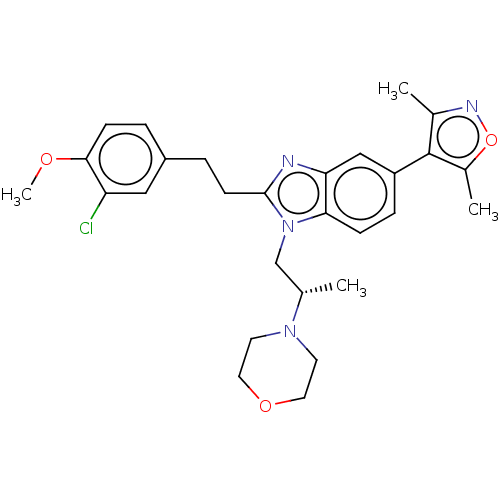
 SGC-CBP30 BDBM188519
- Nakai, T; Perl, NR; Barden, TC; Carvalho, A; Fretzen, A; Germano, P; Im, GY; Jin, H; Kim, C; Lee, TW; Long, K; Moore, J; Rohde, JM; Sarno, R; Segal, C; Solberg, EO; Tobin, J; Zimmer, DP; Currie, MG Discovery of IWP-051, a Novel Orally Bioavailable sGC Stimulator with Once-Daily Dosing Potential in Humans. ACS Med Chem Lett 7: 465-9 (2016)
- Kim, C; Nakai, T; Lee, TW; Moore, J; Perl, NR; Rohde, J; Iyengar, RR; Mermerian, A; Fretzen, A SGC stimulators US Patent US10189809 (2019)
- Nakai, T; Jia, J; Renhowe, PA; Barden, TC; Yu, XY; Sheppeck, JE; Iyer, K; Jung, J; Milne, GT; Long, KK; Currie, MG; Moore, J; Perl, NR; Iyengar, RR; Mermerian, A; Im, GJ; Lee, TW; Hudson, C; Rennie, GR sGC stimulators US Patent US10183021 (2019)
- Petrassi, HM; Lairson, LL; Chin, E; Schultz, PG; Yu, C; Yang, B; Grant, V; Li, Y; Pacheco, A; Chu, A; Johnson, K; Chatterjee, AK AGONISTS OF STIMULATOR OF INTERFERON GENES STING US Patent US20230357253 (2023)
- Gajiwala, KS; Huh, CW; Jalaie, M; Patman, RL; Rui, EY; Sun, J; Wythes, MJ Modulators of STING (stimulator of interferon genes) US Patent US11964978 (2024)
- Wells, C; Couñago, RM; Limas, JC; Almeida, TL; Cook, JG; Drewry, DH; Elkins, JM; Gileadi, O; Kapadia, NR; Lorente-Macias, A; Pickett, JE; Riemen, A; Ruela-de-Sousa, RR; Willson, TM; Zhang, C; Zuercher, WJ; Zutshi, R; Axtman, AD SGC-AAK1-1: A Chemical Probe Targeting AAK1 and BMP2K. ACS Med Chem Lett 11: 340-345 (2020)
- Wythes, MJ; McAlpine, IJ; Patman, R; Rui, EY; Maderna, A; Jalaie, M; Gajiwala, KS Cyclopentane-based modulators of STING (stimulator of interferon genes) US Patent US10968242 (2021)
- Zhang, H; You, QD; Xu, XL Targeting Stimulator of Interferon Genes (STING): A Medicinal Chemistry Perspective. J Med Chem 63: 3785-3816 (2020)
- Asquith, CRM; Berger, BT; Wan, J; Bennett, JM; Capuzzi, SJ; Crona, DJ; Drewry, DH; East, MP; Elkins, JM; Fedorov, O; Godoi, PH; Hunter, DM; Knapp, S; Müller, S; Torrice, CD; Wells, CI; Earp, HS; Willson, TM; Zuercher, WJ SGC-GAK-1: A Chemical Probe for Cyclin G Associated Kinase (GAK). J Med Chem 62: 2830-2836 (2019)
- Jeon, MJ; Lee, H; Lee, J; Baek, SY; Lee, D; Jo, S; Lee, JY; Kang, M; Jung, HR; Han, SB; Kim, NJ; Lee, S; Kim, H Development of Potent Immune Modulators Targeting Stimulator of Interferon Genes Receptor. J Med Chem 65: 5407-5432 (2022)
- Abdel-Magid, AF Potential Cancer Treatment by Agonists of the Stimulator of Interferon Genes. ACS Med Chem Lett 11: 1081-1082 (2020)
- Rennie, GR; Barden, TC; Bernier, SG; Carvalho, A; Deming, R; Germano, P; Hudson, C; Im, GJ; Iyengar, RR; Jia, L; Jung, J; Kim, E; Lee, TW; Mermerian, A; Moore, J; Nakai, T; Perl, NR; Tobin, J; Zimmer, DP; Renhowe, PA Discovery of CYR715: A novel carboxylic acid-containing soluble guanylate cyclase stimulator. Bioorg Med Chem Lett 40: (2021)
- Chen, NN; Zhang, H; Zhu, QS; Zeng, T; Dai, W; Zhou, YL; Xin, GF; Wu, BD; Gong, SJ; Jiang, ZY; You, QD; Xu, XL Development of Orally Bioavailable Amidobenzimidazole Analogues Targeting Stimulator of Interferon Gene (STING) Receptor. J Med Chem 66: 5584-5610 (2023)
- Liu, X; Wang, M; Yang, M; Sun, H; Wang, B; Pan, X; Chen, X; Jin, J; Wang, X Structure-activity relationship study of amidobenzimidazole derivatives as stimulator of interferon genes (STING) agonists. Eur J Med Chem 246: (2023)
- Discovery and Optimization of Hsp110 and sGC Dual-Target Regulators for the Treatment of Pulmonary Arterial Hypertension.
- Kargbo, RB Targeting Stimulator of Interferon Genes (STING) for the Potential Treatment of Cancer and Infectious Diseases. ACS Med Chem Lett 12: 328-330 (2021)
- Xi, Q; Wang, M; Jia, W; Yang, M; Hu, J; Jin, J; Chen, X; Yin, D; Wang, X Design, Synthesis, and Biological Evaluation of Amidobenzimidazole Derivatives as Stimulator of Interferon Genes (STING) Receptor Agonists. J Med Chem 63: 260-282 (2020)
- Shan, B; Hou, H; Zhang, K; Li, R; Shen, C; Chen, Z; Xu, P; Cui, R; Su, Z; Zhang, C; Yang, R; Zhou, G; Liu, Y; Guo, H; Chen, K; Fu, W; Jiang, H; Zhang, S; Zheng, M Design, Synthesis, and Biological Evaluation of Bipyridazine Derivatives as Stimulator of Interferon Genes (STING) Receptor Agonists. J Med Chem 66: 3327-3347 (2023)
- Follmann, M; Ackerstaff, J; Redlich, G; Wunder, F; Lang, D; Kern, A; Fey, P; Griebenow, N; Kroh, W; Becker-Pelster, EM; Kretschmer, A; Geiss, V; Li, V; Straub, A; Mittendorf, J; Jautelat, R; Schirok, H; Schlemmer, KH; Lustig, K; Gerisch, M; Knorr, A; Tinel, H; Mondritzki, T; Trübel, H; Sandner, P; Stasch, JP Discovery of the Soluble Guanylate Cyclase Stimulator Vericiguat (BAY 1021189) for the Treatment of Chronic Heart Failure. J Med Chem 60: 5146-5161 (2017)
- Chang, W; Altman, MD; Lesburg, CA; Perera, SA; Piesvaux, JA; Schroeder, GK; Wyss, DF; Cemerski, S; Chen, Y; DiNunzio, E; Haidle, AM; Ho, T; Kariv, I; Knemeyer, I; Kopinja, JE; Lacey, BM; Laskey, J; Lim, J; Long, BJ; Ma, Y; Maddess, ML; Pan, BS; Presland, JP; Spooner, E; Steinhuebel, D; Truong, Q; Zhang, Z; Fu, J; Addona, GH; Northrup, AB; Parmee, E; Tata, JR; Bennett, DJ; Cumming, JN; Siu, T; Trotter, BW Discovery of MK-1454: A Potent Cyclic Dinucleotide Stimulator of Interferon Genes Agonist for the Treatment of Cancer. J Med Chem 65: 5675-5689 (2022)
- Shen, A; Li, X; Zhang, Y; Ma, J; Xiao, R; Wang, X; Song, Z; Liu, Z; Geng, M; Zhang, A; Xie, Z; Ding, C Structure-Activity relationship study of benzothiophene oxobutanoic acid analogues leading to novel stimulator of interferon gene (STING) agonists. Eur J Med Chem 241: (2022)
- Discovery of novel amidobenzimidazole derivatives as orally available small molecule modulators of stimulator of interferon genes for cancer immunotherapy.
- Liu, J; Yuan, L; Ruan, Y; Deng, B; Yang, Z; Ren, Y; Li, L; Liu, T; Zhao, H; Mai, R; Chen, J Novel CRBN-Recruiting Proteolysis-Targeting Chimeras as Degraders of Stimulator of Interferon Genes with In Vivo Anti-Inflammatory Efficacy. J Med Chem 65: 6593-6611 (2022)
- Song, Z; Wang, X; Zhang, Y; Gu, W; Shen, A; Ding, C; Li, H; Xiao, R; Geng, M; Xie, Z; Zhang, A Structure-Activity Relationship Study of Amidobenzimidazole Analogues Leading to Potent and Systemically Administrable Stimulator of Interferon Gene (STING) Agonists. J Med Chem 64: 1649-1669 (2021)
- Lioux, T; Mauny, MA; Lamoureux, A; Bascoul, N; Hays, M; Vernejoul, F; Baudru, AS; Boularan, C; Lopes-Vicente, J; Qushair, G; Tiraby, G Design, Synthesis, and Biological Evaluation of Novel Cyclic Adenosine-Inosine Monophosphate (cAIMP) Analogs That Activate Stimulator of Interferon Genes (STING). J Med Chem 59: 10253-10267 (2016)
- Srivastava, BK; Soni, R; Patel, JZ; Joharapurkar, A; Sadhwani, N; Kshirsagar, S; Mishra, B; Takale, V; Gupta, S; Pandya, P; Kapadnis, P; Solanki, M; Patel, H; Mitra, P; Jain, MR; Patel, PR Hair growth stimulator property of thienyl substituted pyrazole carboxamide derivatives as a CB1 receptor antagonist with in vivo antiobesity effect. Bioorg Med Chem Lett 19: 2546-50 (2009)
- Lee, H; Jeong, JH; Lee, T; Chong, Y; Choo, H; Lee, S Identification of (-)-Epigallocateshin gallate derivatives promoting innate immune activation via 2',3'-cyclic GMP-AMP-stimulator of interferon genes pathway. Bioorg Med Chem Lett 90: (2023)
- Novotná, B; Vaneková, L; Zavřel, M; Buděšínský, M; Dejmek, M; Smola, M; Gutten, O; Tehrani, ZA; Pimková Polidarová, M; Brázdová, A; Liboska, R; Štěpánek, I; Vavřina, Z; Jandušík, T; Nencka, R; Rulíšek, L; Bouřa, E; Brynda, J; Páv, O; Birkuš, G Enzymatic Preparation of 2'-5',3'-5'-Cyclic Dinucleotides, Their Binding Properties to Stimulator of Interferon Genes Adaptor Protein, and Structure/Activity Correlations. J Med Chem 62: 10676-10690 (2019)
- Vankayalapati, H; Liu, X; Ramamoorthy, G; Sharma, S; Kaadige, MR; Weston, A; Thode, T Substituted-3H-imidazo [4,5-c] pyridine and 1H-pyrrolo[2,3-c]pyridine series of novel ectonucleotide pyrophosphatase/phosphodiesterase-1 (ENPP1) and stimulator for interferon genes (STING) modulators as cancer immunotherapeutics US Patent US10689376 (2020)
- Vankayalapati, H; Sharma, S; Kaadige, MR; Weston, A; Thode, T Substituted-3H-imidazo[4,5-c]pyridine and 1H-pyrrolo[2,3-c]pyridine series of novel Ectonucleotide Pyrophosphatase/Phosphodiesterase-1 (ENPP1) and stimulator for interferon genes (STING) modulators as cancer immunotherapeutics US Patent US11142524 (2021)
- ChEBML_155229 Ability to inhibit human tissue plasminogen activator stimulator
- ChEBML_207886 Ability to inhibit human tissue plasminogen activator stimulator
- ChEMBL_155229 (CHEMBL764719) Ability to inhibit human tissue plasminogen activator stimulator
- ChEMBL_2323408 Inhibition of telomerase activity in human SGC-7901 cells by TRAP assay
- ChEMBL_2105981 (CHEMBL4814656) Inhibition of telomerase in human SGC-7901 cell extract by TRAP assay
- ChEMBL_2297235 Inhibition of telomerase activity in human SGC-7901 cells incubated for 24 hrs by TRAP-PCR-ELISA assay
- ChEMBL_2018158 (CHEMBL4671736) Activation of human sGC subunit alpha1/beta1 expressed in CHO cells assessed as cGMP production by CASA assay
- ChEMBL_2018163 (CHEMBL4671741) Activation of human sGC subunit alpha1/beta1 expressed in CHO cells assessed as cGMP production in presence of ODQ by CASA assay
- Activation Assay Using an sGCα 1 gene (NCBI accession No. BC028384.2) and an sGCβ1 gene (NCBI accession No. BC047620.1), an N-terminal FLAG tag-fused sGCα1 and an sGCβ1 expression baculovirus were prepared. These viruses were transfected into insect cells Sf9 (Cat. No. 11496-015, Gibco) to express a protein. From the cell lysates of the insect cells, heterodimers of the N-terminal FLAG tag-fused sGCα1 and sGCβ1 were purified with an M2 Affinity Gel (Sigma-Aldrich, Inc.) to obtain a human sGC.An Example compound was dissolved in DMSO and diluted 20-fold with ultrapure water. 2 uL of the diluted Example compound solution (maximum concentration of 100 uM), 2 uL of a substrate solution [0.5 uM triethanolamine buffer solution, 0.03 uM dithiothreitol, 0.01 uM GTP, 0.04 uM MgCl2, and 0.03 uM sodium nitroprusside (SNP)], and 6 uL of a human enzyme suspension were added to 384-well plates (manufactured by Greiner Bio-One), and incubated at room temperature for one hour. The measurement of the amount of cGMP was carried out, using an HTRF reagent (Cisbio).
- ChEMBL_2120648 (CHEMBL4829795) Activation of full length human sGC alpha1/beta1 subunit containing heme in ferric state expressed in Sf9 insect cells using cGMP as substrate incubated for 15 mins by [32P]GTP assay
- Homogeneous Time Resolved Fluorescence Assay The sGC cellular activator assay is performed in the presence and absence of 50% human serum (HS) using Chinese hamster ovary cells that have been stably transfected to express the human soluble guanylate cyclase alpha 1 and beta 1 subunits (sGC). Cells are preincubated with 40 microM 1H-[1,2,4]oxadiazolo[4,3-a]quinoxalin-1-one (ODQ), an sGC inhibitor, for one h in buffer containing 0.1% bovine serum albumin and 3-isobutyl-1-methylxanthine (IBMX). Concentration response curves are prepared for test compounds in DMSO. An intermediate dilution of the compounds is performed in either buffer containing IBMX or type AB HS containing IBMX. Diluted compounds are added to cells and they are incubated at room temperature for thirty min. cGMP is measured using a CisBio homogeneous time resolved fluorescence kit and the EC50 is calculated for each compound.
- sGC Binding Assay The binding potencies of sGC compounds to the human recombinant sGC enzyme were determined in a Size Exclusion Chromatography (SEC) competition binding assay using [3H] Ex-77B as the radioligand.[3H] Ex-77B was prepared using a standardardized tritium exchange procedure. The parent (non-labeled) molecule was first iodinated then a Pd-catalyzed iodine to tritium exchange provided the labeled compound.Method: The binding buffer was composed of 50 mM triethanolamine, pH 7.4, 3 mM MgCl2, 0.025% BSA, 2 mM dithiothreitol (DTT), 300 μM DETA/NO and 400 μM GTP. Assays were conducted in 96-well plates in a total volume of 200 μL. Recombinant human sGC protein (40 ng) was incubated with 1.6 nM [3H] Ex-77B for 24 hours at 37° C. in the presence and absence of various concentrations of sGC testing compounds delivered as DMSO solutions to give a total of 1% organic solvent content. Non-specific binding was defined by competition with 1 μM of Ex-77B. After the incubation period, the binding mixtures were loaded onto the gel-filtration plate (ThermoFischer Cat. No. 89808) pre-equilibrated with binding buffer and spun at 1000×g for 3 min at 4° C. on a Bench top centrifuge. The collected eluates in White Frame Clear Well Isoplates (Perkin Elmer Cat #6005040) received 100 μl of UltimaGold scintillation cocktail. The sealed plates were shaken vigorously and span, and counted after 6 hours with a Wallac Microbeta TriLux 1450 LSC & Luminescence Counter (Perkin Elmer). Data from competition experiments were analyzed to determine Ki values using one site fit Ki equation.
- Cell-Based Luminescent Assay The test compounds that demonstrated a corrected % activity of >=50% were defined as inhibitors of the reaction. The experimental values were normalized by the difference between values from neutral and stimulator control wells in each plate. Then normalized data was corrected to remove systematic plate patterns due to artifacts such as dispensing tip issues etc.
- Binding Assay The binding potencies of sGC compounds to the human recombinant sGC enzyme were determined in a Size Exclusion Chromatography (SEC) competition binding assay using [3H] Compound B as the radioligand. [3H] Compound B was prepared using a standardardized tritium exchange procedure. The parent (non-labeled) molecule was first iodinated then a Pd-catalyzed iodine to tritium exchange provided the labeled compound. Method: The binding buffer was composed of 50 mM triethanolamine pH 7.4, 3 mM MgCl2, 0.025% BSA, 2 mM dithiothreitol (DTT), 300 μM DETA/NO and 400 μM GTP. Assays were conducted in 96-well plates in a total volume of 200 μL. Recombinant human sGC protein (40 ng) was incubated with 1.6 nM [3H] Compound B for 24 h at 37° C. in the presence and absence of various concentrations of sGC testing compounds delivered as DMSO solutions to give a total of 1% organic solvent content. Non-specific binding was defined by competition with 1 μM of Compound B. After the incubation period, the binding mixtures were loaded onto the gel-filtration plate (ThermoFischer Cat. No. 89808) pre-equilibrated with binding buffer and spun at 1000×g for 3 min at 4° C. on a Bench top centrifuge. The collected eluates in White Frame Clear Well Isoplates (Perkin Elmer Cat #6005040) received 100 μl of UltimaGold scintillation cocktail. The sealed plates were shaken vigorously and span, and counted after 6 hs with a Wallac Microbeta TriLux 1450 LSC & Luminescence Counter (Perkin Elmer). Data from competition experiments were analyzed to determine Ki values using one site fit Ki equation.
- Activation Assay The activity of sGC was evaluated by measuring the amount of a cyclic guanosine monophosphate (cGMP) which is produced by human purified sGC. A test compound was dissolved in DMSO and diluted 20-fold with ultrapure water. 2 μL of the diluted test compound solution (maximum concentration 100 μM), 2 μL of a substrate solution [0.5 μM TEBA, 0.03 μM dithiothreitol, 0.01 μM GTP, 0.04 μM MgCl2, and 0.03 μM sodium nitroprusside (SNP)], and 6 μL of a human enzyme suspension were added to 384-well plates (manufactured by Greiner Bio-One), and incubated at room temperature for one hour. The quantitative determination of cGMP is using HTRF which based on the competition between sample cGMP and fluorescent dye labeled cGMP for binding to a cGMP-specific antibody.
- HEK WC Assay Human embryonic kidney cells (HEK293), endogenously expressing soluble guanylate cyclase (sGC), were used to evaluate the activity of test compounds. Compounds stimulating the sGC receptor should cause an increase in the intracellular concentration of cGMP. HEK 293 cells were seeded in Dulbecco's Modification of Eagle's Medium supplemented with fetal bovine serum (10% final) and L-glutamine (2 mM final) in a 200 μL volume at a density of 1×10⁵ cells/well in a poly-D-lysine coated 96 well flat bottom plate and grown overnight at 37° C. Medium was aspirated and cells were washed with 1× Hank's Buffered Saline Salt Solution (200 μL). Cells were then incubated for 15 minutes at 37° C. with 0.5 mM 3-isobutyl-1-methylxanthine (200 μL). Test article and sodium nitroprusside were then added to the assay mixture (2 μL each) and incubated at 37° C. for 10 minutes. After the 10 minute incubation, the assay mixture was aspirated and 0.1M HCl (200 μL) was added to the cells. The plate was incubated at 4° C. for 30 minutes in the 0.1M HCl to stop the reaction and lysed the cells. The plates were then centrifuged at 1,200 g for 5 minutes at room temperature. Supernatants were collected and transferred to a new flat bottom 96 well plate for analysis. Vehicle controls were carried out using DMSO (1%). A known sGC stimulator, BAY 41-2272, was used as the positive control. Samples were diluted with an equal volume of 1 M Ammonium Acetate (pH 7) to neutralize samples for better chromatography. A 2×cGMP standard curve was prepared in 0.1 M HCl and then diluted with an equal volume of 1 M Ammonium Acetate, with the following final concentrations in nM: 1024, 512, 256, 128, 64, 32, 16, 8, 4, 2, 1. cGMP concentrations were determined from each sample using the LC/MS conditions (Table 2 below) and calculated standard curve. EC50 values were calculated from concentration-response curves generated with GraphPad Prism Software.
- Stimulation of sGC Enzyme Activity Soluble guanylate cyclase (sGC) converts on stimulation GTP into cGMP and pyrophosphate (PPi). PPi is detected with the aid of the assay described below. The signal produced in the assay increases as the reaction progresses and serves as a measure of the sGC enzyme activity under the given stimulation.To carry out the assay, 29 μl of enzyme solution [0-10 nM soluble guanylate cyclase (prepared according to Honicka et al., J. Mol. Med. 77, 14-23 (1999)) in 50 mM TEA, 2 mM MgCl2, 0.1% BSA (fraction V), 0.005% Brij , pH 7.5] are initially introduced into a microplate, and 1 μl of the substance to be tested (as a serially diluted solution in DMSO) is added. The mixture is incubated at room temperature for 10 min. Then 20 μl of detection mix [1.2 nM Firefly Luciferase (Photinus pyralis luciferase, Promega), 29 μM dehydroluciferin (prepared according to Bitler & McElroy, Arch. Biochem. Biophys. 72, 358 (1957)), 122 μM luciferin (Promega), 153 μM ATP (Sigma) and 0.4 mM DTT (Sigma) in 50 mM TEA, 2 mM MgCl2, 0.1% BSA (fraction V), 0.005% Brij , pH 7.5] are added. The enzyme reaction is started by adding 20 μl of substrate solution [1.25 mM guanosine 5′-triphosphate (Sigma) in 50 mM TEA, 2 mM MgCl2, 0.1% BSA (fraction V), 0.005% Brij, pH 7.5] and measured continuously in a luminometer. The extent of the stimulation by the substance to be tested can be determined relative to the signal of the unstimulated reaction.The activation of haem-free guanylate cyclase is examined by addition of 25 μM of 1H-1,2,4-oxadiazolo[4,3-a]quinoxalin-1-one (ODQ) to the enzyme solution and subsequent incubation for 30 minutes and compared to the stimulation of the native enzyme.
- Binding Assay The binding buffer was composed of 50 mM triethanolamine, pH 7.4, 3 mM MgCl2, 0.025% BSA, 2 mM dithiothreitol (DTT), 300 μM DETA/NO and 400 μM GTP. Assays were conducted in 96-well plates in a total volume of 200 μL. Recombinant human sGC protein (40 ng) was incubated with 1.6 nM [3H] Ex-77B for 24 hours at 37° C. in the presence and absence of various concentrations of sGC testing compounds delivered as DMSO solutions to give a total of 1% organic solvent content. Non-specific binding was defined by competition with 1 μM of Ex-77B. After the incubation period, the binding mixtures were loaded onto the gel-filtration plate (ThermoFischer Cat. No. 89808) pre-equilibrated with binding buffer and spun at 1000×g for 3 min at 4° C. on a Bench top centrifuge. The collected eluates in White Frame Clear Well Isoplates (Perkin Elmer Cat #6005040) received 100 μl of UltimaGold scintillation cocktail. The sealed plates were shaken vigorously and span, and counted after 6 hours with a Wallac Microbeta TriLux 1450 LSC & Luminescence Counter (Perkin Elmer). Data from competition experiments were analyzed to determine Ki values using one site fit Ki equation.
- CHO Cellular Assay Chinese hamster ovary (CHO) cells overexpressing soluble guanylate cyclase were generated to test the effect of sGC activators in a cellular context. Human cDNAs for GUCYA3 (RefSeq: NM_000856.3) and GUCYB3 (RefSeq: NM_000857.1) were amplified by PCR from a HUVEC (Human Umbilical Vein Endothelial Cells) cDNA library and cloned into mammalian expression vectors. CHO K1 cells (ATCC CCL-61) were transfected using Lipofectamine 2000 following manufacturer's instructions and stably expressing clones were identified by antibiotic selection. CHO GUCY clone 8E10 was used for subsequent experiments.Cells were seeded at a density of 3000 cells/well in white 384-well proxyplates (Perkin Elmer) and incubated overnight, then the medium was removed and cells were washed with assay buffer (HBSS, 0.1% BSA. 1 mM IBMX, 20 uM ODQ). sGC activators were serially diluted in DMSO, then diluted in assay buffer prior to adding to cells (10 ul/well, final DMSO concentration 0.5%). Cells were incubated with compounds for 1 h room temperature, then assayed for cGMP production using Cisbio cGMP HTRF kit (62GM2PEC) according to manufacturer's instructions.The EC50s are calculated based on the amount of cGMP interpolated from the standard curve, using a 4-parameter sigmoidal dose-response.
- sGC-HEK-cGMP Assay Human embryonic kidney cells (HEK293), endogenously expressing soluble guanylate cyclase (sGC), were used to evaluate the activity of test compounds. Compounds stimulating the sGC enzyme should cause an increase in the intracellular concentration of cGMP. HEK 293 cells were seeded in Dulbecco's Modification of Eagle's Medium supplemented with fetal bovine serum (10% final) and penicillin (100 U/mL)/streptomycin (100 μg/mL) in a 50 μL volume at a density of 1.5×10⁴ cells/well in a poly-D-lysine coated 384 well flat bottom plate. Cells were incubated overnight at 37° C. in a humidified chamber with 5% CO2. Medium was aspirated and cells were washed with 1× Hank's Buffered Saline Salt Solution (50 μL). Cells were then incubated for 15 minutes at 37° C. with 50 μL of a 0.5 mM 3-isobutyl-1-methylxanthine (IBMX) solution. Test article and Diethylenetriamine NONOate (DETA-NONOate) solutions (x μM concentration for test article solution and 10 μM concentration for DETA-NONOate solution; wherein x is one of the following concentrations: 0.029 nM to 30000 nM). were then added to the assay mixture and the resulting mixture incubated at 37° C. for 20 minutes. After the 20 minute incubation, the assay mixture was aspirated and 10% acetic acid containing 150 ng/mL+3-cGMP (internal standard for LCMS) (50 μL) was added to the cells. The plate was incubated at 4° C. for 30 minutes in the acetic acid solution to stop the reaction and lyse the cells. The plates were then centrifuged at 1,000 g for 3 minutes at 4° C. and the supernatant transferred to a clean reaction plate for LCMS analysis.cGMP concentrations were determined from each sample using the LCMS conditions below (Table 5) and calculated standard curve. The standard curve was prepared in 10% acetic acid with 150 ng/mL+3cGMP (isotopically labelled cGMP with a weight 3 units higher than wild type) with the following final concentrations of cGMP in ng/mL: 1, 5, 10, 50, 100, 250, 500, 1000, 2000.
- Stimulation of sGC Enzyme Activity To carry out the assay, 29 μl of enzyme solution [0-10 nM soluble guanylate cyclase (prepared according to H nicka et al, J. Mol. Med. 77, 14-23 (1999)) in 50 mM TEA, 2 mM MgC2, 0.1% BSA (fraction V), 0.005% Brij , pH 7.5] are initially introduced into a microplate, and 1 μl of the substance to be tested (as a serially diluted solution in DMSO) is added. The mixture is incubated at room temperature for 10 min. Then 20 μl of detection mix [1.2 nM Firefly Luciferase (Photinus pyralis luciferase, Promega), 29 μM dehydroluciferin (prepared according to Bitler & McElroy, Arch. Biochem. Biophys. 72, 358 (1957)), 122 μM luciferin (Promega), 153 μM ATP (Sigma) and 0.4 mM DTT (Sigma) in 50 mM TEA, 2 mM MgCl2, 0.1% BSA (fraction V), 0.005% Brij , pH 7.5] are added. The enzyme reaction is started by adding 20 μl of substrate solution [1.25 mM guanosine 5′-triphosphate (Sigma) in 50 mM TEA, 2 mM MgC2, 0.1% BSA (fraction V), 0.005% Brij , pH 7.5] and measured continuously in a luminometer. The extent of the stimulation by the substance to be tested can be determined relative to the signal of the unstimulated reaction.The activation of haem-free guanylate cyclase is examined by addition of 25 μM of 1H-1,2,4-oxadiazolo[4,3-a]quinoxalin-1-one (ODQ) to the enzyme solution and subsequent incubation for 30 minutes and compared to the stimulation of the native enzyme.
- HEK293 luciferase Purpose of the AssayThe purpose of this assay is to identify small molecule inhibitors of Keap1, preventing Keap1 binding to Nrf2, and thus activating the Nrf2 signalling pathway in HEK-293 ARE firefly luciferase transiently transfected cells. HEK-293 cells express wild-type Keap1 protein and therefore have low constitutive levels of Nrf2 protein and Nrf2-dependent transcription. The cell line was generated in house by transient transfection and possesses 2× tandem repeats of the ARE transcriptional response element upstream of firefly luciferase. When Keap1 is inhibited, Nrf2 signalling is activated, and there is an increase in luciferase expression and light emission.Assay WorkflowCryopreserved HEK ARE luciferase cells were rapidly thawed in a 37° C. water bath and resuspended in assay culture medium (DMEM, 10% FCS, 2 mM L-glutamine). The cell suspension was pelleted by centrifugation (5 mM; 300 g) using a Heraeus benchtop centrifuge. Supernatant was removed and the pellet was gently resuspended in 5 mL culture medium per vial. Cell viability and cell number was measured using an Invitrogen Countess automated cell counter (typical viability 80%), and cells were diluted to a density of 5.0×10⁵ cells/mL.Cells were then plated out into white 384-well plates (Greiner 781080) using a Multidrop Combi, 20 μL/well, to give 10,000 cells/well. As appropriate, test compounds had been added to wells prior to dispensing cells using an Echo 555 acoustic dispenser (Labcyte). Plates were left at room temperature for 10 min to promote even cell settling across the plate before incubation for 18 h at 37° C., 95% humidity and 5% CO2.After 18 h incubation, plates were removed from the incubator and allowed to cool to room temperature for 30 min, before 10 μL per well SteadyGlo reagent detection reagent was added (as per manufacturer's instructions, 10 min before required 10 mL room temperature buffer was added to one vial of lyophilised substrate and inverted several times to fully dissolve). Plates were then incubated in the dark for 30 min before reading on an Envision plate reader.Preparation of Compounds for ScreeningCompounds were acoustically dispensed using a Labcyte Echo, using a 10 pt dose curve with a top concentration of 100 μM. Assay wells were backfilled with DMSO to a total of 60 nL to maintain 0.3% (v/v) DMSO through the assay.Data Analysis Software and Calculation of ResultsThe Stimulator signal was defined using 30 μM tert-butyl hydroquinone (tBHQ) and the Neutral signal by DMSO vehicle control. All calculations were performed using GeneData.