Report error Found 122 Enz. Inhib. hit(s) with all data for entry = 5844
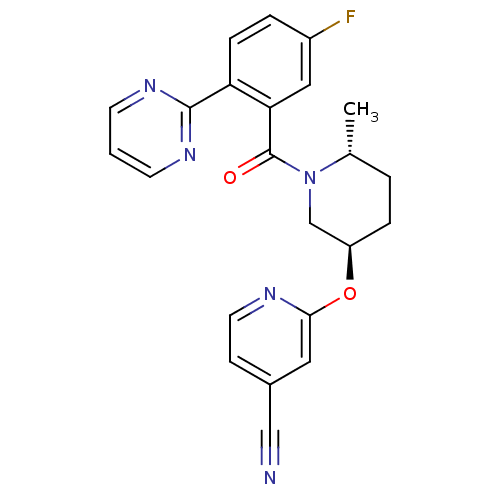
Affinity DataKi: 1nMAssay Description:The inhibition constant (Ki) is determined using a radioligand binding assay (described in Bergman et. al. Bioorg. Med. Chem. Lett. 2008, 18, 1425-14...More data for this Ligand-Target Pair
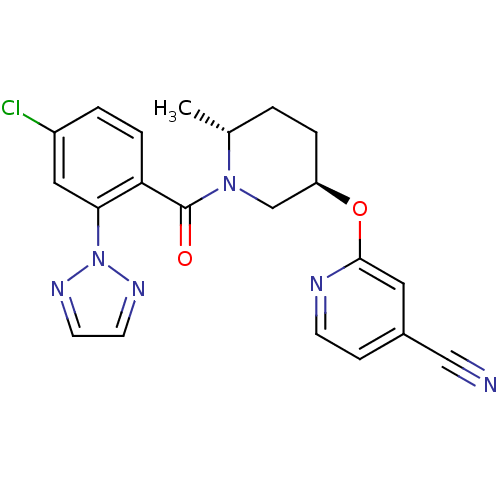
Affinity DataKi: 1.10nMAssay Description:The inhibition constant (Ki) is determined using a radioligand binding assay (described in Bergman et. al. Bioorg. Med. Chem. Lett. 2008, 18, 1425-14...More data for this Ligand-Target Pair
Affinity DataKi: 1.30nMAssay Description:The inhibition constant (Ki) is determined using a radioligand binding assay (described in Bergman et. al. Bioorg. Med. Chem. Lett. 2008, 18, 1425-14...More data for this Ligand-Target Pair
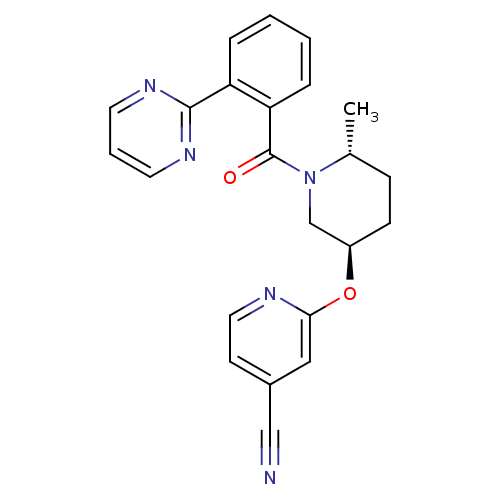
Affinity DataKi: 1.30nMAssay Description:The inhibition constant (Ki) is determined using a radioligand binding assay (described in Bergman et. al. Bioorg. Med. Chem. Lett. 2008, 18, 1425-14...More data for this Ligand-Target Pair
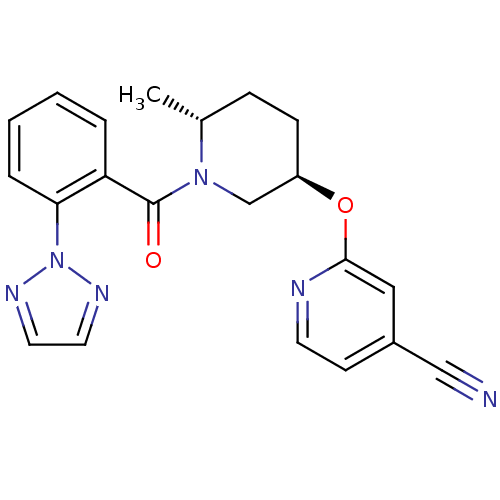
Affinity DataKi: 1.60nMAssay Description:The inhibition constant (Ki) is determined using a radioligand binding assay (described in Bergman et. al. Bioorg. Med. Chem. Lett. 2008, 18, 1425-14...More data for this Ligand-Target Pair

Affinity DataKi: 2.10nMAssay Description:The inhibition constant (Ki) is determined using a radioligand binding assay (described in Bergman et. al. Bioorg. Med. Chem. Lett. 2008, 18, 1425-14...More data for this Ligand-Target Pair
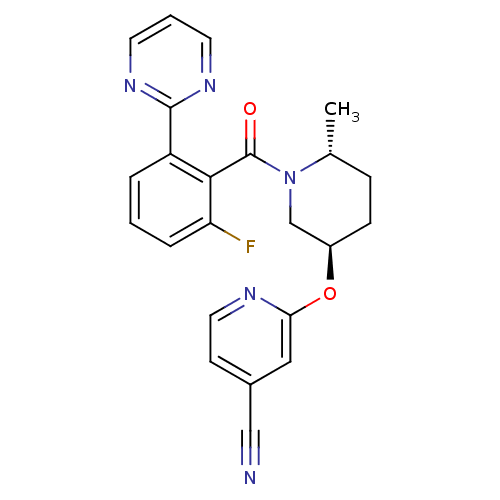
Affinity DataKi: 2.10nMAssay Description:The inhibition constant (Ki) is determined using a radioligand binding assay (described in Bergman et. al. Bioorg. Med. Chem. Lett. 2008, 18, 1425-14...More data for this Ligand-Target Pair
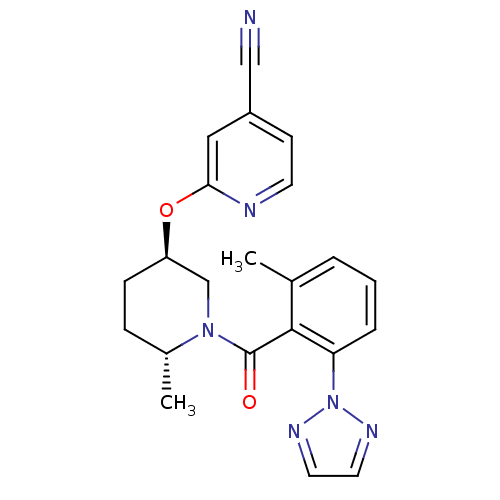
Affinity DataKi: 2.30nMAssay Description:The inhibition constant (Ki) is determined using a radioligand binding assay (described in Bergman et. al. Bioorg. Med. Chem. Lett. 2008, 18, 1425-14...More data for this Ligand-Target Pair
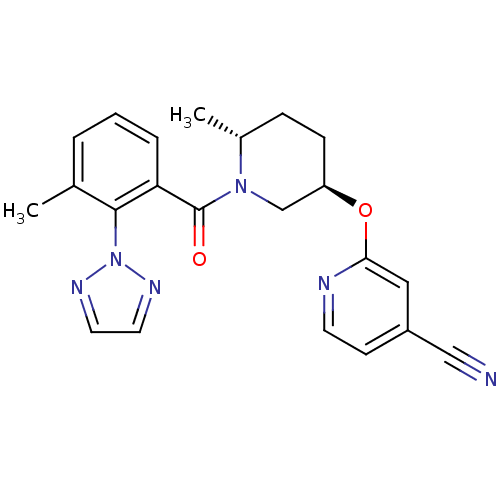
Affinity DataKi: 3nMAssay Description:The inhibition constant (Ki) is determined using a radioligand binding assay (described in Bergman et. al. Bioorg. Med. Chem. Lett. 2008, 18, 1425-14...More data for this Ligand-Target Pair
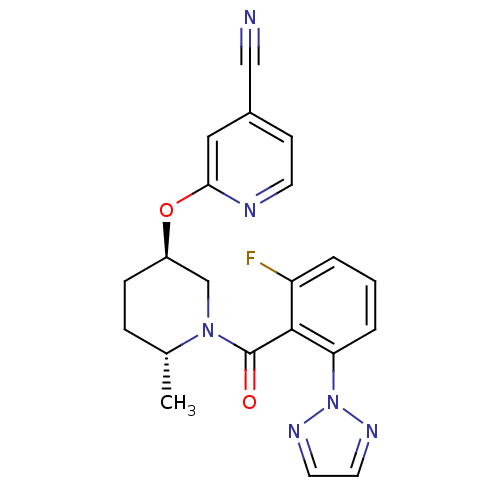
Affinity DataKi: 3.40nMAssay Description:The inhibition constant (Ki) is determined using a radioligand binding assay (described in Bergman et. al. Bioorg. Med. Chem. Lett. 2008, 18, 1425-14...More data for this Ligand-Target Pair
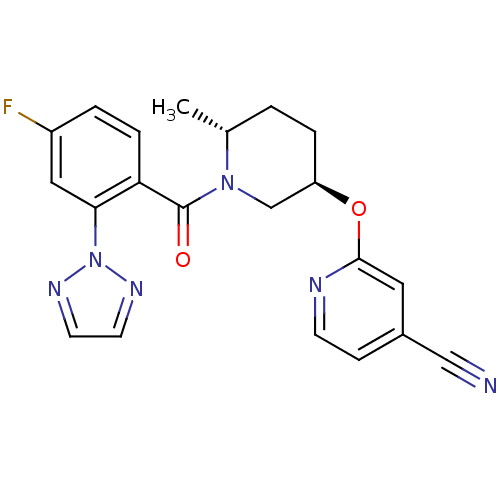
Affinity DataKi: 3.5nMAssay Description:The inhibition constant (Ki) is determined using a radioligand binding assay (described in Bergman et. al. Bioorg. Med. Chem. Lett. 2008, 18, 1425-14...More data for this Ligand-Target Pair
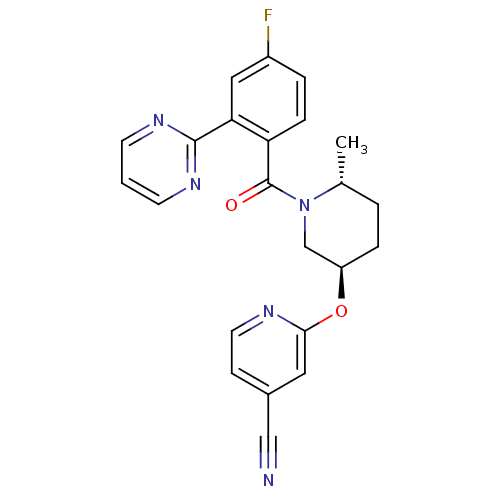
Affinity DataKi: 3.5nMAssay Description:The inhibition constant (Ki) is determined using a radioligand binding assay (described in Bergman et. al. Bioorg. Med. Chem. Lett. 2008, 18, 1425-14...More data for this Ligand-Target Pair
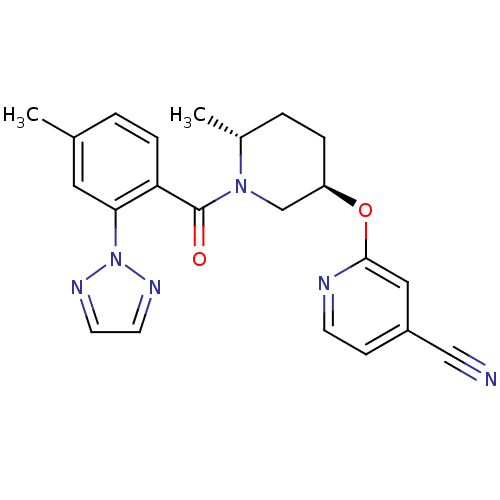
Affinity DataKi: 3.70nMAssay Description:The inhibition constant (Ki) is determined using a radioligand binding assay (described in Bergman et. al. Bioorg. Med. Chem. Lett. 2008, 18, 1425-14...More data for this Ligand-Target Pair
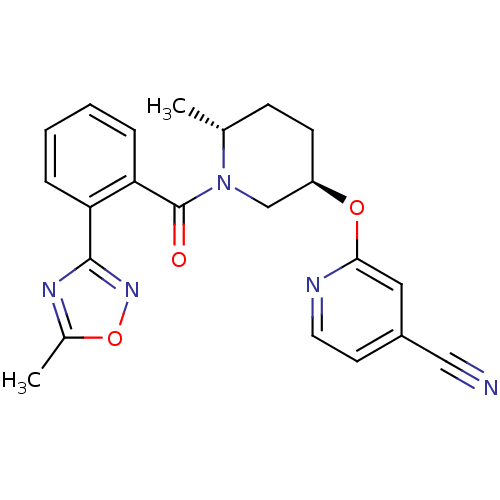
Affinity DataKi: 4.5nMAssay Description:The inhibition constant (Ki) is determined using a radioligand binding assay (described in Bergman et. al. Bioorg. Med. Chem. Lett. 2008, 18, 1425-14...More data for this Ligand-Target Pair
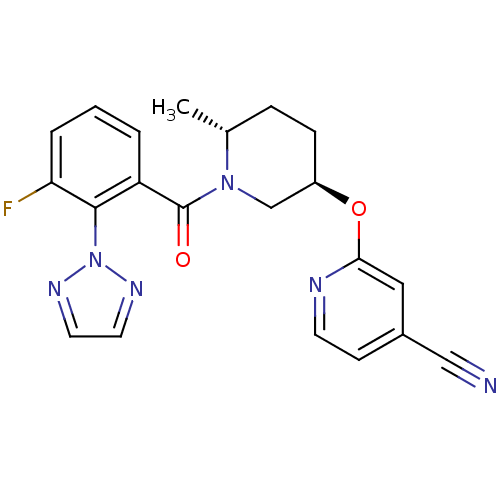
Affinity DataKi: 5.5nMAssay Description:The inhibition constant (Ki) is determined using a radioligand binding assay (described in Bergman et. al. Bioorg. Med. Chem. Lett. 2008, 18, 1425-14...More data for this Ligand-Target Pair
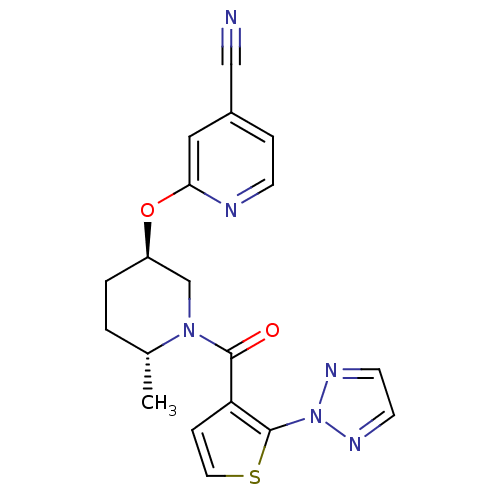
Affinity DataKi: 5.90nMAssay Description:The inhibition constant (Ki) is determined using a radioligand binding assay (described in Bergman et. al. Bioorg. Med. Chem. Lett. 2008, 18, 1425-14...More data for this Ligand-Target Pair
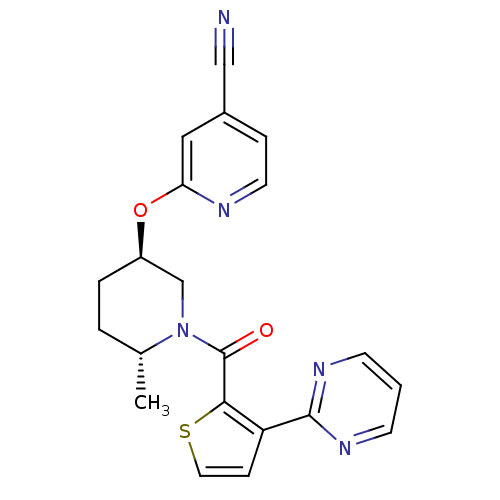
Affinity DataKi: 5.90nMAssay Description:The inhibition constant (Ki) is determined using a radioligand binding assay (described in Bergman et. al. Bioorg. Med. Chem. Lett. 2008, 18, 1425-14...More data for this Ligand-Target Pair
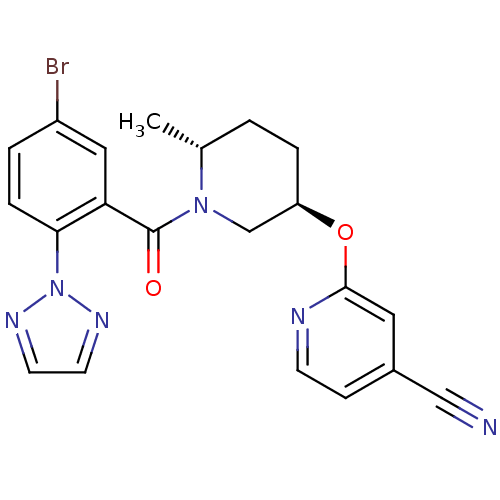
Affinity DataKi: 9.10nMAssay Description:The inhibition constant (Ki) is determined using a radioligand binding assay (described in Bergman et. al. Bioorg. Med. Chem. Lett. 2008, 18, 1425-14...More data for this Ligand-Target Pair
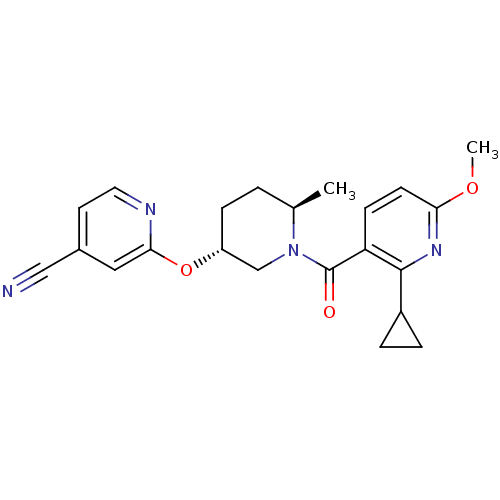
Affinity DataKi: 11.5nMAssay Description:The inhibition constant (Ki) is determined using a radioligand binding assay (described in Bergman et. al. Bioorg. Med. Chem. Lett. 2008, 18, 1425-14...More data for this Ligand-Target Pair
Affinity DataIC50: 12nMT: 2°CAssay Description:Chinese hamster ovary (CHO) cells expressing the rat orexin-1 receptor or the human orexin-2 receptor, are grown in Iscove's modified DMEM containing...More data for this Ligand-Target Pair
Affinity DataIC50: 12nMT: 2°CAssay Description:Chinese hamster ovary (CHO) cells expressing the rat orexin-1 receptor or the human orexin-2 receptor, are grown in Iscove's modified DMEM containing...More data for this Ligand-Target Pair
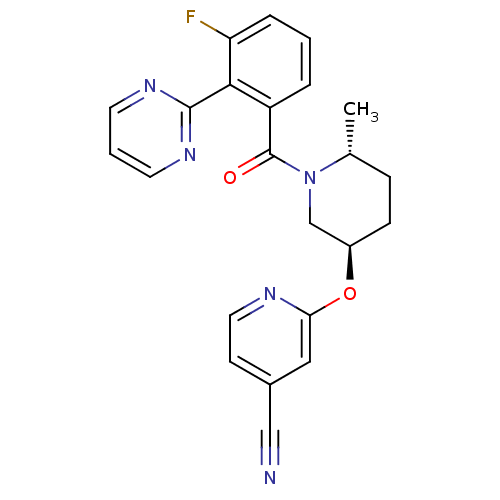
Affinity DataKi: 12.4nMAssay Description:The inhibition constant (Ki) is determined using a radioligand binding assay (described in Bergman et. al. Bioorg. Med. Chem. Lett. 2008, 18, 1425-14...More data for this Ligand-Target Pair
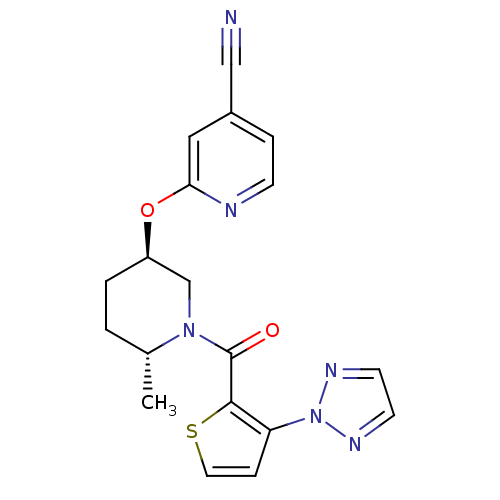
Affinity DataKi: 15nMAssay Description:The inhibition constant (Ki) is determined using a radioligand binding assay (described in Bergman et. al. Bioorg. Med. Chem. Lett. 2008, 18, 1425-14...More data for this Ligand-Target Pair
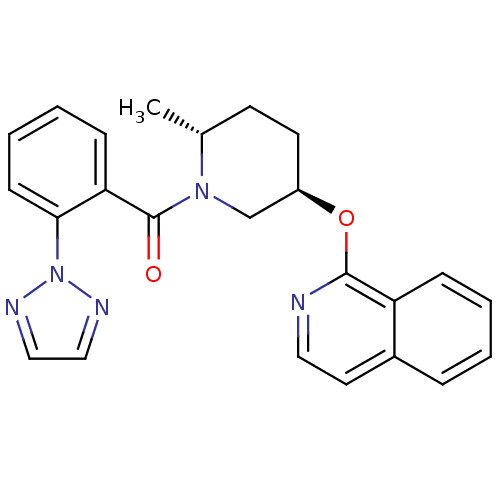
Affinity DataIC50: 15nMAssay Description:The inhibition constant (Ki) is determined using a radioligand binding assay (described in Bergman et. al. Bioorg. Med. Chem. Lett. 2008, 18, 1425-14...More data for this Ligand-Target Pair
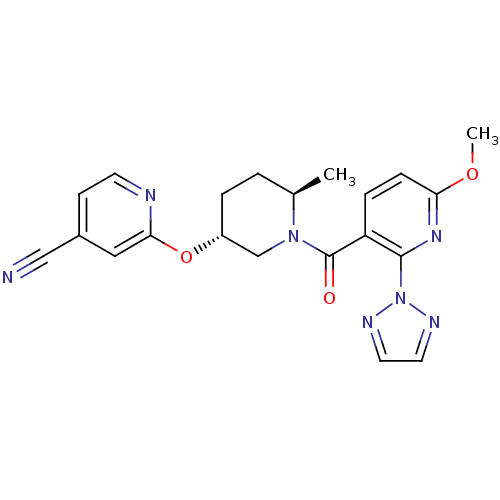
Affinity DataKi: 15nMAssay Description:The inhibition constant (Ki) is determined using a radioligand binding assay (described in Bergman et. al. Bioorg. Med. Chem. Lett. 2008, 18, 1425-14...More data for this Ligand-Target Pair
Affinity DataIC50: 16nMAssay Description:The inhibition constant (Ki) is determined using a radioligand binding assay (described in Bergman et. al. Bioorg. Med. Chem. Lett. 2008, 18, 1425-14...More data for this Ligand-Target Pair
Affinity DataIC50: 17nMT: 2°CAssay Description:Chinese hamster ovary (CHO) cells expressing the rat orexin-1 receptor or the human orexin-2 receptor, are grown in Iscove's modified DMEM containing...More data for this Ligand-Target Pair
Affinity DataIC50: 17nMT: 2°CAssay Description:Chinese hamster ovary (CHO) cells expressing the rat orexin-1 receptor or the human orexin-2 receptor, are grown in Iscove's modified DMEM containing...More data for this Ligand-Target Pair
Affinity DataIC50: 18nMT: 2°CAssay Description:Chinese hamster ovary (CHO) cells expressing the rat orexin-1 receptor or the human orexin-2 receptor, are grown in Iscove's modified DMEM containing...More data for this Ligand-Target Pair
Affinity DataIC50: 18nMT: 2°CAssay Description:Chinese hamster ovary (CHO) cells expressing the rat orexin-1 receptor or the human orexin-2 receptor, are grown in Iscove's modified DMEM containing...More data for this Ligand-Target Pair
Affinity DataIC50: 22nMT: 2°CAssay Description:Chinese hamster ovary (CHO) cells expressing the rat orexin-1 receptor or the human orexin-2 receptor, are grown in Iscove's modified DMEM containing...More data for this Ligand-Target Pair
Affinity DataIC50: 23nMT: 2°CAssay Description:Chinese hamster ovary (CHO) cells expressing the rat orexin-1 receptor or the human orexin-2 receptor, are grown in Iscove's modified DMEM containing...More data for this Ligand-Target Pair
Affinity DataIC50: 28nMT: 2°CAssay Description:Chinese hamster ovary (CHO) cells expressing the rat orexin-1 receptor or the human orexin-2 receptor, are grown in Iscove's modified DMEM containing...More data for this Ligand-Target Pair
Affinity DataIC50: 29nMT: 2°CAssay Description:Chinese hamster ovary (CHO) cells expressing the rat orexin-1 receptor or the human orexin-2 receptor, are grown in Iscove's modified DMEM containing...More data for this Ligand-Target Pair
Affinity DataIC50: 29nMT: 2°CAssay Description:Chinese hamster ovary (CHO) cells expressing the rat orexin-1 receptor or the human orexin-2 receptor, are grown in Iscove's modified DMEM containing...More data for this Ligand-Target Pair
Affinity DataIC50: 29nMT: 2°CAssay Description:Chinese hamster ovary (CHO) cells expressing the rat orexin-1 receptor or the human orexin-2 receptor, are grown in Iscove's modified DMEM containing...More data for this Ligand-Target Pair
Affinity DataIC50: 31nMT: 2°CAssay Description:Chinese hamster ovary (CHO) cells expressing the rat orexin-1 receptor or the human orexin-2 receptor, are grown in Iscove's modified DMEM containing...More data for this Ligand-Target Pair
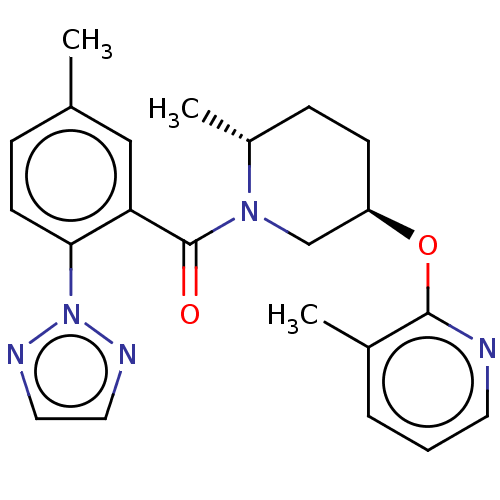
Affinity DataIC50: 32nMAssay Description:The inhibition constant (Ki) is determined using a radioligand binding assay (described in Bergman et. al. Bioorg. Med. Chem. Lett. 2008, 18, 1425-14...More data for this Ligand-Target Pair
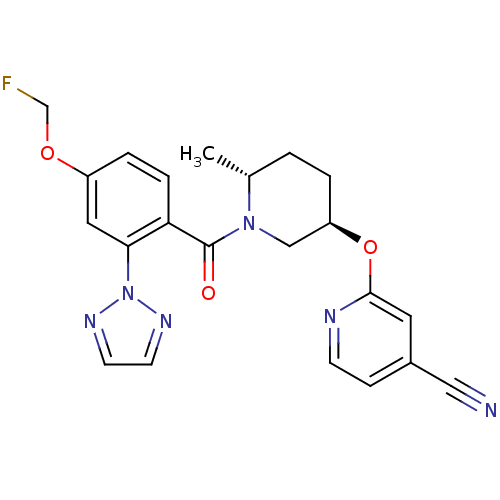
Affinity DataKi: 35nMAssay Description:The inhibition constant (Ki) is determined using a radioligand binding assay (described in Bergman et. al. Bioorg. Med. Chem. Lett. 2008, 18, 1425-14...More data for this Ligand-Target Pair
Affinity DataIC50: 38nMT: 2°CAssay Description:Chinese hamster ovary (CHO) cells expressing the rat orexin-1 receptor or the human orexin-2 receptor, are grown in Iscove's modified DMEM containing...More data for this Ligand-Target Pair
Affinity DataIC50: 44nMT: 2°CAssay Description:Chinese hamster ovary (CHO) cells expressing the rat orexin-1 receptor or the human orexin-2 receptor, are grown in Iscove's modified DMEM containing...More data for this Ligand-Target Pair
Affinity DataIC50: 47nMT: 2°CAssay Description:Chinese hamster ovary (CHO) cells expressing the rat orexin-1 receptor or the human orexin-2 receptor, are grown in Iscove's modified DMEM containing...More data for this Ligand-Target Pair
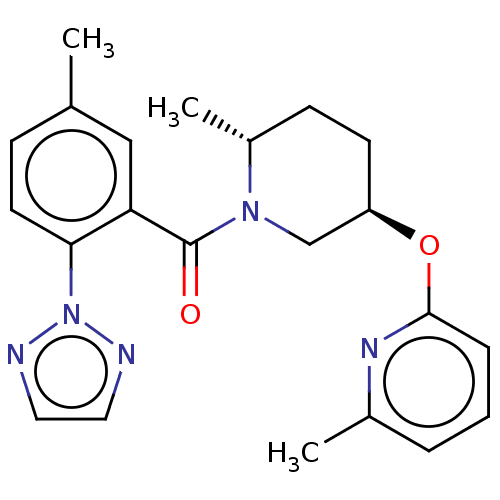
Affinity DataIC50: 47nMAssay Description:The inhibition constant (Ki) is determined using a radioligand binding assay (described in Bergman et. al. Bioorg. Med. Chem. Lett. 2008, 18, 1425-14...More data for this Ligand-Target Pair
Affinity DataIC50: 48nMT: 2°CAssay Description:Chinese hamster ovary (CHO) cells expressing the rat orexin-1 receptor or the human orexin-2 receptor, are grown in Iscove's modified DMEM containing...More data for this Ligand-Target Pair
Affinity DataIC50: 52nMT: 2°CAssay Description:Chinese hamster ovary (CHO) cells expressing the rat orexin-1 receptor or the human orexin-2 receptor, are grown in Iscove's modified DMEM containing...More data for this Ligand-Target Pair
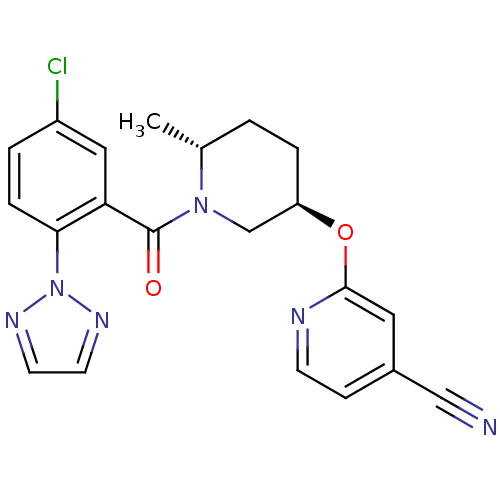
Affinity DataKi: 57nMAssay Description:The inhibition constant (Ki) is determined using a radioligand binding assay (described in Bergman et. al. Bioorg. Med. Chem. Lett. 2008, 18, 1425-14...More data for this Ligand-Target Pair
Affinity DataIC50: 62nMT: 2°CAssay Description:Chinese hamster ovary (CHO) cells expressing the rat orexin-1 receptor or the human orexin-2 receptor, are grown in Iscove's modified DMEM containing...More data for this Ligand-Target Pair
Affinity DataIC50: 65nMT: 2°CAssay Description:Chinese hamster ovary (CHO) cells expressing the rat orexin-1 receptor or the human orexin-2 receptor, are grown in Iscove's modified DMEM containing...More data for this Ligand-Target Pair
Affinity DataIC50: 67nMT: 2°CAssay Description:Chinese hamster ovary (CHO) cells expressing the rat orexin-1 receptor or the human orexin-2 receptor, are grown in Iscove's modified DMEM containing...More data for this Ligand-Target Pair
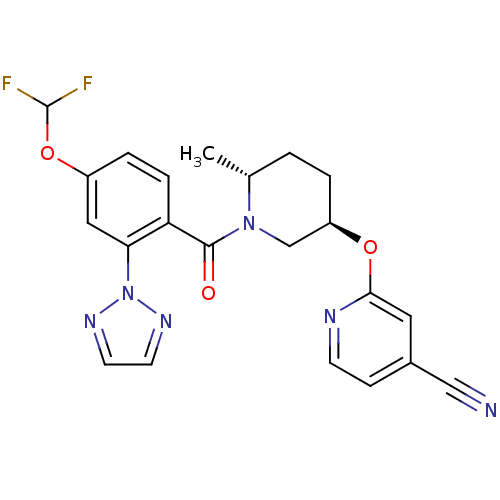
Affinity DataKi: 79nMAssay Description:The inhibition constant (Ki) is determined using a radioligand binding assay (described in Bergman et. al. Bioorg. Med. Chem. Lett. 2008, 18, 1425-14...More data for this Ligand-Target Pair
